The London Underground carries around five million passengers a day and connects almost every neighbourhood worth visiting. Visitors tend to overcomplicate it before they have used it. It is genuinely one of the most intuitive mass-transit systems in the world once you understand three things: how to read the map, how to pay, and which lines beat the others.
This guide covers the practical side of the Underground from a real-user perspective: the routes locals actually use, the Oyster versus contactless question, the etiquette that matters, and the small set of stations and lines the standard map undersells.

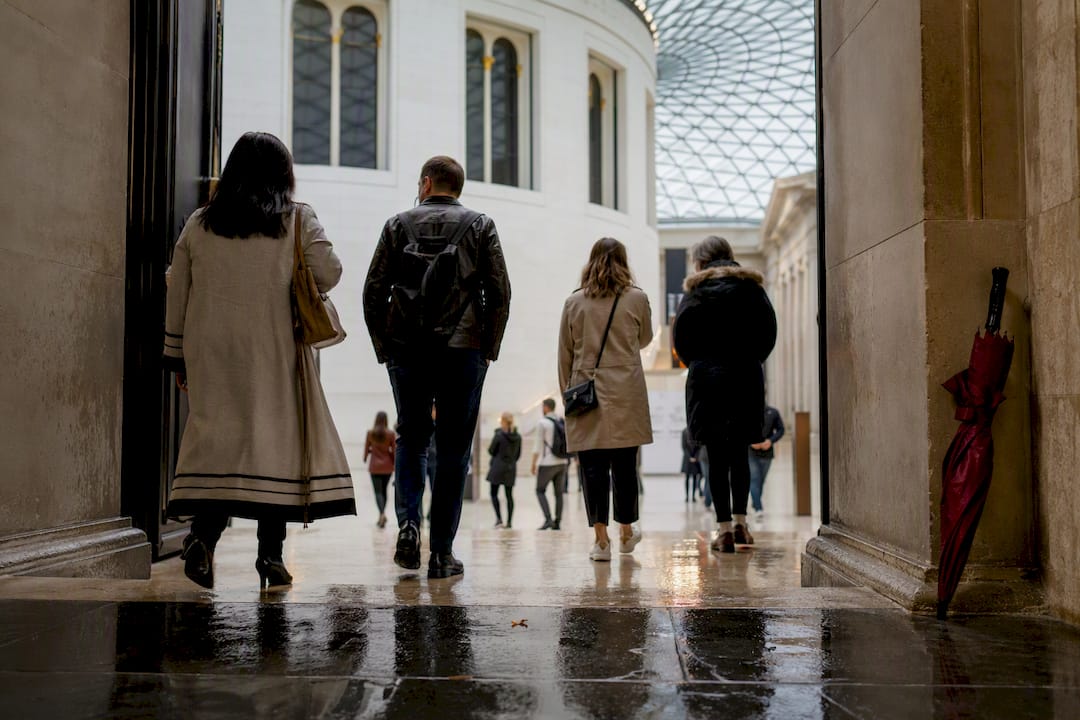
Photo by Petr Slezak on Unsplash
How the Map Works
The Tube map is not a map. It is a diagram, originally drawn in 1933 by Harry Beck, and it does not try to represent geography. Each line is a colour, each station is a stop, and the spacing reflects the time between stops, not the actual distance on the ground. This is why it has lasted nearly a century: it shows you what you actually need, which is how to get from A to B.
Find your starting station, follow the lines that pass through it, and look for interchange stations where they cross. Interchanges are dots where two or more lines meet: Oxford Circus (Bakerloo, Central, Victoria), King's Cross St Pancras (six lines), Bank (Central, Northern, Waterloo & City, DLR), Green Park (Jubilee, Piccadilly, Victoria). Each is a place where you can switch lines without leaving the station.
The map does not tell you which station is closest to a real-world destination. Leicester Square is one stop east of Covent Garden on the diagram, and a five-minute walk on the ground. The map is correct for connections, but not for walking distance. Walk between stations whenever they are closer than the next Tube stop.
Lines That Matter Most
Twelve lines run through central London, but visitors get better outcomes by learning four:
Central runs east-west through the middle of the city. It is the right answer for getting from the West End to the City, or from Liverpool Street out east. Fast trains and deep stations.
Northern runs south through Bank and Charing Cross, then forks: one branch to Barnet, the other to Morden, Edgware, or Kennington. Read the front of the train, not the line colour; the destination sign matters more.
Piccadilly connects Heathrow to central London and runs through the west end of the West End (Green Park, Piccadilly Circus, Leicester Square, Covent Garden, Holborn) to King's Cross. It is the line most visitors use most.
Jubilee is the modern east-west express. It runs from Stanmore through Bond Street, Westminster, Waterloo, Canary Wharf, and Stratford. Trains are wide and stations are deep, and it is usually the fastest way to cross town.
The Elizabeth line (Crossrail) opened in 2022 and runs east-west under the city from Reading and Heathrow through Paddington, Liverpool Street, and out to Shenfield and Abbey Wood. It is technically National Rail rather than Underground but uses the same ticketing, and it is the fastest way from Heathrow to the City.
The Overground and the DLR are not Tube lines but show up on the same map. The Overground runs through Shoreditch, Hackney, and the eastern creative neighbourhoods that locals visit on weekends. The DLR runs through the Docklands to Greenwich, Woolwich Arsenal, and Stratford.
Oyster, Contactless, and What to Actually Buy
You do not need to buy anything in advance. The right answer for almost every visitor is to pay with a contactless debit or credit card (or a phone wallet) at the yellow reader at every Tube entrance. The system applies a single daily cap (£8.90 in 2026 for zones 1-2, the area most visitors stay in) and a weekly cap if you are staying longer. No upfront cost and nothing to register.
An Oyster card is still useful if your bank charges foreign transaction fees or if you are visiting with children. You can buy one at any Tube station ticket machine for a £7 deposit, top it up, and reuse it on future visits.
Two rules catch visitors out:
- Always touch in at the start of your journey and touch out at the end. If you forget, you are charged the maximum fare.
- The Elizabeth line has a separate fare structure but works the same way: touch in and touch out.
Stations Worth Knowing
Bank/Monument is the deepest interchange on the network. The walk from the Central line platform to the DLR is genuinely long; the moving walkways are there for a reason. Plan ten minutes when switching lines here.
Green Park is the right interchange between Buckingham Palace, the West End, and Bond Street, and the only interchange with step-free access across all three Tube lines.
Stratford is the gateway to the east. The Jubilee, Central, and Elizabeth lines, the Overground, and the DLR all converge here, one stop from the Olympic Park and Westfield Stratford City.
Etiquette Locals Care About
Stand on the right on escalators. The left is the walking lane. Locals take this seriously.
Let people off the train before you get on. The "stand clear of the doors" announcement is not a suggestion.
Move down inside the carriages. The default is for everyone to pile up near the doors. Walk down to the next free space.
Mind the gap. Many platforms curve, and the gap between the train and the platform edge is wider than you expect.
Always touch out. Forgetting this is the single most common reason visitors end up overcharged for a single journey.
When Not to Use the Tube
Walking between stops a few hundred metres apart (Leicester Square to Covent Garden, Marylebone to Baker Street, Holborn to Chancery Lane) is faster than going down to a platform and waiting for a train.
The bus is right in three situations: when a Tube line is closed for engineering works (most weekends), when you want to see the city above ground, and when you are crossing from the edge of the fare zone. The same Oyster or contactless works, with a separate daily cap.
The river bus (Thames Clippers) is genuinely the most underrated way to move around central London. It runs from Putney through Westminster, the Embankment, Tower, and out to Greenwich, with the same payment. The view from the water is better than from any bridge.
Plan Your First Tube Day
Touch in at Paddington (for a Heathrow arrival) and ride the Elizabeth line to Liverpool Street. Five minutes, no changes, and you have just used one of the most modern pieces of public transport in Europe.
From Liverpool Street, take the Central line one stop to Bank. Step off, look at the platform map, and change lines. You have just done the Underground's most confusing interchange. The rest of the system is easier than that.
By the end of day one, the Underground is not a puzzle to solve but a tool to use. After a week you will have routes in your head that you cannot remember learning.
For a great cross-London walk after a morning on the Tube, our South Bank guide shows a riverside route past six stations in a single afternoon. For more on planning the rest of your trip, the latest from The London Journal has neighbourhood guides and weekend ideas that pair well with the routes covered here.