Westminster Abbey: Beat the Crowds and Join the 90 Minute Verger Tour
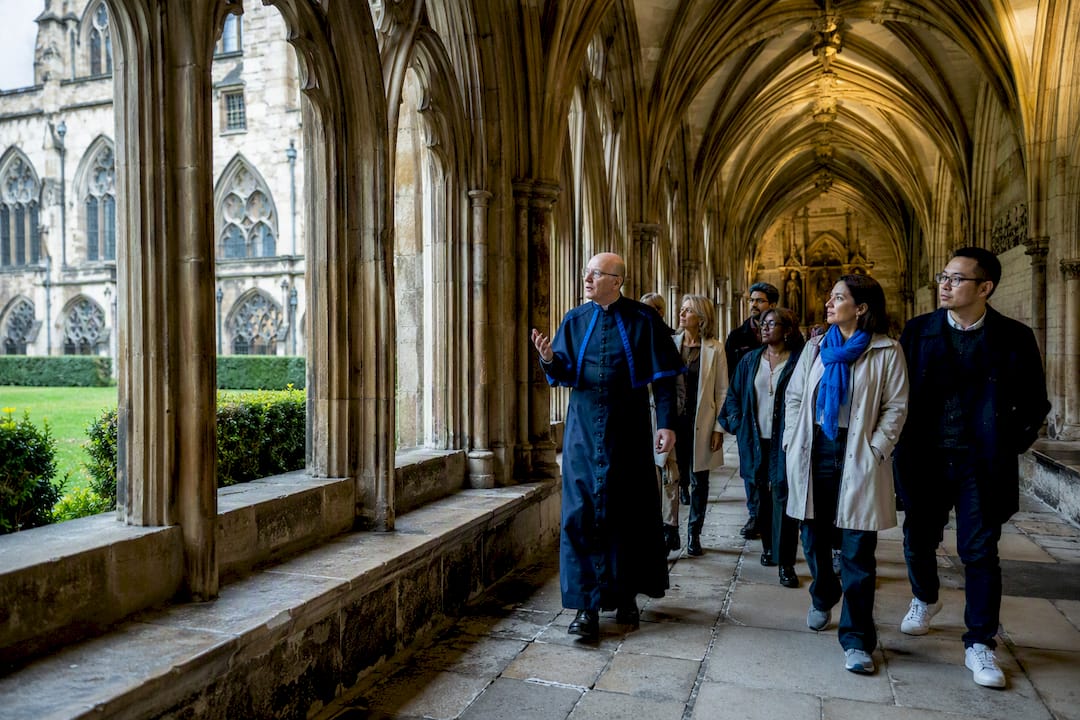
For most first-time visitors, the best experience comes from pairing the included multimedia guide with a booked verger-led tour, which adds expert commentary and access to areas the general public rarely sees. Book your slot and check the day’s opening times on the official site before you travel, since services can close sections without notice.
TL;DR:
- Verger-led tours are limited and must be booked in advance, especially during peak seasons, to guarantee access to restricted areas.
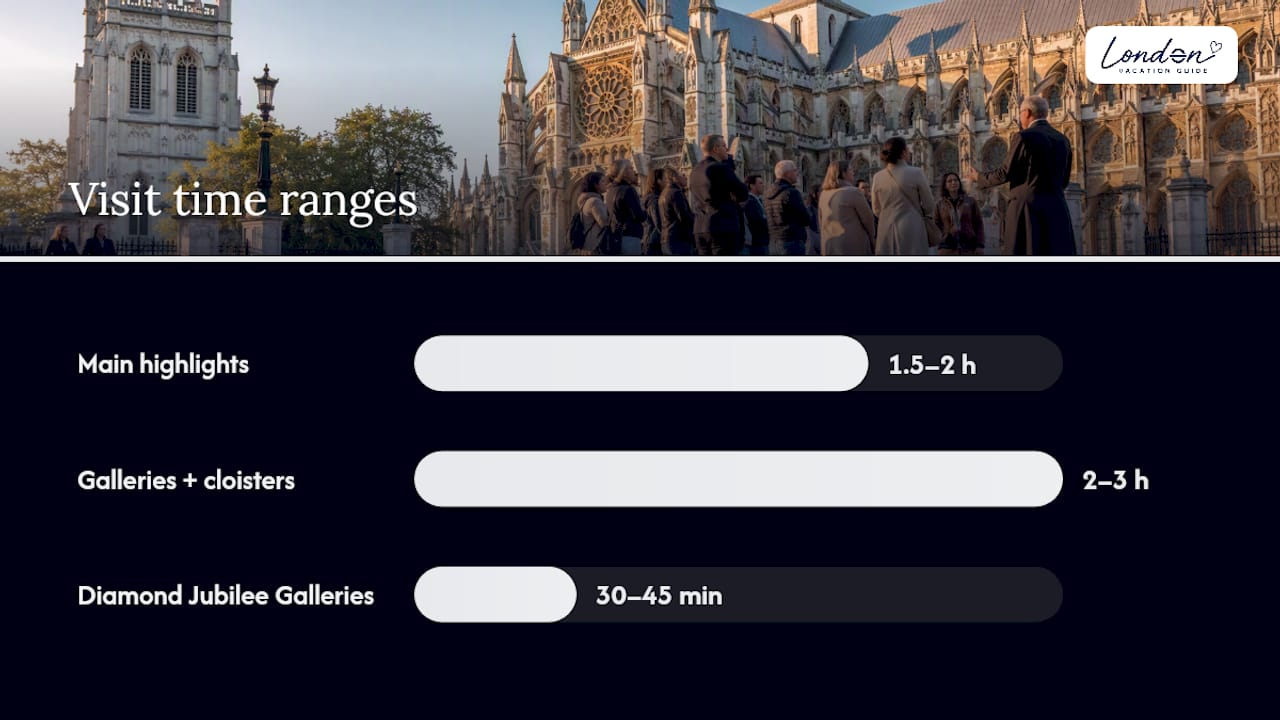
- Most visitors spend between 1.5 and 2 hours exploring the main highlights, with additional time needed for the Queen’s Diamond Jubilee Galleries and cloisters.
- Entry is single-use only, with no cloakroom or luggage storage inside, so plan your day accordingly and avoid bringing large bags or suitcases.
- The Abbey’s hours vary due to events and services, requiring visitors to check the official site on the day of their visit for potential short-notice closures.
- Attending services such as choral evensong is free, but access to certain areas differs from regular sightseeing tickets and may offer a more atmospheric experience.
Table of Contents
- Westminster Abbey guide to opening hours, tickets and how long to stay
- Verger tours, multimedia guides or a private guide: which suits you?
- What to see at Westminster Abbey: a self-guided highlights route
- Best time to visit Westminster Abbey and accessibility tips
- Where to stay and how to get to Westminster Abbey
- Etiquette and behaviour: what visitors should know before entering
- Security procedures and what you cannot bring inside
- Special events, services and how visitors can take part
- Nearby attractions worth combining with your Abbey visit
- A local’s view on getting the most from your visit
- Plan the rest of your London trip around the Abbey
- Sources
- FAQ
Westminster Abbey guide to opening hours, tickets and how long to stay
Westminster Abbey runs a working church calendar, not a museum one, so its hours shift more than most attractions in the capital. The Abbey is generally open Monday to Friday from 9:30am to 3:30pm and on Saturdays from 9:30am to 3pm, with Sundays reserved entirely for worship and closed to sightseers. That schedule can move again at short notice for memorial services, state occasions, or rehearsals, so checking the official page on the morning of your visit is worth the two minutes it takes.
Admission works on a single-entry basis. Once you leave, you cannot re-enter on the same ticket, and there is no cloakroom or bag storage inside, so plan your day around that before you arrive with shopping or luggage.
Admission options vary and may include standard, concession, family, and special pricing during certain times or events.
Pro Tip: If you’re visiting London for more than a few days, consider options that allow flexible return visits, which may offer value when planning multiple stops.
Most visitors need between 1.5 and 2 hours to see the main highlights, rising to 2 to 3 hours if you add the Queen’s Diamond Jubilee Galleries and a proper walk through the cloisters. Build the extra time in rather than rushing it. The galleries alone hold enough detail to occupy 30 to 45 minutes.
Verger tours, multimedia guides or a private guide: which suits you?
Three ways to see Westminster Abbey exist side by side, and each suits a different kind of visitor.
- The multimedia guide comes free with your ticket. You can hire an Abbey device at the entrance or download a shortened version to your phone, and it lets you move at your own pace, skip sections that don’t interest you, and linger where you want. Bring your own headphones if you’re using a personal device. It’s the right pick if you’re travelling with restless children, have limited time, or simply prefer wandering without a group.
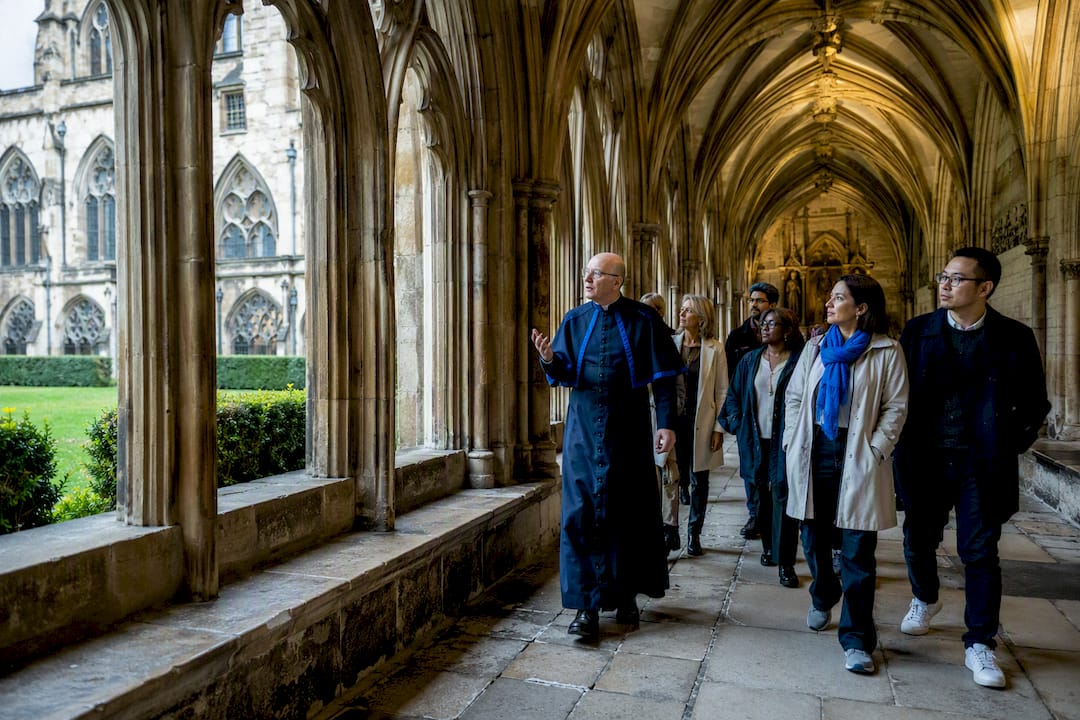
- Verger-led tours run for about 90 minutes and include areas the general visitor cannot always enter, such as the Shrine of St Edward and closer access to royal tombs. Vergers know the building’s daily rhythms and its history in a way no app can replicate, and small group sizes mean you can actually ask questions rather than straining to hear a script. Groups are capped, commonly up to about 20 people, and they can sell out early in the day.
- Blue Badge and private guides are permitted for certain group bookings arranged in advance. They cost more, but for a family marking a special occasion, or a small group wanting tailored commentary on, say, Tudor history or Victorian poets, the extra spend buys genuine flexibility that a fixed-route tour can’t offer.
Pro Tip: If a verger tour matters to you, don’t gamble on turning up and hoping. Slots are capped and go quickly on busy mornings, so book ahead or arrive right at opening to secure a place.
Booking in advance suits anyone visiting in peak season (April to September, and the week around Christmas). If you’re travelling midweek in quieter months, arriving early and deciding on the day carries less risk, though you’re still not guaranteed a verger slot without checking availability first.
What to see at Westminster Abbey: a self-guided highlights route
The Abbey publishes an official highlights trail with numbered stops that give independent visitors a sensible route without doubling back through crowded aisles. This is the order that works best on foot.
- Great West Door to the Nave (5 to 10 minutes): Pause just inside. The soaring Gothic ceiling sets the scale of everything that follows, and it’s the best spot for a first, unobstructed photo before the crowds thicken.
- Coronation Chair and Cosmati pavement (10 to 15 minutes): Look down before you look up here. The 13th-century Cosmati pavement’s inlaid stone geometry is easy to walk straight over if you’re not paying attention.
- Poets’ Corner (15 to 20 minutes): Memorials to Chaucer, Dickens, and Hardy cluster in the South Transept. Take your time reading the smaller, less famous plaques tucked at floor level.
- Lady Chapel (15 minutes): The fan vaulting above Henry VII’s Chapel is arguably the single finest ceiling in the building. Stand centrally and look straight up.
- Queen’s Diamond Jubilee Galleries (30 to 45 minutes): Reached via a narrow spiral staircase, these galleries hold treasures rarely displayed elsewhere, including the Hockney window visible from inside.
- Cloisters (10 to 15 minutes): A quieter, calmer close to the visit, and usually the best place to sit for a moment before heading back out.
If you have questions along the way, look for the Abbey Marshal or an Abbey Guide stationed near the crossing and at the entrance to the galleries. They’re there specifically to help, and asking one directly is often faster than searching the multimedia guide’s menus.
Best time to visit Westminster Abbey and accessibility tips
Weekday mornings, especially Tuesday to Thursday, are consistently the calmest slot to visit. Arriving shortly after 9:30am typically offers the quietest experience, while midday services can restrict access to certain chapels for a stretch. Weekends and school holidays bring the heaviest footfall, particularly from late morning into early afternoon, so if your dates are fixed around a weekend, book the earliest slot you can get.
Light changes the building through the day, and it’s worth timing a pause around it. The Abbey’s Head of Conservation has suggested watching how shifting natural light reveals detail in the stone vaulting that’s easy to miss in flat overhead lighting. Late morning sun through the Lady Chapel windows is a good moment to stand still for a few minutes.
Accessibility support is genuinely solid. The Abbey offers borrowed wheelchairs subject to availability, a hearing loop system, and BSL or audio-described material, and disabled visitors plus one essential companion are admitted free. AccessAble’s independent summary is worth a look before you travel if step-free routes matter to your visit.
- Large bags and luggage aren’t permitted inside, and there’s no cloakroom
- Outside food and drink is restricted, though sealed water and medical items are allowed
- Wheelchair loan and hearing loops are available on request at the entrance
Where to stay and how to get to Westminster Abbey
Westminster and St James’s Park are the two nearest Tube stations, both a short walk from the Great West Door. From Westminster, you’re minutes from the Houses of Parliament and Big Ben; from St James’s Park, it’s a pleasant stroll through the park itself if the weather cooperates.
For where to base yourself, three areas stand out. Westminster puts you within walking distance of everything covered in this guide, ideal if early starts matter to you. Victoria offers stronger transport links and typically better value hotel rates, a sensible trade-off if you’re covering multiple parts of London. Covent Garden suits visitors who want lively evening options after a day of sightseeing, with theatres and restaurants a short bus or Tube ride from the Abbey.
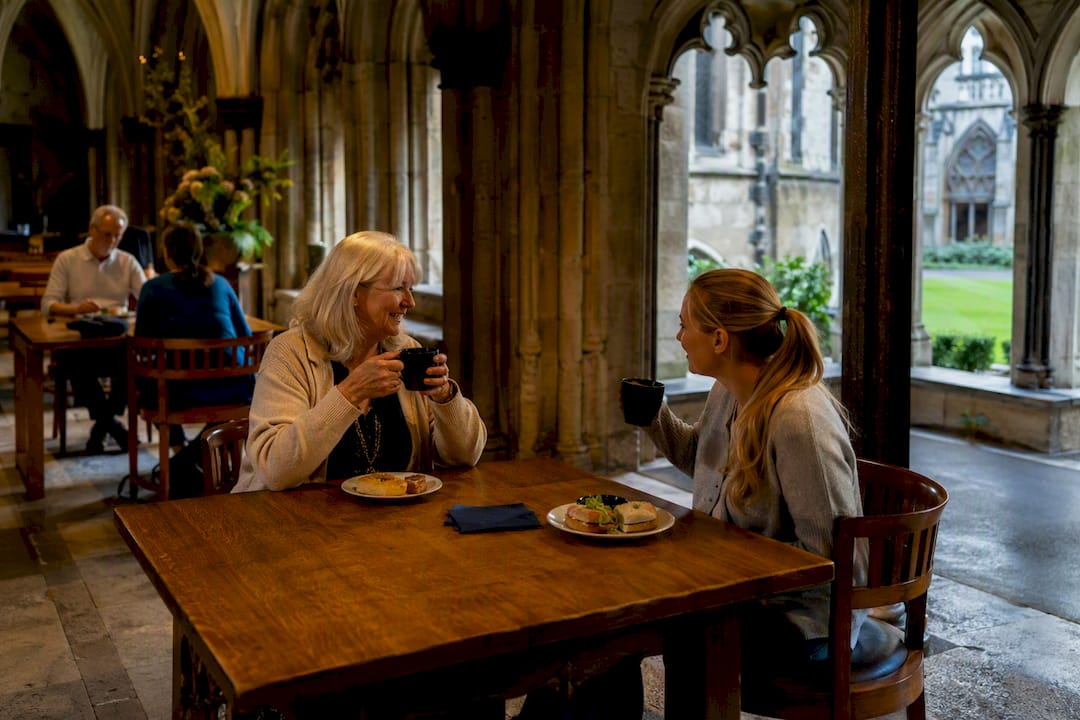
For a coffee or light lunch afterwards, the on-site Cellarium Café in the East Cloister serves during regular visitor hours and is a genuinely nice spot to sit with the building still around you. For something further afield, the streets around Westminster hold a good spread of casual lunch options within a five-minute walk.
Etiquette and behaviour: what visitors should know before entering
Westminster Abbey is a working church and an active place of worship, not just a historic monument, and its rules reflect that. Silence isn’t strictly enforced everywhere, but a respectful, low volume is expected throughout, particularly near the shrine and tomb areas.
Photography is generally not permitted inside the main body of the church, a rule staff enforce fairly consistently, so leave the camera in your bag once you’re through the door. Hats should come off for men as a mark of respect, and modest dress is appropriate, though there’s no formal enforced dress code beyond common sense. Avoid vest tops, beachwear, or anything overtly casual if you can.
During services, visitors are asked to either join respectfully or wait until the area reopens. Vergers and stewards will guide you if you’ve wandered somewhere restricted at that moment, and it’s worth following their instructions promptly rather than lingering to finish a look at a tomb. Eating and drinking inside is not permitted anywhere in the building, and mobile phones should be silenced. None of this is unusual for a major cathedral or abbey, but visitors arriving expecting a purely tourist attraction sometimes forget they’re standing in an active religious site with over a thousand years of continuous worship behind it.
Security procedures and what you cannot bring inside
Security screening at Westminster Abbey resembles what you’d expect at a major public building: bag checks and a walk-through or handheld scanner at the entrance queue. Arrive a few minutes earlier than your ticket time to allow for this, particularly during peak season when queues build quickly outside the West Front.
Large bags, suitcases, and anything that won’t fit under a seat on public transport should be left at your accommodation, since there is no cloakroom or luggage storage on site. Sharp items, and anything that would be restricted on a flight, are prohibited. Outside food and drink isn’t permitted inside, with the practical exception of sealed water bottles and items needed for medical reasons, such as diabetic supplies.
Tripods, selfie sticks, and drones are not allowed, and as noted in the etiquette section, general photography inside the church itself is restricted regardless of equipment. Staff at the entrance will ask you to store away anything that doesn’t clear these rules before you’re allowed through, so packing light for this particular stop saves you a delay at the door.
Special events, services and how visitors can take part
Westminster Abbey holds daily services that visitors are welcome to attend, and choral evensong is one of the more memorable ways to experience the building beyond a standard daytime visit. Attending a service is free and doesn’t require the day ticket that sightseeing visits do, though the areas open to you during a service differ from a full tourist visit.
Throughout the year, the Abbey also hosts special commemorative services, state occasions, and seasonal events, from Remembrance-tide observances to Easter and Christmas services that draw larger congregations than usual. These are announced on the Abbey’s own calendar, and they’re often the reason a scheduled closure appears with little warning on the visitor pages, so cross-check dates if your trip falls near a major date on the church calendar.
Some visitors specifically plan around choral evensong, held on most weekdays and Sundays, as a quieter, more atmospheric way to experience the building’s acoustics and setting without the daytime tourist flow. If music and atmosphere matter more to you than ticking off every chapel on the highlights trail, this is worth building into your itinerary as an alternative to, or in addition to, a daytime ticket.
Nearby attractions worth combining with your Abbey visit
Westminster Abbey sits in one of the most concentrated stretches of historic London, and it would be a waste to treat it as an isolated stop. The Houses of Parliament and the Elizabeth Tower, home to Big Ben, are directly across the road, and the changing of the guard at nearby Buckingham Palace is a fifteen-minute walk if timed right.
St Margaret’s Church, standing quietly beside the Abbey itself, is often overlooked entirely, yet it holds its own historic parish records and a far calmer atmosphere for anyone who wants a moment of quiet after the crowds inside the main Abbey. The Churchill War Rooms, a short walk north, offer a completely different but equally compelling stretch of history if you have the afternoon free.
For a broader sense of how the Abbey fits into Westminster’s story, London Vacation Guide’s piece on why Westminster is London’s historic heart is a useful companion read, and visitors extending their stay might also look at day trips from London for what’s realistically reachable beyond the city itself.
A local’s view on getting the most from your visit
Arrive right at 9:30am, and the Abbey feels almost like a private building for the first half hour. Choose the verger tour if you can get a slot; the multimedia guide is the better fallback for flexible pacing, not a lesser option. If architecture is your interest, don’t rush the Lady Chapel. If you’re drawn to literary history, Poets’ Corner rewards slow reading over quick photos. Either way, the cloisters are where the visit settles, and a half-day built around the Abbey, Parliament Square, and a slow lunch nearby is plenty.
— Matt
Plan the rest of your London trip around the Abbey
Westminster Abbey is one stop in a much bigger day, and getting the surrounding logistics right matters just as much as booking the right tour inside. London Vacation Guide isn’t a ticket vendor. Instead, it’s the planning layer that fills in everything the Abbey’s own site doesn’t cover: where to eat nearby, how to sequence your day across Westminster without wasted walking, and which neighbourhood suits your onward plans best.
If this is your first trip to the city, the essential guide for first-time visitors is the natural next stop, built to help you sequence Westminster Abbey alongside Parliament, the Palace, and everything else competing for your time. Read it before you finalise your itinerary, and you’ll avoid the common mistake of underestimating how long this part of London actually takes.
Sources
Confirm opening times and closures on the Abbey’s plan your visit page, review the highlights trail PDF, and check accessibility details or the Abbey’s UNESCO listing for background on its heritage status.
FAQ
Is a guided tour of Westminster Abbey worth it?
Yes, particularly the verger-led tour: it runs about 90 minutes and includes access to areas such as the Shrine of St Edward that general visitors cannot always reach, with commentary you won’t get from the multimedia guide alone.
Can I walk into Westminster Abbey for free?
No, sightseeing entry requires a paid ticket, though attending a daily service, including choral evensong, is free and open to the public.
What are the best guided tours of Westminster Abbey?
The official verger-led tour is the strongest option for depth and access, while a booked Blue Badge or private guide suits groups wanting tailored commentary on a specific era or theme.
What are the best things to see at Westminster Abbey?
The Coronation Chair and Cosmati pavement, Poets’ Corner, the Lady Chapel’s fan vaulting, and the Queen’s Diamond Jubilee Galleries are the standout stops on the official highlights trail.