The London-versus-Paris debate is one of those arguments that surfaces at dinner parties and in travel forums and never quite gets resolved because everyone involved has a stake in the outcome. Parisians find it faintly insulting. Londoners find it useful ammunition. Everyone else just wants to know which city to book.
Here is an honest attempt. Not partisan, not diplomatic. Just a straightforward look at what each city actually does better — because both do some things better, and pretending otherwise helps nobody plan a trip.
Food: Paris Wins, But London Has Caught Up Fast
Let's give Paris its due. The bistro culture is real and it's excellent. A well-executed steak frites with a carafe of house red in a neighbourhood brasserie, eaten at a pavement table at 8pm on a Tuesday, remains one of the genuinely pleasurable things a city can offer. The pastry infrastructure alone — croissants, tarte tatin, galette des rois — is something London has no equivalent for.
But London's food landscape in 2026 is substantially different from the one that earned it a poor reputation in the 1980s. The restaurant diversity is the point: London has the best Japanese food outside Japan, Vietnamese cooking that competes with anything in Paris's 13th arrondissement, West African food in Brixton, Palestinian food in Shoreditch, Sichuan in Soho, Trinidadian roti in Notting Hill. Paris goes deep in one tradition. London goes wide across dozens.
For a first visit, Paris probably offers a more coherent food experience. For a fifth visit, or for anyone seriously interested in how global migration has shaped a city's eating habits, London's range is unmatched in Europe.
Museums and Culture: London, Decisively
This one isn't close. London's free museum policy is genuinely unusual, and it changes the experience of the city in ways that aren't immediately obvious until you compare it to Paris.
The Louvre costs €22. The Musée d'Orsay costs €16. The Pompidou costs €15. Entry to the Palace of Versailles runs to €21 plus travel costs. A family of four visiting four Paris museums will spend around £250 on admission before they've bought lunch.
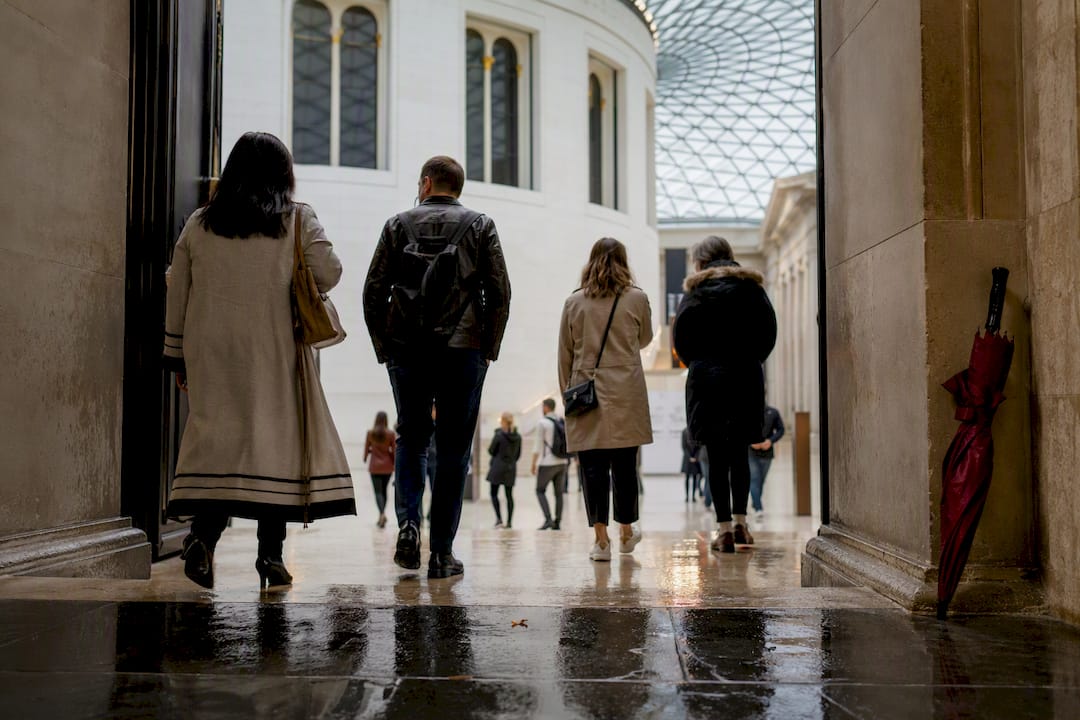
In London: the British Museum, Natural History Museum, V&A, Science Museum, National Gallery, Tate Modern, National Portrait Gallery, Tate Britain — all free. Every day. No booking required for the permanent collections.
This isn't just a budget point. It's a philosophical difference about who culture belongs to. London's answer has been more democratic since 2001, and the practical effect is that a visitor can spend three days in world-class museums without a single financial decision about whether it's worth the money.
Neighbourhoods: Different Energies, Both Brilliant
London wins on variety. The city's 33 boroughs each have a distinct character — Shoreditch and its creative industries, Notting Hill's pastel-fronted townhouses, Camden's counterculture permanence, the South Bank's concentrated arts and culture. Moving between them reveals different cities, different demographics, different architectures.
Paris wins on visual coherence. The Haussmann boulevards, the zinc rooftops, the consistent cream stone, the way the city looks like Paris from almost every vantage point — there's an aesthetic unity that London, which grew rather than being planned, simply doesn't have. If you're visiting for the photography or the sense of inhabiting a coherent urban vision, Paris delivers something London can't.
Preference here depends entirely on what you're looking for. First-time European visitors often find Paris's visual clarity immediately satisfying. Repeat visitors tend to find London's variety more interesting over time.
Cost: Both Are Expensive, But in Different Ways
Neither city is cheap. But the specific things that cost money differ in ways worth knowing.
Paris: museums cost more, but mid-range restaurant meals are often cheaper than equivalent London options. Hotels in outer arrondissements can be substantially better value than Zone 1 London accommodation. Wine in casual Parisian settings — a pichet in a neighbourhood bistro — is much cheaper than drinks in London bars.
London: public transport is more expensive than Paris once you're paying adult fares, but the Oyster card daily cap prevents runaway spending. Eating at markets and street food is London's strongest budget play — Borough Market and Maltby Street offer genuinely excellent food at prices that outperform mid-range restaurant meals. See our guide to the best free things to do in London for the full picture.
The biggest cost difference is the museum comparison above. That alone shifts the calculation meaningfully for culture-focused visitors.
Nightlife: London, But It's Complicated
London's nightlife ecosystem is more diverse, more international, and more open than Paris's. The underground club scene — historically anchored in the East London venues — runs later, goes harder, and spans more musical genres. Paris closes earlier than first-time visitors usually expect; many clubs don't open until 1am but the city's social energy in casual late-night settings is limited outside specific neighbourhoods.
That said: London has lost a significant number of venues since 2019, and the East London club circuit that defined British nightlife for a generation has contracted. What remains is still excellent. The café culture for daytime socialising is Paris's counterpoint — sitting at a pavement table for three hours with a single coffee is socially acceptable in a way that London pub culture approximates but doesn't quite match.
The Honest Verdict
Neither city wins overall. The question is which one is right for your trip.
Choose London if: This is your first European city, or you want maximum value from culture (free museums carry real weight), or you're interested in food diversity rather than food tradition, or you want a city that's genuinely walkable and easy to navigate in English.
Choose Paris if: You've done London and want a different experience, or visual beauty and architectural coherence matter more than cultural variety, or bistro food and wine culture is specifically what you're after, or you want the sense of inhabiting a city that looks as designed as Paris does.
Most people who visit both end up with strong opinions about which they prefer, and those opinions vary enough that the debate persists. The honest answer is that they're both among the best cities in Europe, they do different things well, and if you can manage both on the same trip — even a day in Paris from London on the Eurostar takes about two hours each way — the comparison becomes much easier to make for yourself.
For more on what to do while you're here, start with our London museums guide or browse the South Bank for an afternoon that costs nothing and covers most of the argument in favour of this city.