Fitzrovia sits between Oxford Street to the north, Regent Street to the west, Tottenham Court Road to the east, and Oxford Street to the south - which makes it one of the most central neighbourhoods in London that most visitors never find. It is named after the Fitzroy Tavern on Charlotte Street, where the painters and writers of the 1930s and 1940s drank. Dylan Thomas, George Orwell, Augustus John, and Nina Hamnett were regulars. The bohemian reputation was earned honestly.
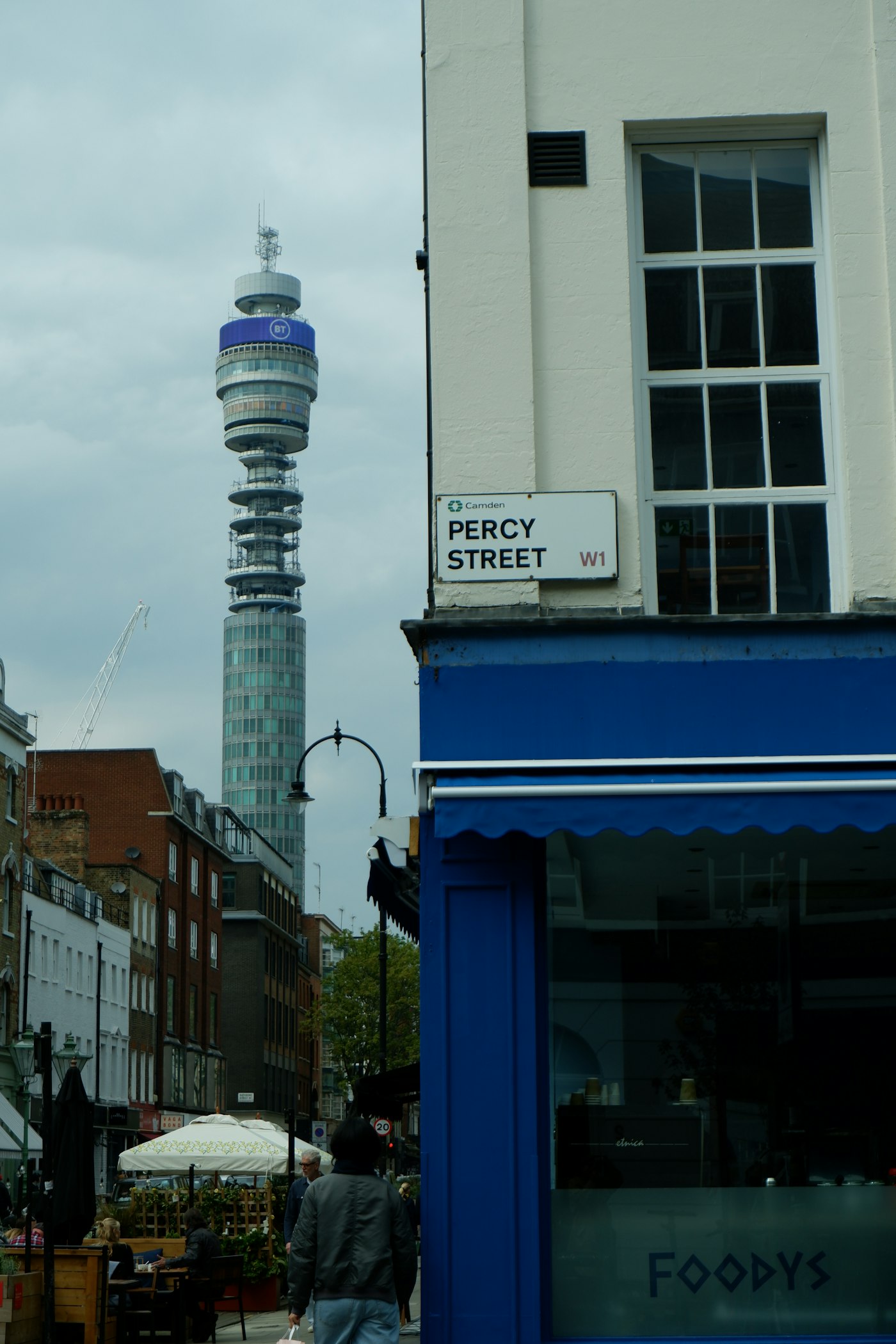
Today the neighbourhood's main thoroughfare is Charlotte Street, which runs north from Oxford Street through the middle of Fitzrovia. The street has one of the best concentrations of independent restaurants in London - Spanish, Greek, Japanese, Scandinavian - without the tourist traffic that inflates prices in Soho and Covent Garden. The Fitzroy Tavern still stands. So does the BT Tower, its rotating restaurant long closed but the building itself a Grade I listed 1960s landmark that orients you when you're lost anywhere in the area.
The neighbourhood also contains Fitzroy Square - a Georgian square designed by Robert Adam, where Virginia Woolf lived and where George Bernard Shaw once had his rooms. One of the most beautiful squares in London, and one of the least visited.
Our Picks in Fitzrovia
Curated by our editorial team. Not paid. Not sponsored. Just places we think are worth your time.
A northward run from the Goodge Street Tube through the heart of Fitzrovia. Restaurant-lined from end to end: Roka for Japanese robata, Dabbous for technical contemporary cooking, Honey & Co for Middle Eastern sharing plates. The street does not have the queue culture of Soho because it does not have Soho's reputation - which is exactly why the quality-to-crowd ratio is so good.
💡 The restaurants on and immediately off Charlotte Street (including Percy Street and Goodge Street) are significantly less busy on a Tuesday or Wednesday than Thursday through Saturday. Same quality, half the competition for tables.
Robert Adam's 1794 square, Grade I listed in its entirety. Virginia Woolf lived at number 29. George Bernard Shaw at number 29 before her (the house is now blue-plaqued for both). The garden in the centre is private but the exterior circuit of the terrace, in Portland stone, is one of the finest Georgian streetscapes in London.
💡 The surrounding streets - Fitzroy Street, Warren Street - are quieter and more residential than the Charlotte Street strip. An afternoon walk of the entire neighbourhood takes 30-40 minutes and can be done entirely without a map.
The pub that gave the neighbourhood its name. A 1897 building on Charlotte Street that was the epicentre of London's Bohemian scene in the 1930s and 1940s. The Writers and Artists Bar in the basement still has a collection of newspaper cuttings, photographs, and signatures from the regulars of that era.
💡 The selection of London ales on tap changes seasonally and the bar staff are genuinely knowledgeable. A proper pub in a neighbourhood of proper pubs.
The 177-metre telecommunications tower on Howland Street has been a London landmark since 1965 and is Grade I listed for its significance to the history of modernist British architecture. The rotating restaurant at the top closed in 1980 and has never reopened; the tower itself is not publicly accessible but is an essential navigational landmark.
💡 The BT Tower is the best visual landmark for orienting yourself in the area. From most of Fitzrovia, it is clearly visible overhead. If you can see it, you are in Fitzrovia.
On Warren Street - a tiny Middle Eastern restaurant run by Israeli chefs Sarit Packer and Itamar Srulovich. The food is personal, seasonal, and has a warmth that larger restaurants struggle to manufacture. The Friday night set menu is one of the best-value dinners in London.
💡 Book well ahead for weekends. The lunch crowd is lighter. The pita with hummus and the za'atar lamb are non-negotiable.
A small, eccentric museum spread over five floors of a Georgian townhouse on Scala Street, devoted to the history of toys from around the world - Victorian paper theatres, pre-war tin toys, shadow puppets, and Pollock's original toy theatres that give the museum its name.
💡 The museum is genuinely charming rather than just curious. The toy shop on the ground floor sells reproductions of the paper theatres at very reasonable prices.
🕵 What Locals Know
- Fitzrovia is made for walking. The neighbourhood is compact enough to cover entirely on foot in an afternoon. Start at Goodge Street station, walk north up Charlotte Street to the Fitzroy Tavern, then loop around through Fitzroy Square and back south via Warren Street. Under an hour; better than most organised tours.
- Pre-book Charlotte Street restaurants. The best places - Roka, Dabbous, Honey & Co - fill up quickly despite the lower profile compared to Soho. Weekend dinners without a reservation are genuinely difficult.
- The Wellcome Collection on Euston Road is technically just outside Fitzrovia but worth flagging: free museum on the intersection of medicine, art, and science, with consistently excellent temporary exhibitions and a permanent collection unlike anything else in London.
- Fitzrovia at lunchtime is one of London's best-kept secrets for affordable eating. The area is full of media and advertising agencies, which means dozens of lunch-focused restaurants at normal prices competing for office crowds. The same level of quality costs 30% more three streets south in Soho.
🕐 Best Time to Visit
Weekday lunchtimes for the best restaurant value. Thursday evenings for the full Charlotte Street atmosphere. Weekend afternoons for Fitzroy Square and the quieter side streets when the office buildings are empty.
🚇 Getting There
Goodge Street (Northern line) is the most central station, dropping you directly onto Goodge Street and a five-minute walk to Charlotte Street. Warren Street (Northern, Victoria lines) for the western edge. Tottenham Court Road (Central, Elizabeth, Northern lines) for the eastern edge.