London Eye explained: a must-see landmark for visitors

TL;DR:
- The London Eye is a cantilevered observation wheel, not a traditional Ferris wheel.
- It offers slow, smooth 30-minute rides with panoramic views up to 40 km.
- Visiting during less busy times and on clear days enhances the experience significantly.
Most people look at the London Eye and think they know exactly what it is: a very large Ferris wheel. That assumption undersells one of the most cleverly engineered structures in modern Britain. The London Eye is, in fact, a cantilevered observation wheel, a fundamentally different machine that changed how the world thinks about urban viewpoints. This guide covers everything you need to know before you go, from the engineering that makes it unique, to the views you can expect, the best times to visit, and why it genuinely deserves a place on your London itinerary.
Table of Contents
- What is the London Eye?
- Design, experience, and views: what makes it special
- Practical tips for your visit
- How the London Eye compares to other observation wheels
- What most travel guides miss about the London Eye
- Planning your London itinerary with the London Eye in mind
- Frequently asked questions
Key Takeaways
| Point | Details |
|---|---|
| Modern landmark | The London Eye is a unique observation wheel and a symbol of modern London. |
| Unmatched city views | From its capsules, you can spot famous landmarks up to 40 kilometres away. |
| Smooth, accessible experience | The ride is comfortable, accessible, and lasts about 30 minutes. |
| Plan smart | Booking ahead and choosing the right time maximises your experience and enjoyment. |
What is the London Eye?
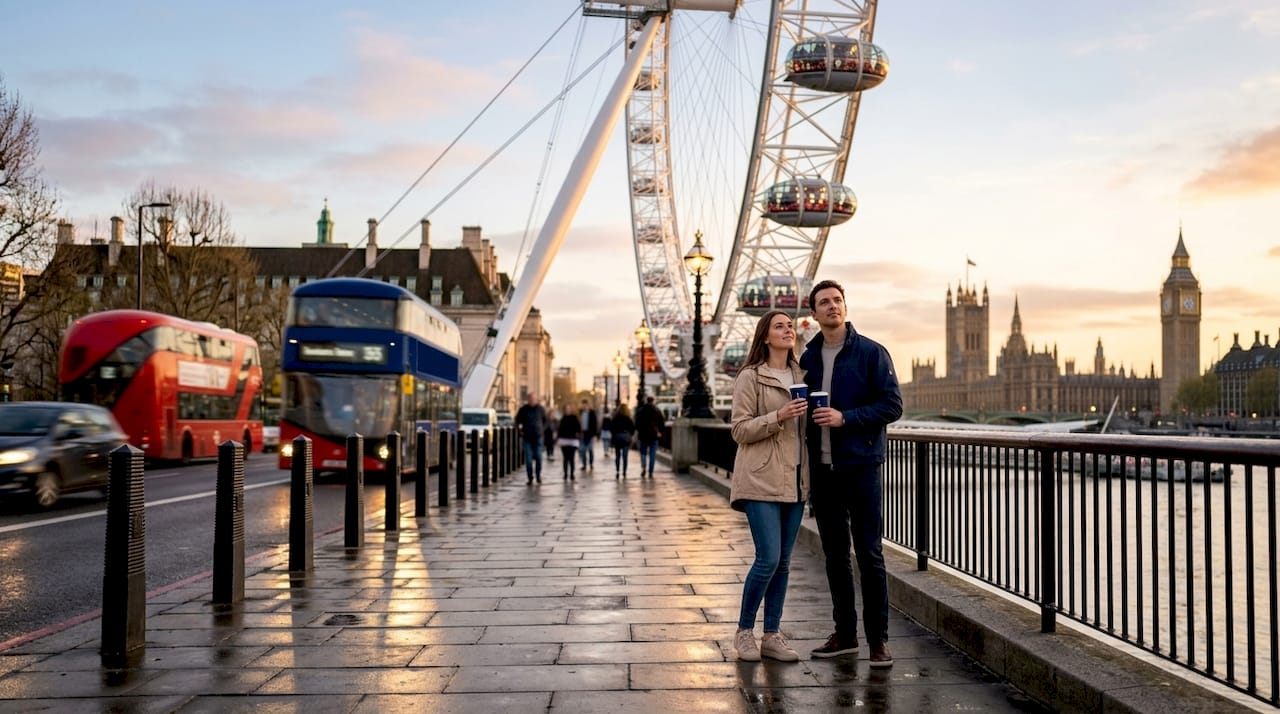
Let’s clear up the most common point of confusion first. A traditional Ferris wheel has spokes running from the rim to a central axle, much like a bicycle wheel. The London Eye works differently. It is a cantilevered structure, meaning the entire wheel extends outward from a single supporting leg on one side, rather than sitting between two upright towers. This engineering choice gave architects a cleaner sightline and a more dramatic visual profile along the South Bank.
Standing 135 metres tall with a diameter of 120 metres, the London Eye was an immediate landmark from the moment it opened on the South Bank of the River Thames in 2000. It was commissioned to mark the millennium and quickly became one of the most visited paid attractions in the United Kingdom. What began as a temporary installation designed for five years has now stood for over two decades.
Here is a quick overview of the key facts that define this structure:
| Feature | Detail |
|---|---|
| Height | 135 metres (443 ft) |
| Diameter | 120 metres (394 ft) |
| Number of capsules | 32 |
| Passengers per capsule | Up to 25 |
| Rotation speed | 0.9 km/h |
| Rotation duration | 30 minutes |
| Location | South Bank, River Thames, London |
| Ownership | Merlin Entertainments |
| Opened | March 2000 |
That rotation speed deserves a mention. At 0.9 km/h, the wheel moves slowly enough that passengers can board without the wheel stopping entirely, which dramatically improves the flow of visitors and reduces waiting time on the boarding platform. It is one of many small design decisions that make the London Eye far more operationally efficient than it might appear.
For a full overview of visiting options, ticketing, and what to expect on arrival, the London Eye attraction guide on London Vacation Guide covers everything in one place.
Design, experience, and views: what makes it special
With its unique structure and prime location along the Thames, the next thing visitors want to know is what the actual experience entails. Riding the London Eye is genuinely different from any other observation experience in London, and that difference comes down to a combination of engineering, design, and geography.
The 32 capsules are oval in shape and fully enclosed. According to Britannica, each one holds up to 25 passengers in air-conditioned comfort, and they are mounted on motorised fittings that keep them perfectly level throughout the entire rotation. You never feel the tilt of the wheel beneath you. Instead, you experience a remarkably smooth, steady ascent that feels almost cinematic. The glass walls curve around you on all sides, offering unobstructed sightlines in every direction.
The rotation takes 30 minutes from start to finish. During that time, you trace a complete circle above the Thames, rising slowly until you are at the very top and then descending gently back to the boarding level. There is no rushing, no sharp movements, and no sense of vertigo unless you are already prone to it. Many visitors describe the experience as calmer and more contemplative than they expected.
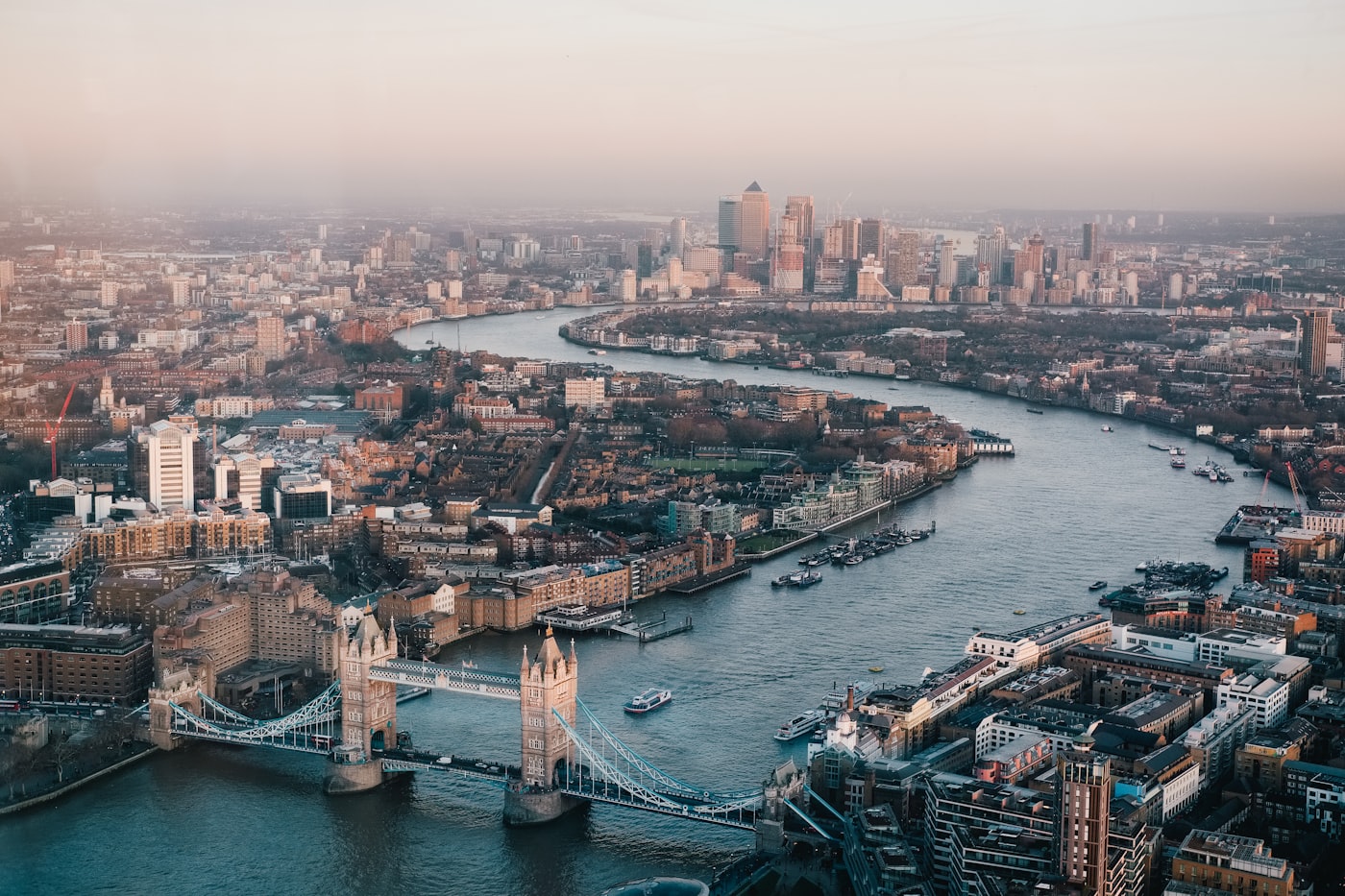
The views, on a clear day, are genuinely extraordinary. The London Eye delivers views up to 40 km in every direction, taking in Big Ben and the Houses of Parliament, St Paul’s Cathedral, the Shard, Canary Wharf, Greenwich, and on particularly clear days, Windsor Castle to the west. You get a sense of the city’s scale that no street-level viewpoint can match.
Here is how the experience breaks down as you ascend:
- 0 to 5 minutes: You board and settle. Westminster Bridge and the Thames riverbank come into immediate view.
- 5 to 12 minutes: You rise past the mid-point. The South Bank’s cultural quarter spreads below, including the Tate Modern and Shakespeare’s Globe.
- 12 to 18 minutes: You reach the upper arc. The full London skyline appears. Big Ben, the Shard, the BT Tower, and the green expanse of Hyde Park all become visible.
- 18 to 25 minutes: You reach the apex. On clear days, the horizon extends far beyond the city boundary. This is the moment most visitors photograph.
- 25 to 30 minutes: The descent brings different angles and softer light, particularly beautiful at dusk.
Pro Tip: Visit during the golden hour before sunset. The light turns warm and amber across the Thames, and the city skyline takes on a completely different character from what you see at midday. Many experienced London visitors argue this is the single best time to ride.
Comparing the London Eye to other London viewpoints helps put the experience in context:
| Viewpoint | Height | Ticket required | Indoor/outdoor | Rotation |
|---|---|---|---|---|
| London Eye | 135 m | Yes | Enclosed capsule | Yes |
| The Shard viewing gallery | 244 m | Yes | Indoor and outdoor | No |
| Sky Garden | 155 m | Free (bookable) | Indoor | No |
| One New Change rooftop | 85 m | Free | Outdoor | No |
| Greenwich Observatory | 47 m | Yes (museum) | Outdoor | No |
The London Eye sits in a middle ground: not the highest viewpoint in the city, but the only one that moves, and the only one positioned directly over the Thames with Westminster at eye level. That combination is unique. If you want to compare it to other spectacular urban vantage points, London’s best rooftop views offers a brilliant companion guide.
For those who want to extend the Thames experience beyond the capsule itself, combining your visit with a river journey enhances the whole afternoon. Thames cruises with London Eye views give you a different perspective of the wheel from the water, which is equally dramatic.
“The London Eye offers a genuinely rare thing in a city as dense and layered as London: space. Space to breathe, to look, and to take in the full sweep of one of the world’s great capitals from a single vantage point.”
Practical tips for your visit
Understanding the experience is only the start. Applying some practical knowledge ensures you make the most of your London Eye visit, from the moment you arrive to the moment you walk away.
Getting there
The London Eye is located on the South Bank, directly beside Jubilee Gardens. The closest underground station is Waterloo, on the Jubilee, Northern, and Bakerloo lines. From the station, it is a pleasant five-minute walk along the riverside. Westminster station on the Jubilee and District lines is equally convenient, with the added bonus of crossing Westminster Bridge on foot to reach the South Bank. Buses serve the area along York Road and Waterloo Road.
Booking tickets
Always book in advance. The London Eye sells tickets online, and booking ahead almost always secures a better rate than purchasing on the day at the ticket office. Walk-up prices are significantly higher, and queues at peak times can add considerable waiting time before you even board. Standard tickets, fast-track tickets, and private capsule bookings are all available depending on your budget and how much time you want to spend waiting.
Best time to visit
Here are the most useful guidelines:
- Arrive at opening time (usually 10:00 or 11:00 depending on the season). Crowds are thinnest in the first two hours, and morning light over the Thames is particularly clear.
- Visit midweek if possible. Saturday afternoons in summer are the busiest periods. Tuesday, Wednesday, and Thursday mornings are noticeably quieter.
- Choose a clear day. Weather in London shifts quickly. If you have flexibility, check the forecast and time your visit accordingly.
- Consider a night visit. The city looks entirely different after dark, with illuminated bridges, the lit-up Shard, and the glowing outline of the Houses of Parliament. Night tickets are popular, so book ahead.
- Avoid school holiday weeks unless you are visiting specifically with children. Half-term and summer holidays bring significant increases in family visitors.
- Check for special events. The South Bank hosts markets, festivals, and pop-up events throughout the year, which can either enhance your visit or increase the surrounding crowds depending on your preference.
Accessibility
The London Eye makes genuine efforts to accommodate all visitors. Capsules allow for accessible boarding as needed, and the boarding process can be adapted for wheelchair users and those with limited mobility. The surrounding area is entirely step-free from Waterloo station. If you have specific mobility requirements, contacting the attraction before you visit is worthwhile to confirm current arrangements.
Pro Tip: If you are visiting with young children, book the first slot of the morning. The shorter queues and cooler temperatures make the whole experience far more manageable, and children tend to be more excited before tiredness sets in later in the day.
What’s nearby
The South Bank is one of London’s most rewarding neighbourhoods to explore before or after your ride. The Tate Modern is a short walk along the river. The Southbank Centre hosts free exhibitions, performances, and events throughout the year. Borough Market, famous for its food stalls and artisan produce, is a fifteen-minute walk east. For restaurant recommendations around this area, where to eat near the London Eye covers the best options at various price points.
If you are visiting London for the first time and trying to fit the London Eye into a broader itinerary, the top things to do in London guide helps you prioritise and plan your days effectively.
How the London Eye compares to other observation wheels
Seeing the London Eye in a global context reveals why it continues to attract millions of visitors each year, long after newer, taller wheels have been built elsewhere.
When the London Eye opened in 2000, it was the world’s tallest Ferris wheel at 135 metres. That record held until 2006, when the Star of Nanchang in China surpassed it. Several taller wheels have since been built, including the High Roller in Las Vegas and the Ain Dubai in the United Arab Emirates. But height alone is not the point.
Observation Wheels Comparison
Height comparison — London Eye sits mid-table internationally, but is uniquely positioned over the Thames with Westminster at eye level.
Here is how the London Eye stands alongside some of its international counterparts:
| Wheel | Location | Height | Year opened | Notable feature |
|---|---|---|---|---|
| Ain Dubai | Dubai, UAE | 250 m | 2021 | World’s tallest wheel |
| High Roller | Las Vegas, USA | 167 m | 2014 | Largest in Americas |
| London Eye | London, UK | 135 m | 2000 | Cantilevered design, Thames setting |
| Melbourne Star | Melbourne, AUS | 120 m | 2013 | CBD views, air-conditioned cabins |
| Tianjin Eye | Tianjin, China | 120 m | 2009 | Built over a bridge |
What separates the London Eye from most of these alternatives is not a single statistic. It is the combination of factors: a genuinely iconic riverfront location, a wheel design that has no structural twin anywhere in the world, and a surrounding cityscape that is globally recognised and historically rich.
The view from Ain Dubai is vast but largely over desert and new urban development. The High Roller in Las Vegas is brilliant for a different kind of spectacle. The London Eye, by contrast, places you directly above one of the most historically dense stretches of urban geography on the planet. Westminster, the City of London, Southwark, Greenwich. Layer after layer of history in every direction.
The cantilevered structure also means the London Eye does not interrupt its own view. Traditional spoke-and-hub wheels have internal ironwork crossing the passenger’s sightline. In the London Eye’s capsules, the only frame around you is the clean curved glass of the capsule walls.
For a broader sense of what makes London’s sightseeing experiences stand out from cities around the world, more unique London experiences is worth exploring before you finalise your itinerary.
What most travel guides miss about the London Eye
Here is an honest perspective after years of covering London’s attractions: the London Eye is frequently dismissed in conversations between experienced travellers. The assumption is that it is a tourist trap, overpriced and overrun, designed to extract money from first-time visitors who do not know better. That view is understandable but ultimately wrong, and it costs people a genuinely worthwhile experience.
The problem is not the London Eye itself. It is how most people visit it. They show up at midday on a Saturday in July, buy a walk-up ticket, join a long queue, and ride during the brightest and least atmospheric part of the day. Under those conditions, almost any experience feels disappointing. The wheel did not fail them. The planning did.
Visit at dusk in October. Stand in a capsule as the light fades over the Thames, the city switches on its illumination, and the sky shifts from pale blue to deep indigo behind the Houses of Parliament. That is not a tourist trap. That is one of the finest urban views in Europe, available for the price of a restaurant starter.
There is also a contemplative quality to the London Eye that guides rarely mention. The slowness is the point. In a city that moves at relentless pace, thirty minutes inside a capsule high above the Thames forces you to stop. You cannot scroll your phone meaningfully. You cannot rush to the next thing. You are simply there, looking, which is rarer and more valuable than it sounds.
Visiting during less obvious seasons makes a significant difference too. A clear winter morning produces crisp, long-distance views that summer haze simply cannot match. The crowds are thinner, the sky is often a vivid blue, and the bare trees along the Embankment give the scene a spare, elegant quality. Some of the best photographs taken from the London Eye come from January and February.
The insider tips for the London Eye on our site go into further detail on timing, ticket strategies, and how to make the most of the experience regardless of when you visit. The short version: be deliberate about when you go, book ahead, and give yourself permission to simply look.
Planning your London itinerary with the London Eye in mind
Now that you understand what makes the London Eye genuinely special, the next step is putting that knowledge into your broader London plans. The attraction sits at the heart of the South Bank, one of London’s most walkable and rewarding areas, which means a single afternoon can combine the ride with world-class galleries, riverside dining, and a stroll across one of London’s most photographed bridges.
The essential London planning guide on London Vacation Guide helps first-time visitors structure their days intelligently, so you are not doubling back across the city or missing key experiences simply due to poor sequencing. For everything specific to the attraction itself, including current ticket prices, opening hours, and what to expect on the day, the complete London Eye guide is the most useful starting point. London Vacation Guide exists to take the guesswork out of planning, so you spend less time researching and more time actually enjoying the city.
Frequently asked questions
How long does a ride on the London Eye take?
A single rotation takes approximately 30 minutes at 0.9 km/h, giving passengers ample time to take in the views in every direction without feeling rushed.
Is the London Eye accessible for wheelchairs or those with limited mobility?
Yes. The capsules allow accessible boarding and the surrounding area is step-free from nearby underground stations, making it a viable option for visitors with mobility needs.
What landmarks can you see from the London Eye?
On a clear day, views extend up to 40 km, taking in landmarks including Big Ben, the Shard, St Paul’s Cathedral, and Windsor Castle to the west.
Are the London Eye capsules air-conditioned?
Yes. All 32 ovoid capsules are air-conditioned, making the experience comfortable in both summer heat and the damp chill of a British winter.
Where is the London Eye located?
The London Eye sits on the South Bank of the Thames in central London, a short walk from Waterloo and Westminster underground stations.
Recommended
- London Eye - Attractions in South Bank | London Vacation Guide
- London for First-Time Visitors: The Essential Guide | London Vacation Guide
- Best Rooftop Bars in London: Sky-High Views Worth the Trip - The London Journal | London Vacation Guide
- Best Free Things to Do in London (2025 Guide) - The London Journal | London Vacation Guide