What is Notting Hill? London’s most layered neighbourhood
Few places in London carry as much weight as Notting Hill. Ask most visitors what is Notting Hill and they will mention either the 1999 film starring Hugh Grant, or the riot of colour and steel drums that fills the streets every August Bank Holiday. Both answers are correct, but neither comes close to the full picture. Notting Hill is one of London’s most complex neighbourhoods: a place shaped by post-war migration, racial tension, fierce community activism, and, eventually, extraordinary wealth. Understanding what lies beneath the surface makes every visit significantly richer.
Table of Contents
- Key takeaways
- Where Notting Hill actually is
- Notting Hill history: from piggeries to prime real estate
- The Notting Hill Carnival: culture, crowd, and meaning
- Notting Hill attractions beyond carnival weekend
- Planning your visit to Notting Hill
- My honest take on visiting Notting Hill today
- Plan your London visit with Londonvacationguide
- FAQ
Key takeaways
| Point | Details |
|---|---|
| Geography and access | Notting Hill sits in the Royal Borough of Kensington and Chelsea, served by three Tube stations and bordered by leafy Holland Park and the elevated Westway. |
| Deep historical roots | The area moved from rural poverty and piggeries through post-war racial violence to one of London’s most expensive postcodes in under a century. |
| Carnival significance | The Notting Hill Carnival draws up to two million visitors and generates over £100 million for London’s economy each year. |
| Beyond the obvious | Portobello Road Market, independent bookshops, galleries, and colourful mews streets reward visitors who look further than the blue door. |
| Plan around the crowds | Carnival weekend is unforgettable but demands early planning; quieter spring visits reveal an equally rewarding, more intimate neighbourhood. |
Where Notting Hill actually is
Notting Hill sits within the Royal Borough of Kensington and Chelsea, spanning roughly from Holland Park Avenue in the south to the Westway flyover in the north. It is West London in every sense: prosperous, photogenic, and surprisingly walkable once you understand its layout.
Three Underground stations give you access depending on which part of the neighbourhood you are exploring:
- Notting Hill Gate (Central, Circle, and District lines) is the main entry point and drops you at the southern end near the market’s antiques section and the famous painted houses.
- Ladbroke Grove (Hammersmith and City line) brings you into the heart of the area and closer to the carnival’s main stage routes.
- Westbourne Park (Hammersmith and City line) sits at the northern edge and is useful for reaching the food and fashion stalls further up Portobello Road.
To the east lies Bayswater and Paddington. To the south, Holland Park and Kensington offer quieter streets and well-maintained green space. To the west, Westbourne Grove stretches out towards Notting Hill’s restaurant and boutique corridor, which local residents typically regard as the neighbourhood’s social spine.
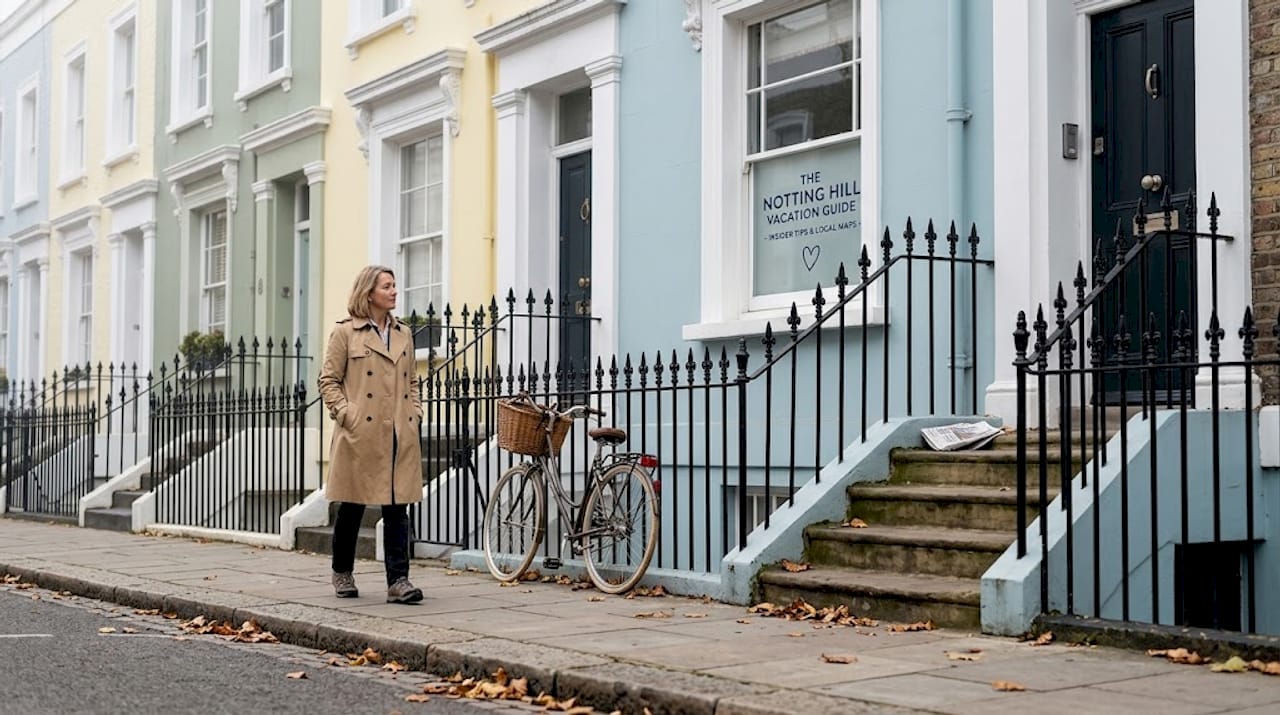
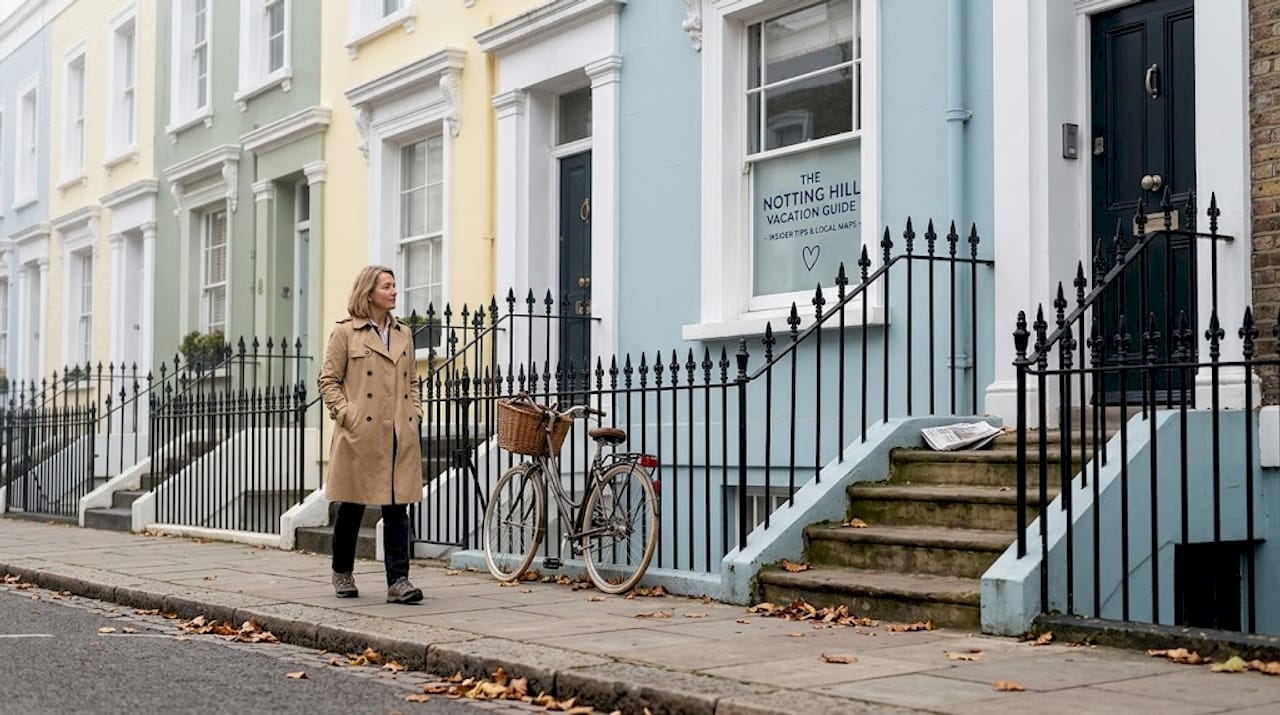
The neighbourhood’s main arteries are Portobello Road (running north to south), Ladbroke Grove (cutting north to south through the middle), and Pembridge Road, which links Notting Hill Gate station to the market. Clarendon Road, Stanley Gardens, and Elgin Crescent are the streets most photographed for their rows of pastel-painted townhouses.
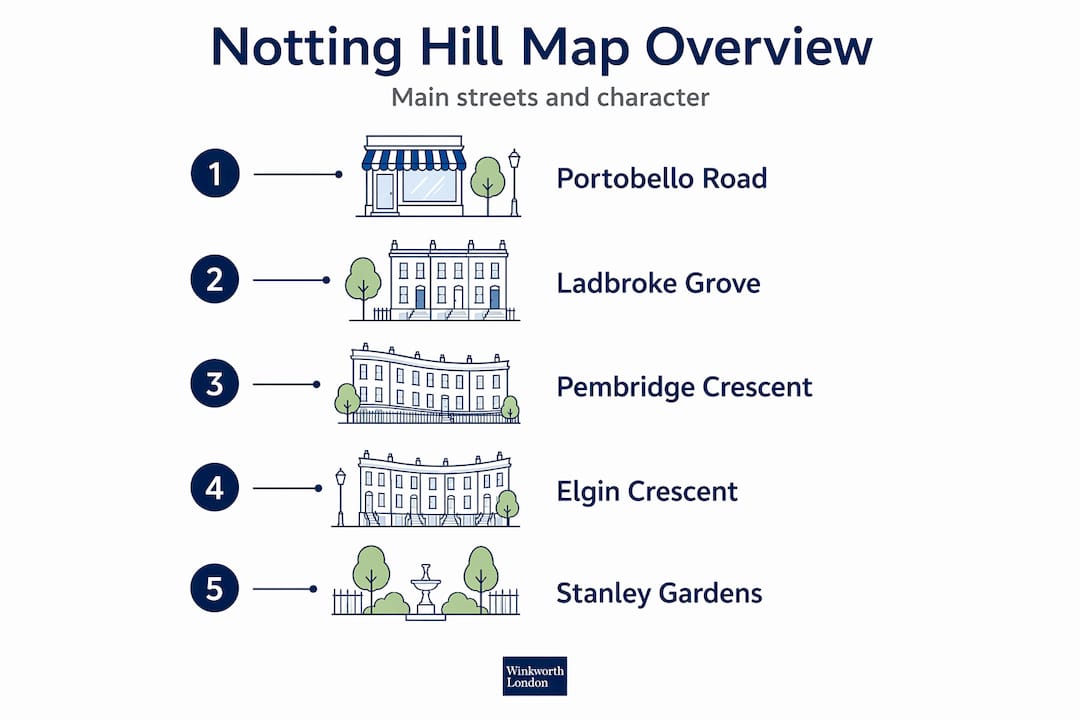
Pro Tip: If you enter from Notting Hill Gate and walk north up Portobello Road, the character of the market shifts noticeably as you go. Antiques dominate the southern end, fresh produce fills the middle, and street food and vintage fashion take over the further north you walk.
Notting Hill history: from piggeries to prime real estate
The story of Notting Hill’s development reads like a compressed version of modern British social history. In the early nineteenth century this was not a desirable address at all. The northern section of the area was known locally as the Potteries and Piggeries, a district of brick kilns and pig farms occupied by some of the poorest workers in London. The clay soil supported pottery production; the pigs fed on neighbouring slaughterhouse waste. It was one of the most deprived corners of what would become a prosperous city.
Gradual Victorian development brought Italianate stucco terraces and crescents to the southern sections, drawing wealthier residents downward from Bayswater. But the area never fully settled into respectability and declined significantly again by the mid-twentieth century. Here is how the key phases unfolded:
- Post-war migration (late 1940s to 1950s): Large numbers of Caribbean migrants, particularly from Jamaica and Trinidad, settled in Notting Hill because rents were cheap and rooms were available. The area became a significant hub of Britain’s West Indian community.
- Racial violence (1958 to 1959): Racial tensions erupted in serious violence, with white mobs attacking Caribbean homes over several nights in August and September 1958. These events marked a turning point in Britain’s post-imperial reckoning with race.
- Housing exploitation and reform: The Notting Hill Housing Trust was founded in 1963 partly in response to the predatory practices of landlords like Peter Rachman, who overcrowded slum properties and used intimidation against tenants. That founding represented genuine community-led resistance.
- Gentrification (1980s to 1990s): Property prices climbed steadily as younger professional buyers and, eventually, wealthy international buyers moved in. By the mid-1990s, Notting Hill Gate was one of London’s most fashionable postcodes.
- The film effect: The 1999 film Notting Hill cemented the area’s global image as a romantic, bookshop-filled idyll. The original blue door from the film was eventually auctioned off; the current door at 280 Westbourne Park Road is a popular photo stop, though it is a different shade from the one on screen.
Today, Notting Hill’s urban identity is increasingly described as a highly curated aesthetic experience oriented towards ultra-high-net-worth residents and visitors. That shift sits uneasily alongside the neighbourhood’s history, and the contrast is especially sharp when you consider that the Grenfell Tower fire site lies within walking distance of streets where properties sell for several million pounds.
Pro Tip: The Museum of Brands on Lancaster Road gives brilliant context on how British consumer culture changed across the twentieth century. It is small and often overlooked, but genuinely fascinating for anyone interested in social history.
The Notting Hill Carnival: culture, crowd, and meaning
The Notting Hill Carnival is not simply a party. It is an annual act of cultural reclamation with roots in both resistance and celebration. Activists Claudia Jones and Rhaune Laslett-O’Brien were central to establishing multicultural street celebrations in London inspired by Trinidad Carnival, creating a visible, joyful counter-narrative to the racist hostility Caribbean communities had faced in the 1950s.
Today, the carnival takes place across the August Bank Holiday weekend (Sunday and Monday) and draws between 1.5 and 2 million visitors, making it one of Europe’s largest open-air street festivals. The economic impact is substantial: the event generates over £100 million for London annually.
“The carnival is a declaration that Caribbean culture belongs in Britain, not as a guest but as a permanent, vibrant part of what this city is.”
Knowing what to expect makes the experience far more enjoyable:
- Sunday is traditionally Children’s Day, with floats and costume competitions. It is smaller, more family-friendly, and often a better choice for first-time carnival visitors.
- Monday is the main event. Sound systems, steel bands, and costumed masquerade troupes fill the designated route through the streets.
- Arrive early. By midday on Monday the surrounding streets become extremely dense. Getting there before 10:00am lets you find a good viewing position without fighting through the crowd.
- Avoid the pinch points around Ladbroke Grove station and the main stage area on Acklam Road if you are sensitive to large crowds.
- Stay hydrated and wear comfortable shoes. The route covers several kilometres and the combination of sun, crowds, and dancing is more demanding than it appears.
Crowd safety at carnival has been a recurrent concern, with reviews examining stewarding levels and the management of exceptionally high crowd densities. Follow official guidance from the Metropolitan Police and Transport for London in the days before you attend.
Notting Hill attractions beyond carnival weekend
The neighbourhood rewards exploration at any time of year, and some of its best experiences have nothing to do with carnival.
Portobello Road Market
Portobello Road is arguably the most famous market street in London. It runs for roughly two kilometres from Notting Hill Gate northward and transforms depending on where you are standing. The southern antiques section, closest to the Gate, operates mainly on Saturdays and draws serious collectors alongside tourists hunting for vintage silverware, prints, and ceramics. The middle section transitions into fruit, vegetables, and grocery stalls serving the local community throughout the week. Further north, past the Westway flyover, the vibe shifts entirely to street food, records, and vintage clothing.
| Section | Speciality | Best day |
|---|---|---|
| Southern (near Gate) | Antiques, silver, vintage prints | Saturday |
| Central | Fresh produce, groceries | Monday to Saturday |
| Northern (past Westway) | Street food, vintage fashion | Friday and Saturday |
For a broader picture of where to eat near the market, Londonvacationguide’s London restaurant guide covers the area in useful detail.
Iconic streets and architecture
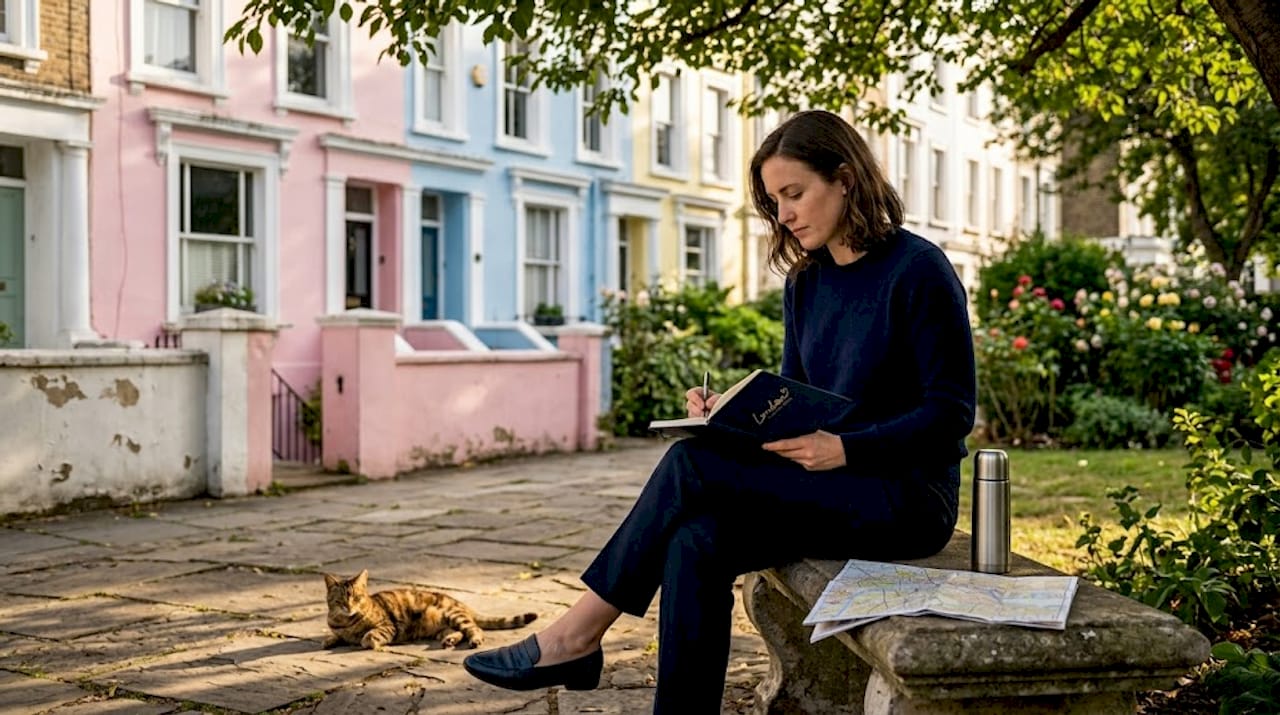
The pastel-painted houses of Pembridge Crescent, Elgin Crescent, and Stanley Gardens are genuinely worth seeing in person. The colours are brighter and more varied than photographs suggest. Many visitors spend time on Denbigh Terrace and Blenheim Crescent, where the legendary bookshop that inspired the film Notting Hill still trades under the name Books for Cooks, specialising in food writing and cookery titles.
Cultural venues
The Tabernacle on Powis Square is a Victorian Gothic church converted into an arts centre and live music venue. It hosted some of the early carnival planning meetings and remains an important community space. The Electric Cinema on Portobello Road is one of London’s oldest working cinemas, with armchair seating and a bar. Both are Notting Hill famous places that most visitors do not find unless they are looking.
Pro Tip: Blenheim Crescent also contains the Travel Bookshop, the real-life inspiration for the bookshop in the film. It has since changed hands and name, but the original shopfront is still recognisable and worth a brief stop.
For authentic dining recommendations in the area, Londonvacationguide’s local dining guide covers hidden gems across the neighbourhood.
Planning your visit to Notting Hill
Getting the most out of Notting Hill depends significantly on when and how you visit.
Best times to visit
The question of timing divides broadly into two choices. If you want the full cultural spectacle, the August Bank Holiday carnival weekend is incomparable. If you want a quieter, more personal experience of the neighbourhood, spring visits in April and May are genuinely excellent. London in spring brings mild weather, open market stalls, and streets without the summer tourist density. Saturday mornings between March and June offer the best combination of a full antiques market on Portobello Road and manageable crowd levels.
Where to stay nearby
Notting Hill itself has very limited hotel stock because the majority of the area is residential. Your best options cluster in adjacent neighbourhoods:
- Bayswater (immediately east) offers good value hotels with fast Central line connections into Notting Hill Gate. It is particularly useful for carnival weekend because you can walk to the area.
- Paddington has strong transport links and a wide range of accommodation from budget to mid-range. The Elizabeth line and the Heathrow Express also make it a convenient base for arrival and departure.
- Kensington and Chelsea to the south carries higher price points but puts you within walking distance of both Notting Hill and the museums of South Kensington.
For an alternative luxury option slightly south, the Knightsbridge neighbourhood guide provides accommodation suggestions in one of London’s most prestigious addresses.
Transport and practical tips
Getting around during a normal visit is straightforward:
- Take the Central line to Notting Hill Gate for the southern market and the famous painted houses.
- Use the Hammersmith and City line to Ladbroke Grove if you are heading to the northern market section or the Tabernacle.
- Buses 27, 28, 31, and 52 all serve Portobello Road and connect the neighbourhood to central London.
- During carnival weekend, several stations close or restrict entry. Check the Transport for London website the week before you travel.
- If you are combining Notting Hill with other West London visits, Holland Park (a five-minute walk south) and the Design Museum in Kensington make natural companions on the same day.
My honest take on visiting Notting Hill today
I have walked this neighbourhood more times than I can count, and the tension I keep returning to is this: Notting Hill is simultaneously one of London’s most important cultural sites and one of its most effectively packaged ones. The pastels are real. The history is real. But the experience most visitors have, particularly those who arrive for the market and the blue door photo, barely scratches the surface of what this place represents.
What I have found is that the people who leave genuinely moved by Notting Hill are those who read a little history before they arrive. Understanding what the 1958 race riots meant, knowing that the carnival was born out of defiance rather than decoration, changes how you hear the music and how you see the streets. The Grenfell Tower site is less than a mile from some of the most expensive real estate in Europe. That proximity is not incidental. It is the defining fact of the neighbourhood.
My advice is to use the market and the colourful streets as your entry point, then go deeper. Have a meal at one of the Caribbean restaurants on Portobello Road. Go inside the Tabernacle. Read about Claudia Jones before you attend the carnival. What you will get is not just a pleasant afternoon in West London. You will get an encounter with a neighbourhood that has been at the centre of everything complicated and vital about modern Britain.
The gentrification is real and it has changed the character of the area significantly. But the soul has not been entirely curated away. It is still there if you look for it, and finding it is what makes Notting Hill worth an entire day rather than a quick photograph.
— Matt
Plan your London visit with Londonvacationguide
Notting Hill is a brilliant starting point for understanding London, but it is one piece of a much larger picture. If you are planning your first trip or your tenth, Londonvacationguide has the practical tools to help you make the most of your time. Start with the first-time visitors guide for an expert-curated itinerary that covers London’s essential experiences beyond the well-trodden tourist trail. For deeper neighbourhood exploration, our detailed Notting Hill guide covers everything from where to stay and eat to the best times to visit specific streets. Londonvacationguide’s neighbourhood guides, restaurant listings, and insider tips are built specifically for visitors who want to go beyond the surface.
FAQ
What is Notting Hill known for?
Notting Hill is known primarily for the annual Notting Hill Carnival, the Portobello Road Market, and its rows of pastel-painted Victorian townhouses. It gained further global recognition from the 1999 film of the same name.
Where exactly is Notting Hill in London?
Notting Hill is located in the Royal Borough of Kensington and Chelsea in West London, bordered by Holland Park Avenue to the south and the Westway to the north. The nearest Tube station is Notting Hill Gate.
When is the Notting Hill Carnival?
The Notting Hill Carnival takes place annually over the August Bank Holiday weekend, spanning Sunday and Monday. It draws up to two million visitors and is one of Europe’s largest open-air street festivals.
Is Notting Hill worth visiting outside carnival weekend?
Absolutely. Saturday mornings from spring through to early autumn offer the full Portobello Road antiques market without the carnival crowds. Spring visits in April and May are particularly pleasant for walking the neighbourhood’s streets and exploring local cafés and bookshops.
What is the historical significance of Notting Hill?
Notting Hill was the site of serious racial violence in 1958 and 1959, events that shaped Britain’s approach to race relations and immigration law. The Notting Hill Carnival was founded in direct response to that hostility, making it one of the most culturally significant street events in Europe.