Why experience local markets: culture, food and community
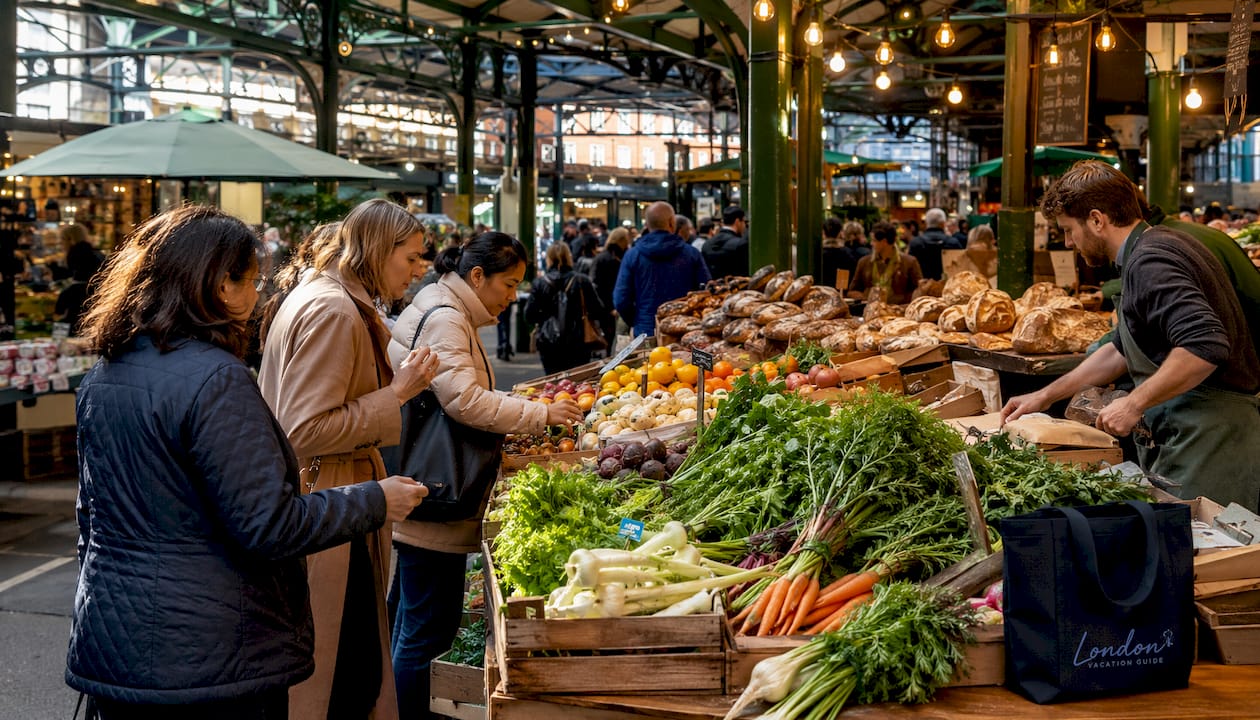
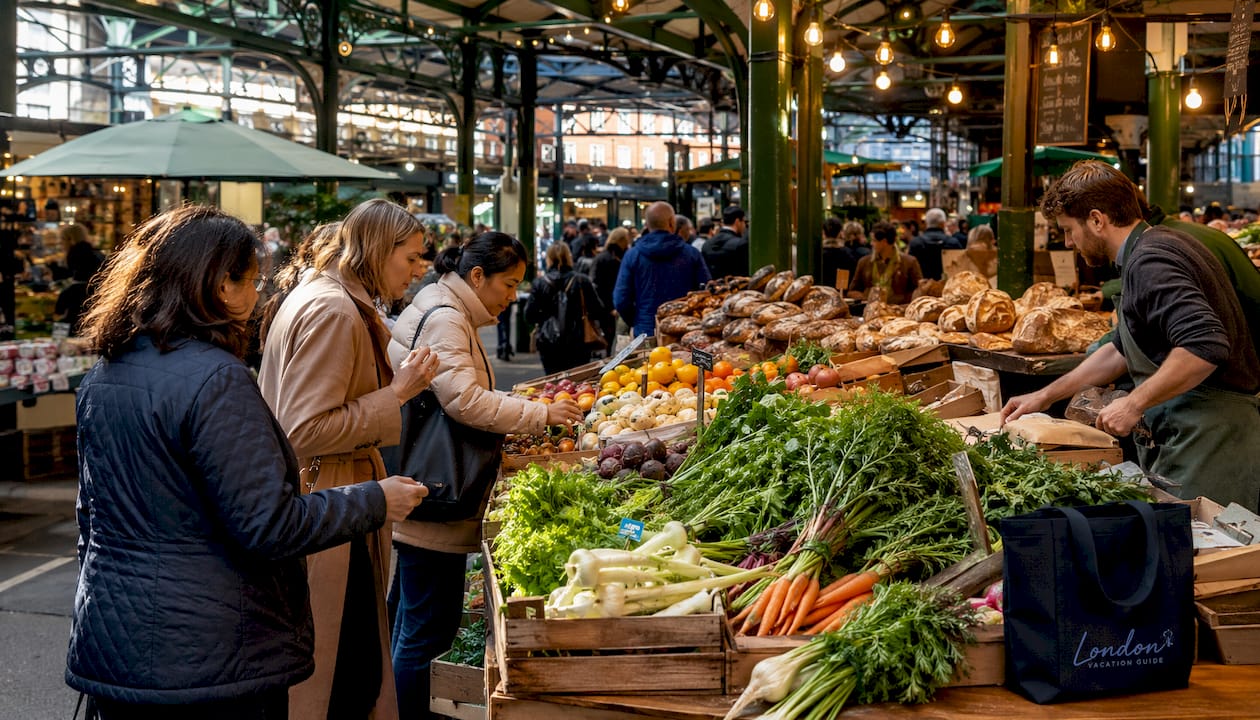
Visiting a local market is one of the most direct ways to understand how a place actually lives. You get fresher food, a shorter supply chain, money that stays in the neighbourhood, and a sensory experience no supermarket can replicate.
The short version:
- Fresher food: produce travels hours, not days, from farm to stall
- Economic impact: UK markets directly employ over 100,000 people and market days can lift town-centre footfall by around 25%
- Environmental gains: shorter supply chains mean lower food miles, less refrigeration, and far less packaging
- Cultural depth: markets are living archives of local foodways, language and seasonal habit
- Community value: they serve as civic gathering places for people across different backgrounds and incomes
Verdict: If you want one experience that combines authentic culture, practical sustainability and genuine local economy support, a market visit beats almost anything else on a London itinerary.
Table of Contents
- Why visiting local markets rewards you in ways little else does
- How markets support local economies and livelihoods
- Environmental advantages you get from shopping at local markets
- Markets as living archives: cultural, sensory and social benefits
- What types of local markets exist and what to expect at each
- How markets compare with supermarkets on the things that matter
- Practical tips for getting the most from a market visit in the UK
- How to support local markets responsibly
- What the research says about markets and local resilience
- Key takeaways
- The thing most visitors miss about London’s markets
- Plan your London market visits with London Vacation Guide
- Useful sources
- FAQ
Why visiting local markets rewards you in ways little else does
The benefits of local markets fall into five clear categories, and each one is worth understanding before you go.
Fresher, seasonal food is the most obvious draw. Produce at a farmers’ market has typically been harvested within 24 hours, compared with the days or weeks that supermarket supply chains can involve. At Borough Market in Southwark, vendors regularly name the farm and county their produce comes from. That traceability is rare in a supermarket aisle.
Economic support for traders matters too. Markets give small producers and first-time traders a low-cost route to customers, acting as business incubators for people who cannot yet afford a permanent shop. Broadway Market in Hackney, for instance, has launched several food businesses that later grew into full restaurants and delis.
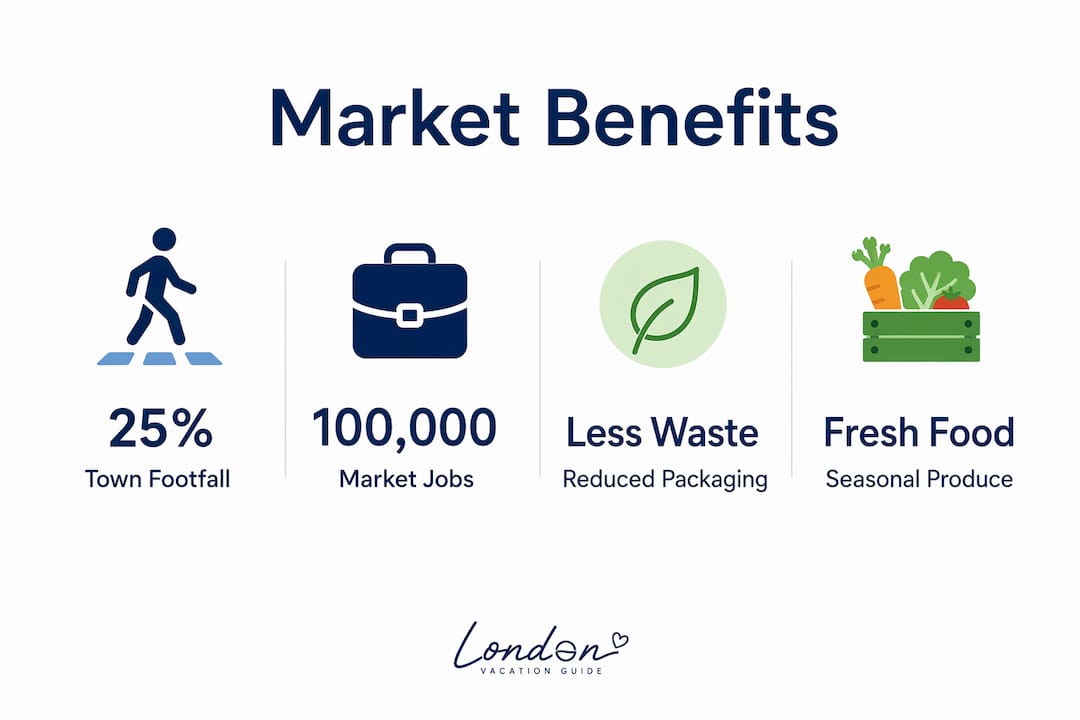
Environmental advantages come from shorter supply chains: fewer lorry miles, less cold storage, and produce sold loose rather than shrink-wrapped. Local market advocates consistently highlight smaller carbon footprint and reduced packaging as core reasons to shop locally.
Cultural and sensory experience is harder to quantify but easy to feel. The smell of fresh bread, the sound of vendors calling out prices, the sight of heritage vegetables you have never seen in a supermarket — these are things a market delivers and a retail park simply does not.
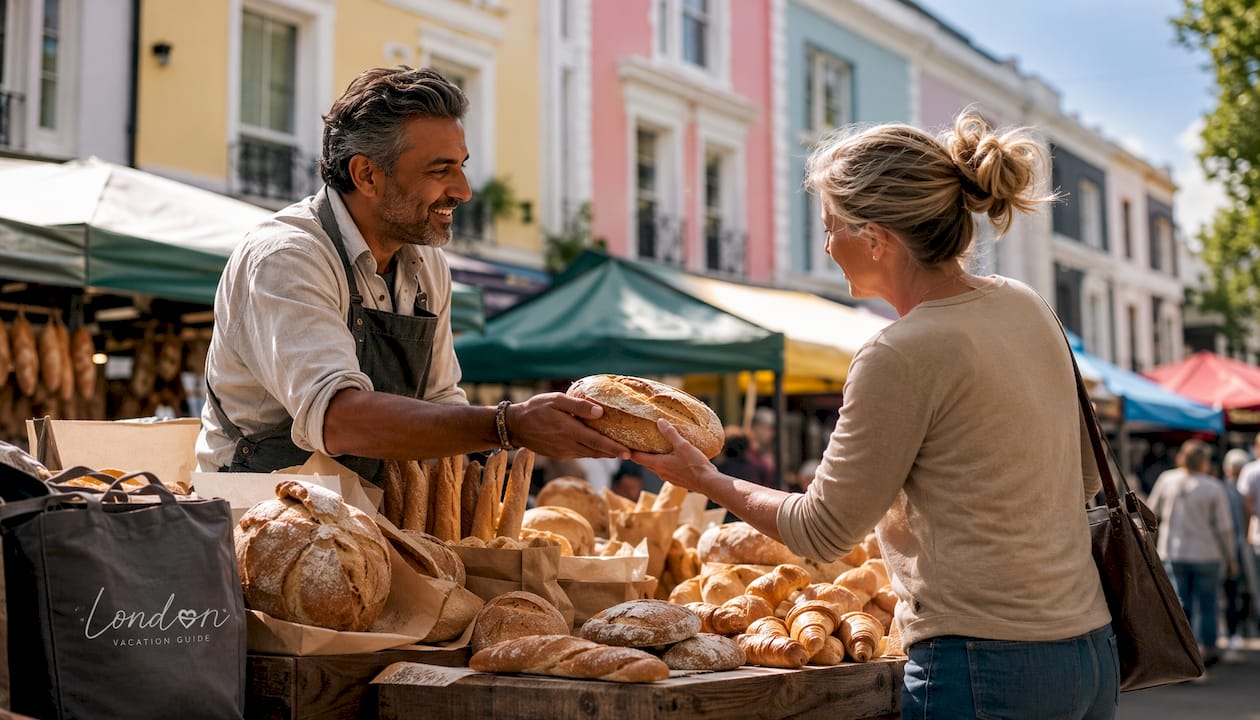
Social and community value rounds out the picture. Markets are important for social interaction, inclusion and local identity, drawing together residents who might otherwise have no shared public space. Portobello Road Market in Notting Hill is a good example: on a Saturday morning it functions as much as a neighbourhood meeting point as a retail destination.
How markets support local economies and livelihoods
The economic case for local markets is stronger than most visitors realise.
UK markets directly employ over 100,000 people, and that figure does not capture the indirect jobs created when market footfall spills into surrounding cafés, bakeries and independent shops. On market days, footfall in town centres can rise by around 25%, and between 55% and 71% of market visitors go on to spend money in nearby businesses. That multiplier effect is why local councils in cities from Cambridge to Nottingham actively invest in their market infrastructure.
Markets also lower the barrier to entry for new traders and producers:
- A permanent shop requires a lease, rates and fit-out costs running into tens of thousands of pounds
- A market pitch can cost a fraction of that, letting a new food producer test demand before committing
- Farmers markets create 13 full-time farm operator jobs per £1 million in revenue, compared with just 3 for farms that sell through conventional channels
- Producers who sell directly keep a larger share of the retail price, which means more income stays in the local area
When you buy a jar of honey or a sourdough loaf directly from the person who made it, the money does not pass through a distributor, a wholesaler and a national retailer before a fraction reaches the producer. It goes straight to them. That is the income-retention argument in its simplest form, and it is why a single regular market customer can make a meaningful difference to a small trader’s viability.
Environmental advantages you get from shopping at local markets
The environmental case for markets is real, though it comes with a caveat worth knowing.
Shorter supply chains cut food miles significantly. A vegetable grown in Kent and sold at a London farmers’ market may travel 60–80 miles. The same vegetable sourced through a national supermarket distribution network can travel several hundred miles, often via a regional depot. Less distance means less refrigerated transport and lower associated emissions. Short supply chains are recognised as a resilience factor in food systems research, helping communities adapt when longer chains are disrupted.
Packaging reduction is the other major gain. Loose produce, paper bags and reusable containers are the norm at most UK market stalls. A weekly shop at a farmers’ market can eliminate a significant amount of single-use plastic compared with the same shop done in a supermarket.
Pro Tip: Ask vendors directly where their produce comes from and how it was grown. Most are happy to tell you, and the answer tells you more about environmental impact than any label. If a stall is selling tropical fruit or out-of-season goods, those items may have travelled as far as anything in a supermarket.
The caveat: not every market stall is automatically low-impact. Heated outdoor stalls in winter, imported speciality goods, and long-distance artisan producers all add to the footprint. The environmental benefit is strongest when you focus on seasonal, locally grown produce from nearby farms.
Markets as living archives: cultural, sensory and social benefits
A market is one of the most honest spaces in any city. What is piled high on the stalls tells you what is actually in season, what locals actually cook, and what the land around the city actually produces. No guidebook replicates that.
Food markets reveal authentic local seasonality and consumption patterns in a way that a restaurant menu, curated for tourists, rarely does. At a Brixton Market stall you might find plantain, ackee and scotch bonnet peppers alongside Caribbean spice blends that reflect the neighbourhood’s heritage. At a Hackney farmers’ market in October, the display shifts to squash, root vegetables and late-season apples — a direct calendar of what the surrounding counties are harvesting.
The cultural benefits of local market experiences include:
- Direct conversation with producers: four out of five farmers selling at markets discuss farming practices with their customers, and three in five discuss nutrition and food preparation
- Language and foodways: market vendors often use local or regional names for produce, giving visitors a window into culinary vocabulary they will not find in a supermarket
- Heritage produce: varieties bred for flavour rather than shelf life appear at markets and almost nowhere else
- Sensory engagement: smell, texture and the ability to taste before buying are experiences markets offer and supermarkets generally do not
Visiting a market is participatory cultural engagement, not passive sightseeing. You are part of the transaction, the conversation and the rhythm of the place. That distinction matters when you are trying to understand a city rather than simply photograph it.
What types of local markets exist and what to expect at each
Not all markets are the same, and matching the type to your interest saves time.

Farmers’ markets focus on food grown or produced within a defined local radius. Expect seasonal produce, meat, dairy, eggs, bread and preserves. Prices reflect quality rather than volume discounts. Most UK farmers’ markets run on Saturday or Sunday mornings and wind down by early afternoon.
Municipal and covered markets are permanent or semi-permanent, often council-run, and stock a wider range of goods including fresh food, household items and clothing. They tend to be busier, cheaper and less curated than farmers’ markets. Brixton Market and Ridley Road in Dalston are good London examples.
Craft and artisanal markets specialise in handmade goods: ceramics, jewellery, textiles, candles and similar items. Prices are higher, the pace is slower, and the audience tends to be browsing rather than doing a weekly shop. Spitalfields and the weekend markets around Shoreditch fit this profile.
Flea and antique markets are about secondhand finds. Portobello Road on a Friday or Saturday morning is the London benchmark, mixing genuine antiques with vintage clothing and collectibles. Arrive early; the best pieces go quickly.
Night markets and street-food hubs prioritise eating over shopping. Kerb at King’s Cross and similar events run evenings or weekends, with a rotating roster of independent food traders. Payment is almost always contactless, queues form at popular stalls, and the atmosphere is social rather than transactional.
Street-food markets sit between a food hall and a traditional market. Expect global cuisines, small portions designed for grazing, and a younger crowd. Borough Market’s weekday lunch trade operates partly on this model.
How markets compare with supermarkets on the things that matter
The differences are practical, not just philosophical.
| Dimension | Local market | Supermarket |
|---|---|---|
| Seasonality | Produce reflects current harvest; variety changes weekly | Year-round availability regardless of season |
| Provenance | Vendor can name the farm; often within the region | Supply chain opaque; country of origin labelling only |
| Packaging | Loose produce; paper bags; minimal plastic | Pre-packaged; significant single-use plastic |
| Price variability | Lower for peak-season produce; higher for out-of-season | Relatively stable year-round; bulk discounts available |
| Social interaction | Direct conversation with producer or maker | Minimal; self-checkout increasingly the norm |
Quick answers to common questions:
- Are markets cheaper? For peak-season produce, often yes. A glut of courgettes in August will be cheaper at a farmers’ market than in a supermarket. Out-of-season or specialist items tend to cost more.
- Can I pay by card? Most UK market stalls now accept contactless payment, but a small number of smaller or older stalls are cash only. Carrying £10–£20 in small notes covers you.
- Is the produce safe? Yes. UK market traders are subject to the same food hygiene regulations as any other food seller. Many farmers’ market organisers require vendors to hold valid food hygiene certification.
Practical tips for getting the most from a market visit in the UK
A little preparation turns a good market visit into a great one.
- Arrive early. Shortly after opening is when the authentic shopping rhythm is visible: locals doing their weekly shop, vendors at their most talkative, and the best produce still available. The tourist wave typically arrives mid-morning.
- Bring reusable bags. Most market stalls do not provide carrier bags. A couple of sturdy tote bags or a wheeled trolley for larger shops is standard kit.
- Carry small change. Even if most stalls take cards, having £5 and £10 notes speeds up transactions and is appreciated by smaller traders.
- Ask before you pick. At many produce stalls, vendors prefer to select items for you, particularly soft fruit and delicate vegetables. A simple “what’s best this week?” opens a conversation and usually gets you better produce than you would have chosen yourself.
- Sample with intention. If a vendor offers a taste, accept it as an invitation to engage, not a free lunch. If you try something and like it, buy it. If it is not for you, a polite “thank you, not today” is fine.
- Use public transport. London’s markets are almost all well-served by the Underground, Overground or bus. Driving to Borough Market or Camden on a weekend is an exercise in frustration; the Tube is faster and cheaper.
- Plan around the weather. Outdoor markets in the UK are weather-dependent. A wet Saturday morning at an open-air market is a different experience from a dry one. Check the forecast and dress accordingly.
Pro Tip: Treat vendors as primary sources of local knowledge. Ask what they recommend, how they would cook something, or where else in the market is worth visiting. The answers are usually more useful than anything in a printed guide.
How to support local markets responsibly
Spending at a market is already a positive act, but a few habits make it more so.
- Buy seasonal produce first. It is cheaper, fresher, and has the lowest environmental cost. If you are unsure what is in season, the stall display tells you: whatever is piled highest is at its peak.
- Buy directly from the producer when you can. A stall run by the farmer or maker keeps more money in their hands than one run by a reseller.
- Choose loose over packaged. Pick up loose carrots rather than a bagged bunch; choose a single unwrapped cheese rather than a pre-sliced, wrapped portion.
- Avoid single-use plastics at stalls. Bring your own containers for olives, deli items or wet goods if the stall allows it. Many do.
- Queue properly and be patient. UK market etiquette is straightforward: join the back of the queue, wait your turn, and do not reach across another customer.
- Ask before photographing. Many vendors are happy to be photographed, but asking first is respectful, particularly at stalls run by people from communities where this matters.
- Buy something small if you are browsing. A coffee, a bread roll or a small jar costs little but contributes meaningfully to a trader whose daily income depends on volume. Occasional large purchases at chain retailers do not offset that in the way regular small purchases at a market do.
What the research says about markets and local resilience
The evidence base for markets is growing, and the findings are consistent.
UK markets directly employ over 100,000 people, and market days increase town-centre footfall by around 25%. Between 55% and 71% of visitors go on to spend in nearby shops, creating a multiplier effect that benefits the wider high street. A Cambridge study published in 2026 confirmed the vital role local markets play across Greater Cambridge, reinforcing findings from the University of Leeds’ Town and Regional Management research on community value.
| Metric | Finding | Source |
|---|---|---|
| Direct employment | Over 100,000 people employed in UK markets | Centre for Thriving Places |
| Footfall uplift | Around 25% increase in town-centre footfall on market days | Centre for Thriving Places |
| Visitor spending spillover | 55–71% of market visitors spend in nearby shops | Centre for Thriving Places |
| Farm jobs per £1m revenue | 13 full-time jobs (direct-selling farms) vs 3 (non-direct) | Farmers Market Coalition |
Short supply chains act as a resilience factor in food systems, providing alternative distribution routes when longer chains are disrupted. Markets are the physical embodiment of those short chains.
“Public markets serve as public gathering places for people from different ethnic, cultural, and socioeconomic communities — markets are our neighbourhoods’ original civic centres.” — Project for Public Spaces
The practical implication is clear: when you visit a market regularly, you are not just shopping. You are part of the infrastructure that keeps a local food system functioning.
Key takeaways
Local markets deliver cultural insight, economic benefit, environmental gains, and a sensory experience that no supermarket or online shop can match.
| Point | Details |
|---|---|
| Economic multiplier | Market days lift town-centre footfall by around 25%, with 55–71% of visitors spending in nearby shops. |
| Direct employment | UK markets employ over 100,000 people; direct-selling farms create 13 jobs per £1m revenue versus 3 for non-direct farms. |
| Environmental gains | Shorter supply chains reduce food miles and refrigeration; buying loose seasonal produce cuts single-use plastic significantly. |
| Cultural engagement | Markets reveal real seasonality, heritage produce and local foodways in a way guidebooks and restaurants rarely do. |
| London Vacation Guide | Use London Vacation Guide’s market listings and neighbourhood guides to plan your next market visit across the city. |
The thing most visitors miss about London’s markets
Most people treat a market visit as a shopping trip with atmosphere. That framing undersells it considerably.
The real value of a market is informational. When you stand in front of a stall and the vendor tells you the spinach came from a farm in Essex yesterday, or that the cheese is made from the milk of a single herd in Somerset, you are receiving a kind of knowledge that the food system has spent decades making harder to access. Supermarkets have worked hard to make provenance invisible. Markets make it visible again, almost by accident.
What I find most striking about London’s markets specifically is how much neighbourhood character they preserve. Broadway Market in Hackney feels nothing like Maltby Street in Bermondsey, which feels nothing like the Saturday morning farmers’ market in Marylebone. Each one reflects the people who live nearby, the history of the area, and what local producers are growing or making. That diversity is fragile. It depends on enough people choosing to show up and spend money there rather than defaulting to the nearest supermarket.
If you visit one market this year, make it Borough Market on a weekday morning before 11am. The tourist crowd has not yet arrived, the traders are at their most engaged, and the range of British produce on display is genuinely extraordinary. Go with a list of questions rather than a shopping list.
Plan your London market visits with London Vacation Guide
London has more markets worth visiting than most visitors realise, spread across neighbourhoods from Hackney to Richmond. London Vacation Guide’s London Business Directory brings together market listings, local food businesses, and neighbourhood guides so you can plan a market-focused day without the guesswork of piecing it together from multiple sources.
Whether you want a farmers’ market near your hotel, a craft market in a neighbourhood you have not yet explored, or a street-food hub for a Saturday evening, the directory gives you the practical details: location, opening times, and what to expect. Pair it with the neighbourhood guides to find markets alongside nearby restaurants, transport links, and places to stay. Browse the directory and start planning your next market visit today.
Useful sources
- Centre for Thriving Places: Why local markets matter — The most comprehensive UK-focused resource on the economic, social and community value of markets, including employment and footfall data.
- MDPI: Short supply chains and resilience — Peer-reviewed research on how short supply chains, including local markets, strengthen regional food resilience during disruptions.
- Farmers Market Coalition: Benefits of farmers markets — Evidence on job creation, food access and sustainability practices among direct-selling farmers.
- Project for Public Spaces: The benefits of public markets — Foundational research on how public markets function as civic spaces and economic engines across communities.
- Cambridge City Council: New study on local markets — Recent UK local authority research confirming the vital role markets play in Greater Cambridge’s economy and community life.
- University of Leeds: Town and Regional Management community value research — Academic research on the community value of markets, including case studies from UK towns and cities.
FAQ
What are the main advantages of visiting local markets?
Local markets offer fresher seasonal produce, direct access to producers, lower packaging waste, and a genuine cultural experience. They also support local employment and keep spending within the community.
Why are local markets better than supermarkets?
Markets offer traceable provenance, seasonal variety, and direct producer relationships that supermarkets cannot match. For peak-season produce, prices are often lower, and the absence of pre-packaging reduces waste significantly.
Why are local markets good for a community?
Markets directly employ over 100,000 people in the UK, increase town-centre footfall by around 25%, and serve as civic gathering places that support social inclusion and local identity.
Why is it important to have markets in a community?
Markets act as short supply chains that strengthen local food resilience, provide low-barrier business opportunities for small producers, and create public spaces where people from different backgrounds mix. Research from the Centre for Thriving Places confirms their role in both economic and social wellbeing.
How do I find good local markets to visit in London?
London Vacation Guide’s market listings and neighbourhood guides cover markets across the city, with practical details on location, opening times and what each market specialises in.
Recommended
- Local dining guide London: find authentic food experiences - The London Journal | London Vacation Guide
- The role of markets in London culture: a local guide - The London Journal | London Vacation Guide
- Discover local London: Why exploring beyond tourist spots matters - The London Journal | London Vacation Guide
- Benefits of exploring neighbourhoods: your 2026 guide - The London Journal | London Vacation Guide