The role of markets in London culture: a local guide
London’s markets are the city’s oldest and most democratic cultural institutions, operating continuously for over 2,000 years from Roman Londinium’s forum to today’s artisan stalls at Borough Market and Columbia Road. The role of markets in London culture extends far beyond commerce. They are where the city’s multicultural communities meet, where independent brands find their first customers, and where working-class neighbourhoods assert their identity against relentless urban change. For travellers and cultural enthusiasts, understanding London’s markets means understanding the city itself.
How London markets have shaped culture across 2,000 years
London’s market tradition is not a quaint survival from a pre-industrial past. It is a living, continuously evolving institution that has shaped the city’s social and economic character at every stage of its history. That continuity is what makes London’s markets genuinely unusual among world cities.
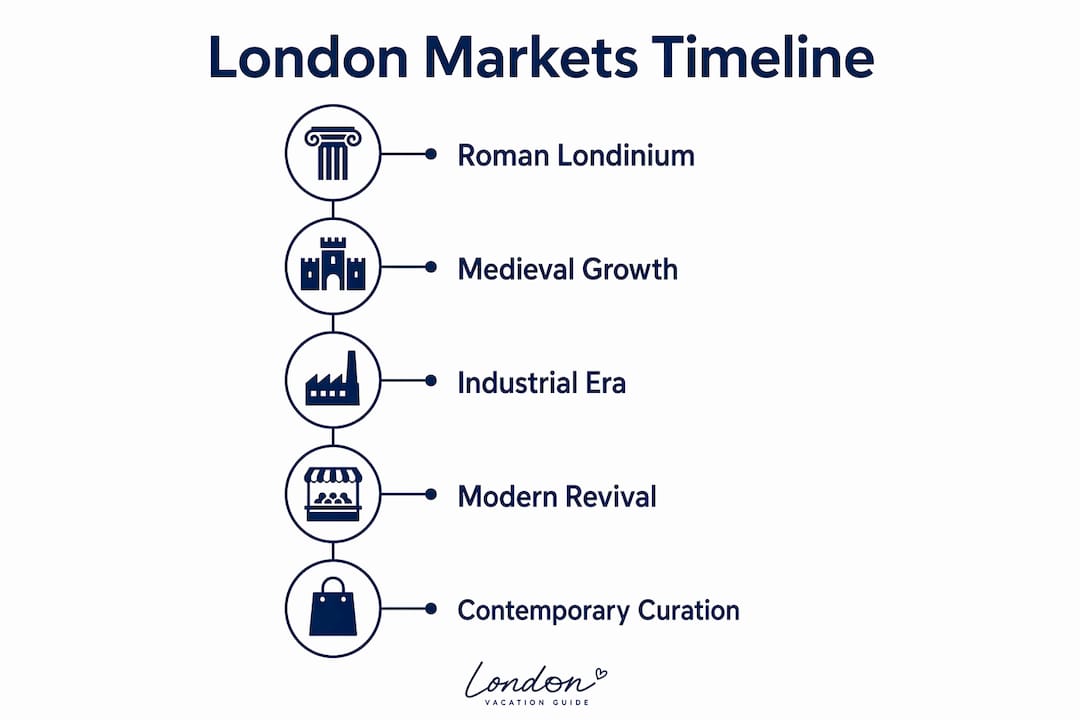
The sequence of development tells a clear story:
- Roman era: The forum at Londinium established the principle of a central trading space open to all citizens, setting a template that persisted for centuries.
- Medieval period: Smithfield became England’s primary livestock and meat market, while Billingsgate handled fish trade from the Thames. Both operated under royal charter, giving markets legal standing as civic infrastructure.
- Victorian expansion: Columbia Road Flower Market grew from the philanthropic vision of Baroness Burdett-Coutts, who built a covered market in 1869 to serve the East End’s poor. The current Sunday market retains that working-class, community-first character.
- 20th-century transition: Wholesale functions gradually shifted out of central London, creating space for the artisan, food, and vintage markets that now define the city’s market culture for visitors.
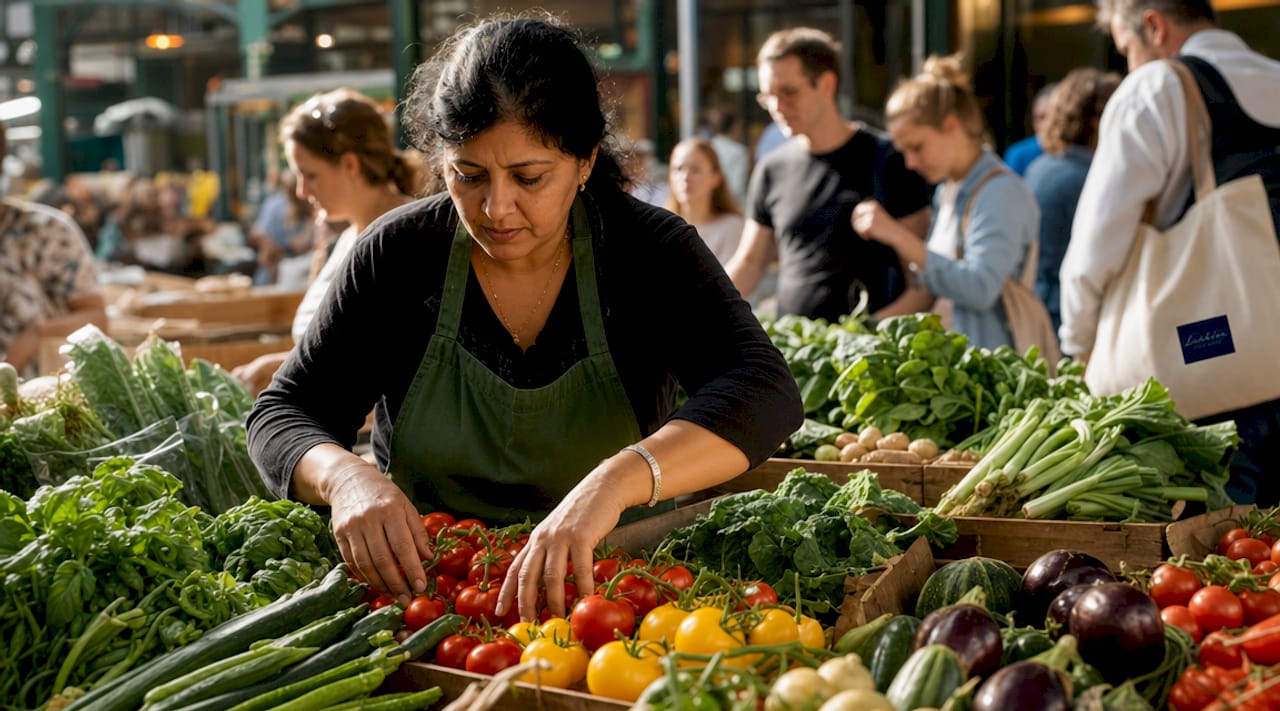
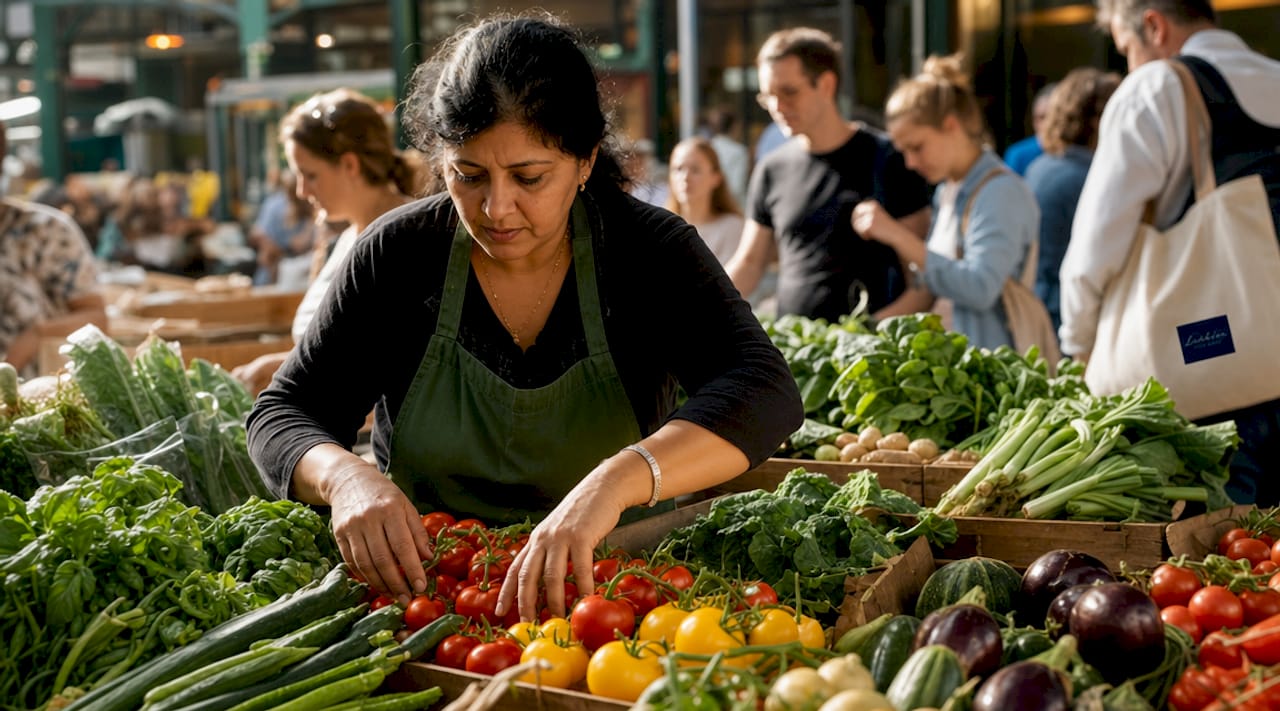
- Contemporary era: Borough Market evolved from a wholesale fruit and vegetable operation into one of Europe’s most celebrated food destinations, while still maintaining direct relationships with British and European producers.
| Market | Founded | Original purpose | Current character |
|---|---|---|---|
| Borough Market | 1014 (recorded) | Wholesale produce | Artisan food and gastronomy |
| Smithfield | 10th century | Live cattle trading | Wholesale meat (relocation planned) |
| Columbia Road | 1869 | Community provision | Sunday flower and plant market |
| Petticoat Lane | 16th century | Second-hand clothing | General goods and street food |
| Portobello Road | 1860s | Herbs and remedies | Antiques, vintage, and food |
What this history reveals is that London’s markets have never been static. Each era’s economic pressures and social needs have reshaped them, yet the underlying function, bringing people together around goods and exchange, has remained constant. Borough Market’s £14 sandwiches and Columbia Road’s Sunday chaos are not departures from tradition. They are the latest chapter in a story that began with Roman traders on the north bank of the Thames.
Pro Tip: Visit Borough Market on a Thursday or Friday morning rather than Saturday to experience the full range of traders without the weekend crowds. The atmosphere is more local and the conversations with stallholders are far richer.
In what ways do markets function as social infrastructure in London?
Markets are not simply retail spaces. For millions of Londoners, particularly those in low-income, migrant, and elderly communities, they are social and cultural lifelines that provide affordable goods, human connection, and a sense of belonging that no supermarket or online platform can replicate.
The social role of London’s markets operates on several distinct levels:
- Affordable access: Street markets consistently offer lower prices than supermarkets for fresh produce, clothing, and household goods. For families on tight budgets, this is not a lifestyle choice but a practical necessity.
- Multicultural exchange: Markets like Shepherd’s Bush Market and Queen’s Market in Newham serve as meeting points for London’s diaspora communities. You will find Caribbean, South Asian, West African, and Eastern European traders operating side by side, creating a cultural plurality that reflects the city’s actual demographic reality.
- Intergenerational connection: Elderly residents who live alone often cite their local market as their primary point of daily social contact. The regularity of market visits, the familiarity with traders, and the informal conversation that accompanies a transaction provide a form of social infrastructure that formal services struggle to replicate.
- Cultural expression: Markets give communities a physical space to express and preserve their cultural identity. The food, music, language, and aesthetics of a market reflect the community it serves in ways that chain retail never can.
Queen’s Market in Newham is a particularly instructive example. When redevelopment proposals threatened the market in the mid-2000s, local campaigners documented its role as the primary affordable food source for a community where a significant proportion of residents had no access to a car. The campaign succeeded in preserving the market, and the episode demonstrated that community resistance to market displacement is not sentiment. It is a defence of essential social infrastructure.
Street markets also function as sites of resistance against economic and racialised displacement, preserving inclusion and dignity in urban areas undergoing rapid demographic change. This is not a marginal observation. It is central to understanding why markets matter in London’s cultural life.
Pro Tip: If you want to experience London’s multicultural market culture at its most authentic, visit Shepherd’s Bush Market on a weekday morning. The traders have been there for decades and the community atmosphere is unlike anything you will find in the tourist-facing markets.
How are London markets adapting to contemporary urban culture?
The most significant shift in London’s market culture over the past decade is the rise of the curated, experiential market. These are not traditional street markets but deliberately designed social spaces that use the market format to address a specific contemporary problem: urban loneliness and digital disconnection.
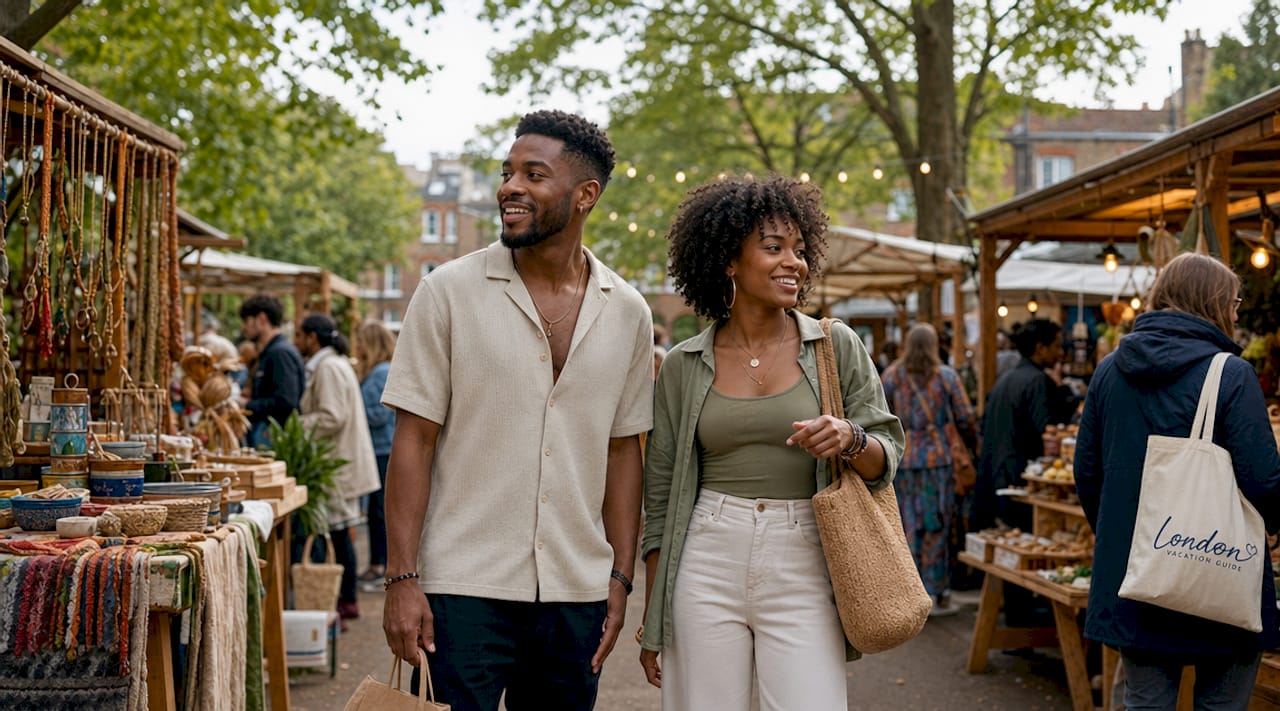
Research estimates that 700,000 Londoners feel lonely often, and curated markets have emerged as one of the city’s most effective responses. The logic is straightforward. A market forces repeated in-person interaction, sensory engagement, and the kind of unscripted conversation that social media cannot provide. This makes the impact of markets on London lifestyle genuinely therapeutic in a way that is rarely acknowledged.
The contemporary market scene in London includes several distinct formats:
- Concept market spaces: Salad Days Market operates in venues including libraries and warehouses, combining independent fashion, music, and food in a format that feels more like a cultural event than a shopping trip. The Sensus Collective takes a similar approach, curating markets around specific aesthetic communities.
- Neighbourhood anchor markets: Broadway Market in Hackney and Maltby Street Market in Bermondsey have become focal points for their surrounding neighbourhoods, drawing both locals and visitors and supporting the independent businesses that give those areas their character.
- Brand incubator markets: Markets now serve as growth infrastructure for independent brands, offering real-world customer interaction, immediate feedback, and community validation that no e-commerce platform can replicate. Many of London’s most successful independent food and fashion brands began as market stalls.
- Cultural hybrid spaces: Spitalfields Market integrates art exhibitions, live performance, and food alongside retail, blurring the boundary between market and cultural venue in a way that reflects how Londoners increasingly want to spend their time.
The integration of markets with cultural venues and creative neighbourhoods is not accidental. It reflects a deliberate strategy by both market operators and local authorities to use markets as anchors for neighbourhood identity and economic vitality. For travellers seeking authentic London experiences, the contemporary market scene offers something that no museum or tourist attraction can: genuine participation in the city’s living culture.
Pro Tip: Check the websites of Salad Days Market and Maltby Street Market before your visit. Both operate on specific days and some events are ticketed or have limited capacity. Planning ahead means you will not miss the best editions.
What challenges do London markets face from gentrification?
The cultural significance of London markets is inseparable from the pressures they face. Gentrification is the single greatest threat to the social and cultural functions that make markets matter, and its effects are now well documented across 53 London neighbourhoods where rising incomes and population shifts between 2012 and 2025 have fundamentally altered the demographic character of communities that once depended on street markets.
The mechanism is consistent. As property values rise around a market, the traders who serve low-income communities face higher rents and pressure to reposition towards higher-margin, tourist-facing goods. The community that gave the market its character gradually cannot afford to live nearby. The market either transforms into a gentrified version of itself or disappears entirely.
| Scenario | Example | Outcome |
|---|---|---|
| Community-led resistance | Ward’s Corner, Seven Sisters | Redevelopment halted; market preserved through bottom-up planning |
| Legal protection for traders | Brixton Plaza | High Court injunction secured by traders over notice period disputes |
| Wholesale relocation | Smithfield and Billingsgate | Royal Docks relocation planned; heritage and accessibility concerns raised |
| Gradual transformation | Portobello Road | Shift from local antiques trade to tourist-facing retail over two decades |
Ward’s Corner in Seven Sisters is the most instructive example of successful resistance. A community-led development plan, backed by local traders and residents, successfully challenged a proposed redevelopment that would have displaced the Latin American market community at the heart of the neighbourhood. The case demonstrated that community-centred redevelopment can align economic, social, and cultural interests in ways that top-down planning consistently fails to achieve.
The proposed relocation of Smithfield and Billingsgate markets to the Royal Docks raises a different set of concerns. Both markets carry centuries of operational heritage, and preserving that heritage requires more than moving the physical activity to a new site. It requires preserving the ecosystems of traders, supply chains, and public access that give these markets their cultural meaning. A relocated Smithfield in a regeneration zone is not the same institution as Smithfield in its historic location, regardless of how well the new facility is designed.
The administrative details matter too. Trader eviction and relocation hinge on notice periods, leasing status, and legal protections that determine whether communities can remain in place during redevelopment. The Brixton Plaza case showed how these legalities directly affect cultural continuity, with traders using the courts to buy time and negotiate better terms. For anyone interested in how markets and urban culture intersect in London, these legal battles are as culturally significant as the markets themselves.
Key takeaways
London’s markets are irreplaceable social and cultural institutions whose influence on the city’s identity, community life, and urban economy cannot be separated from the pressures they face from gentrification and redevelopment.
| Point | Details |
|---|---|
| 2,000 years of continuity | London’s market tradition runs from Roman Londinium to Borough Market and Columbia Road, reflecting every era of the city’s social history. |
| Social infrastructure for vulnerable communities | Markets provide affordable goods and daily social contact for elderly, migrant, and low-income Londoners who have few alternatives. |
| Contemporary markets counter loneliness | Curated spaces like Salad Days Market address urban isolation by creating repeated in-person interactions and community belonging. |
| Gentrification is the primary threat | Rising property values in 53 London neighbourhoods are displacing the communities that give street markets their cultural character. |
| Community resistance works | Cases like Ward’s Corner show that bottom-up development strategies can successfully preserve markets against top-down redevelopment pressure. |
Why markets are the truest measure of a city’s character
I have spent years exploring London’s markets, from the pre-dawn activity at Smithfield to the Sunday ritual of Columbia Road, and my honest view is this: no other urban institution tells you as much about a city as its markets do. Museums curate the past. Markets live in the present.
What strikes me most is how consistently markets reveal the gap between London’s self-image and its reality. The city presents itself as a global, cosmopolitan place, and its markets confirm that. But they also reveal the economic anxiety, the community solidarity, and the daily negotiation between cultures that the polished tourist version of London tends to obscure. Shepherd’s Bush Market and Queen’s Market are not on most visitors’ itineraries, and that is precisely why they are worth visiting. They show you a London that has not been curated for your consumption.
I am also struck by how much the contemporary curated market scene owes to the traditional street market format. Salad Days and similar concepts are not departures from London’s market culture. They are its latest adaptation, applying the same logic of physical gathering, direct exchange, and community identity to a generation dealing with digital overload and social fragmentation. The format is ancient. The problem it solves is entirely modern.
For travellers, my advice is to treat markets not as attractions but as entry points. Spend an hour at a market and you will understand a neighbourhood better than you would from a week of sightseeing. Talk to the traders. Buy something you did not plan to buy. That is how London’s historical sites actually come alive.
— Matt
Plan your London market experience with Londonvacationguide
Londonvacationguide has curated everything you need to explore London’s market culture with confidence. Whether you are planning your first visit or returning to discover neighbourhoods beyond the usual circuit, the first-time visitors’ guide covers the practical essentials alongside the cultural highlights that make London genuinely worth your time. For food lovers, the dedicated guide to London’s best food markets covers Borough Market, Broadway Market, and beyond, with timing tips and trader recommendations that go well past the obvious. If you want to combine market visits with the broader dining scene, the local dining guide connects market discoveries with the restaurants and street food spots that surround them. London’s markets reward curiosity. Londonvacationguide helps you direct it well.
FAQ
What is the cultural significance of London markets?
London’s markets are social, economic, and cultural institutions with over 2,000 years of continuous history. They serve as community hubs, affordable access points for goods, and spaces where the city’s multicultural identity is expressed and preserved.
Which London markets are best for first-time visitors?
Borough Market in Southwark is the most celebrated food market and suits first-time visitors well. Columbia Road Flower Market on Sunday mornings and Portobello Road Market in Notting Hill offer distinct cultural experiences that go beyond standard tourist attractions.
How do London markets support local communities?
Street markets provide affordable produce and goods for low-income, elderly, and migrant communities, while also offering daily social contact and cultural expression. Research confirms they act as essential social infrastructure, particularly in areas facing gentrification pressure.
Are London’s historic markets under threat?
Several are. Smithfield and Billingsgate markets face planned relocation to the Royal Docks, raising concerns about heritage loss. In other areas, rising property values are displacing the communities that give street markets their character, though community-led campaigns have successfully resisted some redevelopments.
When is the best time to visit London’s markets?
Weekday mornings offer the most authentic experience at food markets like Borough and Maltby Street, with fewer crowds and more interaction with traders. Columbia Road Flower Market is Sunday only, and Portobello Road is at its best on Saturday mornings before midday.
Recommended
- Local dining guide London: find authentic food experiences - The London Journal | London Vacation Guide
- Discover London’s best shopping: markets to luxury - The London Journal | London Vacation Guide
- Best Food Markets in London: Borough, Broadway and Beyond - The London Journal | London Vacation Guide
- How to experience London like a local: your essential guide - The London Journal | London Vacation Guide