Discover London’s best shopping: markets to luxury
TL;DR:
- London’s shopping scene encompasses historic markets, luxury districts, and independent boutiques across diverse neighborhoods. Exploring beyond flagship stores, engaging with local traders, and embracing spontaneous detours create memorable shopping experiences. Planning around neighborhood proximity, using efficient transport, and staying in local areas enhances authentic discovery and enjoyment.
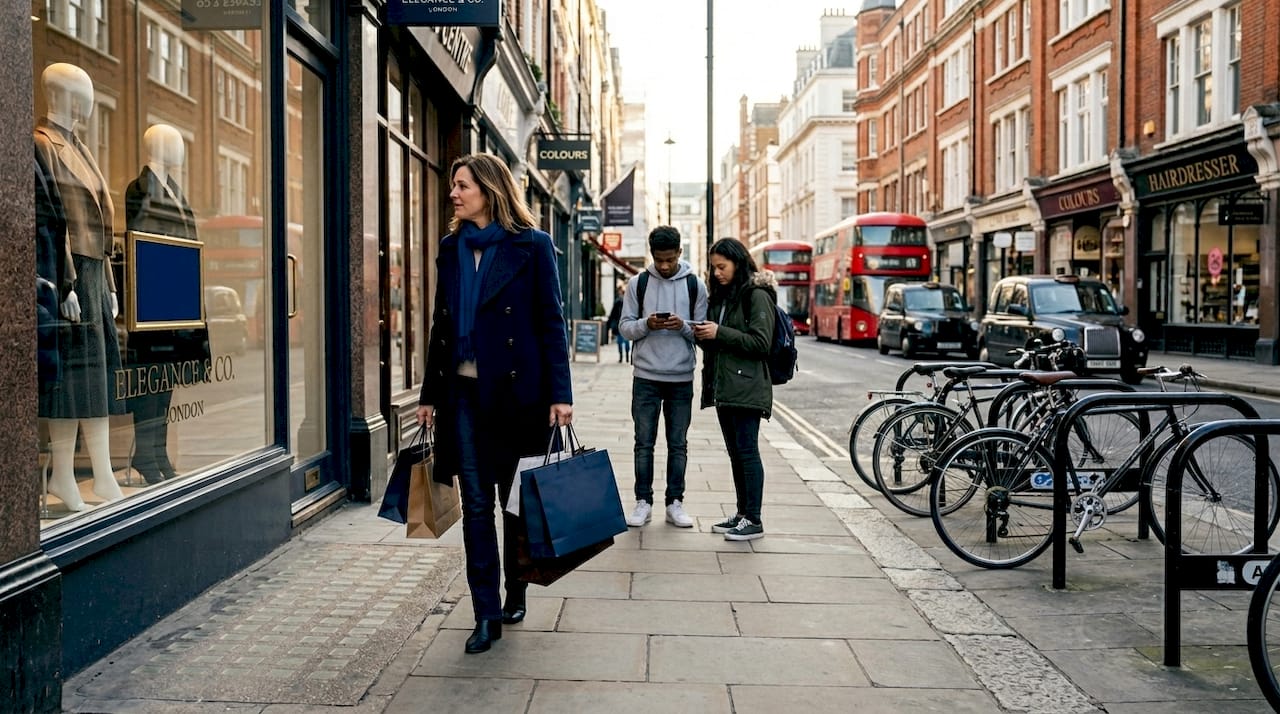
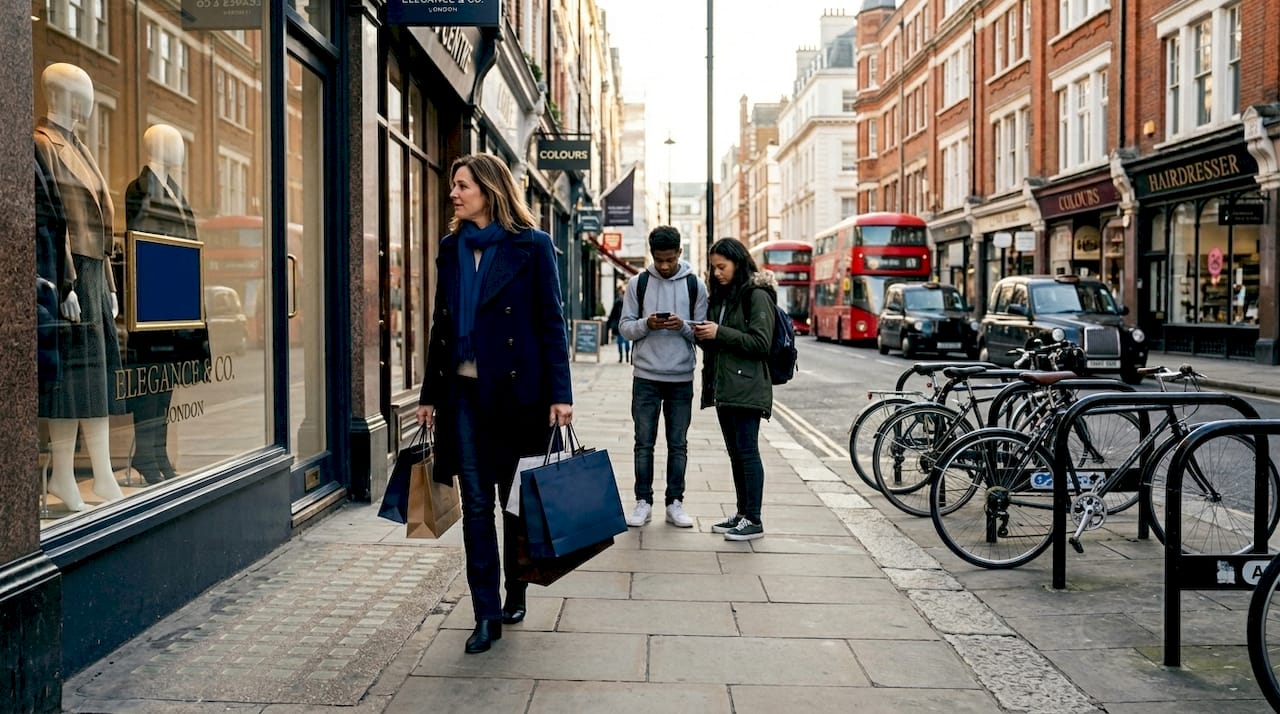
London shopping is not simply about elbowing your way down Oxford Street or peering into Harrods’ gilded food halls. The city offers one of the most varied retail landscapes on earth, where a single afternoon can take you from a centuries-old antiques market to a sleek designer boutique, from a street food stall selling Colombian empanadas to a fabric shop that has dressed royalty. Whether you have one day or one week, understanding the full picture of what London has to offer will transform a routine shopping trip into a genuinely memorable travel experience.
Table of Contents
- Understanding London’s shopping landscape
- Iconic department stores and luxury retail
- Exploring local markets and unique boutiques
- Planning your ultimate London shopping day
- Making memories: Beyond the shopping bag
- Why the real magic of London shopping is in the unexpected
- Plan your perfect London trip with expert guidance
- Frequently asked questions
Key Takeaways
| Point | Details |
|---|---|
| Diverse shopping styles | London offers everything from historic markets to world-famous department stores in one city. |
| Plan by neighbourhood | Organising your route around key shopping areas means more discoveries and less travel stress. |
| Authentic finds matter | Markets and boutiques provide unique souvenirs and truly memorable shopping moments. |
| Soak up the atmosphere | Enjoy people-watching, local tastes, and city energy as a key part of your retail adventures. |
| Expert planning pays off | Using insider guides and directories makes your London shopping day efficient and rewarding. |
Understanding London’s shopping landscape
Now that you know London offers more than big-name shopping, let’s explore how the city’s neighbourhoods and shop types contribute to this vibrant retail landscape.
London is unusual among world cities because its shopping destinations are spread across dozens of distinctive neighbourhoods, each with its own personality, price point, and crowd. As London’s shopping areas range from historic markets to designer districts, you will rarely find two areas that feel the same. That variety is both London’s greatest strength and its most intimidating quality for first-time visitors.
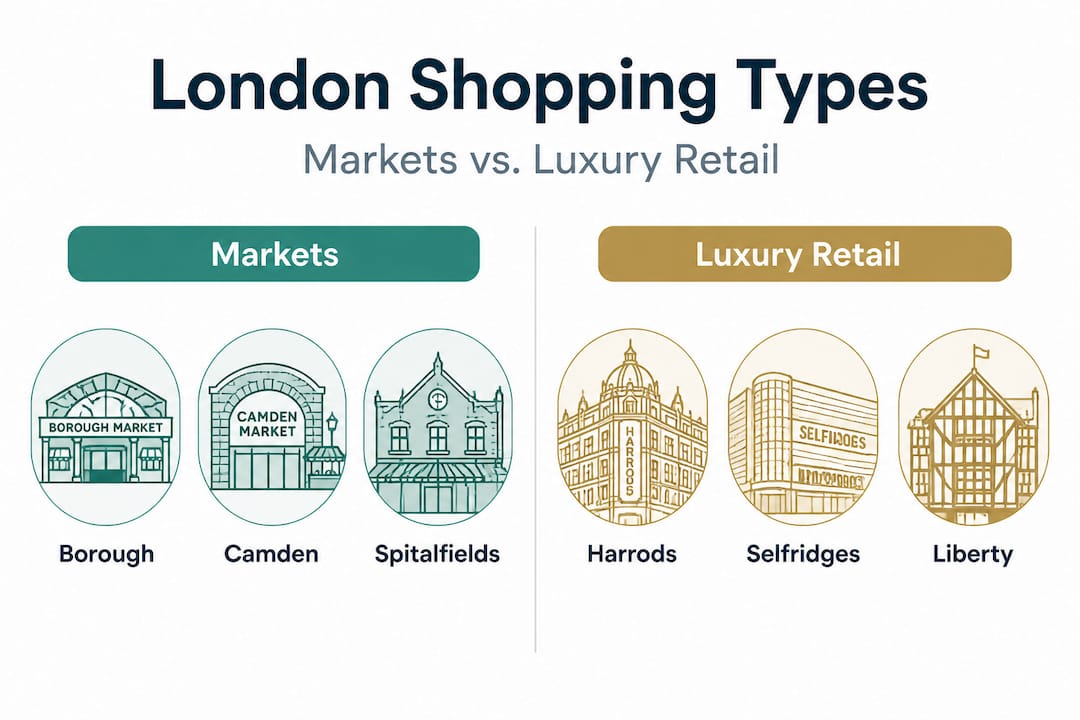
It helps to think of London’s retail world in four broad categories. First, there are the grand department stores: multi-floor institutions that are destinations in their own right. Second, there are the luxury districts, particularly around Knightsbridge and Bond Street, where flagship boutiques line immaculate pavements. Third, there are the independent and boutique shopping streets found in neighbourhoods like Shoreditch and Notting Hill. Fourth, and arguably the most exciting, are the open-air and covered markets that pulse with colour, noise, and genuine local character.
Each of these zones draws a different type of visitor. Knightsbridge shopping attracts those seeking heritage luxury and prestige labels, while the Oxford Street guide caters to visitors after mainstream fashion at competitive prices. Camden pulls in a creative crowd hunting vintage clothing and subculture memorabilia. Shoreditch has grown into a magnet for independent designers, concept stores, and streetwear brands.
Here is a quick comparison to help you decide which zone suits your travel style:
| Shopping area | Ambience | Crowd levels | Average spend |
|---|---|---|---|
| Knightsbridge | Refined, formal | Moderate | £100 and above |
| Oxford Street | Busy, commercial | Very high | £30 to £80 |
| Camden Market | Energetic, alternative | High at weekends | £10 to £40 |
| Shoreditch | Cool, creative | Moderate | £20 to £60 |
| Portobello Road | Bohemian, colourful | High on Saturdays | £15 to £50 |
| Borough Market | Rustic, artisan | High at weekends | £5 to £30 |
Understanding these differences before you arrive saves you both time and disappointment. There is little point wandering Knightsbridge if you are hunting vintage denim, and Camden will not satisfy a guest looking for a fine cashmere coat.
“London’s charm lies in the fact that no two shopping streets feel alike. From cobbled market lanes to marble-floored boutiques, the city invites you to discover something unexpected around every corner.”
- Department stores: Harrods, Selfridges, Liberty, John Lewis
- Luxury districts: Knightsbridge, Bond Street, Sloane Street
- Independent streets: Carnaby Street, Brick Lane, Exmouth Market
- Markets: Camden, Borough, Portobello Road, Spitalfields, Brixton
Iconic department stores and luxury retail
With an understanding of the landscape, let’s focus on the iconic stores and high-end retail that often headline London shopping maps.
Harrods and Selfridges are landmarks for luxury shopping in London, and for very good reason. These are not merely shops. They are cultural institutions with long histories, extraordinary product ranges, and carefully curated visitor experiences that go far beyond buying things. A visit to either store is worth your time even if you have no intention of spending a penny.
| Store | Location | Signature offering | Best for |
|---|---|---|---|
| Harrods | Brompton Road, Knightsbridge | Food halls, couture, perfume | Luxury gifts, iconic experience |
| Selfridges | Oxford Street | Fashion, beauty, lifestyle | Trend-led shopping, events |
| Liberty | Great Marlborough Street, Soho | Fabric, heritage brands, jewellery | Unique gifts, artisan finds |
Harrods is the heavyweight. Founded in 1849, it now spans over one million square feet and stocks everything from fresh truffles to private jets. The ground-floor food halls alone could occupy an entire morning. The store’s Tudor kitchens, chocolate library, and dedicated champagne bar mean there is genuinely something theatrical about every visit. Exploring Knightsbridge alongside a Harrods trip makes for a full half-day of luxury immersion.
Selfridges on Oxford Street is a different beast entirely. It moves faster, feels younger, and leans into fashion, art, and pop culture. The store regularly hosts in-store events, live performances, and concept takeovers that turn retail into entertainment. Its beauty hall is one of the most comprehensive in Europe.
Liberty is the most underrated of the three. Housed in a stunning mock-Tudor building constructed from the timber of two Royal Navy ships, it specialises in fabric, distinctive prints, and carefully chosen independent brands. A scarf or tote bag from Liberty makes one of the most genuinely distinctive gifts you can bring home from London.
Pro Tip: Visit department stores on weekday mornings between 10am and noon. Crowds are noticeably thinner, staff have more time for you, and window displays are freshly arranged. If you plan to stay nearby, consider boutique hotel stays in Knightsbridge or Marylebone to make early starts effortless.
How to make the most of a department store visit:
- Pick one store per half-day rather than rushing between several. Each deserves unhurried attention.
- Start at the top floor and work downwards. Lifts are slower than escalators, and top floors are always quieter.
- Visit the food hall or café first for a fortifying coffee and a sense of the store’s character.
- Ask a floor assistant about any in-store events, promotions, or exclusive collections during your visit.
- Allow at least twenty minutes in the gift section before you leave. Packaged goods, rare preserves, and branded keepsakes make far better souvenirs than anything sold near a tourist attraction.
Exploring local markets and unique boutiques
Beyond grandeur and luxury, many of London’s shopping stories lie in its vibrant markets and distinctive independent boutiques.
London’s markets like Camden and Borough attract both tourists and locals for their wide variety and authentic atmosphere, and that mix of audiences is precisely what keeps them vital. When a market draws real locals doing their weekly food shopping, you know it has integrity.
The four markets every visitor should know:
-
Camden Market: This is the heartbeat of London’s alternative culture. Stretching along the canal in north London, Camden is home to hundreds of stalls and shops selling vintage clothing, handmade jewellery, records, art prints, street food from dozens of cuisines, and some of the most creatively decorated shop fronts in Britain. It is loud, colourful, and relentlessly entertaining.
-
Borough Market: Sitting beneath the railway arches near London Bridge, Borough Market finds represent some of the finest artisan food produce in the country. Come here for fresh truffle pasta, cave-aged cheese, raw honey, sourdough bread baked that morning, and charcuterie from small-scale producers across Europe. It runs Thursday to Saturday and is absolutely worth an early arrival before the weekend crowds arrive.
-
Portobello Road Market: Held in Notting Hill every Saturday, this is one of London’s most famous antiques markets. You will find vintage silverware, old maps, Victorian jewellery, retro cameras, and all manner of beautifully worn objects with histories attached. Prices are negotiable, and the social ritual of browsing and gentle bargaining is half the pleasure.
-
Brick Lane Market: Running on Sunday mornings in east London, Brick Lane is eclectic, unpredictable, and brilliant for a Sunday morning wander. Alongside vintage clothing and independent crafts, you will find the street itself lined with Bangladeshi restaurants, bagel shops open since the 1970s, and creative murals. It rewards curiosity above all else.
Beyond markets, London’s independent boutique scene is extraordinary. Brixton shops in south London represent one of the city’s most exciting creative retail pockets. Pop Brixton, a structure built from repurposed shipping containers, houses emerging designers, food entrepreneurs, and lifestyle brands in a buzzing open-air setting.
In Shoreditch, streets like Redchurch Street and Calvert Avenue are lined with concept stores, independent booksellers, ceramics studios, and galleries that sell original works. These areas reward slow walking and unscheduled stops far more than any pre-planned itinerary.
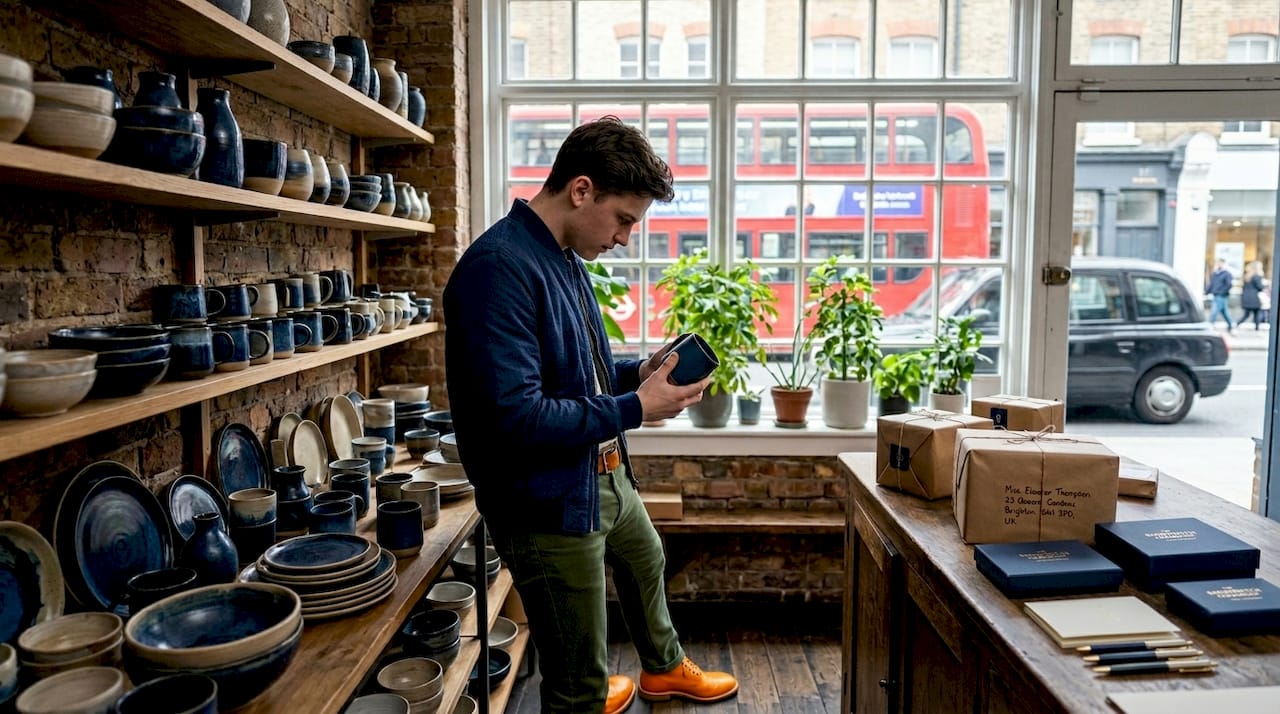
Pro Tip: To tell genuine handmade goods from mass-produced tourist souvenirs, ask the stall holder a direct question about the making process. Authentic artisans will light up when explaining their work. Hesitation or a vague answer is usually a signal that the item came from a factory catalogue. Real makers know exactly how their products are created.
Research consistently shows that market visits produce some of the most treasured travel memories. A survey of international visitors to London found that spontaneous purchases from local markets were cited as among their top holiday highlights, beating ticketed attractions and restaurant meals in several studies. The reason is straightforward: markets give you a story. A jar of marmalade from Borough Market or a hand-tooled leather belt from Camden carries a memory of how and where you found it, making it incomparably more meaningful than any branded shopping bag.
Planning your ultimate London shopping day
Once you’ve chosen your must-see destinations, here’s how to weave them into a seamless, practical day of shopping.
First-time visitors benefit from planning their shopping day around neighbourhood proximity and easy transport connections. London is large. Criss-crossing the city without a plan is exhausting and wastes hours that could be spent browsing.
A sample morning-to-evening shopping itinerary:
- 8:30am: Start with a coffee and pastry near your hotel or base. Collect your thoughts and confirm your list of priorities for the day.
- 9:30am: Head to your first neighbourhood early. If you are visiting Oxford Street, arriving just as stores open avoids the midday crush entirely. Follow the Oxford Street itinerary to navigate the area intelligently rather than walking aimlessly.
- 11:30am: Cross to Carnaby Street and the surrounding lanes for independent fashion and streetwear. This area connects naturally from the western end of Oxford Street.
- 1:00pm: Take a proper lunch break. This is not optional. Tired feet and low energy make shopping feel like a chore. Book ahead at one of the recommended dining breaks nearby to make it part of the experience rather than an afterthought.
- 2:30pm: Head south or east towards Shoreditch, Brick Lane, or Borough Market depending on your interests and the day of the week.
- 4:30pm: Slow down and allow yourself to wander without purpose for the final stretch. This is when you tend to find the best things.
- 6:00pm: End with a drink or a meal in your final neighbourhood. Many of London’s best bars and restaurants are in the same streets as its best shops.
Pairing a shopping route with a London Walks tour in the morning is a genuinely useful tactic. These guided walking tours cover specific neighbourhoods and provide the local history and architectural context that makes shopping streets feel alive with meaning rather than simply functional.
Transport and practical tips:
- Use an Oyster card or contactless bank card for tube and bus travel. Single cash fares are significantly more expensive.
- Comfortable, supportive shoes are not a luxury. London’s pavements are unforgiving over a full day.
- Bring a lightweight tote bag to carry purchases and avoid accumulating carrier bags from every shop.
- Most larger stores now charge for carrier bags, so having your own saves money and is better for the environment.
- Contactless payment is accepted almost universally across London, including most market stalls. Carrying a small amount of cash is still wise for the smallest independent traders.
- Check individual market opening days carefully before building your itinerary. Borough Market, for example, runs Thursday to Saturday only, whilst Portobello Road is best visited on a Saturday.
Making memories: Beyond the shopping bag
Shopping in London isn’t just about what you buy. It’s also about the stories and experiences you gather.
The London shopping experience is as much about atmosphere and discovery as it is about purchases. The best moments often happen in the gaps between transactions. Watching a street musician at Spitalfields. Sampling a pickled walnut at a Borough Market stall because the trader insisted you try it. Getting into conversation with a vintage clothing dealer in Portobello Road who turns out to have dressed musicians and actors for forty years.
“The most memorable thing I bought in London wasn’t from a department store. It was a watercolour sketch of Waterloo Bridge from a man who had been painting there every Sunday for thirty years. It cost twelve pounds and it hangs on my wall to this day.”
These moments cannot be planned. But you can create the conditions for them by slowing down, making eye contact with traders, accepting samples when offered, and allowing yourself to spend twenty minutes in a shop that you had no intention of entering.
Places where atmosphere matters most:
- The covered walkways of the London Eye area along the South Bank, where street artists, market stalls, and food vendors create an energetic promenade
- Leather Lane in Farringdon at lunchtime, a street market that comes alive Monday to Friday for office workers and curious visitors alike
- Exmouth Market in Clerkenwell, which combines independent food shops, cafes, and boutiques in one of London’s quietest and prettiest streets
- Broadway Market in Hackney on a Saturday morning, where locals queue for fresh sourdough while children play in the road and dogs inspect every stall
Consider pairing an evening of shopping with arrangements for unique hotel stays that put you in the heart of these neighbourhoods. Waking up in Shoreditch or Notting Hill rather than a generic hotel near a transport hub means you experience the neighbourhood’s morning rhythm, which is one of its most charming qualities.
The joy of London shopping, when you really lean into it, is that it mirrors the city itself. Layered, occasionally chaotic, full of contradictions, and endlessly surprising. A morning in Harrods and an afternoon at Brick Lane are both authentically London. Neither cancels the other out.
Why the real magic of London shopping is in the unexpected
Here is something no one tells you in a standard travel guide: the most cherished purchases and the most vivid shopping memories from London almost never come from the destinations you circled on a map.
They come from the detour. The street you walked down because you were lost. The shop with the handwritten sign that you almost ignored. The stall holder who handed you a card and said “come back on Saturday when the good stuff arrives.”
London rewards shoppers who are willing to stray from the plan. The city’s genuine vibrancy lives in its unscheduled corners, not its famous addresses. You can visit Harrods on every trip to London and still feel the thrill of it. But the stories you tell when you get home are usually about the painter selling originals from a fold-out table, or the Jamaican bakery in Brixton where a woman gave you a bag of spiced buns because she liked your scarf.
This matters because many visitors to London make the mistake of treating shopping purely as acquisition. A list of shops, a budget, a bag of purchases. But the city’s retail culture is fundamentally social and experiential. Traders at Borough Market genuinely want you to understand what you are buying. The woman running a ceramics shop in Hackney made every piece on the shelf herself. These are people with stories, not just transactions waiting to happen.
There is also a practical argument for spontaneity. Planning a rigid itinerary around fixed destinations can cause you to miss whole streets, markets, and neighbourhoods that are arguably more interesting than your original targets. Some of the best shopping in London is in postcodes that do not appear on most tourist maps at all.
Our honest advice: use guides, including ours, to orientate yourself. Then put them down. Walk, notice, ask questions, and let personal London stays in distinctive neighbourhoods become the base from which you explore without a script. The best version of London shopping is the one you did not plan.
Plan your perfect London trip with expert guidance
Ready to bring your London shopping adventure to life? London Vacation Guide brings together everything you need to plan a trip that balances iconic experiences with genuinely local discoveries. From our detailed London beginner’s guide covering every major area and attraction, to in-depth neighbourhood guides that reveal the character and highlights of each postcode, we have the resources to make your planning both enjoyable and efficient. Browse our complete London shops directory for curated recommendations across every shopping category, from luxury boutiques to independent makers. Whenever you are ready, we are here to help you shop London like an insider.
Frequently asked questions
What are the must-visit shopping areas in London for first-timers?
Knightsbridge, Oxford Street, and Carnaby Street are essential first stops, offering contrasting experiences from luxury heritage retail to high-street fashion and independent boutiques. As shopping areas range from historic markets to designer districts, your itinerary can be as varied as you like.
Are London’s markets suitable for families?
Markets like Borough, Spitalfields, and Camden all offer family-friendly environments with wide walkways, abundant food options, and lively street performers that entertain children and adults equally. Camden and Borough attract both tourists and locals, ensuring a busy but welcoming atmosphere for groups of all ages.
How can I maximise my shopping day in London?
Plan your day around one or two neighbouring areas rather than travelling across the full city, use contactless payment, wear comfortable shoes, and plan by neighbourhood proximity to avoid wasting time on transport between distant destinations.
What’s the best time to visit London’s department stores?
Weekday mornings between opening time and noon are consistently the calmest periods, especially outside the summer tourist season and the Christmas retail period. Harrods and Selfridges are particularly enjoyable on quiet weekday mornings when staff are more available and the atmosphere is noticeably more relaxed.
Recommended
- London’s Best Restaurants: Where to Eat in Every Neighborhood - The London Journal | London Vacation Guide
- Explore the best London neighbourhoods for locals - The London Journal | London Vacation Guide
- Best Free Things to Do in London (2025 Guide) - The London Journal | London Vacation Guide
- Hidden London: Secret Spots Most Tourists Miss - The London Journal | London Vacation Guide
- Luxury handbag terminology guide: elevate your shopping – San Rocco Italia