Why boutique hotels in London offer a truly personal stay
TL;DR:
- London boutique hotels are smaller, independently operated, and offer personalized, locally inspired experiences.
- They provide attentive service, unique design, and strong neighborhood character that enhance authentic city exploration.
- Choosing a boutique hotel allows deeper connection to London’s culture, history, and hidden gems.
Most travellers assume that booking a hotel is simply a matter of picking a price point and a location. You check in, get a key card, find a beige room with a kettle and a laminated menu, and check out two days later with little to show for it beyond a receipt. London’s boutique hotel scene argues passionately against that assumption, offering something that large chains simply cannot replicate: a stay that feels genuinely crafted around you, rooted in the city’s extraordinary character, and memorable long after you’ve unpacked at home.
Table of Contents
- What makes boutique hotels unique in London
- Personalised service and attention to detail
- Local identity and immersive design
- Comparing boutique hotels with chain hotels
- Tips for choosing and booking your London boutique hotel
- Why the boutique experience is worth more than five stars
- Discover your perfect London boutique stay
- Frequently asked questions
Key Takeaways
| Point | Details |
|---|---|
| Personal touch | Boutique hotels in London often provide attentive service designed around your needs. |
| Local immersion | Expect rooms and amenities inspired by London’s culture and neighbourhoods. |
| Unique design | Boutique hotels feature distinctive interiors not found in chain properties. |
| Tailored experience | You’re more likely to enjoy a memorable, bespoke stay compared to standard hotels. |
| Practical booking | Choosing the right boutique hotel is easier with neighbourhood guides and tips. |
What makes boutique hotels unique in London
London is one of the most visited cities on earth, which means its hospitality industry is vast and varied. Amongst the enormous international chains and sprawling conference hotels, boutique properties carve out something altogether different. Understanding what separates them is the first step to deciding whether one is right for your trip.
By definition, boutique hotels are typically smaller and independently operated, which enables far more personalised guest interactions than you would ever experience at a standardised chain operation. Most boutique hotels sit well under 100 rooms, with many London properties running between 10 and 50 rooms. That smaller scale changes everything about the experience.
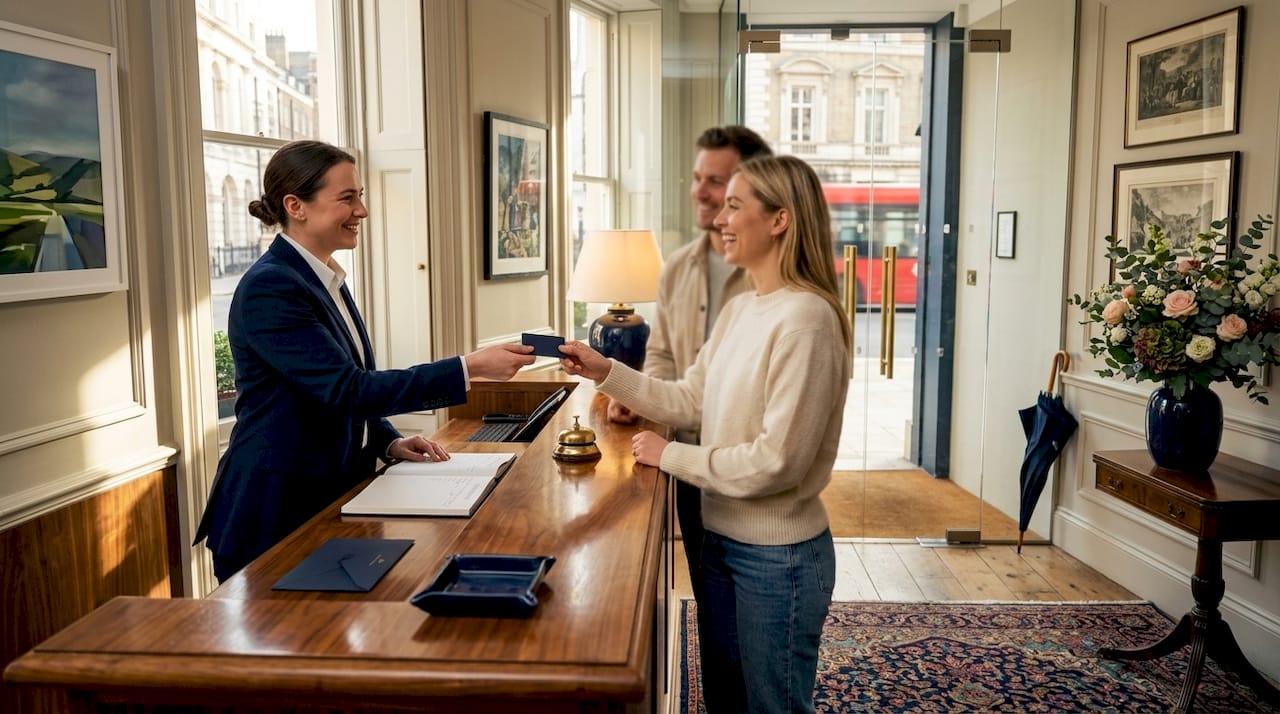
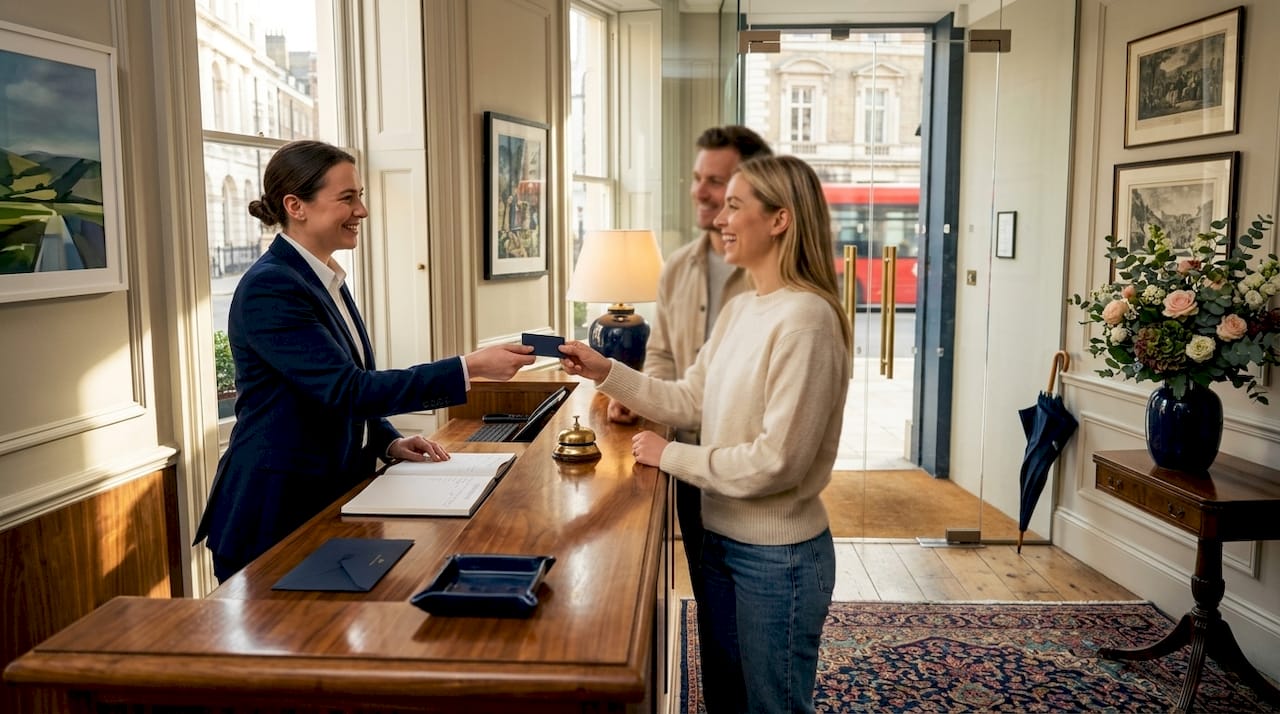
When a hotel has 400 rooms and a rotating roster of staff working shifts across multiple floors, you are inevitably a booking reference. When a hotel has 30 rooms and the same small team greets you every morning, you become a person. Staff learn your name before you arrive, remember that you prefer a firm pillow, and know you like your breakfast served at eight rather than nine. These are not small details. Over the course of a three or four night stay, they add up to a fundamentally different kind of hospitality.
Independent ownership also gives boutique hotels the flexibility that chains simply cannot match. A chain must adhere to brand standards set at head office, often thousands of miles away. A boutique hotel owner in Shoreditch or Notting Hill can make decisions based on what suits their guests and their neighbourhood, whether that means sourcing pastries from the bakery three streets over or redesigning a room to reflect a local artist’s work.
Boutique vs chain hotels: a quick overview
| Feature | Boutique hotel | Chain hotel |
|---|---|---|
| Number of rooms | Typically under 100 | Often 150 to 500+ |
| Ownership | Independent | Corporate brand |
| Interior design | Unique, locally inspired | Standardised across properties |
| Staff to guest ratio | Higher | Lower |
| Flexibility | High | Limited |
| Loyalty programmes | Rarely | Commonly offered |
| Local character | Central to the experience | Often absent |
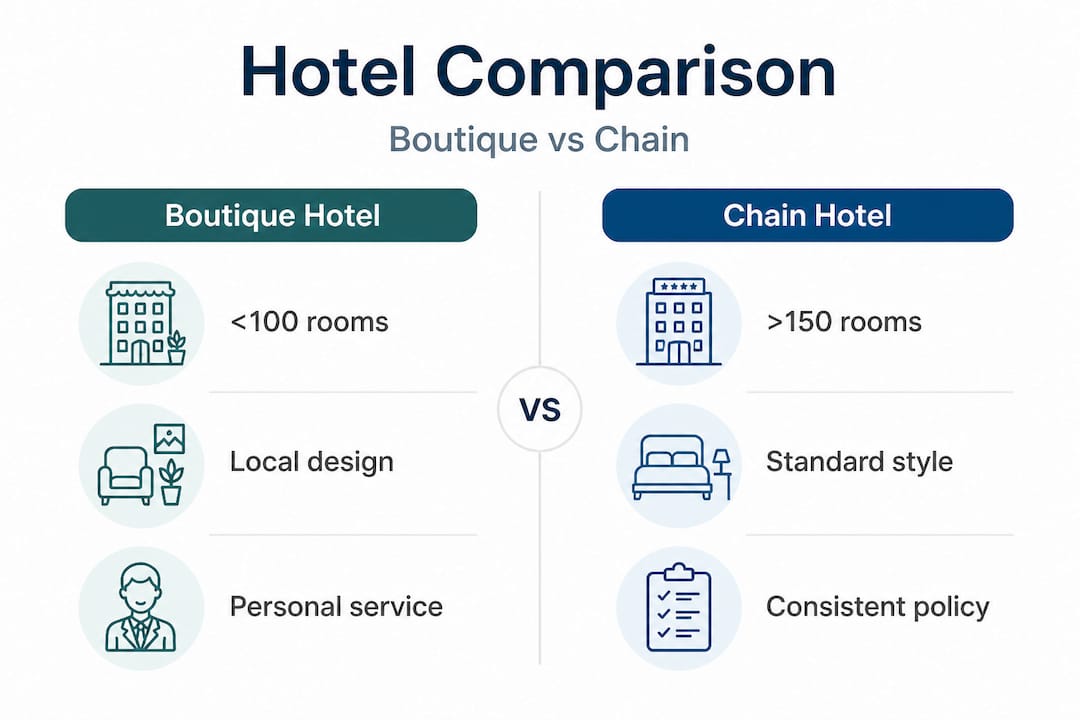
Beyond the numbers, the design philosophy of boutique hotels sets them apart visually and atmospherically. Walking into a thoughtfully designed boutique hotel in, say, South Kensington feels entirely different from walking into a chain property a few streets away. The art on the walls means something. The furniture was chosen with intention. The colour palette reflects something about the area’s history or energy.
For travellers who want to discover hidden London spots that most tourists never find, boutique hotels often act as a brilliant starting point. The staff, being deeply embedded in their local area, tend to know exactly which coffee shop is worth queuing for and which market is worth getting up early to visit. If you are staying near Oxford Street, for instance, a boutique property in the area will likely offer insights that no chain hotel concierge desk ever would.
“The best boutique hotels don’t just give you a room for the night. They give you a sense of place, a sense of story, and a sense that someone genuinely cared about your stay.”
Personalised service and attention to detail
Now that we understand what defines boutique hotels, let’s look more closely at how their guest service stands out in London’s busy hospitality landscape. This is where the real difference becomes tangible.
Boutique hotels offer attentive service, with staff able to learn guest names and preferences, creating an intimate atmosphere that guests frequently describe as the highlight of their stay. This is not accidental. It is a deliberate approach to hospitality that requires smaller scale, consistent staffing, and a genuine commitment to individual attention.
Here is what personalised service actually looks like in practice at a well-run London boutique hotel:
- Pre-arrival communication: Many boutique hotels contact guests before check-in to ask about dietary requirements, room preferences, or the purpose of the visit, whether it’s a honeymoon, a solo work trip, or a family anniversary.
- Welcome touches: Arriving to find a handwritten note, a small bouquet, or a selection of local chocolates waiting in your room signals that someone thought specifically about your arrival.
- Tailored local recommendations: Rather than handing over a generic city map, staff at boutique hotels often sit with guests and discuss their specific interests, recommending neighbourhood restaurants, galleries, or walks based on what the individual actually enjoys.
- Flexible housekeeping: Boutique hotels rarely operate on rigid schedules. If you need your room sorted at two in the afternoon rather than ten in the morning, that conversation is far easier to have.
- Follow-up during the stay: Good boutique hotel staff check in during the stay rather than only at checkout, addressing small issues before they become frustrations.
- Remembered preferences on return visits: Regular guests at boutique hotels often find that their preferences are noted for future stays, creating a genuinely continuous relationship with the property.
Pro Tip: When booking a boutique hotel in London, email the property directly before arrival rather than submitting a generic online request. Introduce yourself, mention your interests, and ask for a local recommendation. This simple step sets the tone for personalised service and signals to staff that you are the kind of guest who appreciates genuine hospitality.
A statistic worth noting: research consistently shows that personalised guest experiences drive significantly higher satisfaction scores and repeat visits in independent hotels compared to chain properties. Guests who feel known and valued are far more likely to return, which is why boutique hotels invest so heavily in the human side of hospitality.
For practical London travel advice before your trip, understanding which areas lend themselves to boutique stays and what to expect from each neighbourhood will help you choose a property that genuinely fits your visit.
Local identity and immersive design
Building on personalised service, the design and local flair of boutique hotels offer an even deeper connection to the heart of London. This is where boutique hospitality becomes genuinely memorable rather than simply comfortable.
Boutique properties in London feature individually designed interiors and themes that reflect the surrounding area’s culture, history, and personality. This is not decoration for its own sake. It is a deliberate choice to make guests feel that their surroundings mean something, that the place they are sleeping in has a story to tell.
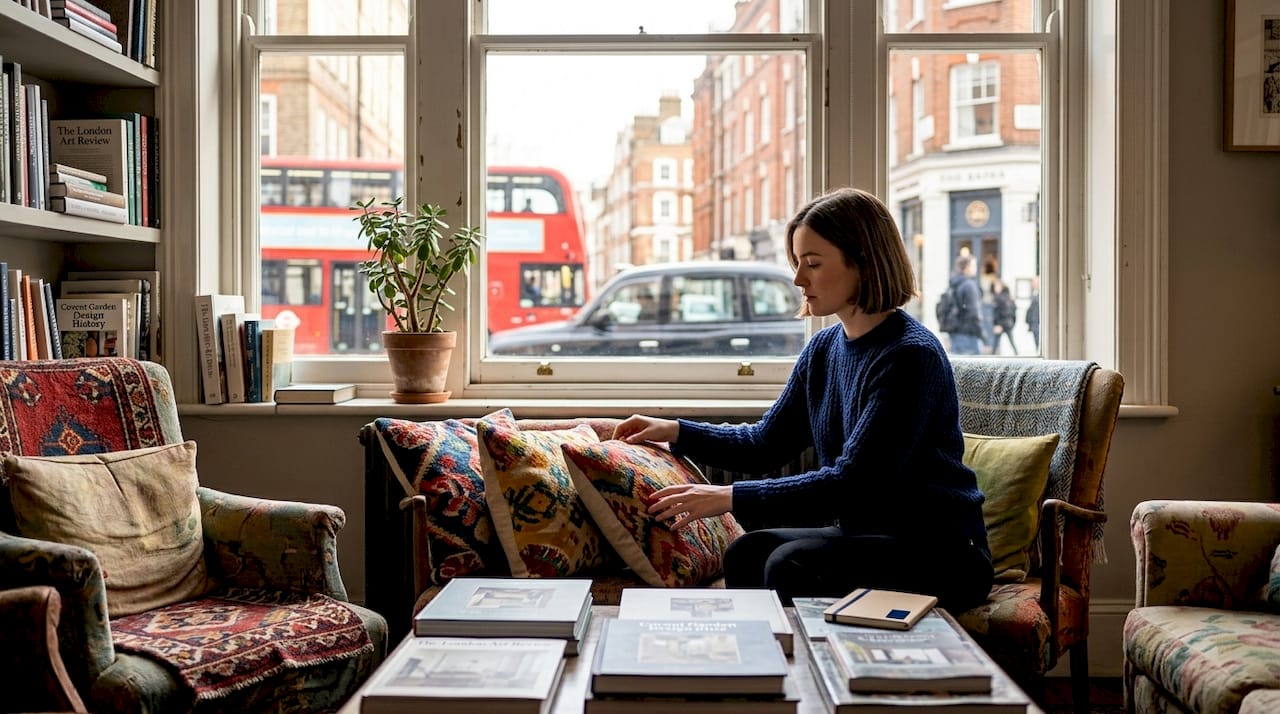
Consider the contrast between a generic hotel room anywhere in the world and a boutique room in Bermondsey that references the area’s Victorian leather trade through its material choices and colour palette. Or a property in Clerkenwell that celebrates the area’s history as London’s watchmaking district with mechanical art installations and timepiece-inspired design details. These choices transform a room from a container for sleep into an experience.
London boutique hotels and their neighbourhood themes
| Area | Character | Common design themes |
|---|---|---|
| Notting Hill | Bohemian, colourful, creative | Vintage prints, bold colour, eclectic furniture |
| Shoreditch | Urban, artistic, edgy | Street art, industrial materials, contemporary works |
| Marylebone | Refined, literary, intimate | Classic British detailing, rich textures |
| South Kensington | Cultural, elegant, international | Art references, museum-inspired pieces |
| Hackney | Alternative, community-focused | Craft, sustainability, local maker goods |
| Southwark | Historic, riverside, evolving | Layers of London history, mixed-era references |
The neighbourhood connection runs deeper than aesthetics. Boutique hotels in London often source their products locally, partner with nearby restaurants for room service, and curate minibar offerings around regional producers. Your morning coffee might come from a roaster three streets away. Your bathroom products might be made by an artisan soap maker in East London. These choices are intentional and they enrich the experience considerably.
Exploring London’s best neighbourhoods before you book helps you match a boutique hotel’s character to your own interests. If you love markets and independent shops, Notting Hill or Broadway Market will suit you far better than the corporate buzz around Canary Wharf. If history and riverside walks are your thing, local London exploration around areas like Bermondsey or London Bridge offers boutique properties that genuinely celebrate their surroundings.
The design quality in London’s boutique hotels has risen sharply over the past decade. Owners now frequently commission well-known interior designers and artists to create spaces that feel as carefully considered as a gallery installation. Staying in one of these properties is as much a cultural experience as visiting a museum, except you get to sleep in it.
Comparing boutique hotels with chain hotels
To put all this insight into context, let’s see how boutique hotels stack up against their larger, chain-operated counterparts. This is not about declaring one superior in every situation. It is about helping you make the right choice for your particular trip.
Boutique hotels offer unique design, local character, intimate atmosphere and attentive service, while chains provide standardisation and scale that suits certain types of travel perfectly well. Understanding which matters most for your trip is the key.
When boutique hotels are the better choice:
- You are visiting London for leisure and want to genuinely experience the city
- You value memorable details over brand familiarity
- You are travelling solo, as a couple, or in a small group
- You want to stay in a distinctive neighbourhood rather than a generic central location
- You enjoy genuine conversation with hotel staff and local recommendations
- Your trip has a particular mood or occasion attached to it (anniversary, milestone birthday, creative retreat)
When chain hotels might serve you better:
- You are travelling for business with early starts and need reliable, predictable amenities
- You have loyalty points to use and specific tier benefits to access
- You are travelling with a large group requiring consistent room standards
- Price certainty and cancellation flexibility are your primary concerns
- You need accessible facilities that meet strict requirements
The practical reality is that many experienced travellers now use a combination approach. They might stay at a chain hotel during a working week and then book a boutique property for a weekend extension, using each type of accommodation for what it genuinely does well.
Pro Tip: When comparing costs, do not look only at the room rate. Factor in what boutique hotels typically include that chains often charge extra for: welcome drinks, curated minibars, complimentary local guide books, and the time saved by not having to research the neighbourhood from scratch. If you want to experience London like a local, a boutique hotel often fast-tracks that experience considerably.
One genuine consideration is that boutique hotels vary more widely in quality than chains. A chain hotel in an unfamiliar city carries a level of guarantee that a boutique property in the same city does not. Reading recent reviews carefully, rather than relying on brand recognition, becomes essential when booking boutique. The upside is that when a boutique hotel excels, it tends to exceed anything a chain could offer by a considerable margin.
Tips for choosing and booking your London boutique hotel
Now that you know how boutique and chain hotels differ, here is how to find and book your ideal boutique stay in London with confidence and clarity.
Boutique hotels in London often provide unique design and an intimate, personalised experience reflecting the area’s local culture, but finding the right one requires a little more thought than simply searching by star rating.
- Define your neighbourhood first: London is a collection of deeply individual villages, each with its own character. Decide what kind of atmosphere suits your trip before searching for properties. A boutique hotel in Knightsbridge will offer a very different experience from one in Hackney or Borough Market.
- Read recent reviews with a specific focus: Look for comments about service quality, staff engagement, and the property’s local knowledge rather than just room cleanliness and Wi-Fi speed. These tell you far more about the boutique experience.
- Book directly with the hotel whenever possible: Boutique hotels often offer better rates, room upgrades, or added extras when you book through their own website rather than a third-party platform. It also starts the relationship on a more direct, personal footing.
- Contact the hotel before arrival: A quick email introducing yourself, noting your interests, and asking for their favourite local recommendation signals that you are an engaged guest and opens the door to a more personalised stay.
- Check what is genuinely included: Some boutique hotels include breakfast, welcome drinks, or evening socials in their rates. Understanding what is and is not included avoids surprises and helps you compare true value accurately.
- Look at the design philosophy: Browse the hotel’s website and social media to understand whether the aesthetic and atmosphere genuinely appeal to you. A beautifully designed hotel whose style does not resonate with you personally will not deliver the same experience as one that does.
- Consider the size of the property: A ten-room boutique hotel will feel extraordinarily intimate. A fifty-room property will still feel personal compared to a chain but offers a bit more anonymity if that suits you. Neither is better, they simply suit different preferences.
Pro Tip: Many of London’s finest boutique hotels are not listed prominently on major booking platforms because they prefer direct relationships with guests and carry their reputation through word of mouth and return visits. Searching independently for boutique hotels by neighbourhood name rather than relying solely on aggregator results can uncover genuinely exceptional properties that rarely appear on the first page of search results.
Why the boutique experience is worth more than five stars
Here is something that most hotel guides will not tell you: star ratings are almost entirely irrelevant when it comes to boutique hotels. A five-star chain hotel and a three-star boutique property can be worlds apart in terms of the experience they deliver, and the chain will often come out the lesser of the two.
Star ratings measure objective criteria: room size, lift availability, twenty-four-hour reception, ironing facilities. They do not measure the warmth of the greeting you receive. They do not measure whether the person who brought your breakfast knew your name. They do not measure whether the framed photograph in your room was taken by a local photographer whose work tells you something true about the street outside your window.
We have spent considerable time exploring unique neighbourhood experiences across London, and the pattern is consistent. The travellers who return from London with the best stories, the clearest memories, and the strongest desire to come back are almost never the ones who stayed at a famous chain on a recognisable street. They are the ones who stayed somewhere small, somewhere specific, somewhere that felt chosen rather than defaulted to.
There is something profound about a hotel that reflects its place. London is not a generic city. It is layered, complicated, neighbourhood-specific, and endlessly particular. Staying in a hotel that captures even a fraction of that specificity brings you closer to the city in a way that a standardised room simply cannot. You begin to notice things. You ask questions. You take different routes. The hotel becomes a lens through which London comes into focus.
Our honest view: the boutique experience is not for every trip or every traveller. If you need the reassurance of absolute consistency, book a chain and do not feel guilty about it. But if you have any flexibility and any appetite for a stay that might genuinely surprise you, a London boutique hotel is one of the best investments you can make in your travel experience. Authenticity, warmth, and a sense of genuine place are worth far more than a marble lobby and a loyalty card.
Discover your perfect London boutique stay
Turning inspiration into a booked trip is where we come in. London Vacation Guide is here to make that process considerably easier. Our neighbourhood guides cover London’s most distinctive areas in depth, helping you understand the character, atmosphere, and practical realities of each location before you commit to a property. Whether you are drawn to the creative energy of East London or the refined calm of Marylebone, we have curated content to match your interests. If this is your first visit to the city, our first-time visitor guide offers expertly organised itineraries that pair beautifully with boutique hotel stays across the capital. Start exploring and let London’s best small hotels surprise you.
Frequently asked questions
What defines a boutique hotel in London?
Boutique hotels are typically smaller and independently operated, enabling personalised guest interactions, with unique design and strong local character that distinguish them from chain properties.
Are boutique hotels more expensive than chain hotels?
Boutique hotels span a wide price range, and while some command a premium for their location and personalised amenities, many offer genuine value through included extras and experiences that chain hotels charge separately for.
How do boutique hotels reflect London’s local culture?
Boutique properties feature individually designed interiors and themes that celebrate the surrounding area’s history and personality, making each property feel like an authentic extension of its neighbourhood.
Is personalisation guaranteed at all boutique hotels?
Most boutique hotels pride themselves on attentive, personalised service, but the level of individual attention can vary depending on property size, staffing levels, and how recently the hotel has invested in its guest experience approach.
Where can I find reliable reviews for London boutique hotels?
Checking specialist travel platforms alongside local city guides and neighbourhood-specific resources will give you the most honest and recent picture of service quality and atmosphere at any boutique property you are considering.
Recommended
- Knightsbridge Neighbourhood Guide - London Vacation Guide
- Discover local London: Why exploring beyond tourist spots matters - The London Journal | London Vacation Guide
- Explore the best London neighbourhoods for locals - The London Journal | London Vacation Guide
- How to experience London like a local: your essential guide - The London Journal | London Vacation Guide
- What Makes a Boutique Hotel Special Today