How to experience London like a local: your essential guide
TL;DR:
- Choosing the right neighborhood greatly influences an authentic local London experience.
- Discovering hidden spots and local markets offers a more genuine connection than tourist sites.
- Blending in involves respecting social norms like queuing, Tube etiquette, and local pub customs.
You could spend a week in London and never leave the tourist trail. Oxford Street, the Tower of London, a selfie on Tower Bridge — and then home, wondering why it felt more like a theme park than a real city. The truth is that London has two layers. The first is polished and obvious. The second is lived-in, surprising, and utterly magnetic. It belongs to the people who know which market to visit on a Tuesday morning, which pub garden fills up on a warm evening, and which park bench has the best view in the city. This guide is about getting you into that second layer, quickly and confidently.
Table of Contents
- Choose the right neighbourhood to settle into local life
- Eat and drink where locals gather
- Uncover London’s hidden gems and secret spots
- Blend in: daily habits and culture
- Plan your perfect local day in London
- What most guides get wrong about living London like a local
- Take your next step: local London awaits
- Frequently asked questions
Key Takeaways
| Point | Details |
|---|---|
| Stay in the right neighbourhood | Choosing a local-favourite area is crucial for an authentic London experience. |
| Eat and drink local | Prioritise markets, pubs, and independent cafes to enjoy London’s culinary scene. |
| Discover hidden gems | Explore lesser-known parks, galleries, and streets for a real local adventure. |
| Master daily habits | Adopt local etiquette for transport, queuing, and public behaviour. |
| Plan a local day | Mix local food, culture, and spontaneous discovery for London the way locals live it. |
Choose the right neighbourhood to settle into local life
Your choice of neighbourhood shapes your London experience more than almost anything else. Neighbourhood guides consistently show that where you base yourself determines what you eat, who you meet, and how the city feels to you each morning. Staying near a major tourist site might seem convenient, but it often means you’re surrounded by other visitors rather than the city’s actual residents.
Consider the difference between staying near Covent Garden versus renting a room in Peckham. In Covent Garden, your morning coffee comes from a chain café with a queue of tourists. In Peckham, you’re grabbing a flat white from an independent roastery, watching local artists head to their studios, and browsing a fruit stall run by the same family for thirty years. Same city. Completely different experience.
Here’s a quick look at some of the most characterful neighbourhoods and what they offer:
| Neighbourhood | Local character | Best for |
|---|---|---|
| Shoreditch | Creative, edgy, street art | Art lovers, nightlife, markets |
| Camden | Bohemian, music-led, eclectic | Alternative culture, live gigs |
| Greenwich | Historic, village-like, riverside | Families, history, green space |
| Peckham | Diverse, artistic, up-and-coming | Food scenes, rooftop bars |
| Stoke Newington | Leafy, independent, community-focused | Cafés, bookshops, parks |
| Bermondsey | Foodie, industrial-chic, creative | Markets, galleries, craft beer |
When choosing where to stay, think beyond proximity to landmarks. Instead, weigh up these factors:
- Café density: Independent coffee shops signal a neighbourhood with character and regulars.
- Local markets: Weekly or weekend markets mean fresh food, community energy, and real interaction.
- Green space: Parks are where Londoners actually relax. Proximity to one changes your daily rhythm entirely.
- Transport links: Being well-connected means you can roam freely without being stuck.
- Nightlife style: Some areas buzz until 4am; others are quiet by ten. Know what suits you.
Shoreditch is ideal if you want to feel the pulse of London’s creative scene. Brick Lane on a Sunday morning, with its bagels, vintage stalls, and street art, is an experience that feels entirely local. Camden suits those drawn to music and a slightly anarchic energy. Greenwich, meanwhile, offers something rarer: the feeling of a village inside a capital city, complete with a market, a park with sweeping city views, and a strong sense of community.
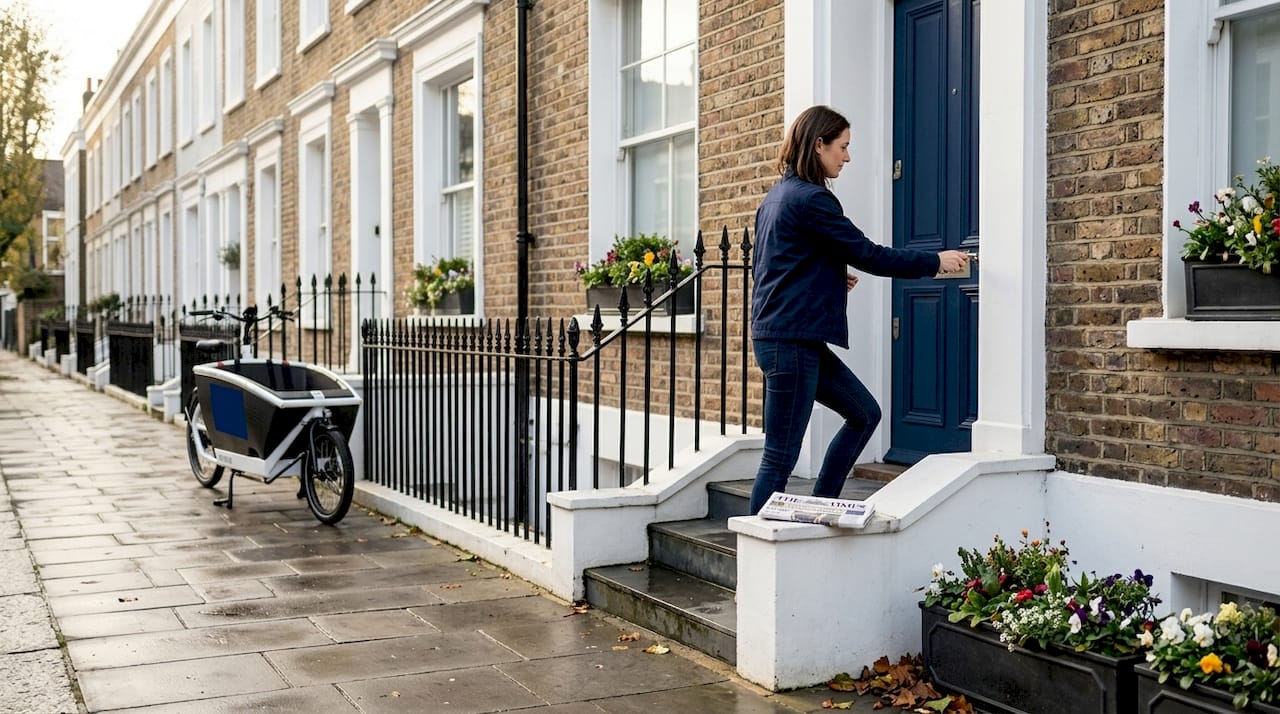
Pro Tip: Book accommodation in a residential street rather than a main road. You’ll wake up to the sounds of a real neighbourhood: milk deliveries, school runs, and the distant rumble of a bus rather than the roar of tourist coaches.
Eat and drink where locals gather
Once you’ve found your home base, it’s time to discover the best way to fuel your London days by eating and drinking like a local. The city’s food scene is extraordinary, but navigating it well means knowing where to look and, more importantly, where not to bother.
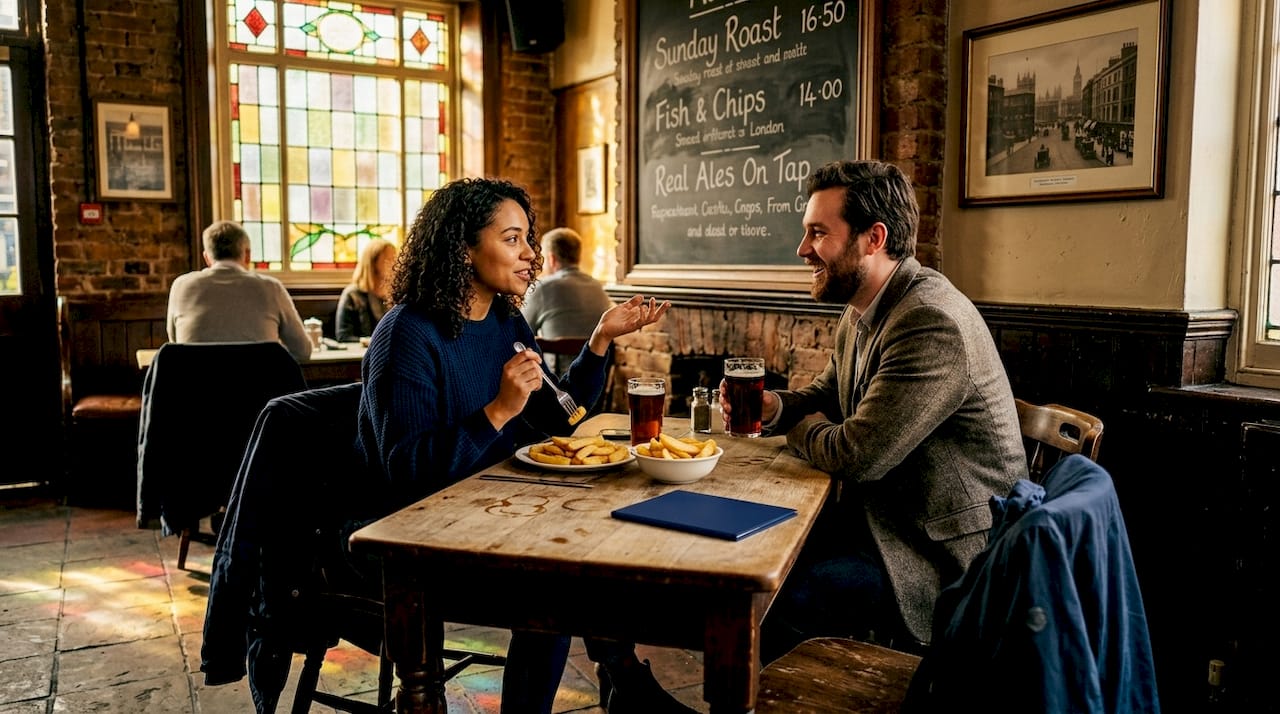
Exploring traditional eateries and pubs is essential to experiencing London’s food scene as locals do. The city’s residents have strong opinions about where they eat, and those opinions rarely align with the laminated menus near the big attractions.
Here’s where to focus your eating and drinking:
- Street food markets: Borough Market is famous but still beloved by locals for its quality. Maltby Street Market in Bermondsey is smaller, less crowded, and arguably better. Brockley Market on a Saturday morning is a genuine neighbourhood gem.
- Historic pubs: The Churchill Arms in Kensington, The Prospect of Whitby in Wapping, and The Lamb in Bloomsbury all have deep roots and a genuinely local clientele.
- Independent coffee shops: Look for places with hand-written menus and mismatched furniture. Avoid anywhere with a logo on a paper cup you’ve seen before.
- Pie and mash shops: A dying but deeply London tradition. Manzes in Bermondsey has been serving since 1902.
- Greasy spoon cafés: The full English breakfast at a proper “caff” is a rite of passage. Look for steamed-up windows and builders reading newspapers.
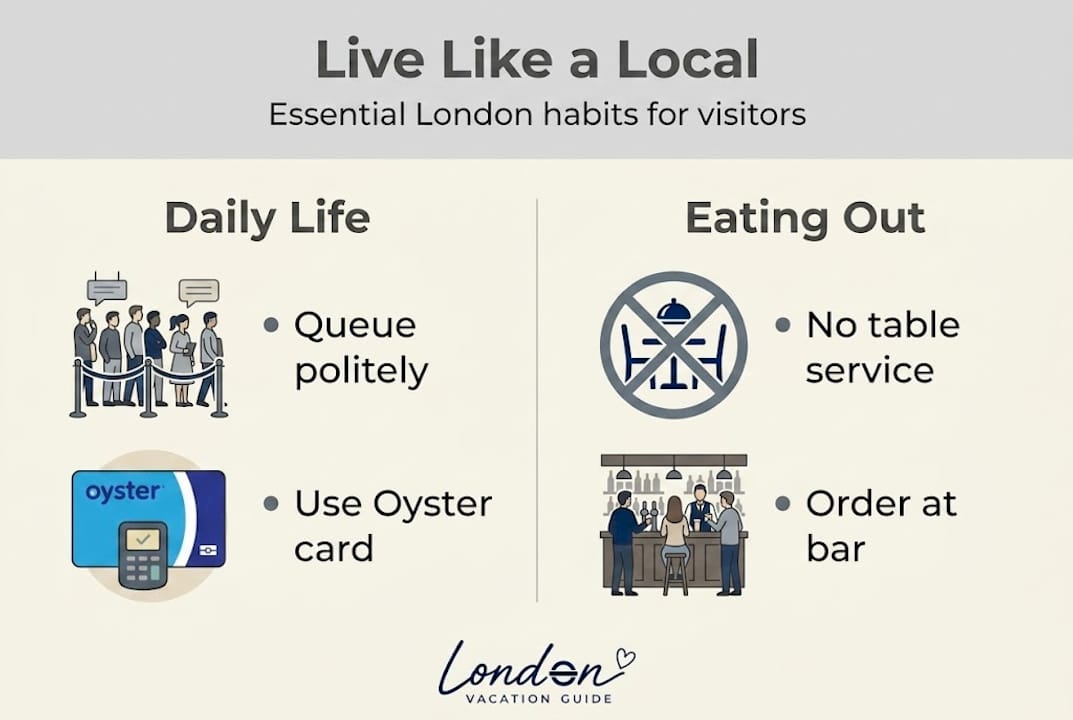
Pub culture deserves its own mention. The pub is the living room of London. Locals don’t just drink there — they meet friends, watch football, celebrate birthdays, and have quiet pints alone with a book. The ritual matters. You go to the bar to order (table service is rare in traditional pubs), you pay as you go, and you don’t rush.
“The pub is not just a place to drink. It’s a place to belong. Every regular has their spot, their order, and their landlord who knows their name.”
Tell-tale signs of a local-approved venue include: a handwritten specials board, real ales on tap, locals who nod at each other when they walk in, and a complete absence of “I Love London” merchandise near the door.
Pro Tip: When ordering at a pub bar, make eye contact with the barstaff rather than waving or calling out. Londoners queue politely and wait their turn. Trying to rush the process marks you immediately as someone who doesn’t know the rules.
Uncover London’s hidden gems and secret spots
With good food in you, it’s time to stray from the usual path and discover the corners even many guidebooks skip. Many Londoners skip the tourist hotspots and spend their free time in secret spots that most visitors never find.
The contrast between the tourist London and the local London is striking. Here’s a comparison to illustrate the difference:
| Tourist version | Local alternative |
|---|---|
| Trafalgar Square | Postman’s Park, EC1 |
| Hyde Park | Brockwell Park, Herne Hill |
| The Tate Modern | Saatchi Gallery or Tate Britain |
| Buckingham Palace | Eltham Palace |
| The Shard | Primrose Hill at sunset |
| Oxford Street | Columbia Road Flower Market |
These alternatives aren’t lesser versions. In many cases, they’re genuinely superior experiences. Postman’s Park, tucked behind St Paul’s Cathedral, contains the Victorian memorial to heroic self-sacrifice, a quiet and deeply moving collection of ceramic tiles commemorating ordinary people who died saving others. Almost nobody goes there. It’s extraordinary.
Here’s a route for discovering hidden gems across the city, designed to be done on foot and by public transport:
- Start at Columbia Road Flower Market on a Sunday morning. Arrive before 9am for the best blooms and the least crowds.
- Walk south through Shoreditch, pausing to look at the street art along Rivington Street and Curtain Road.
- Cross to Bermondsey and find Maltby Street Market for a late breakfast or early lunch.
- Head to Leathermarket Gardens, a hidden green square tucked behind the railway arches, almost entirely unknown to visitors.
- Walk along the river eastwards to Bermondsey Wall East for a view of the Thames that feels entirely off the tourist map.
- End the afternoon at Nunhead Cemetery, one of London’s “Magnificent Seven” Victorian cemeteries, wild with nature and strangely beautiful.
How do you recognise a spot that locals actually love? Look for these signs: no ticket booth, no gift shop nearby, locals sitting quietly rather than posing for photographs, and a sense that the place has been quietly maintained rather than aggressively marketed.
London is a city that rewards the curious. Its energy shifts constantly, and the best spots are often those that haven’t been written up yet. Ask your local café owner, your Airbnb host, or the person sitting next to you on the bus. Locals love sharing their city when asked genuinely.
Blend in: daily habits and culture
Now that you’ve got the lay of the land, let’s make sure you’re blending in seamlessly. Learning local habits is essential for travellers wanting a more authentic experience, and in London, the unwritten rules are just as important as the written ones.
London is a city with deeply ingrained social codes. They’re rarely explained, but they’re always enforced — usually through a withering look rather than a confrontation.
Here’s what you need to know:
- On the Tube: Stand on the right on escalators. Always. Move down inside the carriage. Don’t make eye contact. Don’t talk loudly. Don’t eat anything smelly.
- Queuing: Londoners queue for everything and take it seriously. Jumping a queue is one of the most serious social offences you can commit.
- In cafés: Ordering a “regular coffee” will confuse people. Be specific: flat white, Americano, filter. Tipping is appreciated but not obligatory in most independent spots.
- Greetings: A nod, a brief smile, or a “cheers” covers most social interactions. Londoners are warm but not effusive with strangers.
- In pubs: Don’t sit at the bar unless you’re ordering. Don’t hover near someone’s table hoping they’ll leave. Don’t ask to share a table unless the pub is genuinely packed.
- On the street: Walk at pace. Don’t stop suddenly in the middle of the pavement. If you need to check your map, step to the side.
The key insight here is that Londoners are not unfriendly. They are simply respectful of personal space and time. Once you understand that, the city opens up. A brief, genuine exchange at a market stall or a conversation sparked in a pub garden can be one of the warmest interactions you’ll have anywhere.
Using London itineraries that factor in local transport habits will also save you significant time and frustration. Locals rarely take taxis during rush hour. They use the Tube, buses, and their own two feet.
Pro Tip: Get an Oyster card or link your contactless bank card to the Transport for London system. You’ll pay the same capped daily fare as every other commuter, which is significantly cheaper than buying individual paper tickets. Tap in, tap out, and you’re moving like a local from day one.
Plan your perfect local day in London
With etiquette and insights in hand, it’s time to put it all together and live a genuinely local day in London. Combining local activities ensures you experience the city as a resident would, not just as a visitor passing through.
The beauty of a local London day is that it has rhythm. It’s not about ticking off attractions. It’s about moving through the city with intention and a little spontaneity. Here’s how to build one:
- Early morning (7am to 9am): Head to a local market or independent café for breakfast. Borough Market, Portobello Road, or your nearest neighbourhood market will do. Order a bacon roll, a coffee, and take your time.
- Mid-morning (9am to 12pm): Walk. London is extraordinarily walkable, and the best discoveries happen on foot. Pick a canal towpath (Regent’s Canal is magnificent), a park, or a residential street you’ve never seen before.
- Lunchtime (12pm to 2pm): Find a pub for a proper pub lunch. A Sunday roast if it’s the weekend, or a ploughman’s and a pint on a weekday. Sit outside if the weather allows — Londoners are optimistic about sunshine.
- Afternoon (2pm to 5pm): Visit a free museum or gallery, or explore a neighbourhood you haven’t been to yet. The best free London experiences include the National Portrait Gallery, the V&A, and the Natural History Museum, all of which are genuinely world-class and entirely free.
- Early evening (5pm to 7pm): Join the after-work crowd at a pub or riverside bar. This is when London is at its most sociable. The energy is relaxed, the conversations are easy, and you’ll feel the city breathe out after a long day.
- Evening (7pm onwards): Dinner at an independent restaurant in your neighbourhood, followed by a walk along the river or through a quiet residential area. London at night, away from the neon, is beautiful and surprisingly peaceful.
Customise this framework based on what draws you. If you’re a food lover, replace the gallery visit with a food tour of a specific neighbourhood. If you’re into music, swap the pub lunch for a record shop browse in Soho or Portobello. The structure is the same; the content is yours.
Pro Tip: London’s late evenings are underrated. After 9pm, the city shifts into a quieter, more intimate gear. A walk along the South Bank, a late pint in a neighbourhood pub, or a wander through Soho reveals a version of the city that most visitors never see because they’ve already gone back to their hotel.
What most guides get wrong about living London like a local
Most guides approach “living like a local” as a checklist. Go to this market. Eat at this restaurant. Take this bus route. And while those specifics can be helpful, they miss the point entirely.
Being local in London isn’t about knowing the right spots. It’s about a particular relationship with the city: comfortable, curious, and unbothered by the chaos. Londoners don’t rush from attraction to attraction. They have a favourite corner of their favourite park. They have a pub they’ve been going to for years. They have a route they walk not because it’s the fastest but because it passes something they like.
The biggest misconception is that local life is exotic or hidden. It isn’t. It’s ordinary, and that’s precisely what makes it special. A Tuesday morning at a local café, watching the neighbourhood wake up, is more authentically London than any curated experience.
At London Vacation Guide, we’ve seen countless visitors transform their trips by simply slowing down. The ones who have the best time are rarely those who planned the most. They’re the ones who gave themselves permission to wander, to sit, to get a little lost, and to let the city show itself on its own terms.
The counterintuitive truth is this: the less you try to experience London like a local, and the more you simply inhabit the city with curiosity and patience, the more local your experience will feel.
Take your next step: local London awaits
You now have the tools to move through London with confidence and genuine curiosity. The neighbourhoods, the food scenes, the hidden corners, the daily habits — it all adds up to a city that rewards those who look beyond the obvious. The next step is planning the details in a way that actually fits your interests and travel style.
London Vacation Guide is built to help you do exactly that. Whether you’re after first-timer tips that cut through the noise, detailed neighbourhood guides to help you choose where to base yourself, or hand-picked itineraries designed around how locals actually spend their time, you’ll find everything you need in one place. Dive in, plan with purpose, and get ready to experience a London that most visitors never find.
Frequently asked questions
What’s the best way to find non-touristy restaurants in London?
Check neighbourhood-focused guides and look for spots with handwritten menus and a local clientele, as exploring traditional eateries is the surest route to authentic London dining.
How can I travel around London like a local?
Use the Tube and buses with an Oyster card or contactless payment, walk between nearby neighbourhoods when you can, and learn local habits such as standing on the right on escalators and avoiding rush-hour taxis.
Are there any free local activities in London?
Absolutely — world-class museums, parks, and community events cost nothing, and locals make the most of free London experiences every weekend.
What is a typical local London breakfast?
A bacon roll or beans on toast from a neighbourhood café or market stall is the classic choice, often accompanied by a strong builder’s tea or a flat white.
Which local customs should I be aware of to blend in?
Respect queuing at all times, follow Tube etiquette by standing on the right and keeping noise down, and learn the unwritten rules of pub culture to feel genuinely at home in the city.
Recommended
- London for First-Time Visitors: The Essential Guide | London Vacation Guide
- 3 Days in London: The Ultimate Itinerary | London Vacation Guide
- Top 10 Things to Do in London for First-Time Visitors - The London Journal | London Vacation Guide
- 4–5 Days in London: The Complete Itinerary | London Vacation Guide