Why explore Shoreditch: London’s creative quarter
Shoreditch is defined by a single quality that no other London neighbourhood can replicate: the collision of raw industrial heritage, world-class street art, and a food and drink scene that genuinely rivals Mayfair. If you are asking why explore Shoreditch, the answer is that it functions as a living, breathing cultural laboratory where trends are born rather than imported. The Great Eastern Street Art Wall, Brick Lane Market, and venues like Tayēr + Elementary are not tourist attractions bolted onto a neighbourhood. They are the neighbourhood. This is East London at its most unfiltered, and it rewards every visitor who arrives with curiosity rather than a checklist.
Why explore Shoreditch’s street art scene first
Shoreditch holds over 2,000 documented street art works, making it one of Europe’s largest open-air galleries. That figure is not a static archive. Works appear, fade, and are painted over within weeks, which means every visit produces a genuinely different experience. This constant renewal is precisely what separates Shoreditch from cities that treat street art as a preserved monument.
The Great Eastern Street Art Wall has hosted work by over 200 artists since 2008, and it remains the most concentrated single stretch of public art in the district. Beyond it, Grimsby Street, Fashion Street, and Seven Stars Yard each carry their own visual character. Grimsby Street leans towards large-scale figurative murals, while Seven Stars Yard tends to attract more experimental, abstract work. Knowing this distinction before you arrive lets you plan a route that matches your taste rather than wandering without direction.
Two artists define the local aesthetic more than any others. Stik produces deceptively simple stick figures that carry enormous emotional weight, and his pieces appear across Shoreditch and neighbouring Hackney. ROA works in monochrome, painting oversized anatomical animals on warehouse walls with a precision that stops pedestrians mid-stride. Spotting either artist’s work in the wild feels like finding something genuinely rare, even though both are internationally recognised.
For a cultural guide to London street art, the context behind these works matters as much as the images themselves. Shoreditch’s art scene grew from a tradition of reclaiming neglected industrial space, not from civic commissioning. That origin gives it an edge and an authenticity that more curated urban art districts lack.
Key locations to include on any street art walk:
- Great Eastern Street Art Wall: The anchor of the scene, best visited on a weekday morning before foot traffic builds
- Grimsby Street: Dense concentration of large-scale murals, excellent for photography in afternoon light
- Fashion Street: Smaller, more intricate pieces tucked between commercial units
- Seven Stars Yard: Rotating works from emerging artists, often the freshest content in the area
- Redchurch Street: Combines street art with independent boutiques, making it a natural route connector
Pro Tip: Resist the urge to follow a pre-mapped tour on your first visit. Walk one block off any recommended route and you will almost certainly find an unsigned piece that does not appear in any guide. The most memorable Shoreditch art is still discovered by accident.
Are Shoreditch’s markets worth visiting?
The short answer is yes, and Sunday is the day that makes the case most convincingly. Markets operate simultaneously within a 30-minute walking radius on Sundays, creating a sequence of entirely different atmospheres within a single morning. This concentration of market culture is unique to this corner of East London and is one of the strongest practical reasons to visit Shoreditch on a weekend.
The three markets that anchor the Sunday circuit are distinct enough to justify visiting all three in sequence:
- Brick Lane Market opens from roughly 9am and covers everything from vintage clothing and vinyl records to handmade jewellery and hot food. The northern end near Bethnal Green Road tends to have the most interesting vintage finds, while the southern stretch closer to Shoreditch High Street skews towards street food and crafts.
- Columbia Road Flower Market operates from 8am to 3pm and sells cut flowers, potted plants, and bulbs at prices well below what any florist charges. The street itself is narrow and the crowds are genuine, so arriving before 10am gives you space to browse without being jostled.
- Old Spitalfields Market runs seven days a week but reaches its full capacity on Sundays, when independent designers, antique dealers, and food vendors fill the Victorian covered hall. It is the most accessible entry point for visitors unfamiliar with market shopping, as the layout is clear and the quality is consistently higher than outdoor stalls.
Shoreditch’s vintage shopping rewards patience and a curious attitude. High-end curated shops sit alongside chaotic, no-frills stalls, and the price variance is considerable. A leather jacket that costs £180 in a Redchurch Street boutique might appear in a Brick Lane stall for £35 if you are willing to dig. The key is arriving with time rather than a specific item in mind.
For a broader view of London’s best food markets, Shoreditch sits comfortably alongside Borough Market and Broadway Market as one of the capital’s essential market destinations, though its character is considerably more eclectic than either.
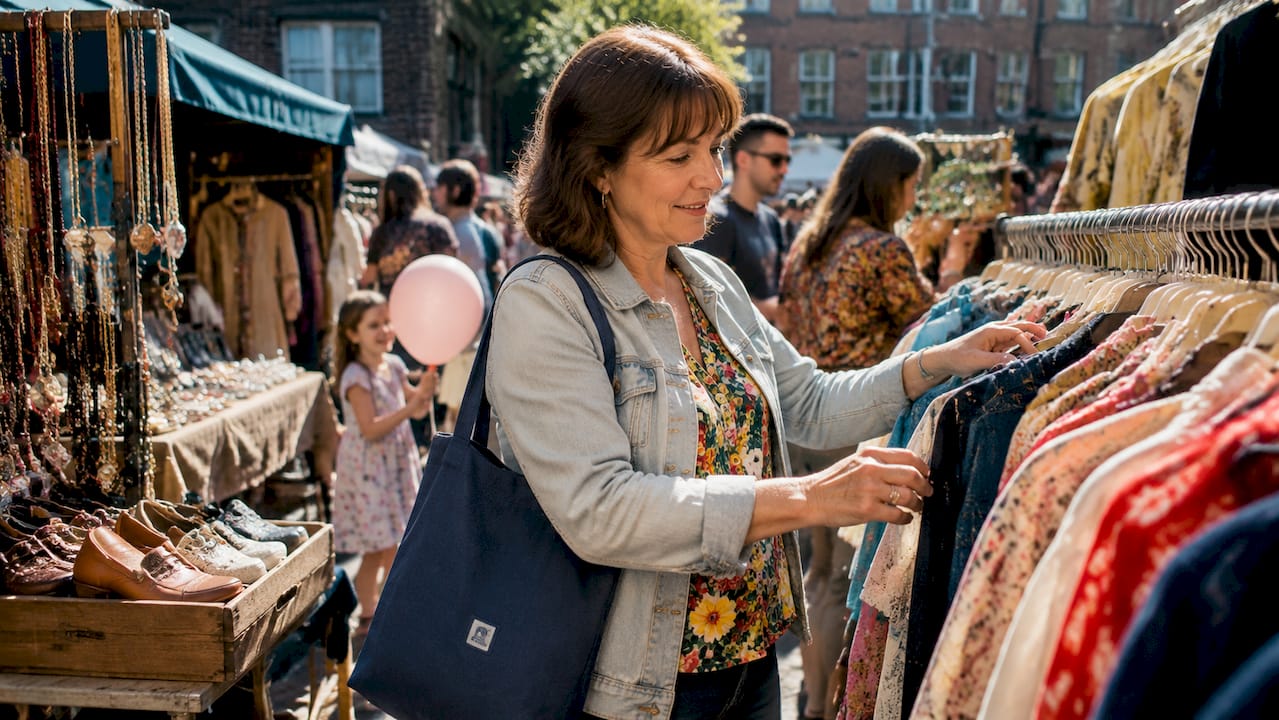
Pro Tip: If you want atmosphere, arrive at Brick Lane between 10am and noon. If you want space to actually look at things, arrive before 9:30am or after 1:30pm when the crowds thin noticeably.
How does Shoreditch’s food scene compare to the rest of London?
Shoreditch’s dining scene now rivals Mayfair in ambition and quality, which is a statement that would have seemed absurd fifteen years ago. The shift happened because the neighbourhood attracted chefs and bartenders who wanted creative freedom rather than the constraints of a traditional fine dining environment. The result is a food and drink culture that is simultaneously more experimental and more accessible than its West End counterparts.
Brick Lane remains the most famous eating street in the area, and its curry houses deliver exactly what they promise: generous portions, competitive pricing, and a lively atmosphere that suits groups. The quality varies, and the touts outside some restaurants are persistent, but the better establishments on the northern stretch of Brick Lane have genuine culinary credentials.
The more interesting story is what has grown around and beyond Brick Lane:
- Tayēr + Elementary on Old Street is the venue that put Shoreditch cocktail culture on the international map. Bartender Alex Kratena treats food and drink as a creative language pushing boundaries, and the bar’s tasting menu format for cocktails is unlike anything available elsewhere in London.
- Lyle’s in Tea Building on Shoreditch High Street holds a Michelin star and serves a short, daily-changing menu built around British produce. Booking is required and fills quickly, but the lunch menu offers better availability than dinner.
- Brat on Redchurch Street focuses on live-fire cooking and has developed a loyal following since opening. The wood-fired turbot is the dish most cited by regulars.
- Dishoom Shoreditch on Boundary Street is the East London outpost of the celebrated Bombay-style café group. Queues form before opening, but the wait is part of the experience.
Reservations at popular venues are advisable, but some exclusive bars operate on a same-night availability basis. Tayēr + Elementary’s more casual ‘Elementary’ side accepts walk-ins on the night, which means spontaneous visitors are not automatically excluded from the best experiences. This is worth knowing because the perception that every top Shoreditch venue requires weeks of advance planning is simply not accurate.
Pro Tip: For the Shoreditch food scene at its most concentrated, walk the stretch between Shoreditch High Street station and Old Street station on a Thursday or Friday evening. The density of quality options per block is higher here than almost anywhere else in London.
What historic and cultural contrasts shape Shoreditch’s character?
Shoreditch’s identity is inseparable from its position directly adjacent to the City of London. The neighbourhood’s distinct appeal arises from its stark contrast with the hyper-corporate City next door, and this tension is not incidental. It is the engine that drives the area’s creative energy. Walking from Liverpool Street station into Shoreditch takes under ten minutes, but the shift in atmosphere is immediate and total.

The neighbourhood’s history runs deeper than its recent creative reputation suggests. Shoreditch was home to London’s first purpose-built theatres in the 1570s, predating the Globe on the South Bank. The Theatre and The Curtain both stood here, and Shakespeare performed at both venues before Bankside became the dominant theatrical district. Victorian industry followed, leaving behind the warehouse architecture that now houses galleries, studios, and restaurants.
The Tech City initiative transformed the area’s economic profile, growing the number of startups near Old Street from 85 to 5,000 by 2026. This demographic shift brought tech professionals into a neighbourhood that had been defined by artists and musicians, creating a cultural friction that is still visible in the mix of venues, prices, and people on any given street. The friction is productive rather than destructive. It keeps the neighbourhood from settling into a single identity.
| Period | Character | Legacy visible today |
|---|---|---|
| Tudor (1570s) | First London theatres | Plaque sites near Curtain Road |
| Victorian | Industrial warehousing | Converted warehouse architecture throughout |
| 1980s to 2000s | Artist and creative community | Independent galleries, studios, street art |
| 2010s to present | Tech City growth | Co-working spaces, startup offices, premium hospitality |
The Victorian warehouse buildings are the physical thread connecting all these eras. Their high ceilings, large windows, and open floor plans made them ideal for artists in the 1990s and equally attractive to tech companies and restaurateurs in the 2010s. The buildings did not change. The people inside them did, repeatedly, and the neighbourhood absorbed each wave without losing its fundamental character.
How to plan your Shoreditch visit: timing, transport, and where to stay
The best way to explore Shoreditch is on foot, with Brick Lane, Redchurch Street, and Old Spitalfields Market forming the natural spine of any visit. Walking allows you to discover the unexpected: a courtyard gallery, a coffee shop in a converted railway arch, a mural you will not find in any guide. Comfortable shoes are not optional.
Practical planning points:
- Best days: Sunday for markets and atmosphere; Thursday and Friday evenings for food and nightlife at full capacity
- Best times for street art photography: Early morning on weekdays, when light is good and foot traffic is low
- Getting there: Shoreditch High Street (Overground) and Liverpool Street (Underground, Elizabeth line) are the two main entry points. Old Street station (Northern line) serves the northern end of the neighbourhood
- Bus routes: The 8, 26, and 388 all pass through or near the area and connect to central London
- Where to stay: The Hoxton Shoreditch on Great Eastern Street is the most characterful hotel in the neighbourhood, with a design that reflects the area’s industrial heritage. Boutique options on and around Curtain Road offer proximity to the main attractions without the premium of West End pricing
- Safety: Shoreditch is safe for visitors with standard urban awareness. Crowded weekend markets are well-policed and heavily foot-trafficked, which reduces risk considerably
For visitors combining Shoreditch with neighbouring areas, the Hackney neighbourhood guide covers the districts immediately to the north and east, which share much of Shoreditch’s creative character at slightly lower tourist density.
Key takeaways
Shoreditch rewards visitors who treat it as a neighbourhood to experience rather than a list of attractions to tick off.
| Point | Details |
|---|---|
| Street art is the entry point | Over 2,000 documented works make Shoreditch Europe’s largest open-air gallery, with new pieces appearing constantly. |
| Sunday is the essential day | Brick Lane, Columbia Road, and Old Spitalfields all operate simultaneously within a 30-minute walk on Sundays. |
| The food scene is genuinely world-class | Venues like Tayēr + Elementary and Lyle’s compete with the best in London, not just the best in East London. |
| History runs deeper than the hype | Tudor theatre roots and Victorian architecture give Shoreditch a cultural depth that its trendy reputation often obscures. |
| Walking beats every other option | The most memorable experiences happen between the major sites, not at them. |
Shoreditch never quite settles, and that is the point
I have spent more time in Shoreditch than I can accurately account for, and the neighbourhood has never once felt the same on two consecutive visits. That is not a travel writer’s flourish. It is the literal truth of a place that treats reinvention as a civic duty.
What I find most interesting is how often visitors arrive with a fixed plan and leave talking about something they stumbled across by accident. A ceramics studio open to the public on a Tuesday afternoon. A pop-up restaurant in a railway arch that has no online presence. A mural that appeared overnight and will be gone within a fortnight. The most memorable experiences happen serendipitously between the major sites, and Shoreditch is structured, almost deliberately, to produce those moments.
The cultural tension between the creative community and the adjacent City of London is real and ongoing. You feel it in the pricing, in the mix of people at any given bar, and in the way the neighbourhood simultaneously resists and accommodates gentrification. Some visitors find this tension uncomfortable. I find it the most honest thing about the place. Shoreditch has not resolved the contradiction between its raw origins and its current commercial success, and it is better for it.
My advice is to give yourself a full day, leave the itinerary loose after the first two hours, and follow whatever catches your eye. The neighbourhood will do the rest.
— Matt
Plan your London trip with London Vacation Guide
Shoreditch is one of the most rewarding neighbourhoods in London, but it works best as part of a broader visit to the city. London Vacation Guide’s essential guide for first-time visitors covers accommodation options, neighbourhood comparisons, transport planning, and day-by-day itinerary suggestions that complement everything Shoreditch offers. Whether you are spending three days or three weeks in London, the guide helps you build a trip that goes beyond the obvious. For a deeper look at the neighbourhood itself, the Shoreditch neighbourhood guide on London Vacation Guide covers the culinary scene, nightlife, and local culture in detail.
FAQ
What is the best day to visit Shoreditch?
Sunday is the best single day to visit Shoreditch. Brick Lane Market, Columbia Road Flower Market, and Old Spitalfields Market all operate simultaneously within a 30-minute walking radius, creating a concentration of activity unmatched on any other day of the week.
Is Shoreditch safe for tourists?
Shoreditch is safe for visitors who apply standard urban awareness. The weekend markets are heavily foot-trafficked and well-policed, and the main streets around Brick Lane and Shoreditch High Street are busy enough throughout the day to present minimal risk.
How long does it take to explore Shoreditch properly?
A full day gives you enough time to cover the street art, at least two markets, and a meal or two. Half a day is sufficient for a focused visit centred on one or two areas, such as the street art circuit or the Sunday market route.
Do I need to book restaurants in Shoreditch in advance?
Booking is advisable for venues like Lyle’s and Brat, which fill quickly. However, some of the area’s most acclaimed bars, including the walk-in side of Tayēr + Elementary, operate on same-night availability, so spontaneous visits are more viable than the neighbourhood’s reputation suggests.
How do I get to Shoreditch from central London?
Shoreditch High Street Overground station and Liverpool Street Underground station are the two most convenient entry points. From central London, Liverpool Street is reachable in under ten minutes on the Central or Circle line, and Shoreditch High Street is a short walk from there.
Recommended
- Explore the best London neighbourhoods for locals - The London Journal | London Vacation Guide
- Hidden London: Secret Spots Most Tourists Miss - The London Journal | London Vacation Guide
- Best Areas to Stay in London: A Neighbourhood-by-Neighbourhood Guide - The London Journal | London Vacation Guide
- Best Food Markets in London: Borough, Broadway and Beyond - The London Journal | London Vacation Guide