What is London street art? A cultural guide
London street art is defined as the practice of creating visual artwork in public urban spaces, ranging from commissioned murals and paste-ups to spontaneous graffiti, that transforms the city’s walls, tunnels, and underpasses into an open-air gallery. The term “street art” is now widely used, though the broader industry often refers to this practice as public art or urban art when works are sanctioned and site-specific. London’s scene is one of the most celebrated in the world, shaped by artists like Banksy, Stik, and Fin DAC, and anchored in neighbourhoods like Shoreditch, Brixton, and the South Bank. Commissioned murals and spontaneous graffiti coexist across the city, keeping the urban walls dynamic and the viewing experience constantly fresh. Whether you are visiting for a weekend or planning a dedicated art itinerary, understanding what London street art actually is will sharpen how you see the city.
What is London street art and how does it differ from graffiti?
Street art and graffiti share walls but not always intentions. Street art is often commissioned, public-facing, and image-based, whereas graffiti is more often unauthorised and word or tag-based. This distinction matters enormously in London, where the two forms coexist on the same streets yet attract very different responses from councils, property owners, and the public.
The clearest way to understand the split is through permission. A large-scale mural painted on a Shoreditch warehouse wall with the building owner’s consent is street art. A tag sprayed on a Tube carriage overnight is graffiti. Both require skill and intent, but only one carries legal protection. This is not a moral judgement. Many of the most culturally significant works in London’s history began as unauthorised pieces.
Here is how the two forms typically differ in London’s context:
- Permission: Street art is usually commissioned or approved by property owners or local councils. Graffiti is typically created without consent.
- Style: Street art tends to use figurative imagery, portraiture, and narrative scenes. Graffiti favours lettering, tags, and throw-ups.
- Longevity: Commissioned murals are often preserved and even restored. Unauthorised graffiti is regularly painted over, sometimes within hours.
- Public perception: Street art is broadly celebrated and attracts tourism. Graffiti divides opinion, with councils and transport authorities spending significant resources on removal.
- Legal status: Street art on private property with consent is legal. Graffiti on public infrastructure, including Tube trains and bridges, is a criminal offence under the Criminal Damage Act 1971.
The lines blur constantly. Banksy began as an illegal graffiti writer in Bristol and London before his work became so culturally valuable that pieces are now protected by Perspex screens. Stik’s simple stick figures, once painted without permission, are now commissioned by councils and housing associations. London’s street art history is largely a story of unauthorised work earning legitimacy over time.
Pro Tip: When exploring Shoreditch or Brick Lane, look at the base of murals for small plaques or painted credits. Commissioned works often include the artist’s name and the commissioning organisation, which helps you distinguish legal murals from spontaneous pieces.
Where are the best street art locations in London?
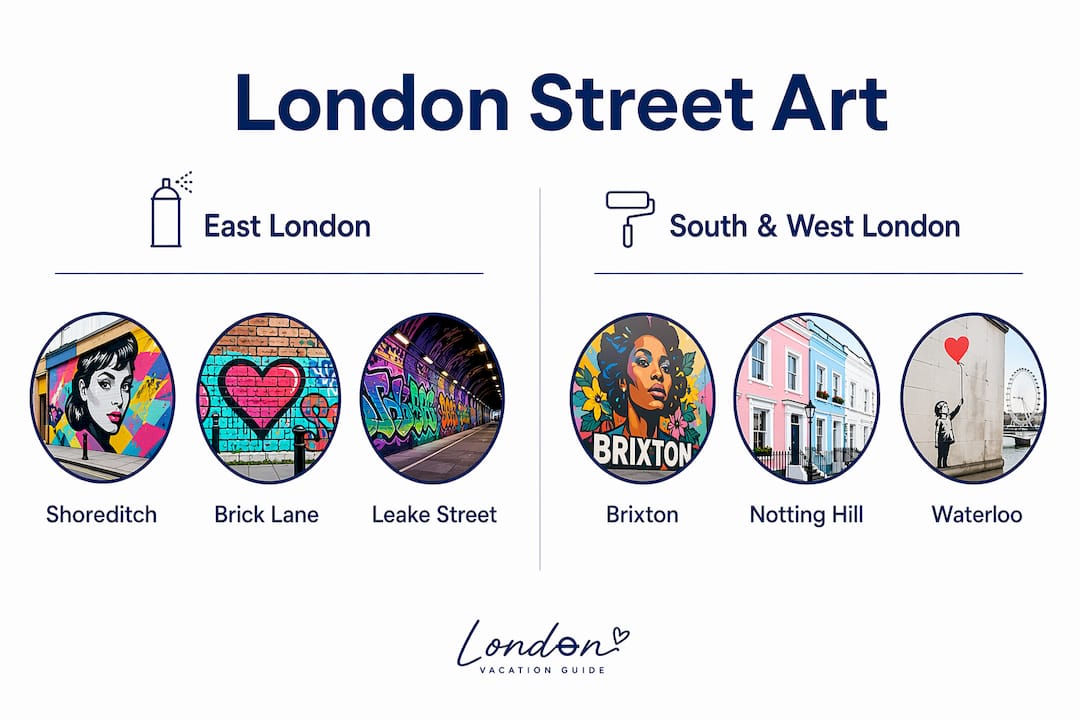
London’s street art is not evenly distributed. It clusters in specific neighbourhoods where property owners, councils, or community organisations have created the conditions for it to thrive. Knowing where to go is the foundation of any good street art discovery process.
Shoreditch and Brick Lane
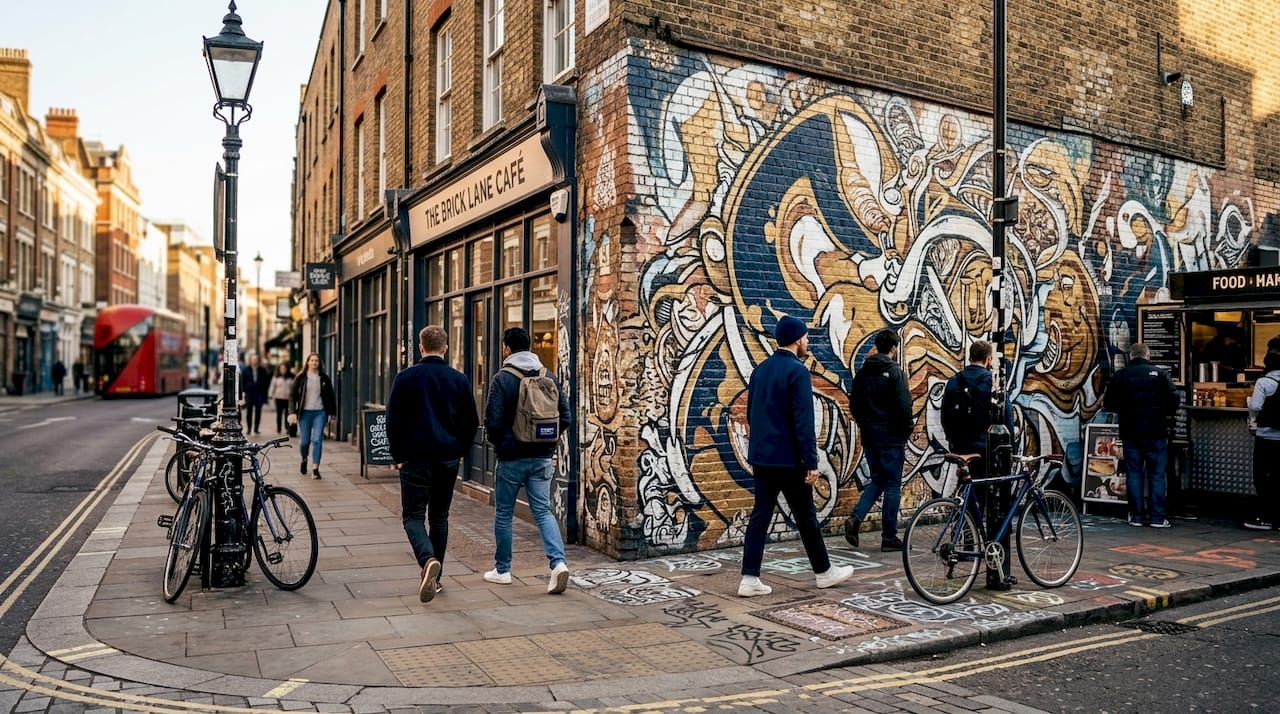
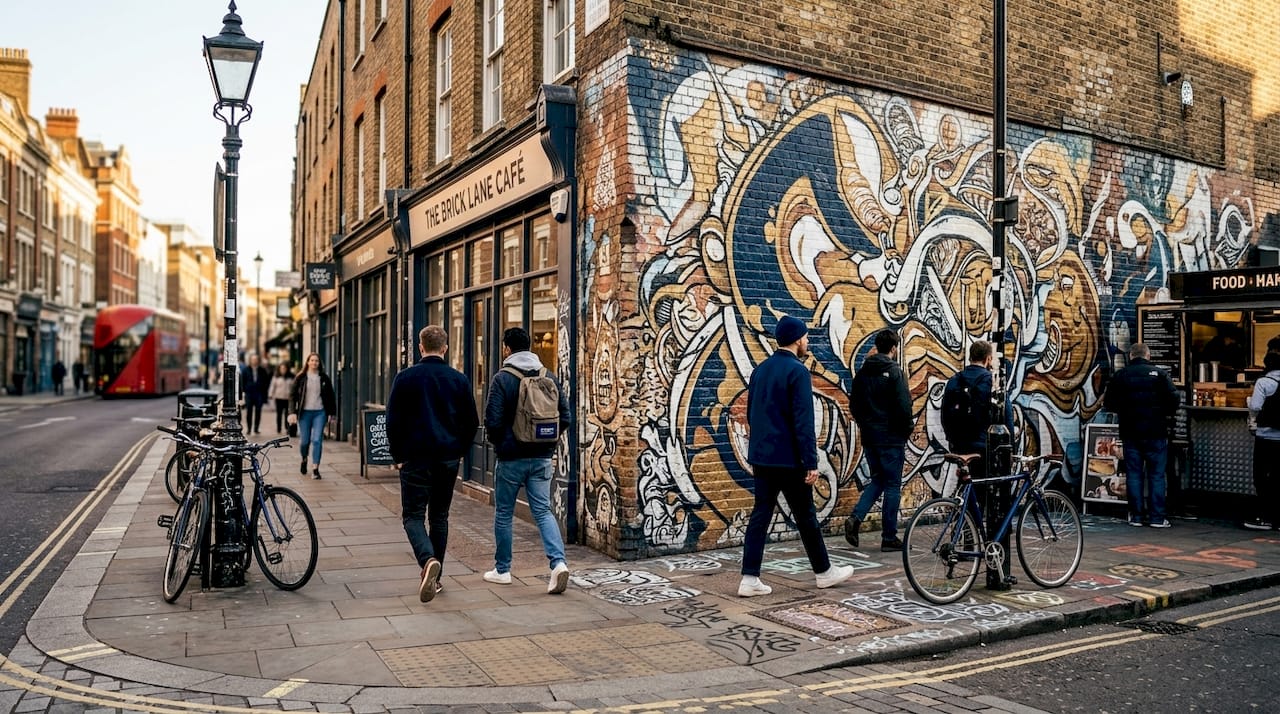
Shoreditch is the undisputed centre of London’s street art scene. The streets around Brick Lane, Hanbury Street, and Rivington Street function as a rotating outdoor gallery, with works by internationally recognised artists appearing and disappearing week to week. Artists including ROA, Zabou, and Thierry Noir have all left significant pieces here. The area’s concentration of creative businesses, independent galleries, and tech companies has created a culture of tolerance and even active encouragement for large-scale murals. For a thorough introduction to the neighbourhood, Londonvacationguide’s Shoreditch neighbourhood guide covers the key streets and what to expect on a visit.
Leake Street Tunnel, Waterloo
Leake Street Tunnel sits beneath Waterloo Station and operates as the largest legal graffiti space in London. Banksy’s 2008 Cans Festival transformed the tunnel into a sanctioned graffiti area, roughly 300 metres long, where artists can paint freely without fear of prosecution. The Railway Company that owns the tunnel has refused to share CCTV footage with police, which means artists work openly and safely in a way that is almost unique in London. The result is a constantly evolving canvas that looks entirely different every few weeks.
Brixton and South London
Brixton’s street art reflects its community. Murals here tend to honour local figures, celebrate Afro-Caribbean heritage, and respond to political events. The area around Brixton Market and Coldharbour Lane features some of the most emotionally resonant public art in the city. The David Bowie mural on Tunstall Road, created by Jimmy C after Bowie’s death in 2016, became an immediate pilgrimage site and remains one of London’s most photographed street art pieces.
West London and Notting Hill
West London offers a different register entirely. Fin DAC’s large-scale portraits of women, often drawing on Japanese and Celtic visual traditions, appear across the Westway and surrounding streets. Notting Hill’s colourful facades and the murals around Portobello Road attract visitors who may not even realise they are engaging with street art. Londonvacationguide’s Notting Hill guide includes the best routes for spotting public art alongside the neighbourhood’s other draws.
Here is a practical overview of London’s key street art destinations:
| Location | Highlights | Best time to visit |
|---|---|---|
| Shoreditch and Brick Lane | Rotating murals, Banksy pieces, ROA works | Weekend mornings before crowds arrive |
| Leake Street Tunnel | Legal graffiti, 24/7 access, constantly changing | Any time; evening light creates atmosphere |
| Brixton | Community murals, David Bowie tribute, political art | Daytime for market atmosphere |
| Notting Hill | Fin DAC portraits, colourful facades, Westway murals | Saturday mornings alongside Portobello Market |
| Camden | Music-themed murals, Amy Winehouse tributes | Afternoon when market stalls are open |
Pro Tip: Arrive at Shoreditch before 10am on a Saturday. The light is better for photography, the streets are quieter, and you will often see artists at work on new pieces before the area fills with visitors.
How has London’s street art evolved over time?
London’s relationship with public art on walls stretches back further than most people realise. Historic murals like the council-commissioned Paddington mural from 1977 predate the graffiti boom by several years, suggesting that London had an appetite for public art before New York subway culture arrived. The early beginnings of London’s street art scene were tied to hip-hop culture brought from New York in the 1980s, when writers began tagging Tube carriages and railway bridges in imitation of the American style.
The institutional response was swift and largely hostile. Operation Anderson, launched by British Transport Police in the late 1980s, targeted graffiti writers on the Underground with surveillance and prosecution. The operation succeeded in reducing graffiti on Tube trains significantly but pushed writers onto street-level surfaces instead, inadvertently spreading the culture across London’s neighbourhoods. This is a pattern that repeats throughout the city’s history: crackdowns on one surface simply redirect creative energy elsewhere.
“The tension between artistic expression and institutional control has shaped London’s street art scene more than any single artist or movement.”
Today, Transport for London spends £10 to 11 million annually on investigation, prevention, and cleaning to manage graffiti on Tube trains. The scale of this expenditure reveals the ongoing complexity of the relationship between public institutions and unauthorised art. TfL removes a tag on average every three minutes across the network. That figure is not just a cost. It is evidence of how deeply embedded graffiti culture remains in London, decades after the first crackdowns.
The shift in public attitude from the 1990s onwards was driven partly by the commercial art market and partly by artists like Banksy, whose satirical stencils began appearing across London in the early 2000s. When Banksy’s pieces started selling at auction for significant sums, the cultural conversation changed. Councils that had previously painted over street art began consulting with community groups before removal. Property owners started commissioning murals as a way to prevent unauthorised tagging. The line between vandalism and public art became genuinely contested rather than simply assumed.
How to discover and experience London street art
The most rewarding approach to exploring London’s street art combines self-guided walks with occasional expert-led tours and an understanding of where legal and spontaneous work tends to cluster. This is not a scene you can exhaust in a single afternoon. Plan across multiple visits if you can.
Here is a practical step-by-step guide to the London street art discovery process:
- Start with Shoreditch. Walk the triangle formed by Brick Lane, Bethnal Green Road, and Old Street. This area contains the highest concentration of significant murals in London and changes frequently enough to reward repeat visits.
- Visit Leake Street Tunnel on a weekday. Weekends bring crowds. A Tuesday or Wednesday visit lets you watch artists at work and have genuine conversations about the pieces being created.
- Book a guided tour for context. Self-guided walks reveal what is there. A guided tour explains why it matters. Immersive street art tours led by local experts connect individual pieces to broader cultural and political narratives that you would otherwise miss.
- Use Instagram and Google Maps strategically. Search location tags for Shoreditch, Leake Street, and Brixton to see recent pieces before you visit. Many murals are documented within hours of completion.
- Time your visit around cultural events. London Gallery Weekend in June 2026 offers access to over 120 galleries alongside the street art scene, creating a genuinely rich cultural itinerary for a single trip.
- Understand permissions geography. Legal murals cluster where agreements exist between artists and property owners. Graffiti tags appear where access is easier and oversight is lower. Recognising this pattern helps you read the city more accurately.
- Respect the work and the space. Do not touch murals. Do not photograph artists without asking. At Leake Street in particular, there is an unwritten etiquette around not painting over works that are clearly in progress.
Pro Tip: Download the walking and cultural tour options from specialist providers before your trip. Having a pre-planned route means you spend less time on your phone and more time actually looking at the art.
Londonvacationguide’s guide to top London cultural experiences covers how to weave street art visits into a broader cultural itinerary, including gallery visits and festival events that complement outdoor art exploration.
Key takeaways
London street art is best understood as a living, permissions-driven cultural practice that spans legal commissions and unauthorised expression, with Shoreditch and Leake Street Tunnel as its most accessible entry points.
| Point | Details |
|---|---|
| Street art vs graffiti | Street art is typically commissioned and image-based; graffiti is usually unauthorised and text-based. |
| Key locations | Shoreditch, Leake Street Tunnel, Brixton, and Notting Hill each offer distinct street art experiences. |
| Historical roots | London’s scene grew from 1980s hip-hop culture and council-commissioned murals, shaped by institutional crackdowns. |
| Institutional tension | TfL spends £10 to 11 million annually on graffiti removal, reflecting ongoing conflict between art and authority. |
| Discovery approach | Combine self-guided walks, expert tours, and cultural events like London Gallery Weekend for the richest experience. |
Why London’s street art still surprises me after years of exploring it
I have walked the streets of Shoreditch more times than I can count, and the scene still catches me off guard. That is genuinely unusual for a city attraction. Most things in London become predictable once you know them. Street art does not, because it is not a fixed exhibition. It is a conversation happening in real time on public walls.
What I find most underappreciated is the permissions geography aspect. Most visitors treat street art as something that simply appears, as if the walls are a neutral canvas. They are not. Every significant mural in Shoreditch or Brixton exists because someone negotiated access, often over months. Understanding that changes how you look at a piece. You stop seeing a wall and start seeing a relationship between an artist, a property owner, a community, and sometimes a council.
My honest recommendation for first-time visitors is to skip the most photographed pieces and look for work that is clearly recent and unsigned. That is where the scene’s actual energy lives. The famous Banksy stencils are worth seeing, but they tell you about the past. The unsigned paste-up that appeared last Thursday tells you about right now. London’s street art is urban archaeology in motion, and the freshest layers are always the most revealing.
— Matt
Plan your London street art visit with Londonvacationguide
Londonvacationguide has curated neighbourhood guides and itineraries specifically designed for visitors who want to explore London’s cultural and artistic scene without wasting time on the wrong streets. The first-time visitor guide covers how to structure your days across key neighbourhoods, including Shoreditch and Notting Hill, with practical timing advice and local recommendations. For a deeper focus on the heart of London’s street art scene, the Shoreditch neighbourhood guide maps the key streets, suggests the best walking routes, and highlights what to look for beyond the obvious murals. Start there and let the walls take you somewhere unexpected.
FAQ
What is London street art, exactly?
London street art is visual artwork created in public urban spaces, including commissioned murals, stencils, paste-ups, and spontaneous graffiti. It spans legal works approved by property owners and unauthorised pieces created without permission.
Where is the best place to find street art in London?
Shoreditch and Brick Lane offer the highest concentration of significant murals, while Leake Street Tunnel near Waterloo is the city’s largest legal graffiti space, open 24 hours a day and free to visit.
Is street art legal in London?
Street art created with the consent of a property owner is legal. Graffiti applied to public infrastructure or private property without permission is a criminal offence under the Criminal Damage Act 1971.
How often does London’s street art change?
In areas like Shoreditch, works can change week to week. Commissioned murals tend to remain for months or years, while spontaneous graffiti and paste-ups may disappear within days of appearing.
Are there guided street art tours in London?
Yes. Several operators offer walking tours focused on London’s street art, covering the history, key artists, and current works across Shoreditch, the South Bank, and beyond. Guided tours add cultural context that self-guided walks rarely provide.
Recommended
- Explore the best London neighbourhoods for locals - The London Journal | London Vacation Guide
- Top London cultural experiences for tourists and enthusiasts - The London Journal | London Vacation Guide
- London Museums Guide: The Best in the City for 2026 - The London Journal | London Vacation Guide
- London Neighbourhood Guides - Every Area Explained