Why stay in soho, london: your 2026 neighbourhood guide
Soho is London’s most concentrated entertainment district, packing West End theatres, Michelin-starred restaurants, historic pubs, and one of Europe’s most celebrated LGBTQ+ scenes into roughly one square kilometre. For travellers asking why stay in Soho, the answer is simple: no other central London neighbourhood puts this much within walking distance. You step outside your hotel and Shaftesbury Avenue is ahead of you, Dean Street is to your left, and Old Compton Street is a two-minute stroll away. Soho rewards the traveller who wants to spend less time on the Tube and more time actually living the city.
Why stay in soho? the core case for london’s liveliest neighbourhood
Soho is London’s entertainment and cultural hub, defined by a high density of bars, clubs, jazz venues, and theatres that distinguish it from every other central London area. That concentration matters enormously when you are planning a short trip. Every hour you save on transport is an hour you spend at a table in a Frith Street restaurant or catching a late show on Shaftesbury Avenue.
The neighbourhood’s compact geography is its greatest practical asset. The entire core can be explored efficiently in half a day, which means staying here gives you genuine flexibility. You can return to your hotel between a matinée and an evening show without any logistical stress.
Soho’s vitality comes from its blend of bohemia, immigrant history, and LGBTQ+ culture, which together create a welcoming, eclectic character unlike anywhere else in the city. That layered identity is why the neighbourhood feels alive at 10am and still alive at 2am. It is not manufactured energy. It is decades of overlapping communities choosing to make this small patch of London their own.
What makes soho’s nightlife and entertainment scene so special?
Soho’s nightlife is diverse, encompassing historic pubs, cocktail bars, jazz clubs, and a vibrant LGBTQ+ community centred on Old Compton Street. That diversity means you are never locked into one type of evening. You can start with a pint at The Dog and Duck on Bateman Street, move to a cocktail at Swift on Old Compton Street, and finish the night at Ronnie Scott’s Jazz Club on Frith Street, all without hailing a cab.
Wardour Street deserves particular attention. It runs north to south through the heart of Soho and concentrates some of the neighbourhood’s most storied music venues and late-night bars. Ronnie Scott’s, which opened in 1959, remains one of the world’s great jazz rooms and books internationally recognised artists most nights of the week.
The LGBTQ+ scene on and around Old Compton Street is one of London’s most established and welcoming. Venues like Comptons of Soho and the Admiral Duncan have been community anchors for decades. Staying in Soho means you are at the centre of this scene rather than travelling into it.
Key nightlife highlights worth knowing before you arrive:
- Old Compton Street: The heart of London’s LGBTQ+ quarter, lined with bars, cafés, and restaurants open late every night
- Wardour Street: Home to Ronnie Scott’s Jazz Club and a string of late-night music venues
- Dean Street: A mix of members’ clubs, wine bars, and intimate restaurants with a creative industry crowd
- Frith Street: Quieter in character but home to some of Soho’s most respected independent venues
- Berwick Street: Famous for its market by day and independent record shops that have survived the digital era
Pro Tip: Book Ronnie Scott’s in advance, particularly for Friday and Saturday late shows. Walk-in tickets exist but sell out quickly, and the late show often features the most adventurous sets of the evening.
Urban intensity makes Soho ideal for travellers seeking nightlife and culture but less suitable for families or light sleepers. That is not a criticism. It is useful information that helps you choose the right base for your trip.
How does soho cater to food lovers and culinary explorers?
Soho offers cuisine from Michelin-starred restaurants to affordable street food, with streets like Dean and Frith hosting the densest variety. That range is genuinely rare. Most London neighbourhoods skew either upmarket or casual. Soho does both simultaneously and does them well.
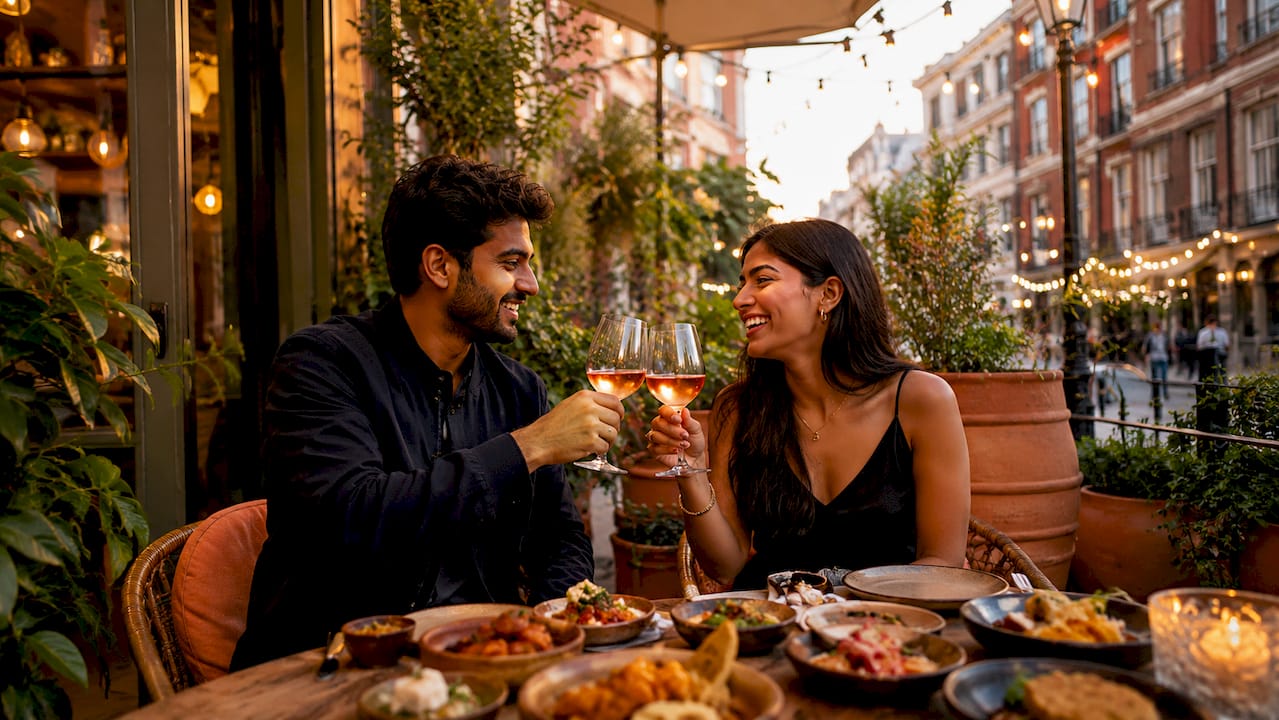
Dean Street is the address to know for serious dining. Quo Vadis, which has operated from its current site since 1926, remains one of London’s most consistently excellent restaurants. Bao on Lexington Street has built a devoted following for its Taiwanese steamed buns. Barrafina on Dean Street holds a Michelin star and operates without reservations, which means arriving early or being prepared to queue. The queue is worth it.
Chinatown sits directly on Soho’s southern edge, along Gerrard Street and Lisle Street. It provides an entirely different culinary register: roast duck from Four Seasons, dim sum at Yauatcha (also Michelin-starred), and late-night noodles from any number of reliable spots that stay open well past midnight. Staying in Soho means Chinatown is a five-minute walk rather than a destination requiring planning.
The neighbourhood’s food geography breaks down usefully:
- Dean Street and Frith Street: Fine dining, members’ clubs, and creative industry restaurants
- Lexington Street and Beak Street: Independent cafés, natural wine bars, and casual international kitchens
- Berwick Street Market: Fresh produce, street food stalls, and independent traders operating weekday mornings
- Gerrard Street (Chinatown): Cantonese roast meats, dim sum, and late-night noodle shops
- Wardour Street: Pre-theatre dining options with reliable quality and reasonable pricing
Soho’s historic pubs, Michelin-starred dining, and cocktail bars sit within approximately one square kilometre. That density means you can make a genuine culinary decision each meal rather than defaulting to whatever is nearest. For food-focused travellers, this is one of the strongest reasons to visit Soho specifically.
Pro Tip: Berwick Street Market runs Monday to Saturday and is at its best between 9am and 1pm. It is one of the few remaining traditional street markets in central London and a genuinely good place to pick up breakfast before the tourist crowds arrive.
Is soho the right base for theatre-goers and culture lovers?
Soho’s southern border, Shaftesbury Avenue, provides unparalleled theatre access, with most major West End venues within minutes on foot. That proximity eliminates the late-night transport problem that affects visitors staying further out. After a show at the Palace Theatre or the Lyric, you walk back to your hotel. No Tube. No waiting for a night bus.
The West End theatre district is not just Shaftesbury Avenue. The Cambridge Theatre on Seven Dials, the Donmar Warehouse in Covent Garden, and the Soho Theatre itself on Dean Street all sit within a short walk. The Soho Theatre in particular programmes some of the most interesting new writing in London, often at lower prices than the major commercial venues.
Beyond theatre, Soho offers a concentrated cultural programme throughout the day. The following table outlines the main cultural draws and their proximity to a central Soho hotel:
| Attraction | Type | Walking Time from Soho Centre |
|---|---|---|
| Shaftesbury Avenue theatres | West End theatre | 3–5 minutes |
| Soho Theatre, Dean Street | New writing and comedy | 2 minutes |
| National Portrait Gallery | Art gallery | 8 minutes |
| Leicester Square | Entertainment and cinema | 4 minutes |
| Soho Square Gardens | Historic green space | 2 minutes |
| Carnaby Street | Shopping and street culture | 3 minutes |
| Chinatown | Food and cultural quarter | 5 minutes |
Soho Square itself is worth treating as a cultural landmark rather than just a shortcut. The square dates to the 1680s and retains a formal garden at its centre. On warm afternoons it fills with office workers, tourists, and locals in a way that captures something genuinely London about the neighbourhood.
Pre-theatre dining is a Soho speciality. Most restaurants on Dean Street, Frith Street, and Wardour Street offer set menus between 5:30pm and 7pm that represent some of the best value eating in central London. Booking these in advance is strongly recommended, particularly for weekend evenings.
How does soho compare to other central london neighbourhoods?
Soho suits travellers who prioritise nightlife and social energy; Covent Garden is more balanced while South Bank offers calm, scenic respite. That distinction is the most useful single piece of information for anyone deciding where to base themselves in central London. Each neighbourhood serves a different type of visitor well.
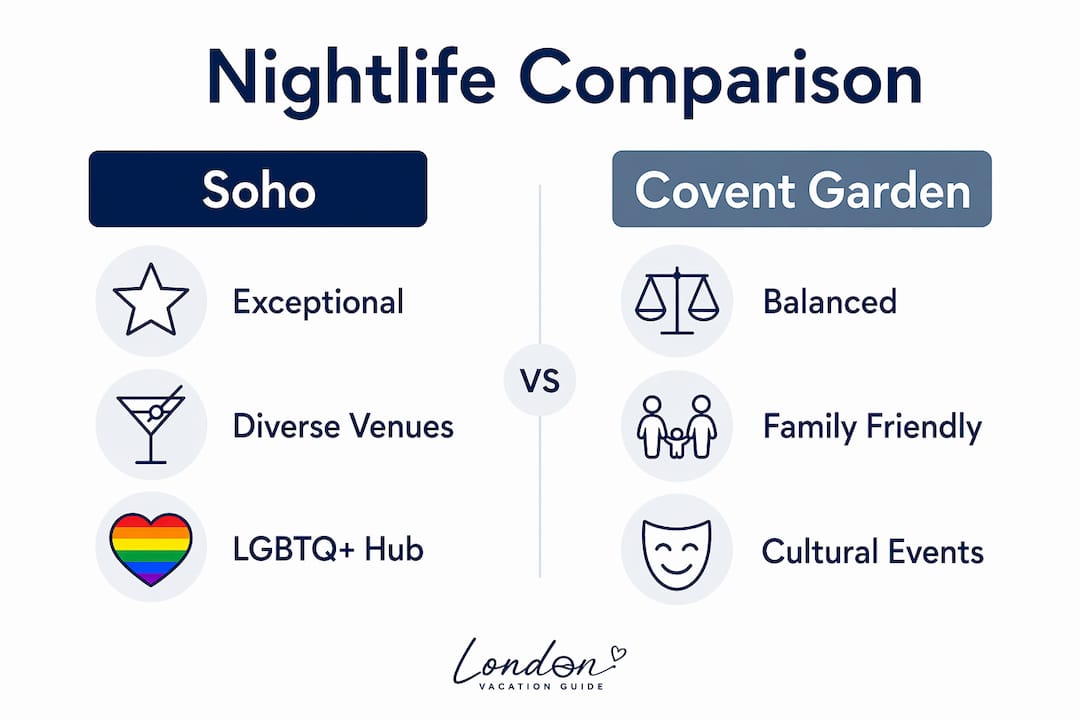
The comparison below helps clarify which area matches your priorities. You can also explore the best areas to stay in London for a broader neighbourhood breakdown.
| Factor | Soho | Covent Garden | South Bank |
|---|---|---|---|
| Nightlife | Exceptional, active every night | Good, more polished | Limited, quieter after dark |
| Theatre access | Direct, Shaftesbury Avenue on doorstep | Excellent, Royal Opera House nearby | Requires short walk or Tube |
| Dining variety | Outstanding, every cuisine and price point | Strong, tourist-facing pricing | Good, concentrated near Tate Modern |
| Family suitability | Low, noisy and crowded at night | Moderate, daytime attractions strong | High, open spaces and cultural venues |
| Noise levels | High, especially weekends | Moderate | Low |
| Transport links | Oxford Circus, Tottenham Court Road, Piccadilly Circus | Covent Garden, Charing Cross | Waterloo, London Bridge |
| Best for | Nightlife seekers, food lovers, theatre-goers | First-time visitors, couples | Families, culture-focused travellers |
Soho is lively and generally safe day and night, though it can be noisy and crowded late on weekends, especially around Old Compton Street and Wardour Street. Visitors who are sensitive to noise should request rooms on upper floors or towards the quieter northern edges of the neighbourhood, near Soho Square. Well-insulated boutique hotels in London often handle this better than larger chain properties, as they tend to occupy converted townhouses with thicker walls and fewer street-facing rooms.
What practical tips help visitors make the most of a stay in soho?
Visitors often miss Soho’s true character by sticking to main streets like Oxford or Regent; exploring from Soho Square reveals authentic, quieter charm. The neighbourhood rewards deliberate walking. The best experiences here are not on the obvious routes.
Follow this approach to get the most from your time in the area:
- Start at Soho Square. Walk south from the square along Greek Street or Frith Street rather than cutting through on Oxford Street. These quieter residential streets show you the neighbourhood’s actual character rather than its tourist-facing edge.
- Look for unmarked doors. Many of Soho’s most iconic experiences happen behind unmarked doors and down alleys, meaning casual visitors using main thoroughfares miss rich cultural layers. The Groucho Club on Dean Street has no signage worth noting. Milk and Honey, now operating as MASH, is similarly discreet. Curiosity is rewarded here.
- Visit Berwick Street Market on a weekday morning. Saturday brings crowds. Tuesday or Wednesday mornings offer the market at its most relaxed and authentic.
- Use the neighbourhood’s transport geography. Oxford Circus (Central, Victoria, and Bakerloo lines), Tottenham Court Road (Central and Elizabeth lines), and Piccadilly Circus (Piccadilly and Bakerloo lines) all border Soho. You are never more than a five-minute walk from a major Tube station.
- Book pre-theatre menus in advance. Restaurants fill quickly between 5:30pm and 7pm on weekdays. Booking two to three days ahead is sufficient for most venues, but a week ahead for Barrafina or Quo Vadis is sensible.
- Explore the hidden gems of Soho beyond the main streets. Carnaby Street has reinvented itself as a destination for independent fashion. Kingly Court, just off Carnaby, is a three-storey courtyard of independent restaurants and bars that most visitors walk straight past.
Pro Tip: Soho is at its most atmospheric on a Tuesday or Wednesday evening. The weekend crowds thin considerably, restaurants are easier to book, and the neighbourhood’s regulars come out. If your schedule allows it, plan your main Soho evening for mid-week.
Soho rewards curiosity with hidden cultural gems found behind unmarked doors and quiet squares, beyond its vibrant street scene. The neighbourhood has genuine depth for visitors willing to look past the obvious.
Key takeaways
Staying in Soho gives you unmatched access to London’s West End theatres, diverse dining, and nightlife within one walkable square kilometre.
| Point | Details |
|---|---|
| Central location | Soho borders Shaftesbury Avenue, putting major West End theatres within a five-minute walk. |
| Culinary range | Dean Street, Frith Street, and Chinatown offer everything from Michelin-starred dining to late-night street food. |
| Nightlife variety | Old Compton Street and Wardour Street provide pubs, jazz clubs, and LGBTQ+ venues active every night. |
| Exploration strategy | Start at Soho Square and walk outward to find authentic venues and quieter streets most visitors miss. |
| Know your fit | Soho suits nightlife and culture seekers best; light sleepers and families may prefer Covent Garden or South Bank. |
Soho after many visits: what i actually think
I have stayed in and around Soho more times than I can count, and my honest view is that most travel writing undersells its daytime character while slightly overselling its nightlife. The nightlife is genuinely excellent. But the neighbourhood is equally interesting at 10am on a Tuesday, when the market traders are setting up on Berwick Street and the cafés on Old Compton Street are half-full with people reading newspapers.
What surprises most first-time visitors is how quickly Soho reveals a quieter version of itself once you step off the main routes. Greek Street on a weekday afternoon feels almost residential. The garden in Soho Square at lunchtime is one of the genuinely pleasant spots in central London, and almost nobody outside the neighbourhood seems to know it.
My practical recommendation: do not book the cheapest room facing Wardour Street if you are a light sleeper. The noise on Friday and Saturday nights is real and it does not stop early. A room on an upper floor, or on a side street like Bateman Street or Meard Street, makes a significant difference to how rested you feel the next morning.
The comparison with Covent Garden is worth taking seriously. Covent Garden is more polished and arguably more comfortable for a first London visit. But if you know what you want from London and it involves late nights, serious food, and theatre without transport logistics, Soho is the correct answer. I have never regretted staying there.
— Matt
Plan your soho stay with london vacation guide
London Vacation Guide has put together detailed resources to help you get the most from your time in this neighbourhood and across the city. The first-time visitor itinerary covers how to structure your days in London, with Soho featuring prominently as a base for evening and cultural activities. If you want to go deeper on the neighbourhood itself, the Soho neighbourhood guide covers accommodation options, restaurant picks, and the best times to visit specific streets and venues. For travellers still weighing up where to stay, the full London neighbourhood guides hub covers every major area with the same level of detail.
FAQ
Is soho a good area to stay in london?
Soho is an excellent base for travellers who prioritise nightlife, dining, and theatre access. Its central location puts major West End venues, Chinatown, and Oxford Street within walking distance.
Is soho safe for tourists at night?
Soho is generally safe day and night, though it becomes crowded and noisy on weekend evenings, particularly around Old Compton Street and Wardour Street. Standard urban awareness applies.
What is soho best known for in london?
Soho is best known for its nightlife, LGBTQ+ community, West End theatre proximity, and diverse dining scene. It has been London’s bohemian and entertainment quarter since the mid-twentieth century.
How do i explore soho without missing the best parts?
Start at Soho Square and walk outward along Greek Street or Frith Street rather than approaching from Oxford Street. Many of the neighbourhood’s best venues are on side streets and behind unmarked doors.
Is soho suitable for families travelling with children?
Soho’s late-night energy and noise levels make it less suitable for families with young children. Covent Garden or South Bank offer more family-appropriate atmospheres with easier access to daytime attractions.
Recommended
- Best Areas to Stay in London: A Neighbourhood-by-Neighbourhood Guide - The London Journal | London Vacation Guide
- Explore the best London neighbourhoods for locals - The London Journal | London Vacation Guide
- London’s Best Restaurants: Where to Eat in Every Neighborhood - The London Journal | London Vacation Guide
- How to experience London like a local: your essential guide - The London Journal | London Vacation Guide