Why visit Greenwich: the complete London guide
Greenwich is London’s historic centre for maritime navigation and global timekeeping, and the single London district where science, empire, and leisure occupy the same postcode. Designated a UNESCO World Heritage Site, Greenwich sits roughly 10 km from central London and packs the Royal Observatory, the Cutty Sark, the National Maritime Museum, and the Old Royal Naval College into a compact, walkable area alongside 183 acres of royal parkland. The atmosphere here is unhurried in a way that Westminster and the City simply are not. If you want to understand why visit Greenwich belongs on every London itinerary, the answer is straightforward: nowhere else in the city offers this combination of world-class history, open green space, and genuine local character in a single afternoon.
Why visit Greenwich for its historic and cultural attractions?
Greenwich’s landmark sites are concentrated tightly enough that you can walk between all of them without a map. Each one tells a different chapter of Britain’s story.
Royal Observatory and the Prime Meridian
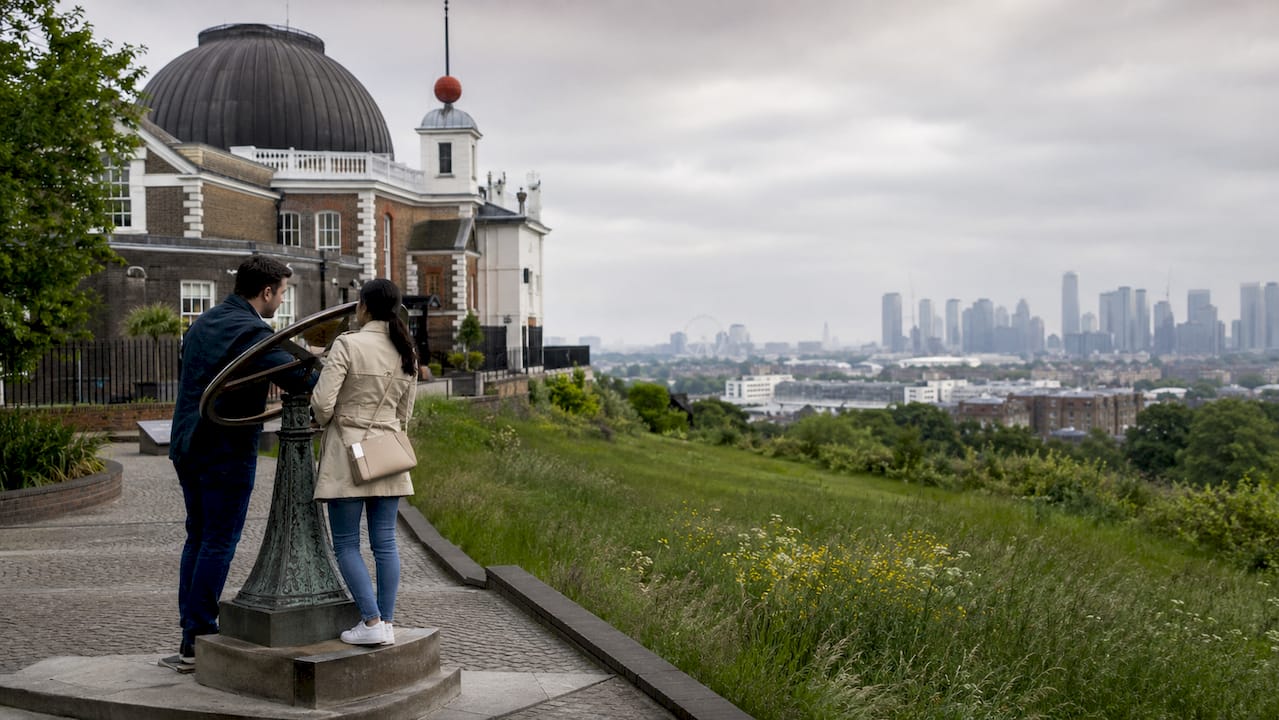
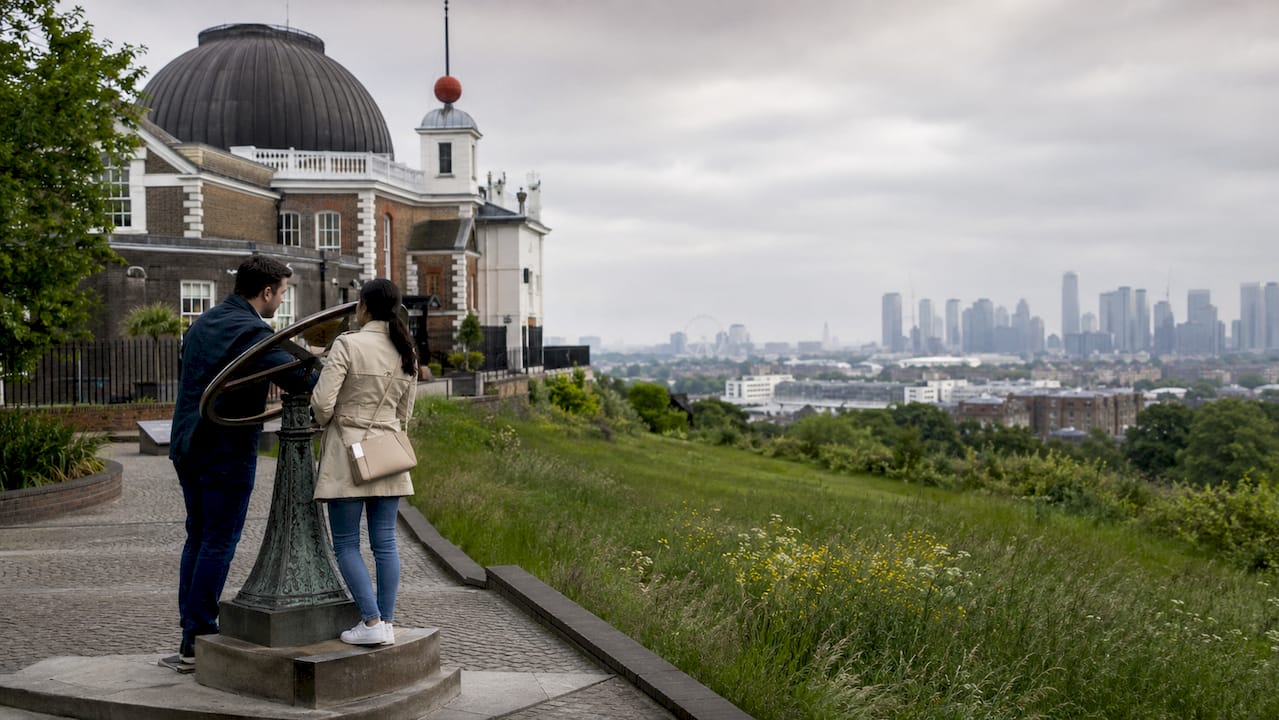
The Royal Observatory sits at the top of Greenwich Park and marks the spot where longitude zero was fixed for the world. The Observatory’s foundation solved one of the most critical problems in global navigation: determining longitude at sea using precise marine chronometers, which made maritime travel dramatically safer. Standing astride the Prime Meridian line with one foot in each hemisphere is a genuinely memorable moment, not a gimmick. The collection of historic astronomical instruments and Harrison’s original H1–H4 marine chronometers are worth the admission alone. Tickets cost £10 on discount days, with combined entry options available for multiple Royal Museums Greenwich sites.
Cutty Sark
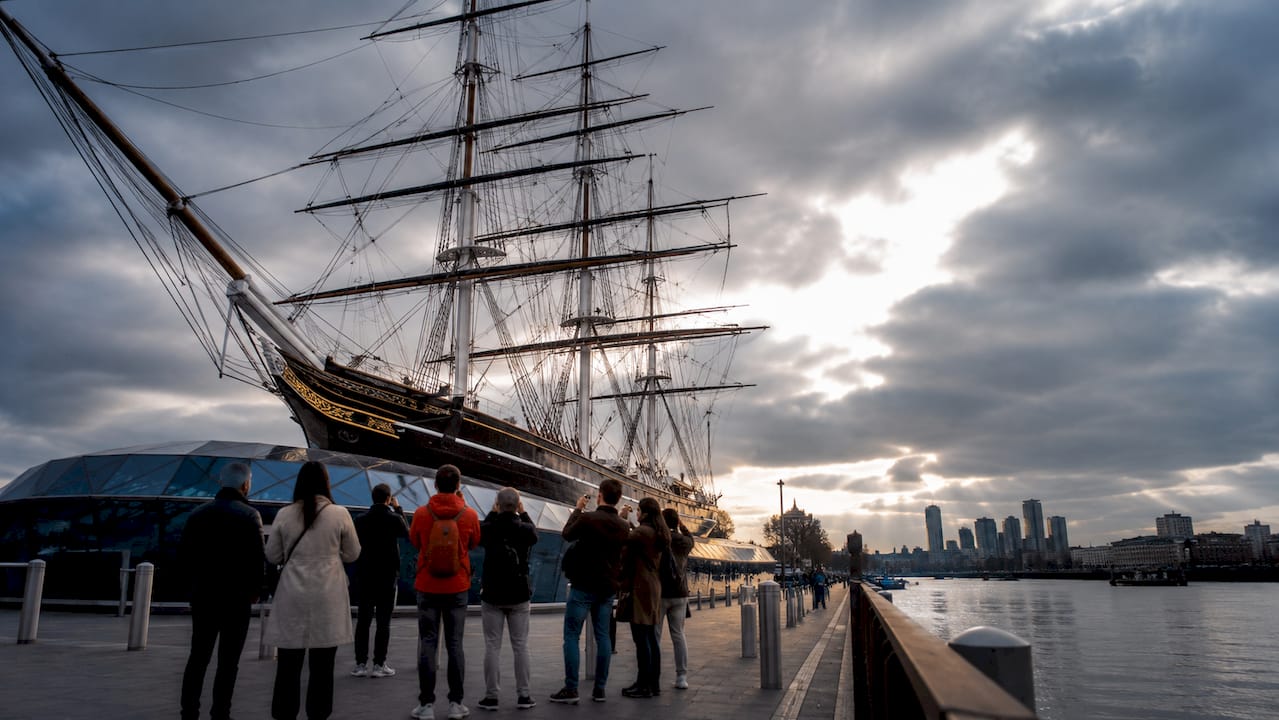
The Cutty Sark is the world’s last surviving tea clipper, dry-docked at Greenwich Pier and restored to a condition that lets visitors walk the original decks and look up into the hull from below. The ship carried tea from China and wool from Australia at speeds that made her the fastest merchant vessel of her era. School groups fill the interior on weekday mornings, so plan your visit for late morning or early afternoon if you prefer a quieter experience.
National Maritime Museum and Queen’s House
The National Maritime Museum is the largest maritime museum in the world, and entry is free. The collections cover naval battles, exploration, trade, and the human cost of empire with a depth that rewards several hours of browsing. Directly adjacent stands the Queen’s House, a 17th-century Renaissance royal residence designed by Inigo Jones. The Queen’s House now functions as an art gallery and contains one of the finest collections of maritime paintings in Britain.
Old Royal Naval College
The Old Royal Naval College is the most architecturally dramatic site in Greenwich. Its twin Baroque domes frame a perfect view of the Queen’s House and Greenwich Park beyond, a composition that has appeared in countless films. The Painted Hall inside is described as the ‘Sistine Chapel of the UK’, its ceiling covered in detailed allegories of British naval and imperial power painted by Sir James Thornhill over 19 years. Entry to the Painted Hall is ticketed, but the grounds and chapel are free to enter.
Pro Tip: Buy a combined ticket through Royal Museums Greenwich before you arrive. It covers the Royal Observatory, Cutty Sark, and special exhibitions at a reduced rate compared to buying each entry separately.
How does Greenwich Park enhance the visitor experience?
Greenwich Park is a Royal Park covering 183 acres on a hill above the Thames, and it changes the character of a Greenwich visit entirely. The park is not simply a green gap between museums. It is an active part of the experience.
The hilltop viewpoint
The hilltop vantage point above the Royal Observatory is one of London’s iconic photo locations. From here, the Old Royal Naval College sits in the foreground, the Thames curves behind it, and Canary Wharf’s towers rise on the opposite bank. The contrast between the Baroque buildings below and the glass towers across the river captures London’s layered history in a single frame. Sunset on a clear evening turns this viewpoint into something genuinely spectacular.
Walking, wildlife, and relaxation
The park contains a deer enclosure, formal flower gardens, a boating lake, and long avenues of chestnut trees that are particularly beautiful in spring and autumn. Families with children find the park easy to navigate, with open lawns for picnics and a well-equipped playground near the Blackheath Gate entrance. The park offers a relaxed contrast to central London’s intensity that visitors consistently find restorative. After two or three hours inside museums, an hour in the park recalibrates the pace of the day.
Pro Tip: Visit the park on a weekday morning between april and october for the quietest experience. The hilltop viewpoint draws large crowds on weekend afternoons, particularly in summer.
The park is free to enter at all times. Its combination of wildlife, formal gardens, and panoramic views makes it one of the best free things to do in Greenwich, and a genuine reason to extend your visit beyond the museums alone.
What are the best ways to get to Greenwich?
Greenwich sits approximately 10 km from central London and is reachable by four distinct transport methods. The method you choose shapes your first impression of the area.
Transport options compared
| Method | Approximate journey time from central London | Key advantage |
|---|---|---|
| DLR from Bank or Tower Gateway | 20–25 minutes | Direct, frequent, affordable |
| National Rail from London Bridge | 15–20 minutes | Fast and reliable |
| Jubilee Line to North Greenwich, then bus | 25–30 minutes | Useful if staying in west London |
| Thames river boat (Uber Boat by Thames Clippers) | 50–60 minutes from Westminster | Scenic, memorable, and experiential |
The DLR and National Rail options are the most practical for a straightforward visit. Both drop you close to the Cutty Sark and the main museum cluster. The Jubilee Line route requires a bus connection and adds unnecessary time.
Why the river boat matters
Taking the river boat to Greenwich transforms the visit into something qualitatively different. The Thames Clippers service from Westminster or Embankment Pier passes under Tower Bridge, past Wapping and Limehouse, and arrives at Greenwich Pier with the Cutty Sark directly ahead. The journey takes around 50–60 minutes but delivers unmatched views of the city skyline and a genuine sense of arriving by water, which is exactly how Greenwich received its most important visitors for centuries. Thames river cruises of this kind are bookable in advance and can be combined with an Oyster card top-up for the return journey by DLR.
- Oyster cards and contactless bank cards work on the DLR, National Rail services within the TfL zone, and Thames Clippers.
- A Travelcard covering zones 1–2 covers the DLR journey. Greenwich sits in zone 2.
- Thames Clippers accept Oyster but charge a separate fare. Allow for this in your budget.
- The river boat is best used as the outward journey. Return by DLR saves time at the end of the day.
What practical advice helps plan the perfect visit to Greenwich?
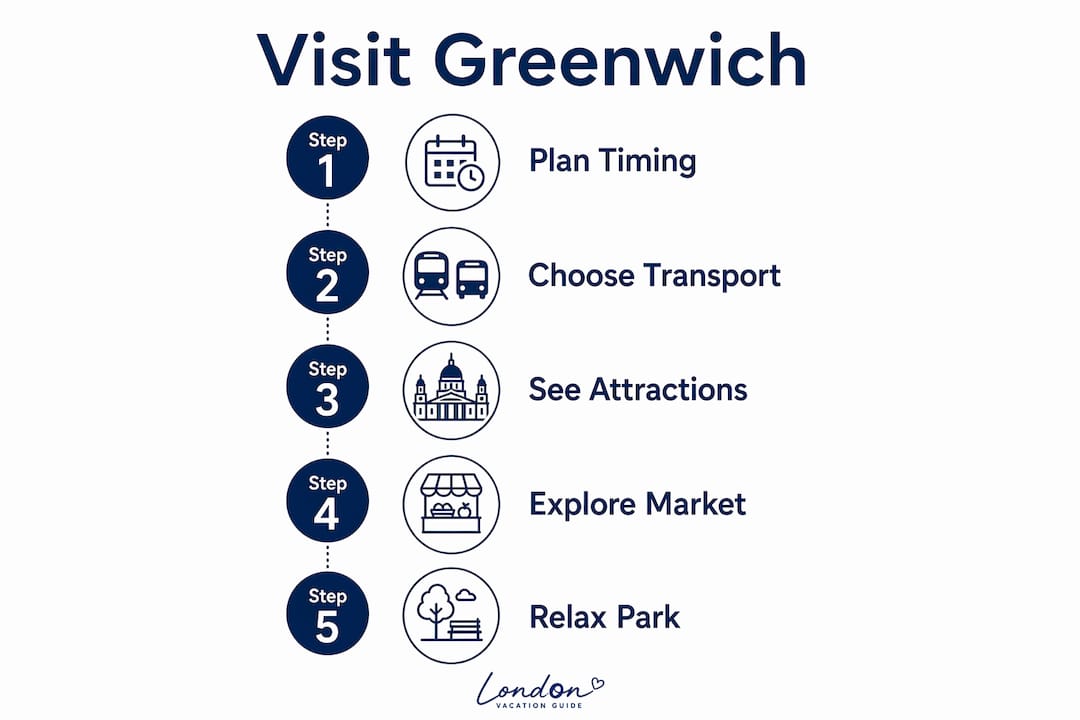
A well-planned Greenwich visit covers the major sites without feeling rushed. The key decisions are timing, duration, and the order in which you tackle the attractions.
How long to spend in Greenwich
Allow a full day, with a minimum of six hours on the ground. Half a day is enough to see one or two museums and walk the park, but it leaves the Painted Hall, the Cutty Sark interior, and the Royal Observatory competing for the same two hours. A full day lets you pace the visit properly.
Suggested order for the day
- Arrive by river boat at Greenwich Pier for the most atmospheric first impression.
- Board the Cutty Sark first, before school groups arrive in numbers.
- Walk through the Old Royal Naval College grounds to the Painted Hall.
- Visit the National Maritime Museum and Queen’s House, both free and adjacent.
- Climb through Greenwich Park to the Royal Observatory and the Prime Meridian.
- Spend time at the hilltop viewpoint, particularly in late afternoon light.
- Descend to Greenwich Market for food and browsing before the return journey.
Avoiding crowds and finding hidden gems
Weekday visits between tuesday and thursday are consistently quieter than weekends. Greenwich Market operates Thursday to Sunday and draws significant foot traffic on saturday afternoons. The Fan Museum on Crooms Hill is one of Greenwich’s genuinely overlooked attractions. It occupies two Georgian townhouses and holds the world’s largest collection of fans, offering an intimate glimpse into 18th-century decorative culture that most visitors walk straight past. Admission is modest and the garden is open in summer.
Pro Tip: Greenwich Market is one of the best places to eat in the area. The covered market runs Thursday to Sunday and offers street food from around the world at prices well below central London equivalents. Arrive before 1:00 PM to avoid the lunchtime queue.
For ticketing, the Royal Museums Greenwich website sells combined passes for the Royal Observatory and Cutty Sark. Booking online in advance avoids queues at the door, which can be significant on summer weekends. The National Maritime Museum and Queen’s House require no booking and no ticket.
Key takeaways
Greenwich is London’s most concentrated destination for maritime history, scientific heritage, and open green space, and a full day here rewards visitors more than almost any other London district.
| Point | Details |
|---|---|
| UNESCO World Heritage status | Greenwich holds this designation because of its historic landmarks, royal park, and architectural significance. |
| Free and paid attractions | National Maritime Museum and Greenwich Park are free; combined tickets cover the Observatory and Cutty Sark at a reduced rate. |
| River boat arrival | Travelling by Thames Clippers from Westminster adds a scenic, historically resonant dimension to the visit. |
| Allow a full day | Six hours minimum is recommended to cover museums, the park, the viewpoint, and Greenwich Market comfortably. |
| Hidden gems worth seeking | The Fan Museum and the Painted Hall are two of Greenwich’s most rewarding sites and among its least crowded. |
Greenwich is different from every other London district, and that is the point
Most visitors to London spend their time in a triangle between Westminster, the South Bank, and the City. Greenwich sits outside that triangle, and that distance is precisely what makes it worth the journey. I have been to Greenwich more times than I can count, and the thing that strikes me every time is how complete it feels. You are not filling gaps between major sights. Every step between the Cutty Sark and the Royal Observatory is part of the experience.
The contrast between Greenwich and central London is not just atmospheric. It is structural. Greenwich reveals a version of Britain built on maritime power and scientific ambition rather than political ceremony. The Royal Observatory solved a problem that changed how the entire world navigates. The Painted Hall was designed to project British naval supremacy to anyone who entered. These are not background details. They are the reason the buildings exist.
What I tell anyone planning a London trip is this: take the river boat out and the DLR back. The boat journey reframes everything you see when you arrive. Pulling up to Greenwich Pier with the Cutty Sark ahead of you and the Baroque towers of the Naval College behind it is one of the genuinely great arrival moments in European travel. No other London district gives you that kind of entrance.
Greenwich also works for travellers who are not particularly interested in history. The park alone justifies the trip on a clear day. The market is one of the best in London. The café culture along the riverfront is relaxed and good value. Greenwich is the rare place that satisfies both the person who wants to stand on the Prime Meridian and the person who just wants to sit on a hill with a coffee and look at the city.
— Matt
Planning your Greenwich visit with London Vacation Guide
Greenwich fits naturally into a wider London itinerary, and the first-time visitors’ essential guide on London Vacation Guide covers exactly how to build a trip that includes it alongside other key districts. The site’s Greenwich neighbourhood guide goes deeper on local restaurants, lesser-known attractions, and the best walking routes through the area. If you are planning a multi-day trip, the 3-day London itinerary shows how to sequence Greenwich alongside central London highlights without doubling back or wasting travel time. London Vacation Guide’s neighbourhood guides cover areas from Richmond to Bloomsbury, giving you the same level of local detail for every part of the city.
FAQ
Is Greenwich worth visiting for a full day?
Yes. Six hours minimum is recommended to cover the major museums, Greenwich Park, the hilltop viewpoint, and the market without feeling rushed.
What is the best way to travel to Greenwich?
The river boat from Westminster or Embankment Pier is the most memorable option, offering unmatched city skyline views along the Thames. The DLR from Bank is the fastest and most practical choice for a straightforward visit.
Which Greenwich attractions are free?
The National Maritime Museum, Queen’s House, Greenwich Park, and the Old Royal Naval College grounds are all free. The Royal Observatory and Cutty Sark charge admission, with combined ticket discounts available through Royal Museums Greenwich.
What is Greenwich best known for?
Greenwich is best known as the home of the Prime Meridian and Greenwich Mean Time, and as a UNESCO World Heritage Site containing the Royal Observatory, Cutty Sark, and National Maritime Museum.
When is the best time to visit Greenwich?
Weekday mornings between tuesday and thursday are the quietest. Spring and autumn offer the best conditions for the park and hilltop viewpoint, with fewer crowds than the peak summer months.
Recommended
- Greenwich Neighbourhood Guide - London Vacation Guide
- London for First-Time Visitors: The Essential Guide | London Vacation Guide
- How to Spend 3 Days in Shoreditch: A Complete Visitor Guide - The London Journal | London Vacation Guide
- Why visit Westminster: London’s historic heart explained - The London Journal | London Vacation Guide