How to explore London supper clubs: find, book and enjoy
Start by checking three types of listings — ticketed platforms, host pages and social channels — then book the earliest seat that fits your budget. London’s supper club scene spans everything from a 10-course dinner for £65 in someone’s Hackney kitchen to a theatrical 200-person feast in a converted warehouse, and the gap between hearing about an event and its selling out can be a matter of hours.
To start exploring London supper clubs today, do these things first:
- Search Eatwith and Tabl for ticketed events this weekend or next month — both list curated home-hosted and chef-led dinners with prices, menus and host profiles visible before you commit.
- Follow three to five hosts on Instagram whose food style appeals to you; most announce new dates there first, often with a link-in-bio booking page.
- Sign up to DesignMyNight and Eventbrite alerts for “supper club” in your preferred London postcode — you will receive email notifications when new events go live.
- Check transport before you book, particularly for home-hosted events in residential areas; confirm the nearest Tube or Overground stop and factor in a late finish.
- Flag dietary requirements immediately — most hosts ask at booking, but if the form does not prompt you, email or DM the host directly before payment clears.
National Geographic’s guide to London’s supper club scene is worth a read for cultural context, and the New York Times has covered the scene’s appeal for travellers specifically.
Pro Tip: Set a Google Alert for “supper club London” and combine it with your neighbourhood of choice (e.g., “supper club Peckham”). You will catch press coverage and new event announcements that never make it onto the big platforms.
Key takeaways
London supper clubs reward readers who book early, follow hosts on social media and match the event format to the experience they actually want.
| Point | Details |
|---|---|
| Book early and follow hosts | Many events sell out within hours; join mailing lists and follow Instagram accounts for first access. |
| Prices range from £28 to £195+ | Accessible home dinners start around £28–£65; chef-table tasting experiences reach £195 or more. |
| Format shapes the evening | Home-hosted dinners are intimate and conversational; theatrical events are larger and performance-led. |
| Check safety and accessibility first | Verify host reviews, pay through the platform, and ask about step-free access before booking. |
| Neighbourhood determines style | East London for experimental pop-ups; Southbank for theatrical events; Walthamstow for Supperclub.tube. |
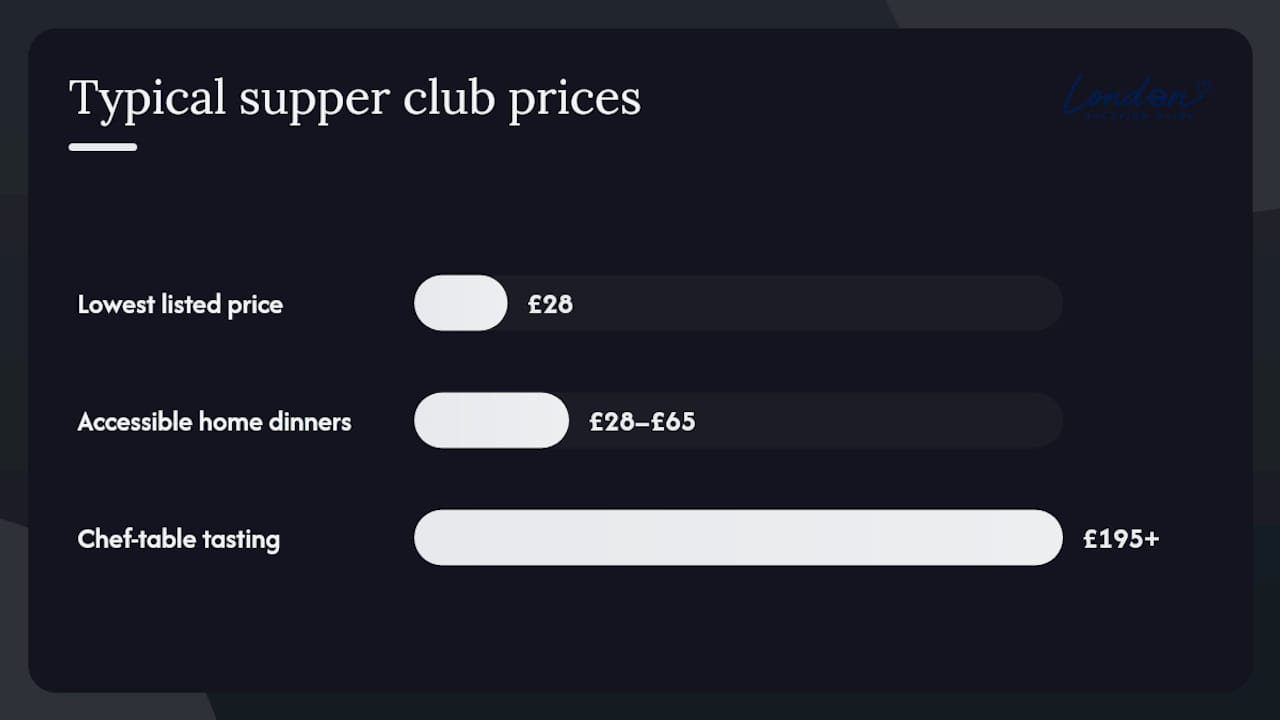
Table of Contents
- Where do you find London supper clubs listed online?
- Notable London supper clubs worth knowing about
- What actually happens at a London supper club?
- How far ahead should you book, and what does it cost?
- Safety, accessibility and etiquette at supper clubs
- How do you pick the right supper club for you?
- Which London neighbourhoods are best for supper club exploration?
- Why supper clubs are worth your time in London’s food scene
- Sources
- FAQ
Where do you find London supper clubs listed online?
The discovery landscape splits into four distinct channels, and knowing which to prioritise saves real time.
Ticketed marketplaces are the most reliable starting point. Eatwith connects diners with vetted hosts globally and has a strong London section covering everything from Middle Eastern home dinners to chef-table tastings. Tabl focuses specifically on the UK and lists events from small home kitchens to larger curated evenings — an editorial write-up in Sainsbury’s Magazine noted example ticket prices around £28 for themed feasts, which gives a sense of the accessible end of the market.
Event platforms handle the ticketing logistics for hosts who prefer not to manage their own booking systems. Eventbrite lists a large volume of supper-club events and lets you filter by date, neighbourhood and price. Tock is worth checking for the more formal end of the spectrum — chef-table experiences and prepaid tasting events with strict cancellation terms tend to live here.
Social media is where the most intimate and spontaneous events surface. Instagram is the primary channel: hosts post new dates, menus and booking links with little advance notice, and advance booking via social media is often the only way to secure a seat at the smallest events. TikTok has become a secondary discovery tool, particularly for younger hosts building an audience around a specific cuisine or concept. Facebook groups dedicated to London food events still circulate last-minute releases and cancellation spots.
DesignMyNight sits between editorial guide and event platform — it publishes curated roundups of the best current supper clubs alongside direct booking links, which makes it useful for readers who want a shortlist rather than a raw search.
- Eatwith — global platform, strong London host base, vetted profiles and guest reviews visible before booking.
- Tabl — UK-focused, good for browsing by cuisine and price, editorial-style event descriptions.
- DesignMyNight — curated editorial picks with booking links; useful for themed or seasonal events.
- Eventbrite — high volume, filter by date and postcode, suits readers who want to compare several options quickly.
- Tock — best for prepaid chef-table and tasting experiences with formal booking terms.
- Instagram — follow hosts directly; most intimate events are announced here first and nowhere else.
Pro Tip: Join the host’s mailing list the moment you find an event you like, even if the next date is already sold out. Many hosts release a small batch of tickets to subscribers 24–48 hours before the public drop — that window is often the difference between getting a seat and joining a waitlist.
Notable London supper clubs worth knowing about
London’s supper club scene is genuinely varied. These profiles cover the range of styles, neighbourhoods and price points you are likely to encounter.
-
Honey & Co (Fitzrovia) — Sarit Packer and Itamar Srulovich’s Middle Eastern cooking has a devoted following. Their supper events extend the warmth of their restaurant into more intimate, storytelling-led formats. Expect generous mezze, slow-cooked meats and a sense that you have been invited to a family dinner. Announced via their mailing list and social channels.
-
Mam Sham — a roving Armenian supper club that has built a loyal following through pop-ups across East London. The menus are personal and seasonal, drawing on family recipes and regional produce. Events sell out quickly; follow on Instagram for date announcements.
-
Shanghai Supper Club — brings the flavours of Shanghai home cooking to intimate London settings. The format is communal and conversational, with dishes designed to be shared. Typically announced via social media with limited seats per sitting.
-
Dinner Ladies — a long-running London supper club known for its relaxed, convivial atmosphere and British-inflected seasonal menus. They have hosted events in a range of venues across the city, from private dining rooms to gallery spaces. Check their website and social channels for upcoming dates.
-
Khao Suppers — Thai-focused supper club with a reputation for precise, fragrant cooking that goes well beyond the standard restaurant repertoire. Events are small and fill fast. Mailing list sign-up is the most reliable route to a ticket.
-
The Bridge Club — a Hackney-based supper club with a rotating cast of guest chefs and a strong community feel. The format varies: some evenings are solo-chef showcases, others are collaborative. Prices sit in the mid-range and the atmosphere is deliberately informal.
-
Kitchen Theory — a Michelin-recommended multisensory dining experience in North London. Chef Jozef Youssef designs menus around a central concept — past themes have included the psychology of taste and the science of flavour. Seats are limited and booking opens months in advance via their website.
-
The Vaults (Waterloo) — an arts and entertainment complex beneath Waterloo station that hosts immersive supper-club events alongside theatre and performance nights. The setting is dramatic and the events tend to be theatrical rather than intimate. Tickets via their own site and Eventbrite.
-
Supperclub.tube (Walthamstow, E17) — a six-course dining experience held inside a decommissioned Victoria Line carriage, making it one of London’s most singular venue concepts. The menu has a Latin American influence and the evenings run on set nights. This is a reliable, long-running event rather than a pop-up, so booking a few weeks ahead is usually sufficient.
For a broader view of where these events sit within London’s local dining scene, London Vacation Guide’s food guides cover the full spectrum from street food to fine dining.
What actually happens at a London supper club?
The format is communal by design. You sit with strangers, eat a set menu, and the host is usually present throughout — cooking, narrating and often joining the table between courses. That social contract is what separates a supper club from a private dining room.
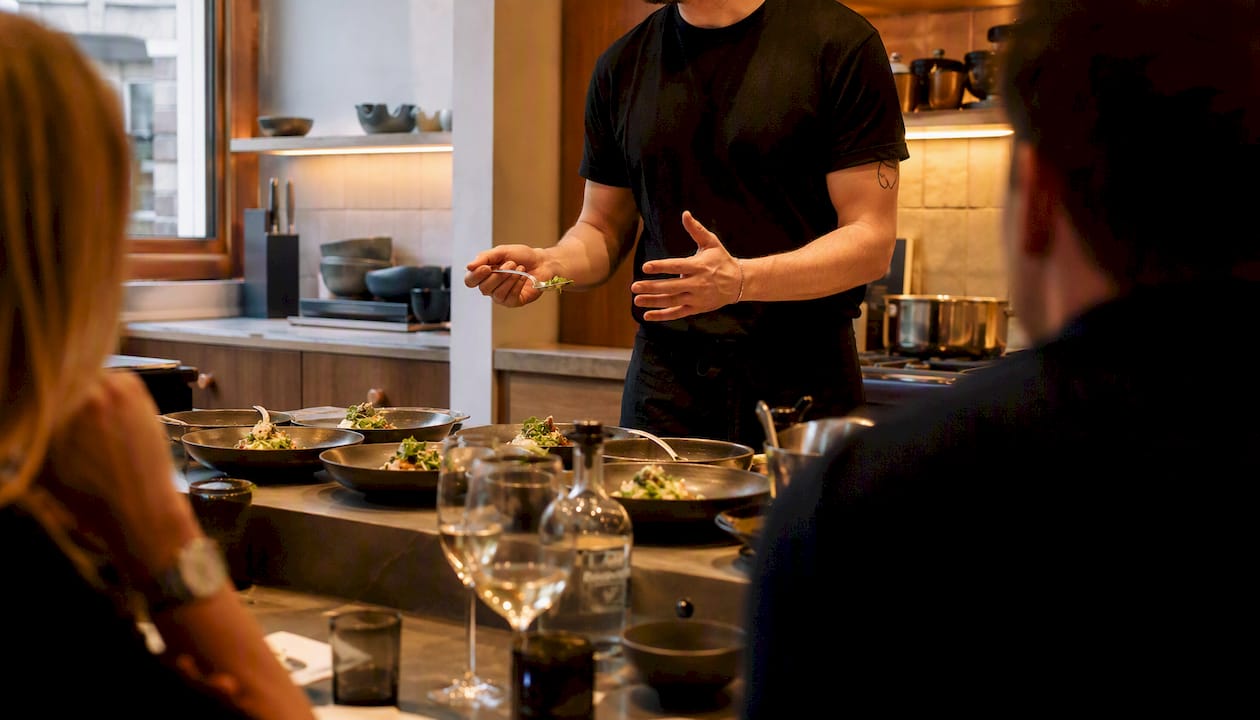
Beyond that shared core, the format varies considerably. London supper clubs range from intimate 10-seat chef tables to 200-person theatrical events, and the experience shifts dramatically depending on scale.
Common features across most formats:
- Multi-course set menus — typically 4–10 courses; no à la carte choices, though dietary alternatives are usually available if flagged in advance.
- BYOB or corkage — many home-hosted events are BYOB; others include wine pairings or offer corkage for a fee. Check before you arrive.
- Communal seating — long tables or shared benches are standard. Solo diners are seated with other guests; hosts often design the seating to encourage conversation.
- Host interaction — the host or chef typically introduces each course, explains the provenance of ingredients and often shares the story behind the menu.
- Duration — most events run 2.5–4 hours. Theatrical events can run longer.
On dress code: smart-casual covers the vast majority of supper clubs. Jeans and a clean shirt or blouse are fine for home-hosted and gallery events. Immersive theatrical evenings sometimes specify a theme or costume element — read the event description carefully. Chef-table experiences at the upper end (think Aulis London, with tasting menus around £195) lean towards smart rather than casual.
How far ahead should you book, and what does it cost?
For home-hosted and small pop-up events, book the moment tickets go live. Many intimate events sell out within hours of announcement, and high-demand events can sell out in seconds for larger gatherings. For chef-table experiences like Kitchen Theory or Aulis, booking 4–8 weeks ahead is realistic for popular dates.
Typical price ranges:
- Casual home dinners: £25–£50 per person
- Mid-range pop-ups and themed feasts: £45–£90 per person (Tabl lists events from around £28 at the accessible end)
- High-end chef-table or tasting experiences: £100–£195+ per person (Aulis London sits at the top of this range)
- A 10-course supper-club meal in London has been reported at around £65, showing that immersive, multi-course events can sit comfortably in the mid-range
Booking timeline advice:
- Join mailing lists before you need them — hosts often release tickets to subscribers 24–48 hours before public sale.
- Enable push notifications on Eatwith, Eventbrite and Tock so you catch releases in real time.
- Save your payment details on booking platforms; autofill can be the difference between securing a seat and missing out when a batch drops.
- Waitlists are worth joining — cancellations happen, and hosts often fill spots from the waitlist within 48 hours of the event.
On cancellations: most prepaid events have strict no-refund policies, particularly for small-capacity dinners where a last-minute cancellation leaves the host out of pocket. Some platforms offer ticket transfer options — check the terms before booking. If you need to cancel, notify the host as early as possible; many will try to resell your seat and offer a credit.
Safety, accessibility and etiquette at supper clubs
Private and pop-up venues do not carry the same regulatory obligations as licensed restaurants, so a small amount of due diligence before you book is worthwhile.
Safety checklist:
- Verify the host has reviews on the platform you are booking through — Eatwith and Tabl both display guest ratings.
- Pay through the platform, never by bank transfer to a personal account.
- Confirm the venue address is shared before the event date; legitimate hosts always provide this in advance.
- Check the nearest Tube, Overground or bus stop and plan your return journey before you go, particularly for events finishing after 11 PM.
Accessibility:
- Private homes and unusual venues rarely offer step-free access — ask the host directly before booking if this matters to you.
- Enquire about seating arrangements if you need a specific chair type or back support.
- Dietary requirements should be flagged at booking and confirmed again by email if the event is more than two weeks away.
Etiquette:
- Arrive on time. Home-hosted events often start the first course promptly and a late arrival disrupts the whole table.
- Flag allergies clearly and early — do not wait until you are seated to mention a severe allergy.
- Ask before photographing food or fellow guests; many hosts welcome it but some prefer a no-phones policy during courses.
- Communal dining means conversation with strangers is expected. Hosts often design seating to encourage mingling, so come prepared with a short introduction about yourself.
- If you feel uncomfortable at any point, you are entitled to leave. Speak to the host first if possible; if the issue is serious, contact the platform’s support team.
Pro Tip: If a host is evasive about the venue address, asks for payment outside the platform, or cannot answer a direct question about allergens, those are clear signals to walk away. Legitimate hosts are transparent about all three.
How do you pick the right supper club for you?
Start with the experience you want, not the cuisine. An intimate home dinner in Hackney and a theatrical 150-person event in Waterloo are both “supper clubs” but they deliver entirely different evenings. Decide on the atmosphere first, then filter by neighbourhood and price.
Selection checklist:
- Dietary needs — confirm the host can accommodate your requirements before booking, not after.
- Group size — some events seat couples and solo diners only; others welcome groups of four or six. Check the listing.
- Noise level — theatrical events are loud by design; home-hosted dinners are conversational. Know which you prefer.
- Interaction level — do you want to talk to the chef and your neighbours, or watch a performance? The format determines this.
- Accessibility — step-free access, seating type and proximity to public transport all vary by venue.
- Budget — set a ceiling before you browse; the range from £28 to £195 is wide enough to cause regret if you do not.
Questions to ask hosts before booking:
- Can the menu be adapted for my dietary requirement, or is there a fixed alternative?
- Is corkage available, and if so, what is the fee?
- What time should guests arrive, and when does the event finish?
- Are guests seated at a communal table or in smaller groups?
Red flags to watch for:
- No clear payment method or a request to pay by bank transfer.
- Vague or withheld venue details before the event date.
- Evasive or delayed responses to allergy questions.
- A price that seems unusually low for a high-end tasting menu — if a 10-course chef’s table is listed at £15, something is wrong.
For readers planning a broader food-focused trip, London Vacation Guide’s 2026 dining guide covers the full range of eating options across the city’s neighbourhoods.
Which London neighbourhoods are best for supper club exploration?
The short answer: East London for experimental pop-ups, Marylebone and Mayfair for intimate regional cuisine, Southbank and Peckham for arts-adjacent events, and Walthamstow for novelty venues. Supper clubs frequently collaborate with galleries, pubs and arts spaces, so neighbourhood character shapes the type of event you are likely to find.
-
East London (Hackney, Dalston, Bethnal Green) — the highest concentration of experimental and chef-led pop-ups. Expect unconventional menus, informal settings and a younger crowd. The Bridge Club and Mam Sham operate in this orbit. Nearest Overground stops: Hackney Central, Dalston Junction.
-
Marylebone and Fitzrovia — home to more polished, intimate events. Honey & Co’s supper evenings fit this register. Smart-casual dress is the norm and prices tend to sit in the mid-to-upper range. Central Line and Bakerloo Line connections make this easy to reach.
-
Southbank and Waterloo — The Vaults sits here, and the area’s density of arts venues means themed and theatrical suppers are common. Events often tie to cultural programming at the Southbank Centre or local galleries. Waterloo station is the obvious hub.
-
Peckham and New Cross — a growing scene of gallery-hosted and community-led suppers, often priced accessibly and tied to local arts collectives. Overground from London Bridge is the practical route.
-
Walthamstow (E17) — home to Supperclub.tube, the Victoria Line carriage dining experience. The neighbourhood is well connected via the Victoria Line and has a growing food scene worth exploring before or after an event.
Timing notes: Thursday to Saturday evenings carry the highest volume of events. Avoid booking during major London events weeks (Frivals, Notting Hill Carnival weekend, major sporting finals) unless the supper club is specifically themed around them — transport and availability both tighten. Spring and autumn tend to produce the most interesting seasonal menus.
For neighbourhood-specific planning, London Vacation Guide’s neighbourhood guides cover transport links, nearby hotels and local context for every area mentioned above. Visitors attending events near the river or in Southwark will find the London Bridge neighbourhood guide particularly useful for planning the evening around the event.
Why supper clubs are worth your time in London’s food scene
London’s restaurant scene is extraordinary, but it is also transactional. You sit, you order, you pay, you leave. Supper clubs break that contract in a way that feels genuinely different, as the host has a story to tell, the menu is the medium, and the strangers at your table are part of the experience rather than background noise.
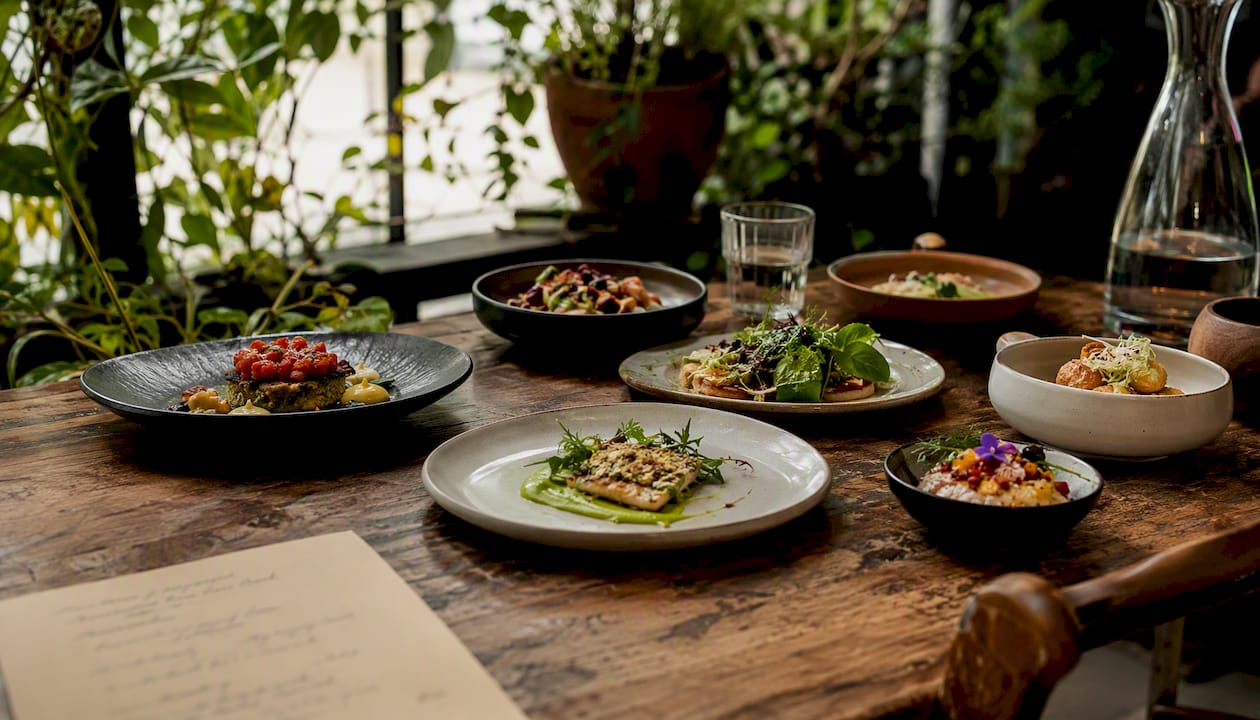
What strikes me most about this scene is how much creative risk it absorbs. Chefs use supper clubs to test concepts that would never survive a restaurant’s commercial pressures: a menu built entirely around one regional ingredient, a dinner structured around a piece of music, a meal that changes course based on guest responses. National Geographic has described the scene as a playground for chefs testing concepts, and that framing is accurate. The best events feel like being let into a rehearsal — something unfinished and alive.
The social dimension matters too. Younger Londoners have gravitated towards supper clubs as an alternative to nightlife, prioritising connection and shared experience over consumption. For visitors, that shift is an opportunity: a supper club is one of the few settings where you will genuinely meet Londoners rather than other tourists. Go with curiosity, follow the booking guidance, and leave a considered review for the host afterwards. The scene runs on trust and word of mouth, and both are worth protecting.
Sources
The platforms below cover the full range of London supper-club discovery, from curated editorial picks to direct ticket purchase. Following hosts on social media remains the most reliable route to last-minute releases and new date announcements — no platform captures every event.
- Step inside London’s evolving supper club scene — National Geographic
- Gen Z revitalises supper clubs: why London’s younger crowd is ditching nightclubs for dining experiences — Itson
- Taking orders: Tabl supper clubs — Sainsbury’s Magazine
- Best supper clubs in London — SquareMeal
- Supperclub
- Aulis London — Aulis
For visitors building a food-centred London itinerary, London Vacation Guide’s first-time visitor guide is a practical companion for planning supper clubs alongside other London experiences.
FAQ
How does a supper club work?
A supper club is a ticketed dining event, usually held in a private home, gallery or unusual venue, where guests share a set menu at a communal table. The host or chef is typically present throughout, narrating the menu and encouraging conversation between guests.
What makes a supper club different from a restaurant?
Supper clubs use communal tables, narrative-driven menus and non-commercial spaces — features that National Geographic identifies as defining the format. There is no à la carte menu, no anonymous service and no separation between kitchen and dining room.
Is a supper club worth it?
For most food-curious visitors, yes. A 10-course supper-club dinner in London has been reported at around £65, delivering an immersive, host-led experience that mid-range restaurants rarely match for personal attention and social connection.
How should you dress for a supper club?
Smart-casual covers the majority of events — clean jeans and a shirt or blouse are fine for home-hosted and gallery suppers. Theatrical or hotel-based experiences may specify smarter attire or a costume theme; always read the event description before you go.
How far ahead do you need to book?
For small home-hosted events, book the moment tickets go live — many sell out within hours. Chef-table experiences like Kitchen Theory typically require 4–8 weeks’ notice for popular dates, while larger theatrical events often have tickets available up to several months in advance.
Recommended
- Local dining guide London: find authentic food experiences - The London Journal | London Vacation Guide
- Hidden London Pubs: A Guide to the City’s Best-Kept Drinking Secrets - The London Journal | London Vacation Guide
- London parties: your complete guide for 2026 - The London Journal | London Vacation Guide
- London restaurant tips: your 2026 insider guide - The London Journal | London Vacation Guide