London tasting menu guide: best picks by budget and occasion
For a special occasion with no budget ceiling, Core by Clare Smyth in Notting Hill is the clearest choice in London right now. For best value under £100, Six By Nico and Perilla consistently deliver multi-course cooking that punches well above its price. Vegans are best served by Gauthier Soho or Tendril. For theatrical counter dining, Kitchen Table and Evelyn’s Table at The Blue Posts are the rooms to target first.
Quick verdicts by occasion:
- Best overall (special occasion): Core by Clare Smyth, Helene Darroze at The Connaught, Alain Ducasse at The Dorchester
- Best value (under £100): Six By Nico, Perilla, AngloThai, Tendril, Bamboo Mat
- Best for vegans: Gauthier Soho, Tendril, Plates
- Best theatrical/experiential: Dinner by Heston Blumenthal, Punk Royale, Ekstedt at The Yard
- Best chef counter: Kitchen Table, Evelyn’s Table at The Blue Posts, Aulis, Sushi Tetsu
- Best for West African cuisine: Ikoyi, Akoko
Where to start booking:
- Three-star rooms (Core, Alain Ducasse, Helene Darroze): book 12 weeks ahead, midnight on the day the window opens
- Two-star and one-star rooms: 6–8 weeks ahead; prime 7:00–8:30 PM sittings sell fastest
- Lunch sittings open later and often have shorter queues; lunch menus run 30–40% cheaper than dinner at the same kitchen
Key takeaways
London’s tasting-menu scene rewards diners who book strategically: three-star rooms require 12 weeks’ notice, lunch cuts costs by 30–40%. The all-in price (menu plus pairing plus service charge) is always higher than the headline figure.
| Point | Details |
|---|---|
| Book three-star rooms 12 weeks ahead | Booking windows open at midnight; prime sittings sell out within hours of release. |
| Lunch saves 30–40% | Many starred kitchens run lunch menus at significantly lower prices with comparable quality. |
| Budget for pairings and service | Add £65–£150 per person for wine pairings and 12.5–15% service charge to the menu price. |
| Dietary needs: notify in advance | Many tasting menus are table-wide and cannot always be adapted; always inform the kitchen at booking. |
| London Vacation Guide for trip planning | Use the neighbourhood guides and first-time visitors’ guide to choose where to stay near your chosen restaurants. |
Table of Contents
- How do London’s top tasting menus compare at a glance?
- What to expect at each restaurant: practical notes for every pick
- How do you choose the right tasting menu in London?
- Why do wine pairings and service matter so much at a tasting menu?
- What are the cancellation policies at London tasting-menu restaurants?
- A note from London Vacation Guide on booking strategy and where to stay
- Plan your London tasting-menu trip with London Vacation Guide
- Sources
- FAQ
How do London’s top tasting menus compare at a glance?
The table below covers the most-searched venues across all three price bands. Prices are per person for the tasting menu only, excluding wine pairings and service charge. Always confirm current pricing on the restaurant’s own website before booking, as menus change seasonally.
Price band legend: Under £100 per person (menu only) / £100–£200 / £200+
What the menu price typically excludes:
- Wine or drinks pairings (often £60–£120+ per person at starred rooms)
- Soft drinks or non-alcoholic pairings
- Service charge (usually 12.5–15% added to the bill)
- Supplements for premium ingredients (truffle, caviar, wagyu)
- Pre-dinner canapés or post-dinner petit fours charged separately at some venues
Before you book: confirm the current menu format, price, and dietary policy directly on the restaurant’s website or booking page. Menus change seasonally and prices are updated without notice.
What to expect at each restaurant: practical notes for every pick
London’s tasting-menu scene spans everything from three-Michelin-star hotel dining rooms to 14-seat counters above Soho pubs. Here is what you actually need to know, venue by venue.
The flagship three-star rooms
Core by Clare Smyth (Notting Hill, Notting Hill Gate Tube) is the benchmark for modern British tasting menus. Six to eight courses, built around ‘Core Classics’ like the potato and roe dish that has become one of London’s most-discussed plates. Expect 2.5–3 hours at the table, formal but warm service, and a booking window that opens 12 weeks ahead. Dinner only for the full tasting menu; a shorter lunch format is occasionally available.
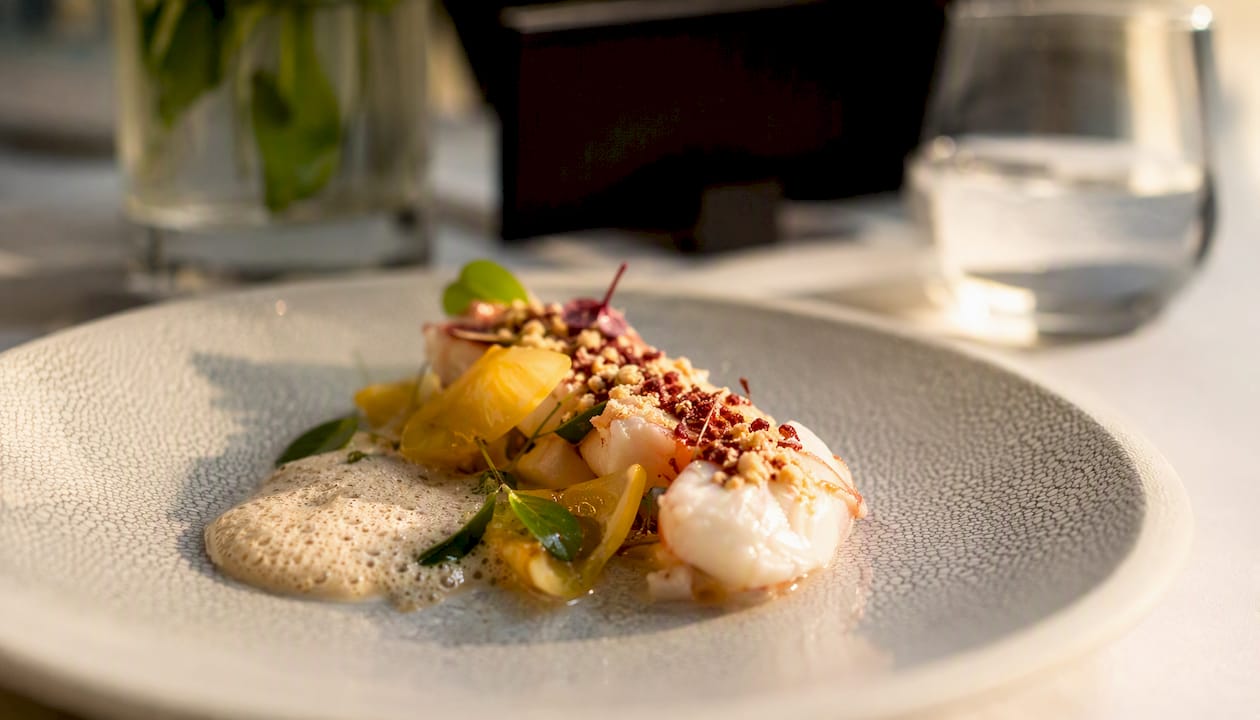
Helene Darroze at The Connaught and Alain Ducasse at The Dorchester occupy the same price tier and the same Mayfair postcode. Darroze’s menu is more personal and ingredient-led; Ducasse’s room is the more classical of the two. Both require the same 12-week advance planning and both offer sommelier pairings that can add £100 or more per person.
The Ledbury returned from its post-pandemic hiatus with renewed critical energy. Brett Graham’s kitchen is obsessive about British produce and the menu shifts with the seasons in a way that makes repeat visits genuinely different. Three stars, Westbourne Park Tube, 10–12 weeks ahead.
The theatrical and historically inspired
Dinner by Heston Blumenthal at the Mandarin Oriental publishes its ‘Journey Through History’ menu prices openly: six courses at £155 and eight courses at £195, with wine pairings at extra cost. The concept riffs on British culinary history from the 14th century onwards, and dishes like the Meat Fruit (c.1500) arrive with a brief historical note. Knightsbridge Tube, 6–8 weeks ahead.
Ekstedt at The Yard in Westminster cooks entirely over fire, wood, and embers — no gas, no electricity in the kitchen. The Nordic-influenced menu is genuinely unlike anything else in London at this price point. Punk Royale in Soho takes theatrical further still: expect dry ice, loud music, and a Scandinavian menu designed to feel like a party rather than a ceremony.
The chef-counter rooms
Kitchen Table above Bubbledogs in Fitzrovia is 14 seats around a single pass. Chef James Knappett and his team cook directly in front of you across 12–14 courses. Booking windows open on a 6–8 week cycle and sell out within hours. Evelyn’s Table at The Blue Posts in Soho runs a similar format: a tiny basement counter, a tight menu, and a level of interaction with the kitchen that a dining room simply cannot replicate.
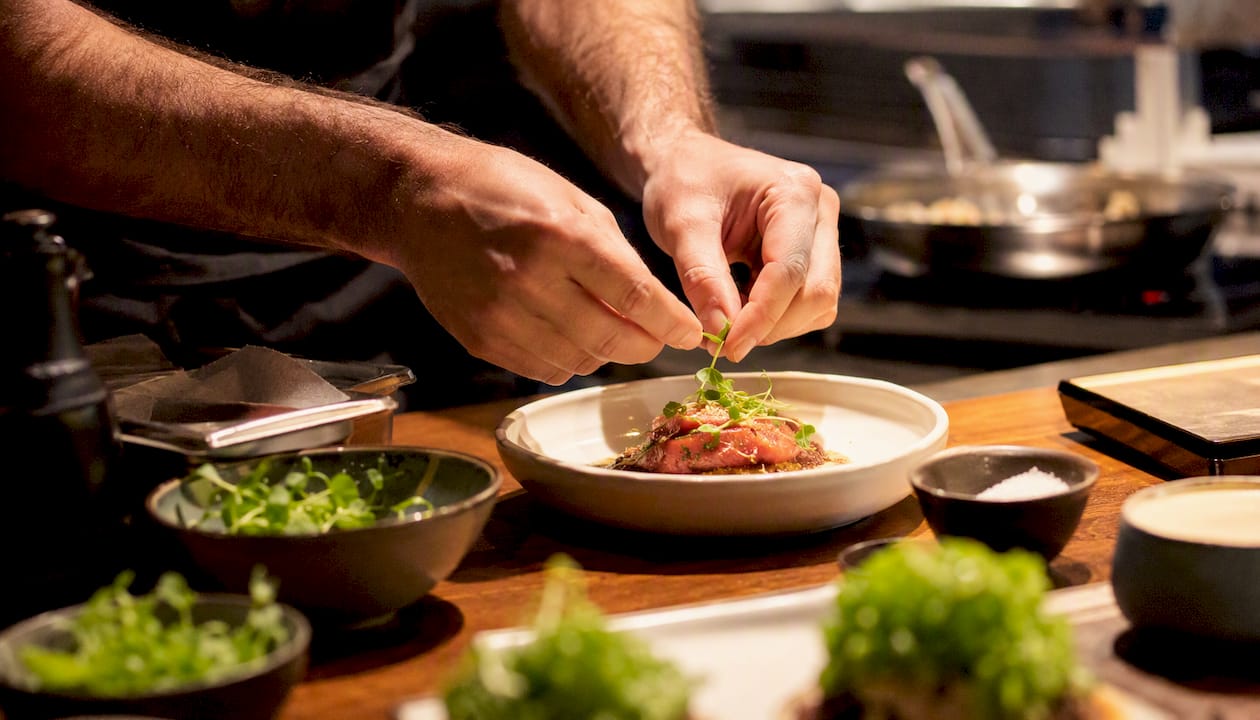
Aulis is Simon Rogan’s London development kitchen turned restaurant, with eight seats and a menu that previews dishes being developed for his wider group. Sushi Tetsu in Clerkenwell is one of the hardest bookings in the city: seven seats, a single chef, and an omakase format that requires booking months ahead via a ballot system.
Humble Chicken in Soho brings a yakitori-omakase format to a counter setting, with 8–12 courses built around fire-cooked chicken and seasonal Japanese ingredients.
West African and Indian fine dining
Ikoyi (St James’s, Piccadilly Circus Tube) holds two Michelin stars and serves some of the most technically demanding food in London. Jeremy Chan’s kitchen uses West African spice profiles — suya, grains of selim, fermented locust beans — applied to British seasonal produce. Eight to ten courses, £200+ per person, 8–10 weeks ahead.
Akoko in Fitzrovia holds one star and offers a more accessible entry point to West African fine dining, with a structured six-to-eight course menu at £100–£150. Gymkhana in Mayfair holds one star for its modern Indian cooking; the tasting menu format here is less rigid than the à la carte, but the kitchen’s technical precision is the same.
Benares Restaurant & Bar, Trishna, Bibi, Colonel Saab, and Pravaas each offer Indian tasting menus at varying price points, from Bibi’s accessible Mayfair counter to Pravaas’s more formal setting. Vatavaran and Paradise bring regional Indian cooking into the tasting-menu format with a focus on underrepresented cuisines.
Value picks under £100
Six By Nico runs a rotating six-course menu themed around a concept (a city, a memory, a season) that changes every six weeks. At under £100 per person, it is one of the most consistent value propositions in London. Perilla in Newington Green is a neighbourhood restaurant that happens to serve one of the city’s most thoughtful tasting menus at a price that makes it a weekly-ish option rather than a once-a-year event.
AngloThai in Marylebone merges British produce with Thai technique in a way that sounds gimmicky and tastes anything but. Tendril and Gauthier Soho are the two strongest choices for plant-based tasting menus: Gauthier’s fully vegan menu is a serious piece of cooking, not a compromise. Plates in Shoreditch takes a similar approach with a more casual room.
Casa Fofo in Hackney, Nest in Hackney Wick, and Bamboo Mat offer neighbourhood tasting menus that reward diners willing to travel east. Perilla, Mater1a, and Paladar round out the mid-range options with distinct culinary identities.
Other notable picks
Bonheur by Matt Abé at Hotel Café Royal brings a Japanese-influenced precision to a Mayfair setting. Frog by Adam Handling in Covent Garden is one of the more accessible starred experiences in central London. KOL in Marylebone applies Mexican culinary logic to British ingredients with one Michelin star. Sollip in Bermondsey is a Korean-European collaboration that remains one of London’s most underrated tasting rooms.
Muse By Tom Aikens in Belgravia is a deeply personal menu built around Aikens’s own memories and experiences. Da Terra in Bethnal Green holds two stars for Rafael Cagali’s modern European cooking, which draws on his Brazilian and Italian background. Ormer Mayfair at Flemings Mayfair, Restaurant St Barts, Row On 5, and Pavyllon London (Yannick Alléno’s London outpost) each offer distinct fine-dining tasting formats in the £100–£200 band.
Chotto Matte in Soho and Junsei bring Japanese-Peruvian Nikkei and Japanese fine dining respectively. Scully St James’s and Scully (note: same chef, Ramael Scully, different formats) draw on his multicultural heritage for menus that span Southeast Asian, Indian, and European influences. MAAI by Nikita and RAI are newer additions to the London tasting-menu circuit worth watching.
Hunan in Pimlico is a long-standing institution where the chef decides what you eat based on your preferences — a set-price, no-menu format that predates the modern tasting-menu trend. 74 Charlotte Street, Cigalon, Angelina, Bardo St James’s, Cheneston’s, Pachamama East, Babur, Gordon Ramsay Hell’s Kitchen, Napoli On The Road Soho, Aces Foodcraft, F.K.A.B.A.M (Formerly Known As Black Axe Mangal), and Pied à Terre each occupy a specific niche, from neighbourhood tasting rooms to high-energy experiential dining.
Pro Tip: Lunch menus at starred restaurants often use the same kitchen and many of the same courses as dinner, but at prices 30–40% lower. Core, The Ledbury, and Helene Darroze all run lunch formats. Book lunch for your first visit to a three-star room; it is a significantly lower-stakes way to experience the cooking.
How do you choose the right tasting menu in London?
The decision comes down to five practical variables, not just price.
1. Budget (all-in, not just the menu price). A £150 tasting menu at a starred room can become a £280 evening once you add a wine pairing (£70–£100), service charge (12.5–15%), and a pre-dinner cocktail. Build your real budget before you browse menus.
2. Course count and duration. A 14-course counter menu at Kitchen Table takes 3–4 hours. A six-course menu at Six By Nico takes 90 minutes. Neither is better; they suit different evenings.
3. Formality. The Ritz and Alain Ducasse at The Dorchester are formal rooms where jackets are expected and the pace is ceremonial. Evelyn’s Table and Humble Chicken are counter rooms where you watch the chef work and conversation flows naturally. Know which version of the evening you want.
4. Dietary flexibility. Many high-end tasting menus are served to the entire table and cannot always accommodate all dietary requirements. Always notify the restaurant at the time of booking, not on the night. Some venues (The Ritz, for example) state explicitly that not all requests can be met. If dietary needs are complex, counter rooms and smaller restaurants tend to be more adaptable than large hotel dining rooms.
5. Accessibility. Several of the counter rooms involve bar-stool seating with no back support for 2–3 hours. Basement rooms (Evelyn’s Table, Gauthier Soho) have stairs. Check with the venue directly if mobility is a consideration.
Booking checklist — questions to ask before you confirm:
- Is the tasting menu required for the whole table, or can one person order à la carte?
- How are dietary requirements handled, and what is the cut-off for notifying the kitchen?
- What is the cancellation policy and is a deposit or full pre-payment required?
- Are wine pairings mandatory or optional?
- Is service charge included in the quoted price?
- What is the dress code?
Red flags to watch for: menus that list no prices online; venues that state dietary requests cannot be accommodated without further discussion; service charges presented as optional but described as “expected.” London’s fine-dining booking landscape is competitive enough that transparency on these points is now a baseline expectation, not a luxury.
Pro Tip: If a three-star room is fully booked, check whether it releases cancellation slots on its own booking platform (Resy or SevenRooms) rather than a third-party aggregator. Many rooms hold back a small number of same-week slots for direct bookers.
Why do wine pairings and service matter so much at a tasting menu?
A tasting menu is not just a sequence of dishes. Sommelier pairings are designed to interact with each course and to introduce diners to grape varieties and regions they would not typically choose from a wine list. The storytelling element — why this wine with this dish, what the producer does differently — is part of what you are paying for at a starred room.
Typical pairing costs in London:
- Under £100 venues: pairings usually £35–£55 per person
- £100–£200 venues: pairings typically £65–£95 per person
- £200+ venues: pairings commonly £100–£150+ per person; prestige pairings higher
What is often not included in the menu price:
- Wine or drinks pairings
- Non-alcoholic / soft pairings (where offered)
- Service charge
- Bread supplements
- Cheese course (sometimes charged separately)
- Petit fours or post-dinner chocolates at some venues
For non-drinkers, ask specifically about a non-alcoholic pairing flight. Restaurants including Ikoyi, KOL, and The Clove Club have invested seriously in juice and ferment pairings that are genuinely worth ordering rather than a token gesture.
Pro Tip: If the full pairing feels expensive, ask for a single bottle chosen by the sommelier for the table, or request pairings by the glass for two or three key courses only. Most rooms will accommodate this without any awkwardness.
What are the cancellation policies at London tasting-menu restaurants?
Pre-payment and strict cancellation terms are now standard across London’s tasting-menu scene, not an exception. Most starred rooms take full or partial payment at the time of booking, and cancellation windows of 48–72 hours are common. Some venues, particularly counter rooms with very few covers, charge the full menu price for no-shows or late cancellations.
Specific things to check before you book:
- Deposit vs. full pre-payment: Three-star rooms and counter restaurants (Kitchen Table, Evelyn’s Table, Sushi Tetsu) typically charge the full menu price upfront. Hotel dining rooms (The Ritz, Alain Ducasse, Helene Darroze) may take a deposit per head.
- Cancellation window: Most venues require 48–72 hours’ notice for a full refund. Some counter rooms require 7 days. Read the terms at the point of booking, not after.
- Group bookings: Cancellation terms are often stricter for groups of six or more. Some rooms require the full amount for groups regardless of notice given.
- Rescheduling: Many venues will allow a date change within the same booking window rather than a cancellation, which avoids losing the deposit. Ask directly.
If you are booking a room you have never visited, consider starting with a lunch sitting. The financial exposure is lower, the cancellation terms are usually the same, and the experience is often comparable in quality to the dinner service.
A note from London Vacation Guide on booking strategy and where to stay
London’s tasting-menu restaurants cluster in a handful of neighbourhoods, and choosing where to stay near them makes a late-night dinner considerably less stressful. Mayfair and St James’s hold the highest density of starred rooms: Core and The Ledbury are a short taxi from a Notting Hill or Kensington base, and the Kensington neighbourhood is the natural choice for anyone planning multiple west London bookings in one trip.
For east London rooms (Da Terra, Nest, Casa Fofo, F.K.A.B.A.M), Shoreditch or Bethnal Green puts you within walking distance of several venues and avoids the late-night Tube scramble. Soho is the best base for counter rooms: Evelyn’s Table, Humble Chicken, Aulis, Gauthier Soho, and Punk Royale are all within a ten-minute walk of each other.
Tuesday and Wednesday evenings are the least competitive nights for cancellation slots and occasionally for initial bookings. Friday and Saturday prime sittings (7:00–8:00 PM) are the hardest to secure at any price point. If you are visiting London specifically for a tasting-menu experience, mid-week travel gives you a meaningful advantage.
Plan your London tasting-menu trip with London Vacation Guide
London Vacation Guide is the practical starting point for visitors combining tasting-menu dinners with a broader London itinerary. The first-time visitors’ guide covers accommodation by neighbourhood, transport between venues, and how to structure a multi-day trip around both sightseeing and serious dining. The neighbourhood guides map every area where tasting-menu restaurants cluster, so you can choose a hotel that puts the right kitchens within easy reach.
For readers planning a culinary-focused trip, the site’s London dining guide covers everything from casual neighbourhood spots to the full fine-dining circuit, helping you balance tasting-menu evenings with the kind of casual London eating that is just as worth your time.
Sources
Before you book, verify menu format, price, and dietary policy on the restaurant’s own website. Menus change seasonally and prices are updated without notice.
- Best tasting menus in London | Wallpaper*
- Best tasting menu London: 20 restaurants serving marvellous multi-course affairs
- Five & Seven Course Two Michelin Star Tasting Menus
- Dinner by Heston Blumenthal London | Menus
- Best fine dining restaurants in London (OpenTable listings)
- Best Fine Dining in London 2026: 14 Picks
FAQ
What is a tasting menu and how long does it take?
A tasting menu is a fixed, multi-course meal chosen by the chef, typically running from five to fourteen courses. Duration ranges from 90 minutes at a shorter counter format to up to 3 hours at a full starred-room dinner.
How far in advance should you book a London tasting menu?
Three-star rooms typically require 12 weeks’ notice, with bookings opening at midnight on the release day. One- and two-star rooms generally need 4–8 weeks, though prime Friday and Saturday sittings sell out faster.
Are wine pairings included in the tasting menu price?
No. Wine pairings are almost always an optional extra, typically adding £35–£150 per person depending on the venue.
Which London tasting menus are best for vegans?
Gauthier Soho offers a fully vegan tasting menu at under £100 per person. Tendril and Plates are strong plant-based options in the same price band. Many other venues offer vegetarian alternatives if notified at the time of booking.
Can you do a London tasting menu on a budget?
Yes. Six By Nico, Perilla, AngloThai, Bibi, and Tendril all offer tasting menus under £100 per person. Lunch sittings at starred restaurants can also bring the cost down by 30–40% compared with dinner at the same kitchen.
Recommended
- London restaurant tips: your 2026 insider guide - The London Journal | London Vacation Guide
- Local dining guide London: find authentic food experiences - The London Journal | London Vacation Guide
- London’s Best Restaurants: Where to Eat in Every Neighborhood - The London Journal | London Vacation Guide
- Best places to eat in London: your 2026 dining guide - The London Journal | London Vacation Guide