Must-try London foods: the definitive 2026 guide
London’s must-try foods are a blend of iconic British classics and celebrated contemporary dishes that together define one of the world’s most exciting food cities. From a perfectly battered piece of cod at a proper East End chippie to a salt beef beigel at 3am from Beigel Bake on Brick Lane, the city rewards curious eaters at every turn. This guide covers the must-try London foods list that every food enthusiast and traveller should work through, with specific venues, timing advice, and the cultural context that makes each dish worth seeking out.
1. Fish and chips with mushy peas
Fish and chips is the dish most closely associated with British culinary identity, and London offers some of the finest versions in the country. The quality gap between a great chippie and a mediocre one is significant. Top venues prioritise premium cod sourcing rather than generic substitutes, which directly affects the flavour and texture of the batter and the flakiness of the fish. Poppies in Spitalfields and Camden serves a classic version with proper mushy peas and tartare sauce, while The Bull and Last in Highgate elevates the dish with high-welfare sourcing and a gastropub setting.
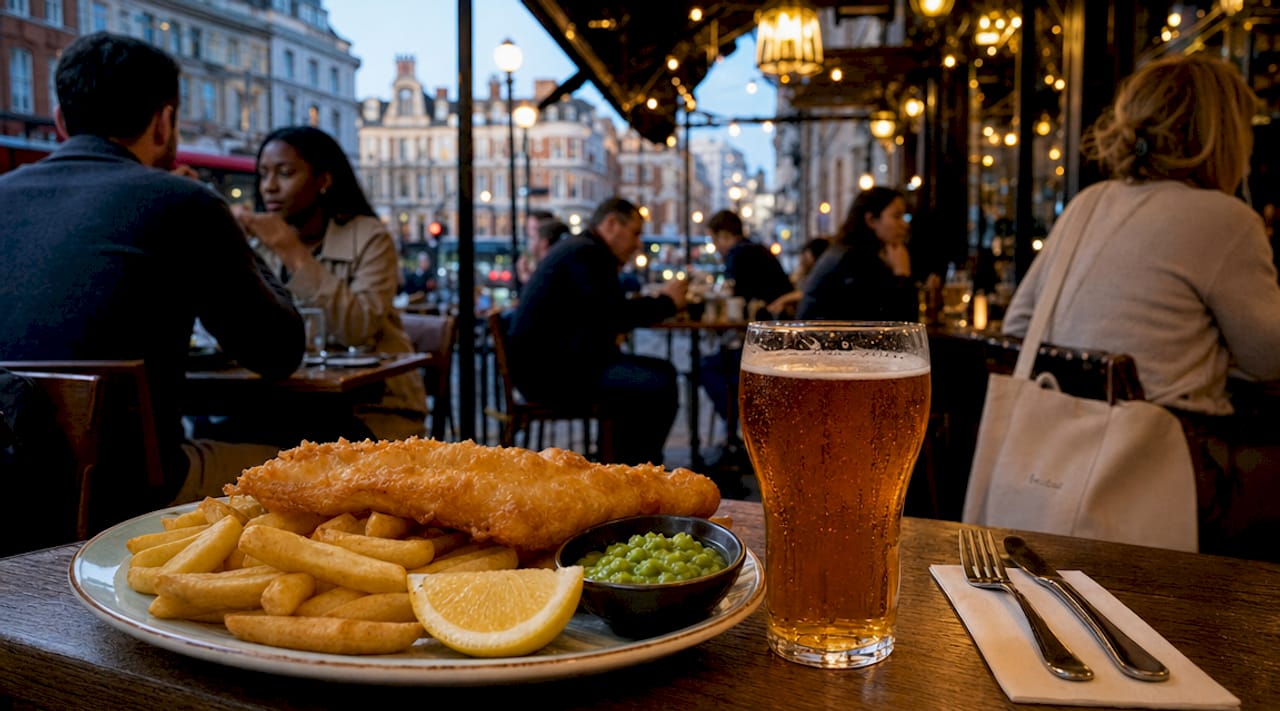
Mushy peas are non-negotiable. They are not a garnish but an integral part of the dish, providing the earthy contrast that cuts through the richness of the batter. Ask for a side of curry sauce if you want to eat it the way many Londoners actually do.
Pro Tip: Avoid fish and chip shops near major tourist attractions like the South Bank on a Friday evening. The queues are long and the quality rarely justifies the wait. Head to a neighbourhood chippie in Islington or Stoke Newington instead.
2. Sunday roast with Yorkshire pudding
The Sunday roast is not merely a meal. It is a weekly ritual, and London’s pub dining scene has turned it into an art form. Popular Sunday roasts at renowned venues require advance bookings, often days ahead. The Harwood Arms in Fulham, London’s only Michelin-starred pub, serves a roast that justifies every penny and every minute of planning. The beef is typically a well-aged rib cut, the Yorkshire pudding is the size of a cereal bowl, and the roast potatoes are cooked in beef dripping.
A proper Sunday roast includes roasted meat (beef, lamb, pork, or chicken), roast potatoes, seasonal vegetables, gravy, and at least one Yorkshire pudding. The Yorkshire pudding originated in the north of England as a way to use up beef dripping, but it has become the centrepiece of the plate in London’s best pub kitchens. For a more affordable version without sacrificing quality, The Anchor and Hope in Waterloo and The Princess of Shoreditch both deliver excellent roasts at reasonable prices.
3. Afternoon tea
Afternoon tea is one of the most recognisable examples of London cuisine and remains a genuine cultural experience rather than a tourist trap, provided you choose the right venue. The format is fixed: finger sandwiches on the bottom tier, plain and fruit scones with clotted cream and jam in the middle, and pastries or miniature cakes on top. The debate over whether cream or jam goes first on a scone is a genuine regional dispute. In London, most establishments follow the Devonshire method: cream first, then jam.
Claridge’s in Mayfair and The Ritz on Piccadilly are the prestige options, with prices to match. For a more accessible but still excellent experience, Bettys at their London pop-ups or Fortnum and Mason’s The Diamond Jubilee Tea Salon on Piccadilly offer quality without the six-week waiting list. Book at least two weeks ahead for any of these venues, particularly at weekends.
4. Full English breakfast
The full English breakfast is the dish that defines a certain kind of London morning, and it is one of the top London street foods in its café form. A proper version includes back bacon, fried or scrambled eggs, pork sausages, grilled tomato, baked beans, black pudding, and toast. The black pudding is the element most visitors hesitate over, but it is the ingredient that separates a full English from a generic cooked breakfast. Made from pork blood, oatmeal, and spices, it adds a depth of flavour that no other component replicates.
E. Pellicci in Bethnal Green has been serving full English breakfasts since 1900 and remains one of the most authentic café experiences in the city. The interior is Grade II listed, the portions are generous, and the prices are still firmly in the working-class café tradition. For a more contemporary take, Granger and Co in Notting Hill serves a refined version that has become a weekend institution.
5. Salt beef beigel from Beigel Bake
The salt beef beigel is a distinctly London dish, rooted in the Jewish East End community that shaped Brick Lane and the surrounding streets. Beigel Bake at 159 Brick Lane is open 24 hours a day, seven days a week, and has been since 1977. The beigels are baked on site, dense and chewy in the way that New York-style bagels are not, and the salt beef is hand-carved and piled generously with mustard and pickles.
The price is deliberately low, which is part of the point. This is not a dish that has been gentrified or repositioned for a food-hall audience. It is the same product it has always been, served from the same counter, at the same price point that makes it accessible to everyone. Going at 2am after a night out is a London rite of passage that food travellers should not skip.
Pro Tip: Beigel Bake is cash only. Bring notes. The queue moves fast, so do not spend time deliberating at the counter.
6. Roast bone marrow and parsley salad at St. John
St. John in Smithfield is the restaurant that defined nose-to-tail eating as a culinary philosophy, and its roast bone marrow with parsley salad is the dish that put it on the map. Chef Fergus Henderson opened St. John in 1994, and this single dish has appeared on the menu every day since. The marrow is roasted in the bone, served with a sharp parsley and caper salad and thick slices of toast for spreading. It is rich, deeply savoury, and unlike anything else on a London menu.
This dish matters beyond its flavour. It represents a philosophy of using every part of the animal with respect and skill, and it influenced a generation of British chefs including Heston Blumenthal and April Bloomfield. Booking at St. John is straightforward through their website, and the lunch service is slightly easier to get into than dinner.
7. Scotch egg at a quality pub
The Scotch egg has undergone a complete transformation in London over the past decade. What was once a motorway service station snack is now a gourmet pub staple, and the quality difference is stark. A proper Scotch egg features a soft, runny yolk encased in seasoned sausage meat, coated in breadcrumbs and fried to a golden finish. Achieving a runny yolk inside a fully cooked exterior requires precise timing and is genuinely difficult to get right.
The Pig and Butcher in Islington is widely regarded as one of the best places in London to try a Scotch egg done properly. The pub sources its meat from rare-breed farms and makes everything in-house. The Harwood Arms also serves a version that regularly appears on best-of lists. Order it as a starter rather than a bar snack to get the full experience.
8. Steak and kidney pudding
Steak and kidney pudding is one of the oldest dishes in the British culinary canon and one of the most misunderstood by visitors. Unlike a pie, the pudding is encased in suet pastry and steamed rather than baked, which produces a dense, almost dumpling-like crust that absorbs the rich gravy inside. The filling of slow-cooked beef and kidney in a dark, deeply flavoured sauce is the definition of cold-weather comfort food.
Rules Restaurant in Covent Garden, London’s oldest restaurant (established 1798), serves a version that is as close to the historical original as you will find anywhere in the city. The dining room itself is worth the visit. For a more casual setting, The Guinea Grill in Mayfair has served steak and kidney pudding for decades and remains one of the most consistent kitchens in London for traditional British cooking.
9. London’s street food markets: Borough, Camden, and Maltby Street
London’s street food markets are not interchangeable. Each has a distinct character, visitor profile, and food speciality, and choosing the right one for your priorities makes a significant difference to the experience. The atmosphere and visitor profiles of these markets are as important as the food itself when planning a visit.
| Market | Atmosphere | Food focus | Best time to visit |
|---|---|---|---|
| Borough Market | Historic, gourmet, refined | Artisan produce, oysters, raclette | Weekday morning, 10am to noon |
| Camden Market | Youth-oriented, experimental, Instagrammable | Global street food, trend-driven stalls | Weekend afternoon |
| Maltby Street Market | Intimate, local, low-key | Specialist producers, natural wine | Saturday morning, from 9am |
Borough Market near London Bridge is the most celebrated food market in the country, but it comes with significant crowds. Avoid Borough Market on Saturday afternoons due to extreme crowding. A Thursday or Friday morning visit gives you access to Kappacasein’s legendary raclette, Richard Haward’s native oysters, and Neal’s Yard Dairy’s cheese counter without the tourist crush. Camden Market suits a different appetite entirely. It is known for experimentation and trend-driven stalls, with the Yorkshire Burrito and global fusion dishes drawing a younger, more adventurous crowd. Maltby Street Market in Bermondsey is the insider choice: smaller, quieter, and stocked with specialist producers who do not have Borough Market’s overheads.
Pro Tip: At Borough Market, the free samples at the cheese and charcuterie stalls are generous enough to constitute a light breakfast if you arrive early. This is not a secret, but it is worth knowing.
For a full breakdown of each market’s layout and seasonal highlights, London Vacation Guide’s food markets guide covers every major option in detail.
10. Sticky toffee pudding
Sticky toffee pudding is the British dessert that consistently surprises visitors who expect it to be heavy or cloying. Done well, it is a light sponge made with finely chopped dates, drenched in a warm toffee sauce and served with vanilla ice cream or clotted cream. The dates dissolve into the batter during baking, leaving no discernible texture but adding a deep caramel sweetness that no other ingredient replicates.
The Ivy in Covent Garden serves a version that has been on the menu for decades and remains one of the most ordered desserts in the restaurant. For a more contemporary presentation, Brat in Shoreditch occasionally features a wood-fired version that adds a subtle smokiness to the toffee sauce. This is a dish that appears on menus across price points, from gastropubs to fine dining rooms, and the quality rarely disappoints.
11. Cheese toastie and comfort snacks
The cheese toastie has been elevated to a serious culinary proposition in London, and The Wigmore at The Langham Hotel in Marylebone serves the most discussed version in the city. It uses Montgomery’s Cheddar, a raw-milk cheese from Somerset, and the bread is grilled in clarified butter until the crust achieves a lacquer-like finish. It costs considerably more than a toastie has any right to, but the quality of the cheese justifies the price.
Beyond the toastie, London’s comfort snack scene includes top street foods like Eton Mess, a deconstructed meringue dessert with strawberries and cream that appears on pub menus throughout summer. Mince on toast, a simple dish of seasoned minced beef on thick white toast, is a working-class staple that has found its way onto the menus of several nose-to-tail restaurants as a deliberate act of culinary reclamation. These dishes are not glamorous, but they are genuinely London.
Key takeaways
London’s must-try foods span centuries of culinary tradition and decades of modern innovation, and the city rewards visitors who eat across both categories rather than sticking to one.
| Point | Details |
|---|---|
| Traditional dishes require planning | Sunday roasts and afternoon tea at top venues need advance bookings, often days ahead. |
| Market timing is critical | Visiting Borough Market on a weekday morning avoids crowds and gives access to the best stalls. |
| Modern cult dishes define London now | Salt beef beigels, bone marrow at St. John, and quality Scotch eggs are as iconic as fish and chips. |
| Ingredient provenance matters | Premium cod sourcing and rare-breed meat directly affect the quality of London’s classic dishes. |
| Neighbourhood eating beats tourist zones | The best food experiences are consistently found away from major landmarks and tourist corridors. |
What I have learned from eating across London for years
The most common mistake food travellers make in London is treating the traditional and the contemporary as separate itineraries. They are not. The city’s food identity is built on the tension between the two, and the most satisfying days of eating move between them naturally.
I have eaten a full English at E. Pellicci at 8am and followed it with bone marrow at St. John for lunch. I have queued at Beigel Bake at midnight after an evening at a Michelin-starred restaurant in Mayfair. These combinations are not contradictions. They are how Londoners actually eat, and they are how you get a genuine picture of the city’s culinary character.
The advice I give every food-focused visitor is this: do not spend your entire trip in the same two or three postcodes. Islington, Bermondsey, Dalston, and Highgate all have food scenes that rival anything in the West End, and the prices reflect a local rather than tourist economy. Borough Market is worth one visit, but Maltby Street on a Saturday morning will give you a more honest picture of where London’s food culture is actually heading.
Reservations matter more than most visitors expect. The Harwood Arms books out weeks in advance for Sunday lunch. St. John fills up quickly for dinner. Book these before you book your flights, not after you arrive. The food experiences that require the most planning are almost always the ones most worth having.
— Matt
Plan your London food adventure with expert help
London’s food scene rewards preparation, and London Vacation Guide has done the groundwork for you. Whether you want a curated food-focused itinerary that moves between Borough Market, Brick Lane, and Smithfield, or a broader trip that balances iconic dishes with neighbourhood discoveries, the London itineraries section covers every style of visit. For those arriving for the first time, the first-time visitor guide includes specific food recommendations alongside practical planning advice. Every itinerary is built around real local knowledge, not generic tourist routes, so you spend your time eating rather than deciding where to eat. For a broader perspective on what makes London one of the world’s great food cities, the culinary traveller’s guide from Wild Foodz offers useful context before your trip.
FAQ
What are the most iconic foods to eat in London?
Fish and chips, Sunday roast, afternoon tea, full English breakfast, and sticky toffee pudding are consistently ranked as the top traditional dishes. Modern cult favourites like the salt beef beigel from Beigel Bake and roast bone marrow at St. John are equally essential.
Which London food market is best for first-time visitors?
Borough Market near London Bridge is the most celebrated option, but weekday morning visits are strongly recommended to avoid Saturday afternoon crowds. Maltby Street Market in Bermondsey is the better choice for a quieter, more local experience.
Do I need to book restaurants in advance for traditional London dishes?
Yes. Popular Sunday roasts and pub meals at renowned London venues require reservations, often several days to weeks ahead. The Harwood Arms and Rules Restaurant are particularly difficult to walk into without a booking.
What is the best time to visit Borough Market?
Thursday or Friday mornings between 10am and noon offer the best combination of stall availability and manageable crowds. Saturday afternoons at Borough Market are extremely congested and not recommended for a relaxed food experience.
Is London street food worth trying beyond the major markets?
Absolutely. Brick Lane, Exmouth Market in Clerkenwell, and Leather Lane in Farringdon all offer excellent street food with fewer tourists and lower prices than Borough or Camden. These spots give a more authentic picture of how Londoners eat on a daily basis.
Recommended
- Why London is a top food destination for culinary travellers - The London Journal | London Vacation Guide
- Local dining guide London: find authentic food experiences - The London Journal | London Vacation Guide
- London’s Best Restaurants: Where to Eat in Every Neighborhood - The London Journal | London Vacation Guide
- How to experience London like a local: your essential guide - The London Journal | London Vacation Guide