Dining in London travel: why food shapes your trip
Few cities punish the assumption that “food is just fuel” quite like London does. The role of dining in London travel goes far beyond satisfying hunger. It connects you to centuries of immigration, social ritual, and neighbourhood identity that no museum exhibit can replicate. Whether you’re sitting down to dim sum in Gerrard Street, nursing a pint at a gastropub in Bermondsey, or hunting jerk chicken at Brixton Market, you are reading the city’s story in real time. This guide will show you exactly how to use food as a lens for understanding London, and how to plan around it properly.
Table of Contents
- Key takeaways
- The role of dining in London travel
- Afternoon tea and pub culture
- How dining shapes your London itinerary
- Modern London dining trends
- Top dining neighbourhoods for travellers
- My honest take on dining as a travel strategy
- Plan your London trip around food
- FAQ
Key takeaways
| Point | Details |
|---|---|
| Dining reveals cultural identity | London’s food scene reflects centuries of immigration and social change, offering insight beyond typical sightseeing. |
| Traditions carry real meaning | Afternoon tea and pub culture are cultural rituals worth experiencing for their history, not just their novelty. |
| Meal planning enriches your itinerary | Timing meals around theatre, markets, and neighbourhoods dramatically improves both your food and your overall trip. |
| Modern dining goes beyond the plate | Contemporary London restaurants use storytelling and local sourcing to create experiences that stay with you long after you leave. |
| Local eating offers better value | Dining where residents eat gives you authenticity and significantly better value than tourist-facing venues. |
The role of dining in London travel
Most visitors arrive expecting fish and chips, roast dinners, and possibly a lukewarm cup of tea. What they actually find is one of the most extraordinary dining cities on the planet, shaped not by a single tradition but by wave after wave of cultural arrivals. Understanding this is the foundation of using food well during your trip.
London’s culinary identity has been in constant motion for centuries. The Huguenot refugees who settled in Spitalfields in the 1600s brought their baking traditions. Indian and Bangladeshi communities transformed Brick Lane into one of the city’s most recognisable food streets. Chinese, Caribbean, West African, Japanese, and Middle Eastern communities each carved out culinary corners that are now woven into the city’s everyday food life. This is not a city with one cuisine. It is a city where cuisine is the story of who arrived and stayed.
The impact of dining on tourism in London is substantial, and it shows in how travellers now plan their trips. Dining experiences increasingly appear alongside sightseeing on itineraries, rather than being treated as an afterthought between landmarks.
What makes London’s food scene especially useful for travellers is how neighbourhood-specific it remains. Consider a few standout examples:
- Chinatown (Soho): Dense with Cantonese and Malaysian restaurants, it offers some of London’s most accessible and authentic Asian dining alongside the theatre district.
- Brixton Market: A celebration of Afro-Caribbean flavours and community energy, representing South London’s vibrant cultural mix.
- Tooting Broadway: One of the best areas in London for South Asian food, largely unknown to first-time visitors but beloved by locals.
- Golborne Road, Notting Hill: Moroccan and Portuguese food side by side, reflecting the area’s layered immigration history.
Each of these places gives you context that a walking tour cannot. When you eat the food, you meet the history.
Afternoon tea and pub culture
Few experiences in London dining carry as much weight as afternoon tea and the traditional pub lunch. Both are deeply embedded in British social life, and both offer travellers something that transcends novelty.
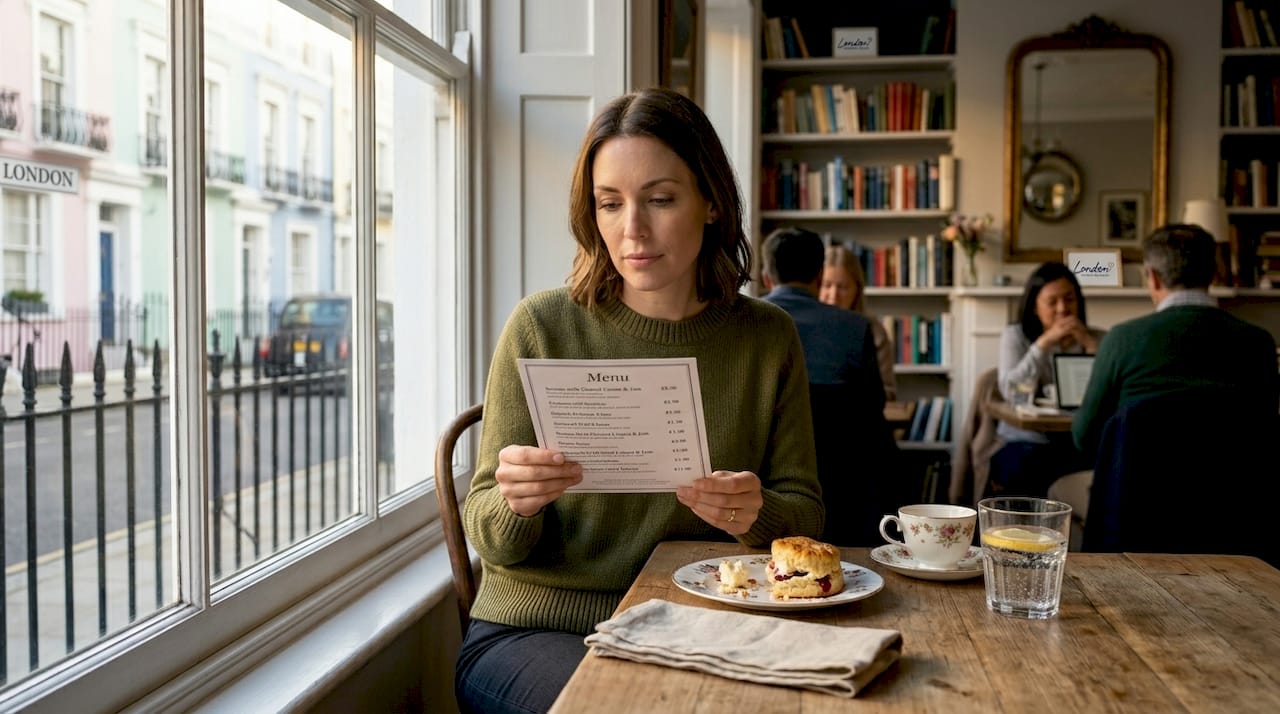
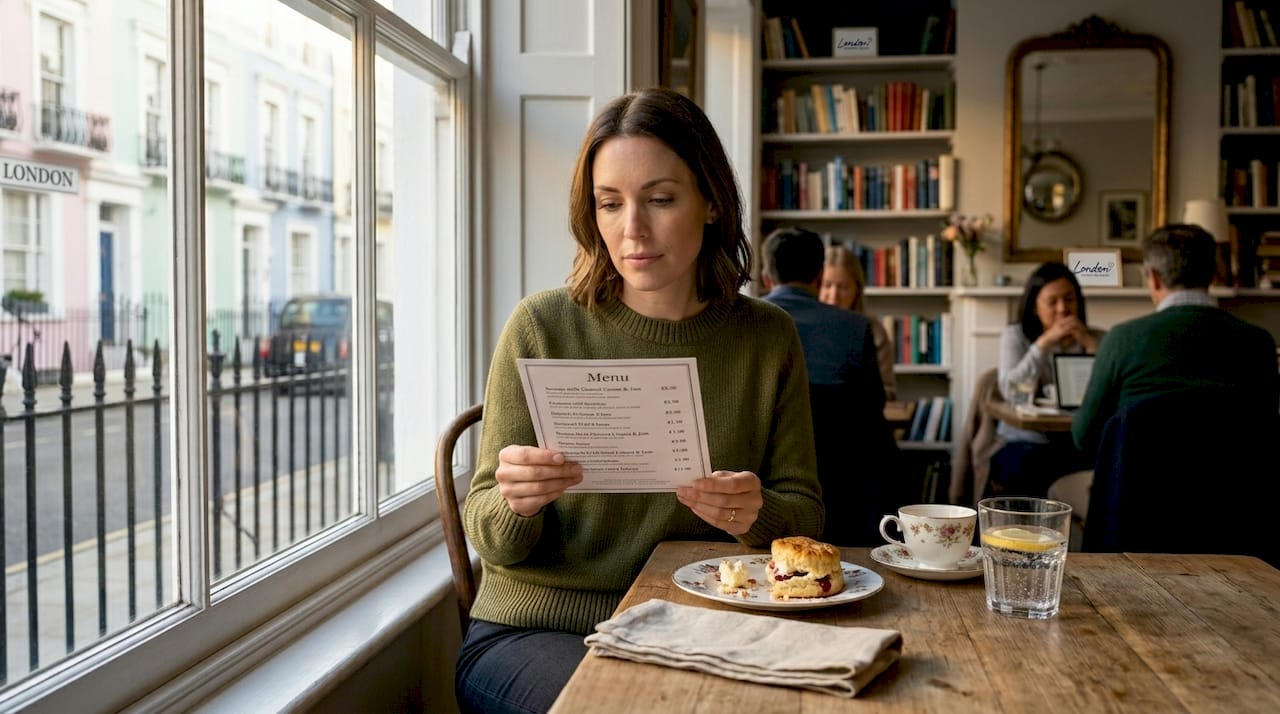
Afternoon tea emerged in the 1840s and has persisted as a beloved social ritual providing a structured, unhurried pause in the day. It was originally a practical solution to the long gap between a light lunch and a late dinner, but it evolved into one of Britain’s most recognisable customs. Today, experiencing it properly means understanding what it actually is, not just what Instagram suggests.
Here is what a well-planned afternoon tea experience looks like, in the right order:
- Book well in advance. Venues at The Ritz, Claridge’s, and The Savoy fill weeks or months ahead. Smaller, equally impressive spots like Bettys at Liberty or Fortnum & Mason require at least a week’s notice.
- Communicate dietary needs early. Dietary requirements need to be flagged at least 48 hours before your booking so kitchens can prepare bespoke options rather than last-minute substitutes.
- Know the difference between afternoon tea and high tea. Afternoon tea is the elegant, finger-sandwich version served in the mid-afternoon. High tea was historically a working-class, early-evening meal with heartier food. Most London venues serve the former.
- Handle the scones correctly. The cream versus jam debate is famously unresolved, but pulling scones apart gently by hand and applying toppings moderately is considered proper form regardless of which county’s method you prefer.
- Allow two hours. Rushing afternoon tea defeats its entire purpose. Plan it as an experience, not a pitstop.
Pro Tip: Book afternoon tea for mid-week rather than weekends to secure better tables, more attentive service, and occasionally lower prices at non-hotel venues.
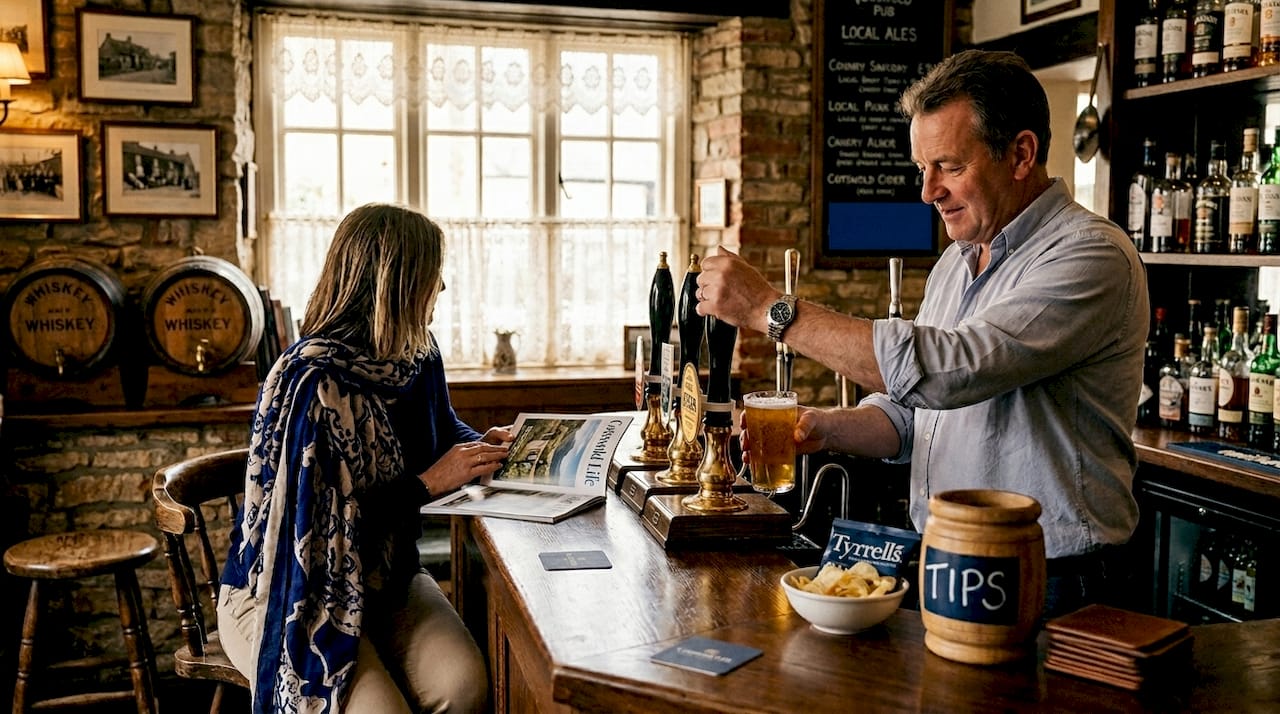
Pubs deserve equal attention. The British pub is not simply a place to drink. It is a social institution with a distinct atmosphere and increasingly strong food. Gastropubs have transformed traditional pub meals by refining ingredients and technique while keeping the relaxed, communal atmosphere intact. Places like The Harwood Arms in Fulham (London’s only Michelin-starred pub) and The Anchor and Hope in Southwark offer genuinely outstanding food in settings that feel distinctly, honestly British.
How dining shapes your London itinerary
Treating dining as a planning tool rather than a daily decision transforms the quality of your trip. The best culinary experiences in London are not stumbled upon. They are chosen deliberately, and placed thoughtfully within your day.
Start by thinking in neighbourhoods. Where you choose to eat tells you where to spend the hours around it. A lunch reservation in Bermondsey naturally draws you through the area’s independent galleries and railway arch studios. Dinner in Marylebone opens an afternoon in the Wallace Collection or along the boutiques of Chiltern Street. Food and neighbourhood exploration reinforce each other when you plan them together.
The timing of meals significantly shapes what you can access and how much you pay. Lunchtime menus at serious restaurants often reflect the dinner menu at a fraction of the price. Brasseries in the City that serve a crowd of bankers at 1pm are quiet and welcoming by 12 noon.
A few principles that experienced London visitors use:
- Plan pre-theatre dining in Soho deliberately. Every £1 spent on theatre tickets generates £1.40 in additional local dining spend, which means restaurants here know how to move tables efficiently. Eat between 5:30pm and 6:30pm, tell them you have a curtain, and most will accommodate without pressure.
- Use markets for flexibility. Borough Market on Thursdays through Saturdays, Maltby Street Market on weekends, and Exmouth Market during weekday lunchtimes offer excellent food without needing a reservation.
- Eat where locals eat for authenticity and value. Small, focused menus typically indicate kitchen specialties. A four-page menu in a tourist area often means the kitchen is covering too much ground.
- Book popular restaurants months ahead. Advanced reservations for sought-after venues can require two to four months of lead time. Brat in Shoreditch, Kiln in Soho, and Rochelle Canteen in Shoreditch are perennially booked and worth planning for.
- Balance your meal spend across the trip. One properly planned splurge dinner, two mid-range meals, and several well-chosen casual lunches is a more satisfying structure than eating at the same price point every day.
Pro Tip: If a restaurant you want is fully booked online, call directly. Many London restaurants hold back a small number of tables from online systems for phone bookings and walk-ins at opening time.
Modern London dining trends
Something has shifted in London’s restaurant culture over the past decade. The most talked-about openings are not the most expensive or technically complex. They are the ones that make dining emotionally engaging through storytelling, sourcing, and atmosphere.
This shift matters for travellers because it means dining now offers a genuine narrative. At restaurants like Brat (Basque-inspired cooking over wood fire), the dish is inseparable from the method and ethos. At Ottolenghi, the food tells a story of cross-cultural creativity rooted in Jerusalem and London simultaneously. These are not just meals. They are positions on how food should exist in the world.
Sustainability has become a defining concern across price points. Restaurants sourcing from specific British farms, using whole animals, or maintaining relationships with named growers are communicating something about values, not just quality. As a traveller, this gives you a more meaningful connection to the meal.
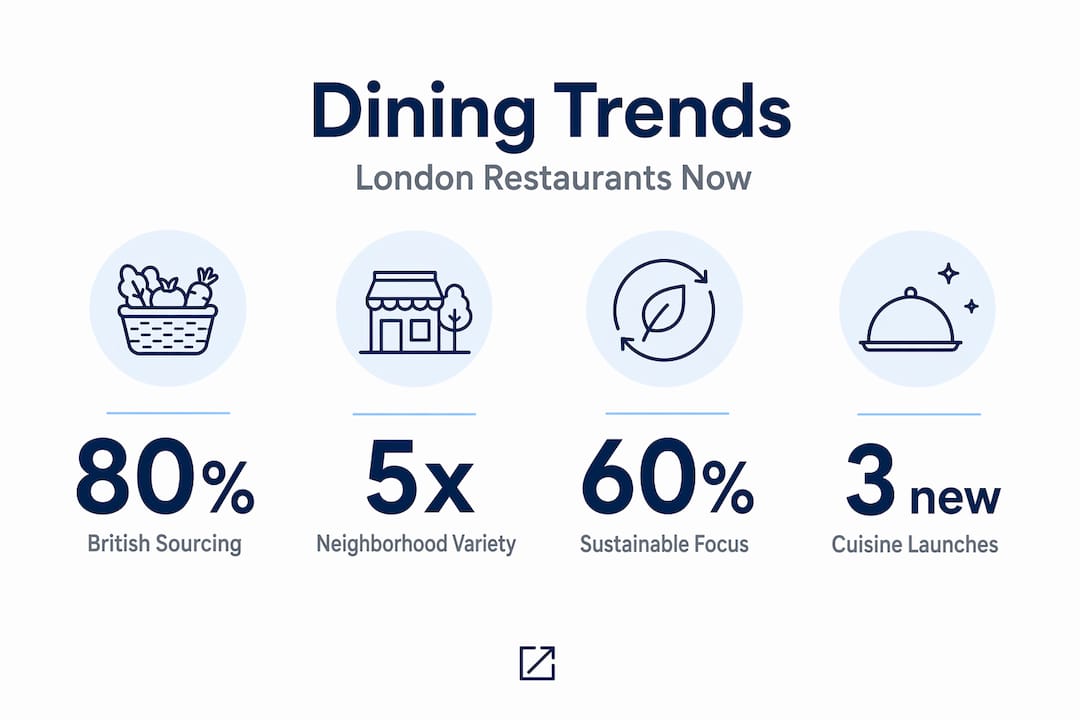
The table below shows how different dining formats in contemporary London serve different types of travel experience:
| Dining format | Best for | Neighbourhood examples |
|---|---|---|
| Tasting menu (chef’s table) | Deep immersion, special occasions | Mayfair, Fitzrovia |
| Neighbourhood bistro | Everyday local feel, great value | Hackney, Bermondsey |
| Market stall or food hall | Flexible, multicultural grazing | Borough Market, Kerb at King’s Cross |
| Gastropub | British culture and comfort | Fulham, Southwark, Clerkenwell |
| Street food trader | Speed, diversity, authenticity | Brick Lane, Brixton Village |
The format you choose shapes not just what you eat but how you feel about London afterwards.
Top dining neighbourhoods for travellers
Choosing where to eat is effectively choosing who you want to meet and what part of the city you want to understand. These are the areas worth exploring through their food:
- Soho: The city’s most concentrated restaurant district, mixing ramen bars, Cantonese BBQ spots, Italian trattorias, and world-class cocktail bars within a ten-minute walk. Excellent for evening dining before or after the theatre.
- Hackney (particularly Broadway Market and London Fields): One of the city’s most exciting food areas, dominated by independent restaurants, natural wine bars, and creative menus that reflect east London’s diverse population. Less tourist-facing and genuinely local in feel.
- Borough Market and London Bridge: The market itself is a microcosm of London’s food culture, with British produce sitting alongside immigrant flavours and seasonal specialties. Borough Market Kitchen is a particularly good anchor point for exploring this area.
- Mayfair: Home to some of the city’s most ambitious dining, including Sketch, Gymkhana, and Scott’s. Also where you find Sketch Gallery, one of London’s most visually extraordinary dining experiences, worth visiting as much for its design as its food.
- Angel (Islington): A slightly overlooked dining neighbourhood packed with independent restaurants on Upper Street and the quieter Essex Road. Especially good for Lebanese, Japanese, and modern European cooking.
- Brixton Village: A covered market arcade that has become one of London’s most exciting food destinations, with Colombian, Ethiopian, Thai, and Caribbean food all within a few minutes of each other.
For a deeper look at local London food experiences, including off-the-beaten-path spots, Londonvacationguide covers these neighbourhoods in detail.
My honest take on dining as a travel strategy
I’ve spent years exploring London’s food scene, and the conclusion I keep returning to is this: the meals you plan properly are the ones that make the trip. Not the landmarks, not the museums, not even the weather (which, being London, is rarely in your favour anyway). The dinners you thought through a month in advance. The market mornings you built a slow Saturday around. The pub you found because you were walking somewhere else and the smell from the kitchen was impossible to ignore.
What I’ve noticed is that most first-time visitors treat dining as secondary. They spend three weeks researching hotels and half an hour deciding where to eat. That proportion should be reversed. In a city this layered, food is one of the fastest ways to understand where you actually are. A meal in Hackney tells you something about east London’s creative energy that no guidebook captures. An afternoon tea at a proper London hotel tells you something about British formality and social grace that a history book only partially conveys.
My advice: sequence your meals the way you sequence your sightseeing. Place them on the map. Think about what comes before and after. A good lunch in Bermondsey followed by a walk along the Thames to Tate Modern is a better afternoon than either experience would be alone.
I also think people underestimate how much a single extraordinary meal can reframe a whole trip. It becomes the reference point. Everything else in London gets measured against it. That’s worth planning for. The best restaurants across London’s neighbourhoods give you a solid starting point for building that list.
— Matt
Plan your London trip around food
If this article has convinced you that dining deserves a proper place on your London itinerary, the next step is practical planning. Londonvacationguide has a full range of neighbourhood guides to help you decide where to stay based on where you want to eat, as well as curated restaurant listings across every part of the city.
If you’re visiting for the first time, the essential first-time visitor guide is a strong starting point. It covers how to structure your days, which areas suit which types of traveller, and how to weave dining and sightseeing into a coherent itinerary rather than a rushed checklist. You can also explore detailed area guides for Victoria and Richmond if you’re considering staying outside Central London. Book popular dining experiences as early as possible. Some of London’s most rewarding tables fill up months in advance, and that’s the one mistake no amount of good planning can fix after the fact.
FAQ
What is the role of dining in London travel?
Dining in London gives travellers direct access to the city’s cultural identity, neighbourhood character, and social history. It shapes your experience of London far beyond simply satisfying hunger between sightseeing stops.
How far in advance should I book restaurants in London?
Popular London restaurants often require two to four months of advance booking, particularly for tasting menus, chef’s tables, and high-demand spots in areas like Soho and Shoreditch. Afternoon tea at major venues like The Ritz should be booked at least four to six weeks ahead.
What are the best food areas in London for travellers?
Soho, Borough Market, Brixton Village, Hackney Broadway Market, and Mayfair each offer distinct food cultures worth exploring. The area you choose shapes the neighbourhood you experience, so align your dining with the parts of London you want to understand.
Is afternoon tea worth doing in London?
Afternoon tea is a genuine cultural experience rather than a tourist gimmick, particularly at well-established London venues. Allow around two hours, book in advance, and communicate dietary needs at least 48 hours before your reservation for the best experience.
How do I eat well in London without overspending?
Eat lunch rather than dinner at higher-end restaurants, use markets like Borough Market and Maltby Street for flexible mid-day eating, and seek out local neighbourhood restaurants with short menus rather than tourist-area venues with long, broad ones.
Recommended
- Why London is a top food destination for culinary travellers - The London Journal | London Vacation Guide
- Local dining guide London: find authentic food experiences - The London Journal | London Vacation Guide
- London’s Best Restaurants: Where to Eat in Every Neighborhood - The London Journal | London Vacation Guide
- Plan your perfect London vacation: tips for US visitors - The London Journal | London Vacation Guide