What is London pub culture? A traveller’s guide
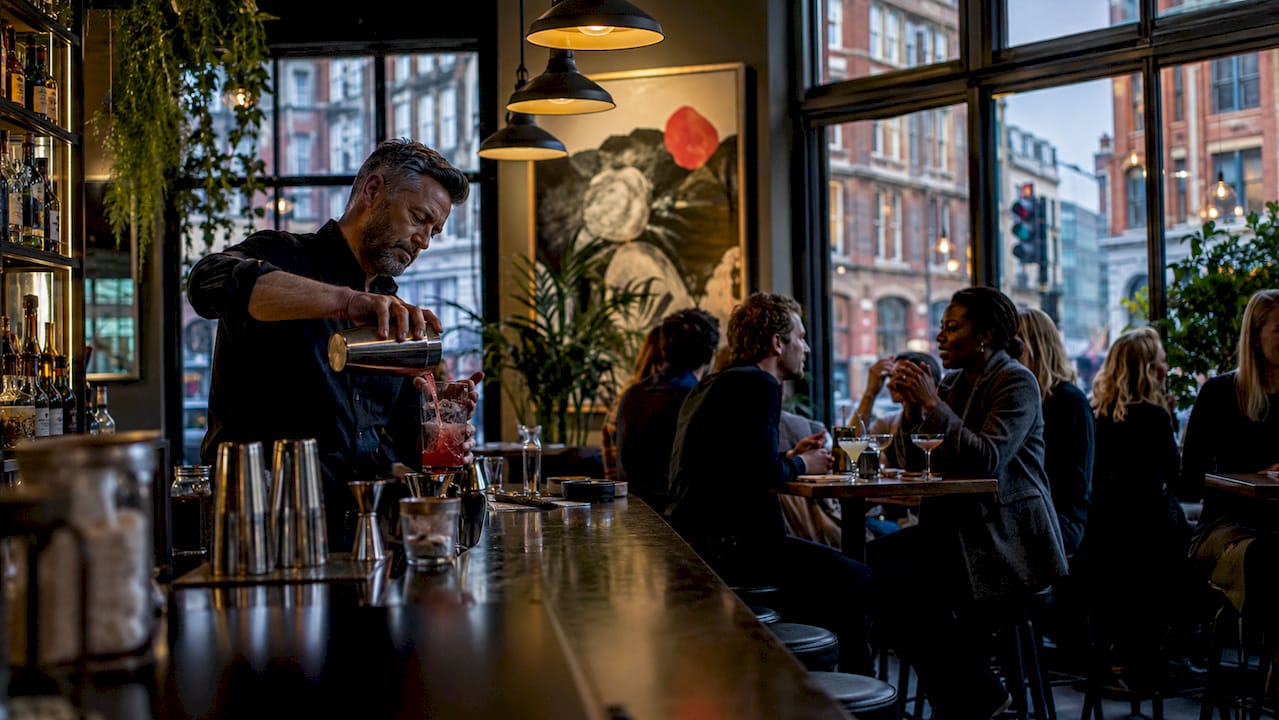
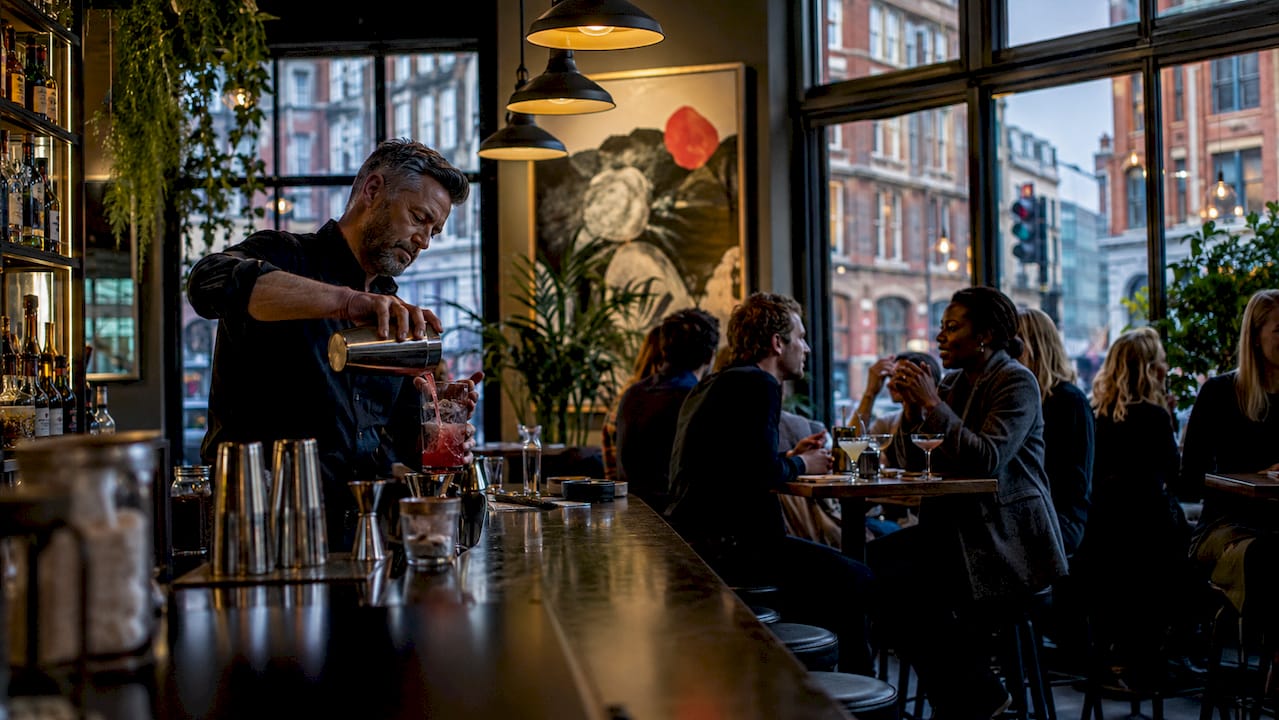
London pub culture is defined as a communal social tradition built around semi-public spaces where Londoners gather to connect, celebrate, and belong, with drinking as the backdrop rather than the point. Known formally as public house culture, it represents one of Britain’s most enduring social institutions, shaping neighbourhood identity across every borough from Bermondsey to Bethnal Green. For visitors, understanding this culture is the difference between having a drink and genuinely experiencing London. Pubs here are not bars in the American sense. They are living rooms shared with strangers, governed by unwritten rules, and loaded with local meaning that no guidebook fully captures.
What is London pub culture, and why does it matter?
London pub culture is the set of social rituals, communal values, and informal behaviours that define life inside a British public house. The term covers everything from how you order a round to why a Tuesday quiz night draws a full house in Islington. At its core, it is about belonging. Sociological research frames pubs as ‘third spaces’, distinct from home and work, where people form attachments to place and to each other. That framing matters because it explains why Londoners feel genuine grief when a local pub closes.
The history behind this culture stretches back centuries. London’s public houses emerged as gathering points for working communities, offering warmth, news, and company in an era before television or social media. The Victorian era gave London many of its most recognisable pub interiors, with ornate tiling, etched glass, and mahogany bars that still survive in venues like The Princess Louise in Holborn and The Blackfriar near Blackfriars Bridge. These spaces were designed to feel welcoming and democratic, open to anyone who could afford a pint.
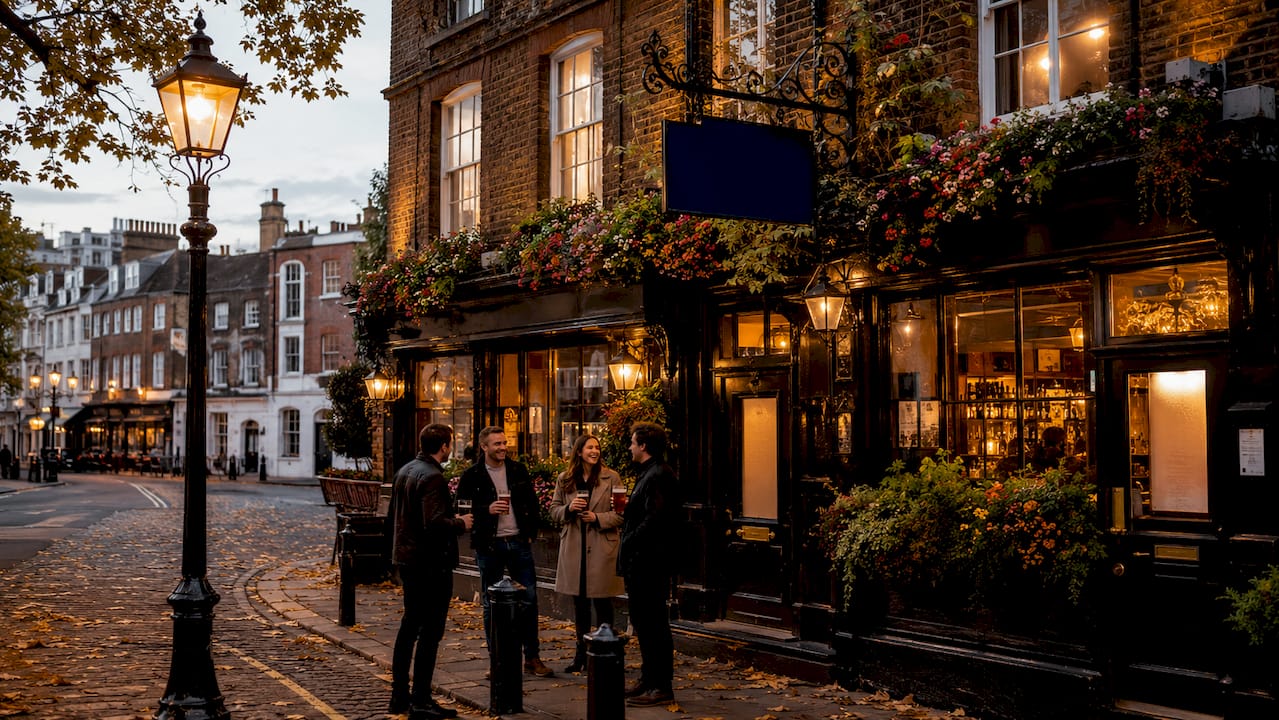
What makes London’s version distinct from pub culture elsewhere in Britain is its sheer diversity. A single borough can contain a Victorian gin palace, a stripped-back craft ale bar, a Caribbean-influenced community local, and a gastropub serving Sunday roasts to young families. The role of pub culture in London is therefore not uniform. It shifts by neighbourhood, by demographic, and by the time of day you walk through the door.
What are the key traditions and unwritten rules in London pubs?
London pub etiquette is not written down anywhere, but locals enforce it through social pressure and the occasional raised eyebrow. Knowing the basics before you arrive saves embarrassment and earns you genuine respect from regulars.
Ordering and payment customs
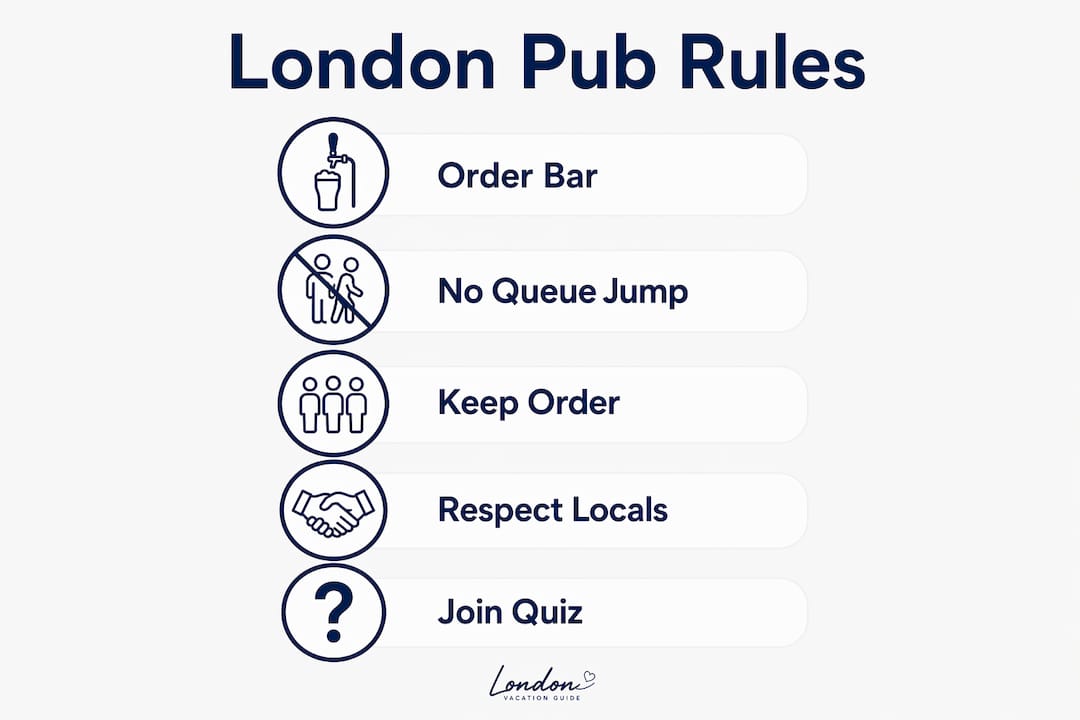
The most important rule is that you order at the bar. Unlike restaurants, most traditional London pubs do not send staff to your table to take orders. You walk to the bar, catch the bartender’s eye, and wait your turn. Ordering at the bar is standard practice, though some modern gastropubs and post-pandemic venues now use QR codes or table numbers. If you are unsure, watch what others do before approaching.
Tipping is another area where London pubs differ sharply from restaurants. Tipping bartenders is not expected and is far less common than in North American bar culture. The accepted gesture, if you want to show appreciation, is to offer the bartender a drink by saying “and one for yourself.” Many will decline, but the offer is always appreciated.
Social norms that matter
- Queue patiently at the bar, even when it is not a formal queue. Bartenders track who arrived first and will serve in order.
- Buying rounds is a deeply embedded tradition. If you are in a group, one person typically buys a full round for everyone, and others take turns. Opting out repeatedly is noticed.
- Noise levels vary by pub type. A sports pub on match day is loud by design. A quiet neighbourhood local on a Wednesday evening is not the place for a speakerphone call.
- Pubs close at specific times, typically 11pm on weekdays and midnight on Fridays and Saturdays. Last orders are called 20 minutes before closing. Do not ignore them.
Regular events and celebrations
Quiz nights are a genuine institution. Pubs like The Sekforde in Clerkenwell and The Hob in Forest Hill run weekly quizzes that draw loyal regulars. Live music, open mic nights, and charity fundraisers are equally common. Pubs serve as focal points for celebrations and rites of passage, from post-funeral wakes to birthday gatherings and engagement announcements.
Pro Tip: When you first enter an unfamiliar pub, spend two minutes observing before you order. Notice whether people are at the bar or seated, whether staff are circulating, and how regulars are behaving. Experienced pub-goers call this signal reading, and it is the fastest way to integrate without a single awkward moment.
How do London pubs function as community hubs?
The social value of London pubs extends well beyond alcohol. Research from Pub is The Hub demonstrates that every £1 invested in pub-based community services generates £8.28 in measurable social value. That figure covers reduced isolation, improved mental health outcomes, and stronger community cohesion. It is a striking number that reframes the pub not as a leisure venue but as social infrastructure.
“Pubs support community cohesion by hosting diverse activities beyond drinking, from village stores to event spaces that reduce isolation and improve wellbeing.” — Pub is The Hub research, 2025
The Halfway pub in Wales, cited in the same research, opened a village store and event marquee offering local courses and community gatherings. London examples follow the same pattern. Pubs in areas like Hackney and Peckham host food banks, mental health drop-ins, language exchange evenings, and local election hustings. The pub becomes a civic space that the council never funded.
This community function is what sociologists mean when they describe pubs as third spaces. Home is the first space, work is the second, and the pub occupies a unique middle ground where social hierarchies flatten and strangers become neighbours. That dynamic is particularly powerful in a city as transient and diverse as London, where many residents lack the deep-rooted community ties found in smaller towns.
| Community function | Real-world impact |
|---|---|
| Hosting local events | Builds regular social contact and reduces isolation among residents |
| Providing informal support networks | Regulars check on each other, particularly elderly or vulnerable members |
| Serving as neutral meeting ground | Facilitates conversations across social and cultural divides |
| Running fundraisers and charity nights | Channels local generosity into neighbourhood causes |
| Offering space for civic activity | Hosts hustings, community meetings, and local campaigns |
London pub food culture also plays a role here. The Sunday roast, served in pubs across Richmond, Chiswick, and Dulwich, is a weekly ritual that draws families and friends together in a way that few other dining traditions manage. Gastropubs like The Anchor and Hope in Waterloo have elevated pub food to a serious culinary level, but the social function remains the same: shared tables, unhurried meals, and conversation.
How has social media changed London pub culture?
London pub culture in 2026 is navigating a genuine tension between its communal roots and a new performative layer introduced by social media. A post-pandemic subculture known as the ‘Schoonerati’ has emerged, comprising influencers who dress fashionably, film viral content in pubs, and turn traditionally relaxed social spaces into stages for curated self-presentation. The effect on atmosphere is measurable. Regulars in affected pubs report feeling observed rather than included.
The concentration of this behaviour is highest in central London, particularly in Soho, where the density of photogenic pub interiors and high foot traffic makes it attractive for content creation. Pubs like The Dog and Duck on Frith Street and The Nellie Dean on Dean Street attract both genuine locals and influencer visitors, creating an atmosphere that shifts depending on the hour and the crowd.
- Influencer-targeted pubs often have longer waits, higher noise levels, and a self-conscious atmosphere that differs from traditional pub sociability.
- Social media has also driven positive change, surfacing hidden gems and historic pubs that might otherwise be overlooked by visitors.
- The tension is not between old and young. Many young Londoners actively seek out traditional pubs precisely because they offer a respite from performative digital culture.
- Gentrification compounds the issue. As property values rise in areas like Brixton and Dalston, traditional community pubs face pressure to rebrand as premium venues, pricing out their original regulars.
Authentic pub experiences increasingly require deliberate effort to find. The rule of thumb is simple: if a pub appears on multiple “best London pubs” listicles and has a queue outside on a Tuesday, it has likely shifted from community local to destination venue. That is not necessarily bad, but it is a different experience.
Pro Tip: Search for pubs that have been on the same street for over a century and are not listed on Instagram’s location feature. The Harp in Covent Garden and The Seven Stars near Lincoln’s Inn Fields are well-known but retain genuine character because their regulars are fiercely loyal.
Historic pubs vs modern venues: where should you drink?
London offers a spectrum of pub experiences that no single neighbourhood captures entirely. Understanding the differences helps you choose the right pub for the atmosphere you want.
| Pub type | Neighbourhood example | Atmosphere | Best for |
|---|---|---|---|
| Victorian gin palace | Holborn (The Princess Louise) | Ornate, historic, mixed crowd | Architecture lovers, first-time visitors |
| Traditional community local | Richmond | Relaxed, regular-heavy, unhurried | Authentic local experience |
| Gastropub | Waterloo, Chiswick | Food-focused, family-friendly | Sunday roasts, quality dining |
| Craft ale bar | Bermondsey, Hackney | Knowledgeable crowd, rotating taps | Beer enthusiasts |
| Soho social pub | Soho | Lively, diverse, trend-aware | Evening drinks, people-watching |
Richmond deserves particular mention for visitors seeking the classic London pub experience without central London crowds. The Cricketers on Richmond Green and The White Cross beside the Thames offer exactly the kind of unhurried, community-rooted atmosphere that defines traditional pub culture. On a summer afternoon, with the river visible and a pint of bitter in hand, it is difficult to imagine a more distinctly London experience.
Bermondsey’s Beer Mile, running along Maltby Street and Druid Street, represents the modern evolution of pub culture. Breweries including Fourpure and Anspach and Hobday open their taprooms at weekends, creating a crawl that feels communal and local despite its growing popularity. The atmosphere is relaxed and knowledgeable rather than performative.
For visitors staying near Victoria, the Churchill Arms in Kensington and The Nag’s Head in Belgravia are both within easy reach and offer contrasting experiences. The Churchill Arms is famous for its extraordinary floral exterior and Thai food menu, a combination that sounds improbable but works perfectly. The Nag’s Head is a quiet, traditional local that feels unchanged since the 1980s.
Pro Tip: Visit neighbourhood pubs between 5pm and 7pm on a weekday. This is when office workers and local regulars overlap, creating the most genuinely social atmosphere. Avoid Saturday afternoons in tourist-heavy areas unless you enjoy queuing.
Key takeaways
London pub culture is a living social institution that combines communal belonging, informal ritual, and neighbourhood identity in ways that no other city quite replicates.
| Point | Details |
|---|---|
| Pubs as third spaces | London pubs function as community infrastructure, not just drinking venues, generating measurable social value. |
| Unwritten etiquette matters | Order at the bar, queue patiently, and consider buying rounds to integrate naturally with locals. |
| Social media has shifted the culture | The Schoonerati subculture has made some central London pubs performative rather than communal. |
| Neighbourhood choice is everything | Richmond, Bermondsey, and Hackney offer distinct pub experiences that differ sharply from Soho. |
| Authentic pubs require effort to find | Seek century-old locals with loyal regulars rather than venues dominating social media feeds. |
Why pub culture still gets under your skin
I have spent years writing about London for Londonvacationguide, and the question I get most often from first-time visitors is some version of: “Is the pub thing real, or is it just a tourist cliché?” The honest answer is both, depending entirely on which pub you walk into.
The cliché version exists. There are pubs in central London that have been so thoroughly optimised for visitors that they feel like theme parks. The beer is fine, the staff are professional, and you will leave having had a perfectly pleasant experience that tells you almost nothing about how Londoners actually live. I have been to dozens of them.
The real version is harder to find but worth the effort. I once spent a rainy Tuesday evening in a pub in Stoke Newington where a retired teacher was explaining the offside rule to a group of recently arrived Eritrean neighbours, using beer mats as players. Nobody had organised it. It just happened, the way things happen in pubs that have been doing this for a hundred years. That is what experiencing London like a local actually looks like.
My practical advice: resist the pull of the obvious. The pub with the best Instagram presence is rarely the pub with the best atmosphere. Walk two streets further, find the place with the handwritten specials board and the dog asleep under the bar, and stay for two drinks instead of one. London pub culture rewards patience and curiosity in equal measure.
— Matt
Plan your London pub experience with Londonvacationguide
Londonvacationguide has curated detailed guides to help you find the right pub experience for your trip, whether you are after a historic Victorian interior, a relaxed riverside afternoon, or a neighbourhood local with genuine character. Start with the first-time visitors’ guide for a full overview of cultural experiences, including where pubs fit into a well-planned London itinerary. For neighbourhood-specific recommendations, the Richmond guide covers the borough’s outstanding pub scene in detail, while the Victoria guide highlights accessible options for visitors staying in central London. You can also explore UK travel insights for broader context on British pub traditions across the country.
FAQ
What is the difference between a pub and a bar in London?
A pub, or public house, is a licensed venue rooted in community tradition, typically serving cask ales, lagers, and spirits alongside food, with an emphasis on social gathering rather than nightlife. A bar in London generally refers to a more modern, design-led venue focused on cocktails or premium spirits, with a different atmosphere and clientele.
Do you tip in London pubs?
Tipping bartenders in London pubs is not standard practice. The accepted gesture is to offer the bartender a drink by saying “and one for yourself,” which many will politely decline but always appreciate.
What should I expect on my first visit to a London pub?
Order at the bar unless table service is clearly indicated, wait your turn without pushing forward, and pay when you order rather than running a tab. Most traditional pubs are welcoming to newcomers, and staff will guide you if you ask politely.
Which London neighbourhoods have the best pub scenes?
Richmond offers classic riverside pubs with a relaxed community atmosphere. Bermondsey is the centre of London’s craft ale culture. Soho provides lively, diverse pub experiences, though the atmosphere is more trend-aware. Hackney and Stoke Newington are strong choices for genuine neighbourhood locals.
How has London pub culture changed in recent years?
Post-pandemic London has seen the rise of influencer-driven pub culture, with the so-called Schoonerati transforming some venues into content-creation spaces. Authentic community pubs still thrive, but finding them increasingly requires seeking out less commercially visible venues away from social media hotspots.
Recommended
- How to experience London like a local: your essential guide - The London Journal | London Vacation Guide
- Top London cultural experiences for tourists and enthusiasts - The London Journal | London Vacation Guide
- Dining in London travel: why food shapes your trip - The London Journal | London Vacation Guide
- Your First 24 Hours in London: What to Actually Do - The London Journal | London Vacation Guide