History of London pubs: a complete cultural guide
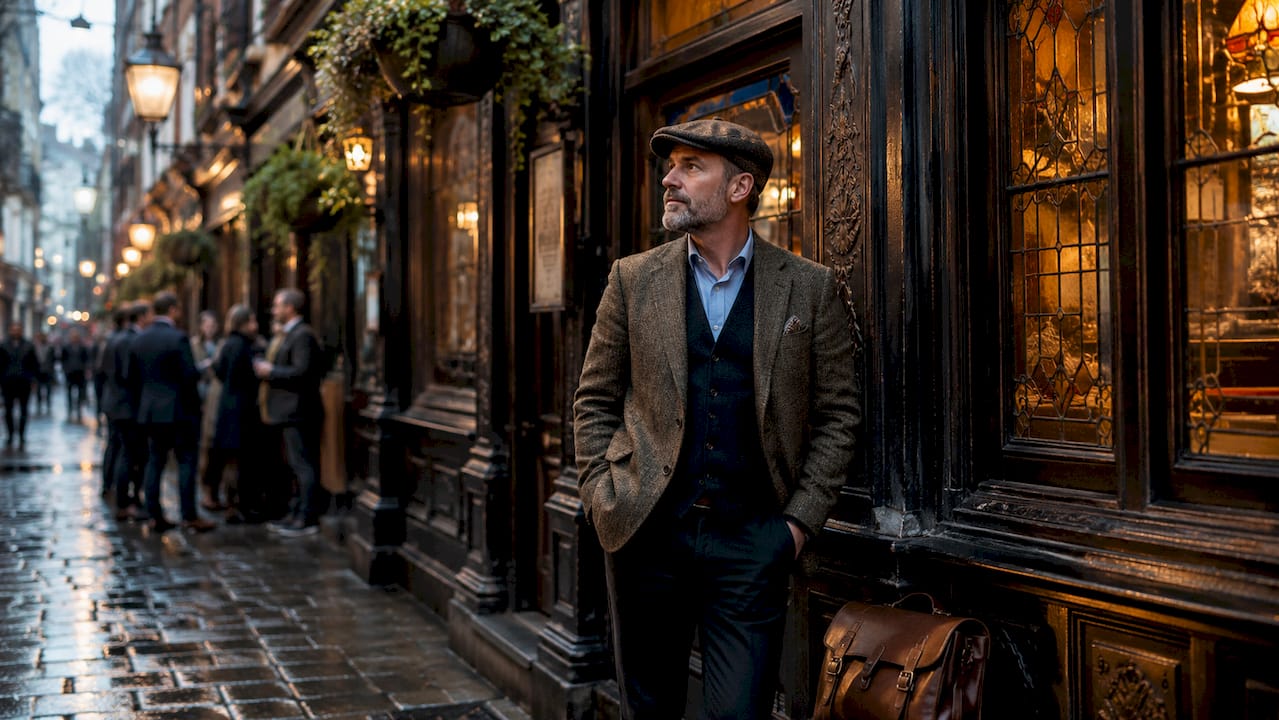
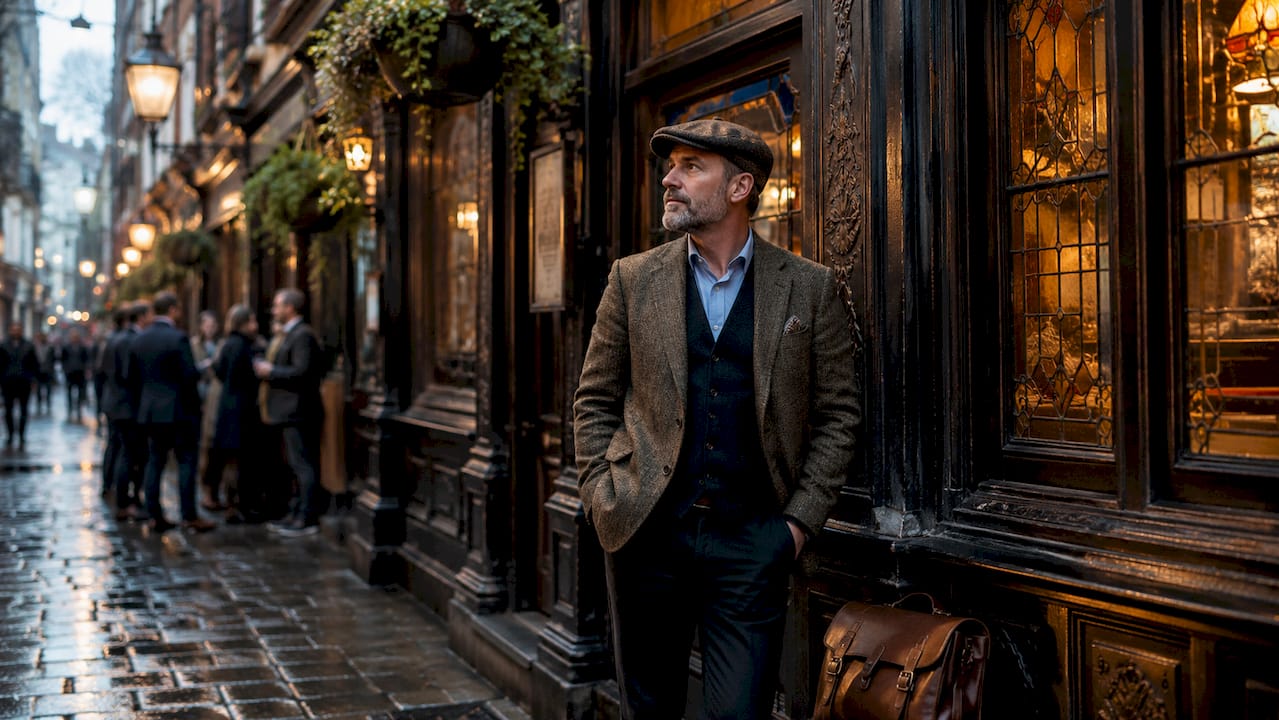
London pubs are defined as public houses that have served as the primary social, commercial, and political gathering spaces for Londoners for over two millennia. The history of London pubs stretches from Roman tabernae to the ornate Victorian gin palaces still standing on street corners today. Pubs like The Prospect of Whitby, Ye Olde Cheshire Cheese, and The Spaniards Inn are not simply old buildings. They are living archives of trade, literature, riot, and community. Understanding London pub history means understanding the city itself, because these venues survived the Great Fire of 1666, the Blitz, and every wave of urban redevelopment in between.
What is the history of London pubs, and when did they begin?
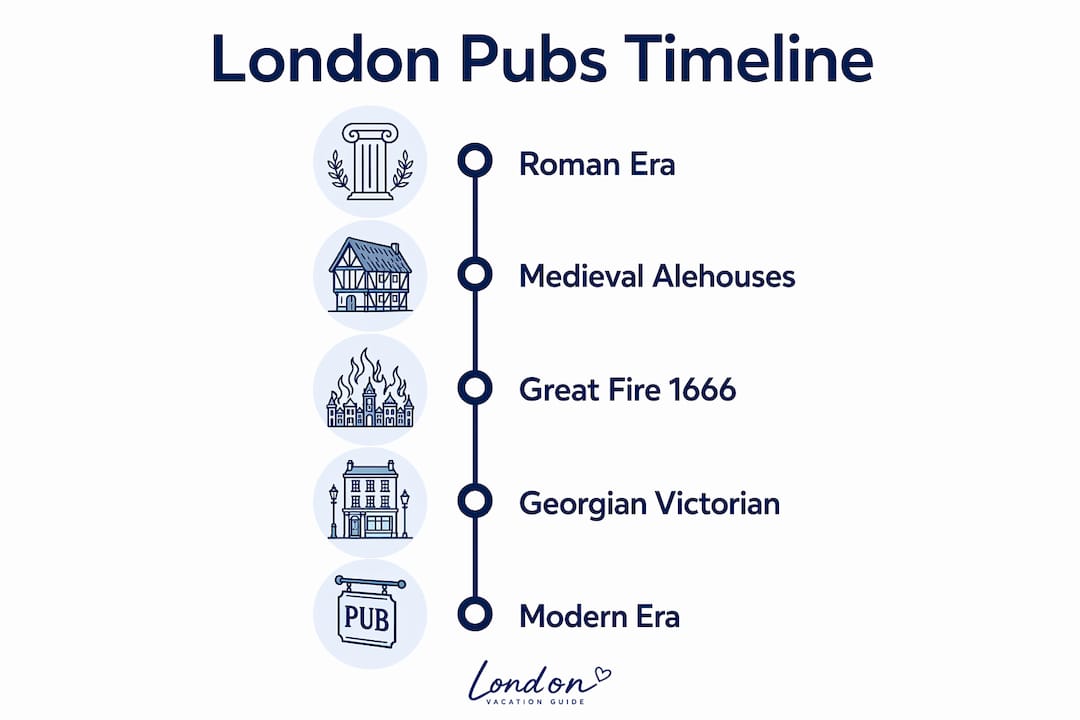
London’s pub tradition begins with the Romans. When Roman soldiers and merchants occupied Londinium from around 43 AD, they established tabernae, roadside drinking and eating houses that provided wine, ale, and shelter. These were the direct ancestors of the English public house. After the Roman withdrawal, Anglo-Saxon alehouses took their place, typically run from private homes by women known as alewives.
The Norman Conquest of 1066 brought a more structured hospitality trade. Inns and taverns multiplied along trade routes to serve pilgrims travelling to Canterbury and merchants moving goods through the city. By the medieval period, London had a dense network of alehouses, taverns, and inns, each serving a distinct social function.
- Alehouses sold ale brewed on the premises, primarily to working people.
- Taverns served wine and attracted merchants and professionals.
- Inns provided food, lodging, and stabling for travellers.
Licensing arrived under Edward VI in the mid-16th century, when local magistrates gained authority to grant or refuse licences. This was the first formal attempt to regulate what had become an enormous and sometimes disorderly trade. By 1577, there was roughly one inn, tavern, or alehouse per 200 London residents. That density tells you everything about how central these spaces were to daily life, long before coffee shops or restaurants existed.
Pro Tip: If you want to understand the difference between a medieval alehouse and a tavern, visit both The George Inn in Southwark and Ye Olde Cheshire Cheese on Fleet Street. The contrast in scale and atmosphere still reflects their distinct historical origins.
How did the Great Fire of 1666 reshape London’s pub culture?
The Great Fire of 1666 is the single most important dividing line in the physical history of London pubs. The fire destroyed roughly 13,200 houses and 87 churches across the City of London, and the vast majority of timber-framed medieval drinking establishments burned with them. A handful survived on the fire’s periphery. The Seven Stars on Carey Street is one of the rare survivors, dating to 1602 and largely untouched by the flames.
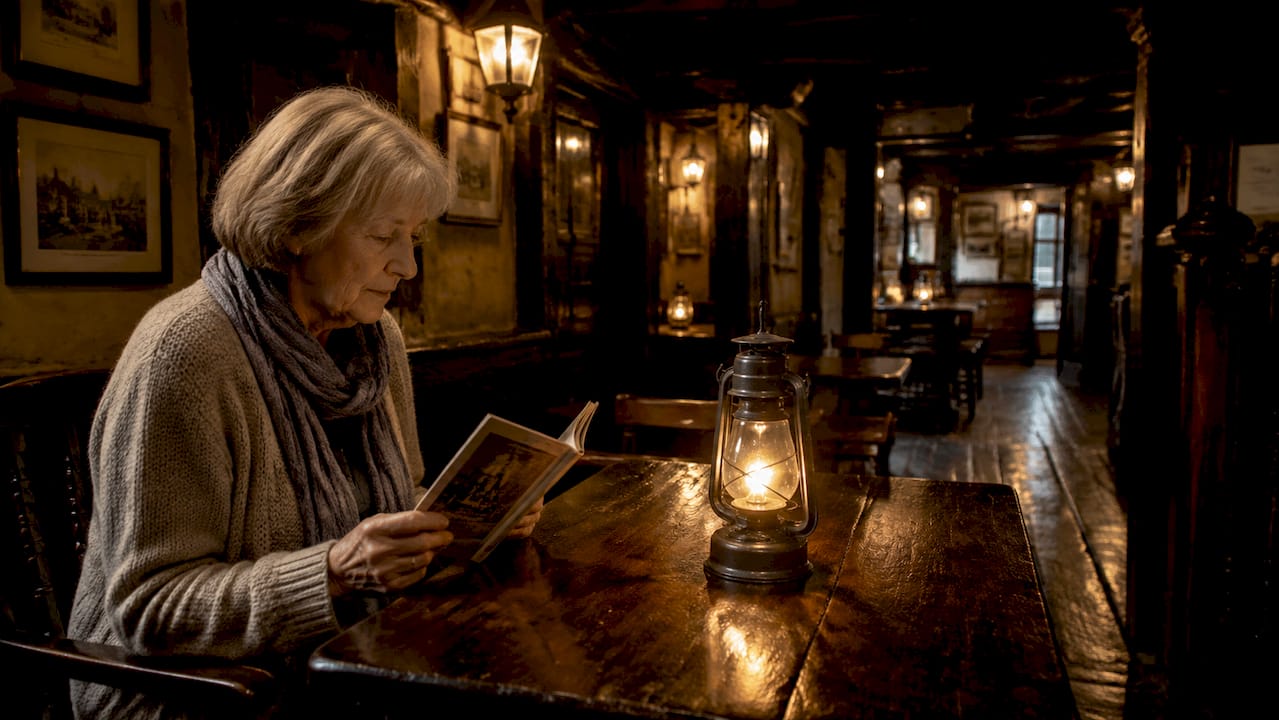
The rebuilding that followed was rapid, and pubs were prioritised because of their vital economic and social role. Workers needed somewhere to eat, drink, and organise. Merchants needed somewhere to conduct business. The post-fire city rose around its public houses as much as around its churches and markets.
Ye Olde Cheshire Cheese on Fleet Street was rebuilt in 1667, just one year after the fire. It retains a warren of low-ceilinged rooms and a cellar that predates the fire entirely. The George Inn on Borough High Street was rebuilt in 1676 and stands as London’s last galleried coaching inn, with a preserved two-storey gallery overlooking its courtyard. These buildings feel ancient, but the truth is more layered.
| Pub | Claimed origin | Current structure dates from | Key feature |
|---|---|---|---|
| Ye Olde Cheshire Cheese | Pre-1666 | 1667 rebuild | Pre-fire cellar intact |
| The George Inn | Medieval | 1676 rebuild | Last galleried coaching inn |
| Seven Stars | 1602 | Largely original | Survived Great Fire |
| The Prospect of Whitby | c.1520 | Multiple rebuilds | Original riverside site |
The physical medieval fabric of most pubs is rare. Surviving original elements exist mainly in cellars or foundations. This is not a reason for disappointment. It is a reason to look more carefully. The layers of rebuild, modification, and Victorian embellishment visible in these buildings tell a richer story than any single original structure could.
Pro Tip: At Ye Olde Cheshire Cheese, ask to see the lower bar rooms. The further down you go, the older the fabric. The cellar dates to a 13th-century Carmelite monastery that predates the pub itself.
Which London pubs are the most historic, and what stories do they hold?
The most historically significant pubs in London are not always the most famous. Each of the following carries a specific, documented story that connects it to a broader chapter of the city’s past.
-
The Prospect of Whitby, Wapping (c.1520). Dating to around 1520, this is one of the oldest riverside pubs in London. It sits on the Thames at Wapping and was once known as the Devil’s Tavern, a haunt for smugglers, thieves, and dockworkers. Samuel Pepys drank here. J.M.W. Turner painted the Thames from its terrace. The pewter bar top and flagstone floors are among the oldest surviving pub fittings in the city.
-
The Spaniards Inn, Hampstead (1585). Built in 1585 at the edge of Hampstead Heath, The Spaniards Inn has connections to highwayman Dick Turpin, who allegedly stabled his horse Black Bess here. Charles Dickens set a scene from The Pickwick Papers within its walls. During the Gordon Riots of 1780, the landlord offered free drinks to distract a mob marching on Kenwood House, almost certainly saving the building and its art collection.
-
The George Inn, Borough High Street (rebuilt 1676). This is the pub that Shakespeare’s audiences would have recognised. Borough High Street was the main road south out of London, and coaching inns lined it for centuries. The George is the last survivor. The National Trust now owns the building, and Shakespeare’s Globe is a short walk away.
-
The Mayflower, Rotherhithe. The pub stands near the point where the Mayflower ship departed for America in 1620. Formerly called The Spread Eagle, it was renamed in 1957 to honour that connection. The building has been rebuilt after fires and bomb damage, but the site’s link to the Pilgrim Fathers gives it a significance that transcends its brickwork.
-
Ye Olde Cheshire Cheese, Fleet Street (rebuilt 1667). Samuel Johnson drank here. So did Voltaire, Mark Twain, and Charles Dickens. The pub sits in a narrow court off Fleet Street and feels entirely removed from the 21st century. Its labyrinthine interior, with multiple bars across several floors, reflects centuries of incremental modification.
“Historic pubs are valued for storytelling and lived social history more than just architectural age. Their cultural layers reveal London’s evolving identity.” — London Museum
How did Georgian and Victorian society transform London pubs?
The Georgian era introduced class distinctions into pub architecture that you can still read in surviving buildings. Saloon bars were designed for the middle classes, with upholstered seating, carpets, and higher prices. Public bars served working men, with bare floors and cheaper ale. The physical separation of these spaces within a single building reflects the rigid social stratification of 18th and 19th century London.
The Beerhouses Act of 1830 was the most disruptive piece of pub legislation in British history. It allowed any ratepayer to sell beer from their home for a two-shilling licence fee, bypassing the magistrates entirely. Around 46,000 new beerhouses emerged within a few years. That explosion transformed working-class social life and alarmed temperance campaigners, setting the stage for decades of licensing battles.
Victorian pub design responded to this competition with extraordinary ambition:
- Etched and cut glass divided bar spaces and created privacy without solid walls.
- Ornate tiled walls were easy to clean and signalled respectability.
- Large mirrors made small spaces feel grand and reflected gaslight for dramatic effect.
- Mahogany fittings and brass pumps projected permanence and prosperity.
Victorian pubs became more elaborate specifically to attract customers across social classes. The pub was simultaneously a news exchange, a political meeting room, a music hall, and a dining room. Many early trade unions organised in pub back rooms. Chartist meetings were held in pub yards. The pub was not peripheral to Victorian civic life. It was central to it.
Brewery expansion during this period also changed ownership patterns. Large breweries bought up pub freeholds and tied landlords to their own products, creating the tied house system that still shapes the British pub trade today.
How can visitors best experience London’s historic pubs today?
The best way to experience historic pubs in London is on foot, through the medieval street layouts that survive in areas like Southwark, Fleet Street, and Wapping. Main roads will take you past famous facades. The real discoveries are in the alleys.
Many pubs are hidden in courts like Groveland Court and Well Court, accessible only through narrow passages that most visitors walk past without noticing. These locations are not accidents. Medieval London was built at a density that required every available space, and drinking establishments filled the gaps between larger buildings.
Practical tips for getting the most from a historic pub visit:
- Start in Southwark. The George Inn, The Anchor, and The Market Porter are all within walking distance of London Bridge station and represent different centuries of pub history.
- Walk Fleet Street to the Strand. Ye Olde Cheshire Cheese, The Tipperary, and The Edgar Wallace are all within a few minutes of each other and span pre-fire, post-fire, and Victorian eras.
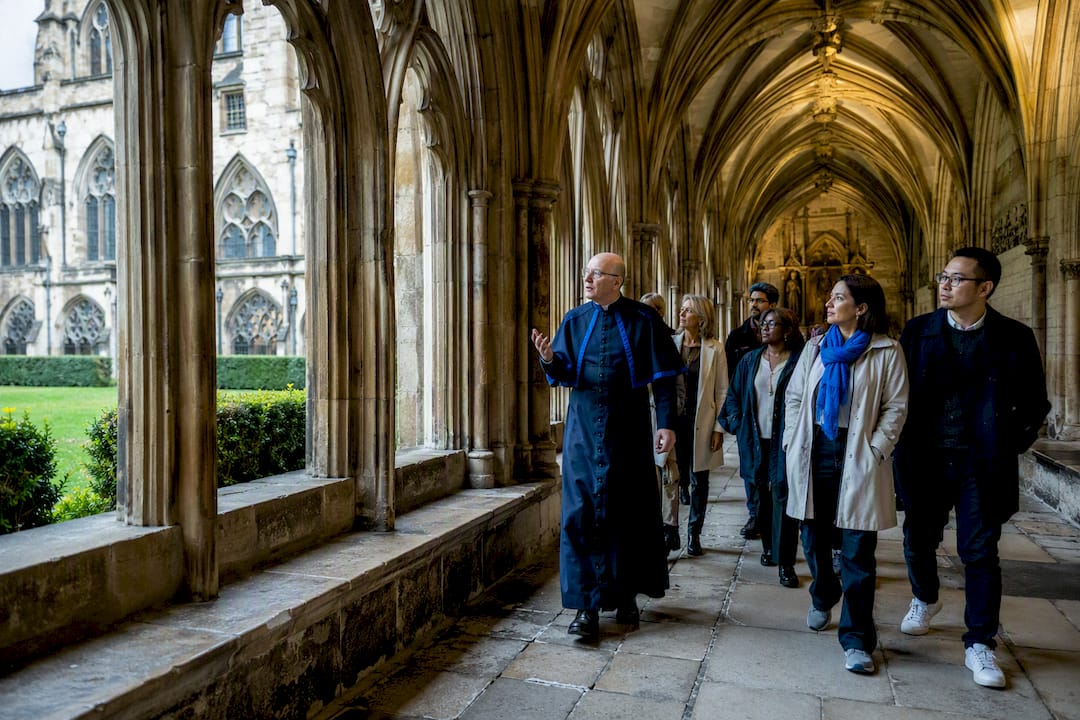
- Consider a guided walking tour. Guided tours reveal the meanings behind pub names and their socio-economic roles, details that are easy to miss without context.
- Visit on a weekday. Historic pubs in the City of London are often quiet from Monday to Friday after 3pm, once the office lunch crowd has cleared. Weekends bring tourists and queues.
- Combine with cultural sites. The George Inn pairs naturally with a visit to Shakespeare’s Globe. The Prospect of Whitby sits near the Museum of London Docklands. The Spaniards Inn is a ten-minute walk from Kenwood House.
Pro Tip: The best historic pub experiences often come from wandering through narrow alleys and exploring pubs off main streets, which maintain medieval street layouts lost elsewhere in the city. Download a historic map of London before you go and compare it to the modern street plan. The differences tell their own story.
Preservation is an active concern. Several historic pubs have been listed by Historic England, which restricts alterations to their interiors. The Campaign for Real Ale (CAMRA) maintains a National Inventory of Historic Pub Interiors, which identifies around 270 pubs across Britain with interiors of exceptional historic interest. Roughly 20 of those are in London.
Key takeaways
London pubs are living heritage sites that document over 2,000 years of social, architectural, and political history, from Roman tabernae to Victorian gin palaces.
| Point | Details |
|---|---|
| Origins in Roman London | London’s pub tradition began with Roman tabernae and evolved through Anglo-Saxon alehouses and medieval inns. |
| Great Fire as a turning point | The 1666 fire destroyed most medieval pubs; rapid rebuilding prioritised them for their economic and social importance. |
| Historic pubs as layered sites | Most founding dates refer to the site, not the building; original fabric survives mainly in cellars and foundations. |
| Victorian transformation | The Beerhouses Act of 1830 and Victorian design ambition reshaped pub culture and architecture across the city. |
| Best visited on foot | Medieval alleys in Southwark and Fleet Street reveal historic pubs that main roads entirely conceal. |
Why London pubs deserve more serious attention than they get
Most visitors treat historic pubs as a backdrop for a pint rather than as primary heritage sites. That is a missed opportunity, and I say that as someone who has spent years walking London’s pub routes and reading the buildings as carefully as any museum exhibit.
The detail that consistently surprises people is how much social history is encoded in the physical layout of a pub. The separate entrances for saloon and public bars, now often bricked up or converted, were not just architectural choices. They were statements about class, aspiration, and exclusion. When you find a pub that still has its original bar divisions, you are looking at a three-dimensional record of Victorian social anxiety.
I am also struck by how many visitors overlook the lesser-known venues in favour of the famous ones. The Lamb in Bloomsbury has one of the finest surviving sets of Victorian snob screens in London, hinged glass panels that allowed drinkers to be served without making eye contact with the bar staff. The Princess Louise on High Holborn has a tiled interior that is genuinely extraordinary. Neither pub appears on most tourist itineraries.
The pressure on historic pubs is real. Permitted development rights have allowed some pub buildings to be converted to flats without planning permission, and the economics of central London make every historic site a potential development target. CAMRA’s listing work and Historic England’s protections matter, but they depend on public awareness and political will.
My advice is to approach every historic London pub as you would a London historical site. Read the building before you order. Look at the ceiling, the bar fittings, the floor tiles. Ask the staff what they know about the history. The answers are sometimes surprising.
— Matt
Plan your London visit with London Vacation Guide
London Vacation Guide has put together a dedicated resource for anyone planning their first trip to the city. The first-time visitor guide covers cultural landmarks, neighbourhood itineraries, and authentic local experiences, including where to find the most rewarding historic pubs in each area. Whether you are planning a dedicated pub walk through Southwark, a literary afternoon on Fleet Street, or a broader cultural itinerary that weaves together museums, markets, and historic drinking houses, London Vacation Guide provides the practical detail you need to make the most of every hour in the city.
FAQ
When did pubs first appear in London?
London’s pub tradition began with Roman tabernae established after 43 AD, evolving through Anglo-Saxon alehouses and medieval inns. Formal licensing began under Edward VI in the mid-16th century.
What is the oldest pub in London still open?
The Prospect of Whitby in Wapping dates to around 1520, making it one of the oldest continuously licensed pub sites in London. The current building reflects multiple rebuilds, but the riverside site and some fittings are among the oldest surviving in the city.
How many historic pubs are protected in London?
CAMRA’s National Inventory of Historic Pub Interiors identifies approximately 20 London pubs with interiors of exceptional historic interest. Many more are listed buildings under Historic England’s protections.
What is the best area to find historic pubs in London?
Southwark and Fleet Street offer the highest concentration of historic pubs within walking distance of each other. Borough High Street alone contains The George Inn and several other venues with documented histories stretching back centuries.
Did the Blitz destroy many of London’s historic pubs?
The Second World War caused significant damage across London, and several historic pubs were destroyed or badly damaged. The Mayflower in Rotherhithe is one example of a pub that survived multiple rebuilds after both fire damage and wartime bombing.
Recommended
- What is London pub culture? A traveller’s guide - The London Journal | London Vacation Guide
- London historical sites: The essential guide for visitors - The London Journal | London Vacation Guide
- The role of markets in London culture: a local guide - The London Journal | London Vacation Guide
- London food etiquette: a complete guide for visitors - The London Journal | London Vacation Guide