What is a guided walking tour? Your London guide
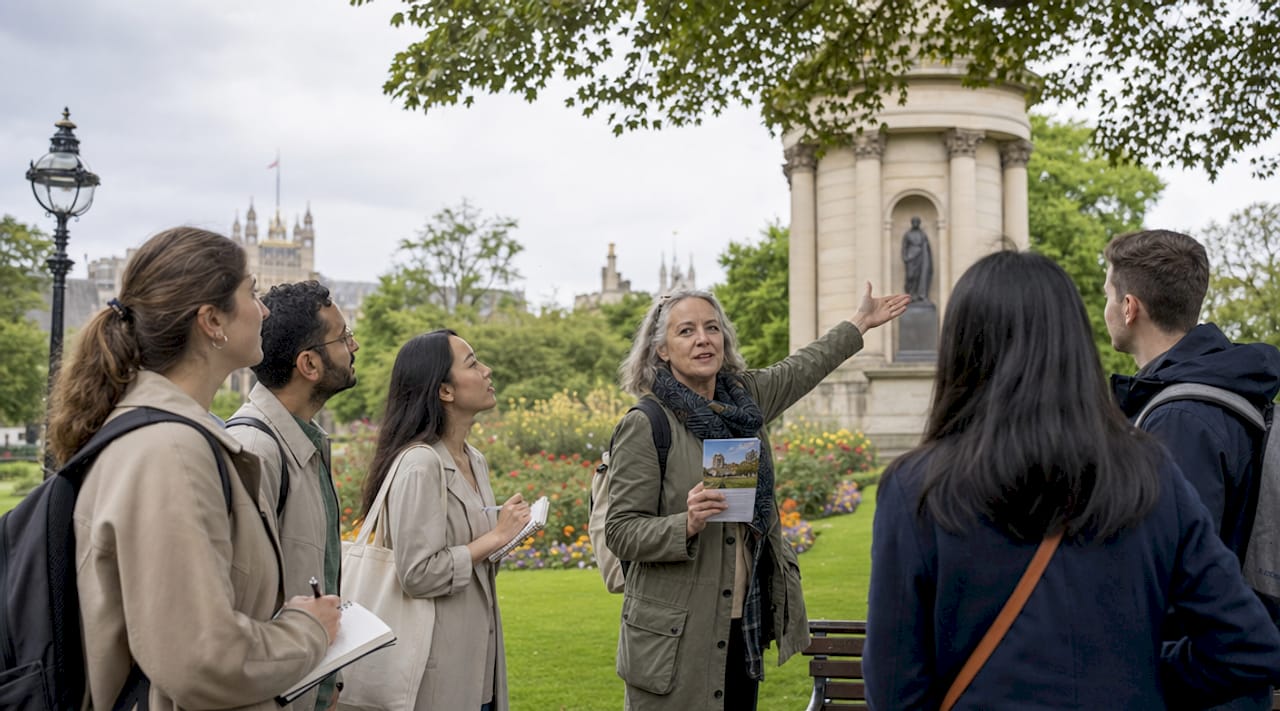
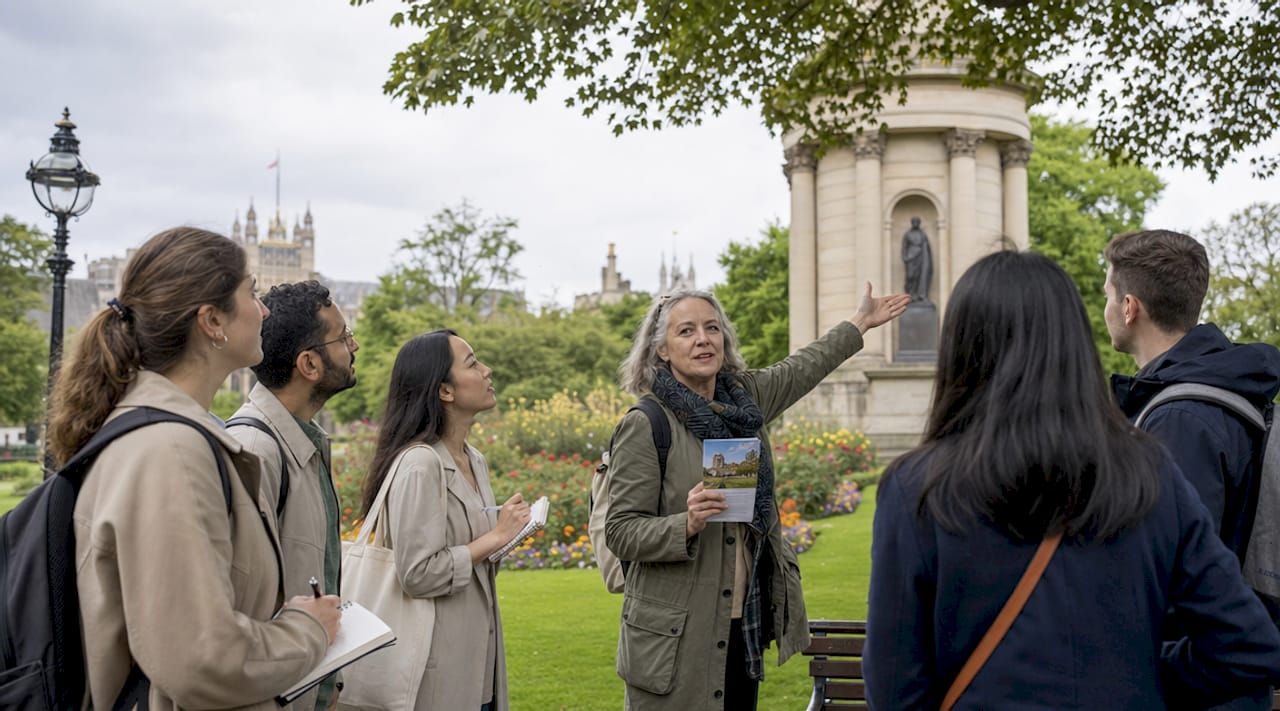
A guided walking tour is a structured, expert-led walk around a historical or cultural area, where a knowledgeable guide provides commentary, stories, and context throughout the route. Unlike a self-guided stroll with a map, this format transforms sightseeing into an educational and social experience. In London, providers such as London Walks and Your London Cabbie have built reputations on exactly this premise: revealing the city’s layered history through the voices of historians, archaeologists, and lifelong Londoners. Tours typically run between one and three hours, cover a defined neighbourhood or theme, and require no prior knowledge from participants. The result is a richer, more memorable visit than most travellers manage independently.
How does a guided walking tour differ from a self-guided walk?
A guided walking tour follows an organised route with commentary and a fixed start time, whereas a self-guided walk gives you a map or audio app and leaves interpretation entirely to you. The distinction matters more than it first appears. A guide does not simply point at buildings. They answer questions in real time, adjust the pace to the group, and surface stories that no guidebook has ever printed.
The table below captures the core differences at a glance.

| Feature | Guided walking tour | Self-guided walk |
|---|---|---|
| Route planning | Pre-planned by expert | Chosen by the traveller |
| Commentary | Live, interactive, and contextual | Audio app, leaflet, or none |
| Flexibility | Fixed schedule, structured pace | Walk at any time, any speed |
| Social element | Small group interaction | Solo or personal group only |
| Hidden knowledge | Guide reveals unlisted stories | Limited to published sources |
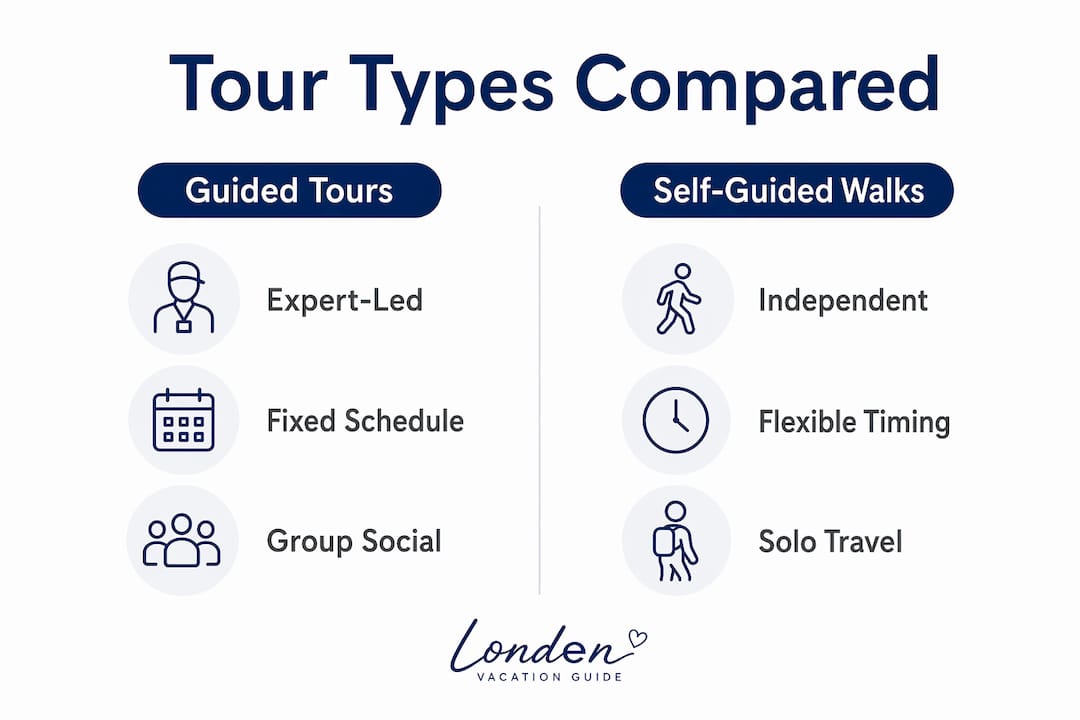
Beyond the table, the social dimension deserves attention. Guided city walks attract curious travellers from across the world, and the shared experience of discovering a hidden courtyard or hearing a shocking historical anecdote together creates a natural camaraderie. Many travellers report that conversations started on a London Walks tour continued over dinner that same evening.
Pricing models also differ significantly between formats. Self-guided options are often free or low cost, while guided tours range from pay-what-you-wish models to fixed-price private experiences. Pay-what-you-wish tours are not truly free. Typical contributions run from £10 to £40 per person, and guides depend on those contributions for their income. Understanding this norm before you join avoids awkwardness at the end.
Group size is the final structural difference worth noting. A self-guided walk has no group at all. Public guided tours in London typically gather between eight and twenty people, while private tours are often capped at eight guests to allow genuine conversation and unhurried stops. Smaller groups consistently produce better question-and-answer exchanges and a more engaged, personal experience.
What are the benefits of a guided walking tour in London?
Expert guides transform basic sightseeing into a genuinely educational experience by unlocking the cultural and historical layers that most visitors walk straight past. London is one of the most historically dense cities on earth, and that density is invisible without context. A guide standing outside a Georgian townhouse in Spitalfields can connect you to the Huguenot silk weavers of the 1680s, the Jewish immigrants of the 1880s, and the Bangladeshi community of the 1980s, all within two minutes. No plaque on the wall does that.
The specific benefits of joining a guided walking experience in London include:
- Local knowledge that goes beyond guidebooks. Guides who specialise in the City of London or Borough Market have spent years researching their patch. They know which alleyway leads to a medieval well, which pub has a Roman floor beneath it, and which market stall has been run by the same family for four generations.
- Discovery of hidden London gems. Guided tours routinely visit sites that do not appear on standard tourist maps: forgotten churchyards, Victorian drinking fountains, and the remnants of Roman walls tucked behind modern office blocks.
- Reduced logistical stress. Guided tours remove the burden of planning, navigation, and timing. You show up at the meeting point and the rest is handled. For first-time visitors to London, this alone is worth the cost.
- Thematic depth. London’s tour market is exceptionally specialised. You can join a Jack the Ripper walk in Whitechapel, a royal palaces tour through St James’s, a street art walk in Shoreditch, or a food tour through Borough Market. Each theme attracts guides with genuine expertise in that subject.
- Private tours tailored to your interests. Providers like Your London Cabbie offer private, fully tailored walks where the itinerary is built around your specific interests, whether that is architecture, crime history, or the literary London of Dickens and Woolf.
Pro Tip: Book a themed tour rather than a generic “highlights” walk. A guide who specialises in, say, the history of the Thames or the hidden pubs of Clerkenwell will deliver a far more memorable experience than a broad overview of the same landmarks you have already seen in photographs.
The social benefit is also underrated. Travelling alone in a large city can feel isolating. A small-group guided walk places you alongside other curious travellers and provides a natural, low-pressure social setting. Many solo travellers to London cite guided city walks as the highlight of their trip, precisely because of the people they met along the way.
What should you expect from a London walking tour?
A typical guided walking tour in London lasts between one and three hours, though full-day options exist for specialist themes such as the Inns of Court or the East End’s immigrant history. Your London Cabbie’s City of London tour, for example, runs for three hours and covers landmarks from the Monument to the Guildhall with full private commentary throughout. Knowing the duration in advance helps you plan the rest of your day without rushing.
Here is what to expect in practical terms:
- A defined meeting point. Tours always begin at a specific location, often a tube station exit, a landmark, or a café. Arrive five minutes early. Guides will not wait for latecomers once the group has assembled.
- A structured but conversational pace. Good guides stop frequently, invite questions, and adjust their speed to the group. You will not feel rushed, and you will not be marching silently behind a flag on a stick.
- A mix of well-known and lesser-known sites. The best London tours balance famous landmarks with genuinely surprising discoveries. Expect to see both St Paul’s Cathedral and the hidden garden behind it that most visitors never find.
- Clear pricing before you start. Fixed-price tours are paid at booking. Pay-what-you-wish tours require a contribution at the end. The expected contribution norm is typically stated clearly by the guide at the start, so you are never left guessing.
- Comfortable footwear as a non-negotiable. London’s streets are uneven, and three hours on cobblestones in unsuitable shoes will ruin the experience. Wear trainers or walking shoes. Bring a waterproof layer regardless of the forecast.
- Seasonal considerations. Summer tours (June to August) attract the largest crowds and the best weather, but spring (April to May) and autumn (September to October) offer a quieter, more atmospheric experience. Winter tours, particularly around Christmas, have their own charm in areas like Covent Garden and the South Bank.
Group sizes vary considerably. Public tours through providers like London Walks can gather up to twenty people, which suits travellers who enjoy a lively group dynamic. Private tours, by contrast, are intimate by design. The small group format of eight or fewer guests allows the guide to tailor commentary on the spot, answer detailed questions, and spend longer at sites that genuinely interest the group.
How to choose the right guided walking tour for your visit
Choosing a guided walking tour in London starts with identifying your primary interest. The city’s tour market is broad enough that a vague search will overwhelm you. Narrow it down by asking yourself whether you are drawn to history, food, architecture, crime, royalty, or a specific neighbourhood. Once you have a theme, the right provider becomes much easier to identify.
Pro Tip: Read the guide’s biography before booking, not just the tour description. A tour led by a qualified Blue Badge Guide, a professional accreditation awarded by VisitBritain, carries a level of expertise that self-trained guides simply cannot match. Look for this credential when booking premium or private tours.
Practical factors to weigh when selecting a tour:
- Group size and format. Decide whether you want a public group tour or a private experience. Public tours are sociable and cost-effective. Private tours offer flexibility, intimacy, and the ability to personalise your itinerary around your specific interests.
- Guide credentials and reviews. Check platforms like TripAdvisor and Google Reviews for recent feedback. Look specifically for comments about the guide’s knowledge and storytelling ability, not just the route.
- Pricing model and cancellation policy. Fixed-price tours offer certainty. Pay-what-you-wish tours require you to budget for a fair contribution. Confirm the cancellation policy before booking, particularly for private tours with higher upfront costs.
- Language and accessibility. Most London tours operate in English, but specialist providers offer tours in French, Spanish, German, and Mandarin. If mobility is a concern, confirm the terrain and distance in advance. Some tours cover significant cobblestone stretches that are not suitable for all visitors.
- Booking source. Londonvacationguide lists curated London walking tours with verified providers, making it straightforward to compare options without trawling through dozens of booking platforms.
The role of authentic city guides in shaping a visitor’s experience of a city is well documented in the travel industry. A guide who is genuinely passionate about their subject communicates that passion in ways that no app or leaflet can replicate. When you find a guide whose specialism matches your interest, the quality of the experience increases dramatically.
Key takeaways
A guided walking tour is the single most effective way to access London’s historical and cultural depth without the burden of independent research or navigation.
| Point | Details |
|---|---|
| Definition and format | A guided walking tour is an expert-led, structured walk with live commentary, typically lasting one to three hours. |
| Guided versus self-guided | Guided tours provide live context, hidden stories, and social interaction that self-guided formats cannot replicate. |
| London-specific benefits | Expert guides reveal hidden gems, reduce logistical stress, and offer thematic depth across history, food, and culture. |
| Practical expectations | Arrive early, wear comfortable shoes, budget for tips on pay-what-you-wish tours, and book in advance for private options. |
| Choosing the right tour | Match the tour theme to your interests, prioritise qualified guides, and consider group size before booking. |
Why guided walking tours are worth every step in London
I have explored London on foot in almost every format imaginable: solo with a map, with audio guides, on free tours, and on private walks with specialist historians. The difference a genuinely expert guide makes is not marginal. It is the difference between seeing a city and understanding it.
My personal preference is for thematic private tours with a small group. A three-hour walk through the City of London with a guide who has spent twenty years researching its Roman and medieval layers produces a kind of knowledge that stays with you. I still remember standing in a narrow lane off Cheapside and being told that the street plan beneath my feet has not changed since the ninth century. That moment cost nothing extra. It came from the guide’s depth of knowledge and their ability to read the group’s curiosity.
I have noticed a growing trend towards hybrid experiences, where guides incorporate digital maps, archival photographs on tablets, and QR codes linking to further reading. This works well when used sparingly. The best guides still lead with conversation, not technology. The human connection between guide and group is what makes the format irreplaceable.
My advice: do not treat a walking tour as a box-ticking exercise. Go in with questions. Ask the guide what they find most surprising about the area. The answers are almost always the best part of the tour. If you want to experience London like a local, a well-chosen guided walk is the fastest route there.
— Matt
Plan your London walking tour with Londonvacationguide
Londonvacationguide brings together the best of London’s guided walking experiences in one place, from neighbourhood-specific walks to full-day cultural itineraries. Start with the London itineraries planner to build a trip that balances guided tours with independent exploration across the city’s most rewarding areas. If this is your first visit, the first-time visitor guide includes recommended walking tours alongside must-see neighbourhoods and practical logistics. Londonvacationguide also covers local dining experiences and top cultural attractions to help you build a richer, more connected visit around your walks.
FAQ
What is a guided walking tour in simple terms?
A guided walking tour is an organised walk led by an expert guide who provides historical, cultural, and local commentary along a pre-planned route. It differs from a self-guided walk in that the guide interprets the environment for you in real time.
How long do guided walking tours in London typically last?
Most guided walking tours in London run between one and three hours, depending on the theme and provider. Full-day specialist tours are available for subjects such as the East End’s social history or the Inns of Court.
Are pay-what-you-wish walking tours actually free?
Pay-what-you-wish tours are not free. Guides rely on contributions from participants, with typical amounts ranging from £10 to £40 per person. The expected contribution is usually stated at the start of the tour.
What should I wear on a guided walking tour in London?
Wear comfortable, flat-soled shoes suitable for uneven cobblestone streets, and bring a waterproof layer regardless of the weather forecast. London’s conditions can change quickly, and comfort directly affects how much you enjoy the experience.
How do I find a qualified guide for a London walking tour?
Look for guides holding the Blue Badge qualification, awarded by VisitBritain, which is the recognised professional standard for tourist guides in the United Kingdom. Londonvacationguide lists verified providers including London Walks for both public and private tour options.
Recommended
- Streamline your London sightseeing: efficient workflow guide - The London Journal | London Vacation Guide
- London for First-Time Visitors: The Essential Guide | London Vacation Guide
- London Walks - Tours in Westminster | London Vacation Guide
- Your essential London travel guide: tips and local experiences - The London Journal | London Vacation Guide