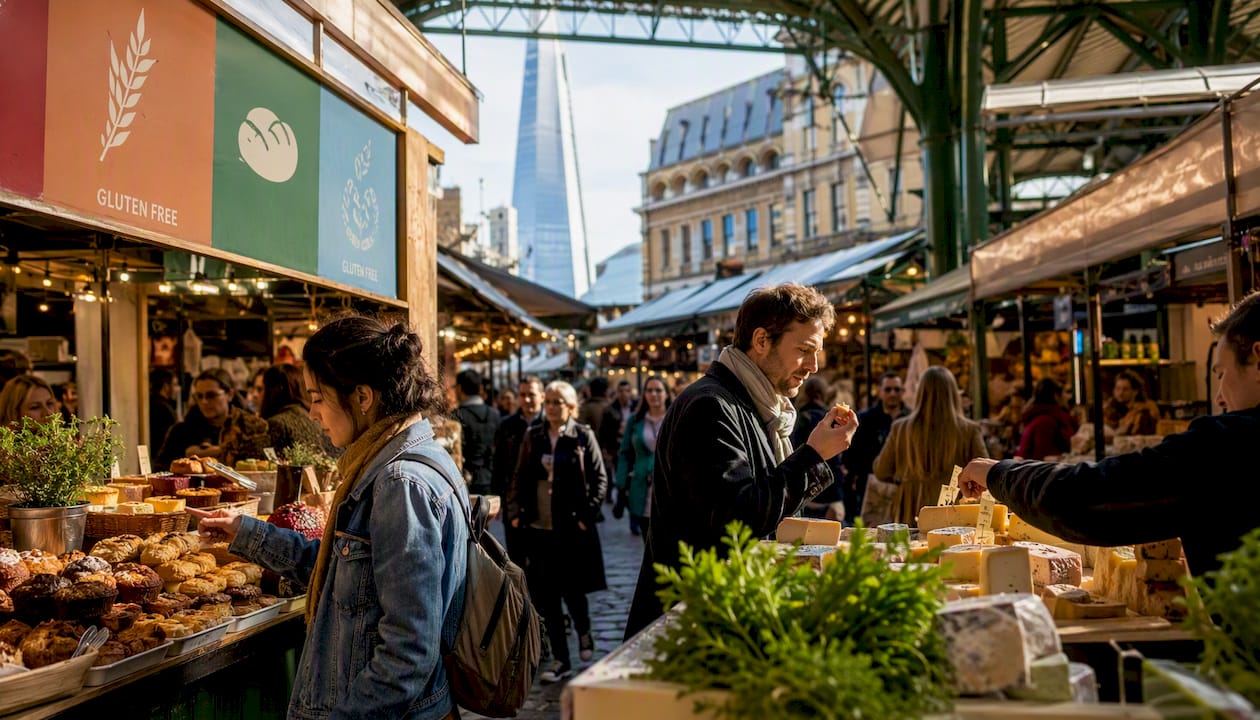
London gluten-free eating guide for tourists and locals
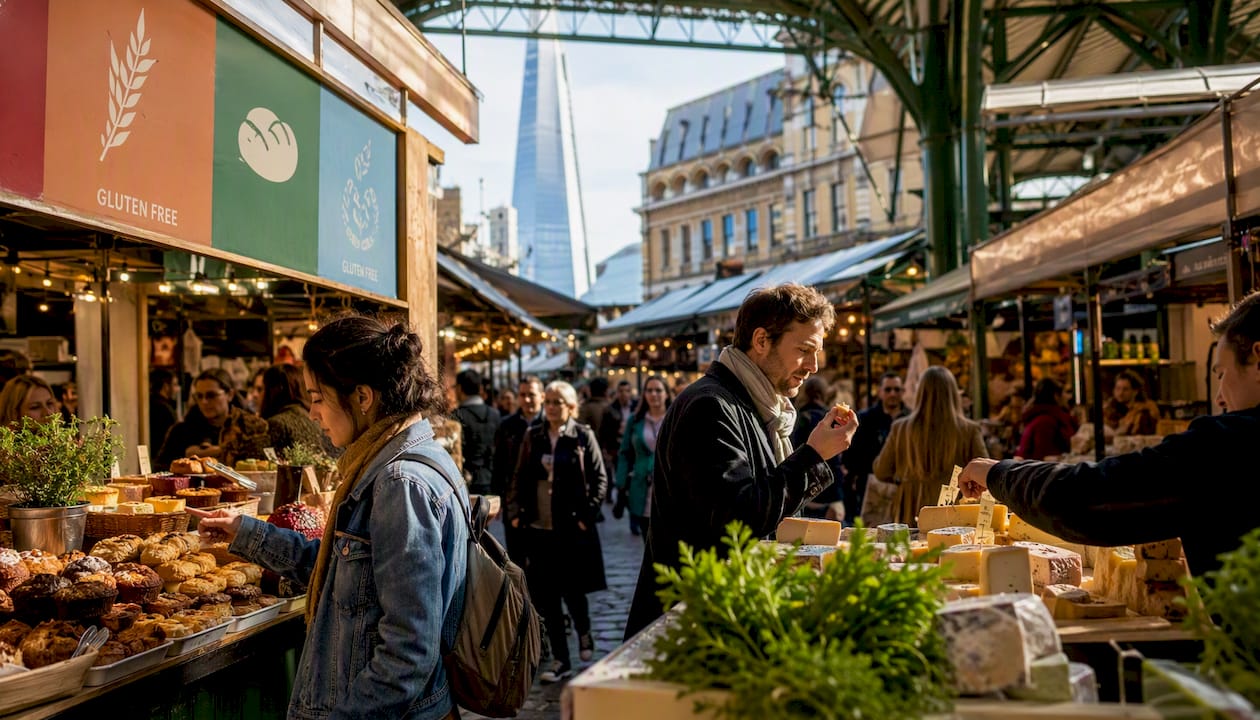
London is one of the best cities in the world for gluten-free dining. With dedicated venues spread across every neighbourhood, Coeliac UK-accredited restaurants, and food markets where multiple safe traders cluster together, you can eat well here without anxiety.
Quick takeaways:
- Best neighbourhoods: Southbank (Borough Market), Hackney (Broadway Market), Angel (Niche restaurant), and Notting Hill
- Markets to prioritise: Borough Market and Broadway Market both host dedicated gluten-free stalls serving pad thai, arepas, and tapioca crepes
- Accreditation check: Look for the Coeliac UK Grade A badge; Niche restaurant near Sadler’s Wells has held it for multiple years
- Budget: Dedicated bakeries like Copains and Borough 22 price in line with standard London bakery quality, so no premium shock
- Resources: My Gluten Free Guide, London Vacation Guide listings, and the Coeliac UK restaurant finder are your three go-to tools
Pro Tip: Say “I am coeliac” rather than “I’m gluten-free” — it signals a medical need, not a preference. Then ask: “Do you use a separate fryer and preparation surface?” before ordering.
Table of Contents
- When should you visit markets and what will it cost?
- Which neighbourhoods work best as a base?
- What should you do if you have a gluten reaction?
- Where can you shop for gluten-free groceries in London?
- Are there gluten-free communities or events in London?
- How do you avoid cross-contamination when eating out?
- London Vacation Guide makes gluten-free trip planning easier
- Key takeaways
- FAQ
When should you visit markets and what will it cost?
Borough Market opens Tuesday to Saturday, with the fullest trader line-up on Thursdays and Saturdays. Broadway Market runs every Saturday morning. Arrive before 11 AM at either to beat the queues at popular stalls. Markets are also where multiple GF traders cluster in one spot, so you can sample pad thai, Venezuelan arepas, and doughnuts from Borough 22 without crossing the city.
Sit-down restaurants with full gluten-free menus, such as Paladar in SE1 or Indigo at One Aldwych, sit at standard London mid-range to fine-dining price points. Street food and market stalls are the budget option, typically £8–£14 per dish.
Which neighbourhoods work best as a base?
Southbank and Borough put you within walking distance of Borough Market, Paladar, and the London Eye. It is the most convenient base for a first visit focused on gluten-free eating.
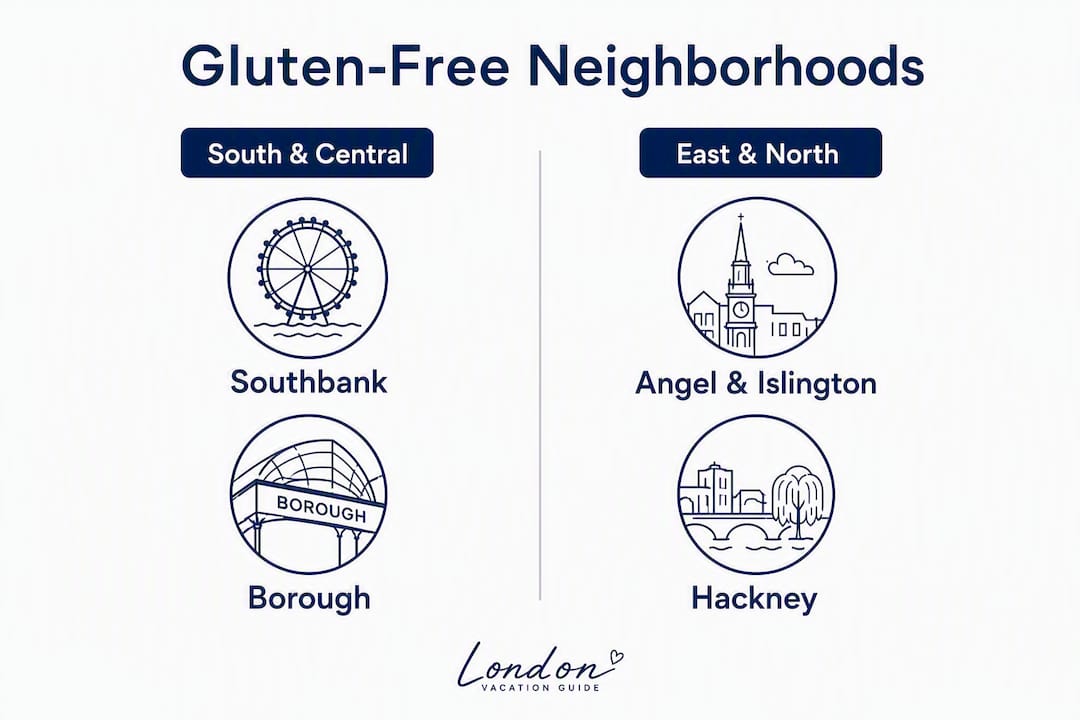
Angel and Islington suit anyone who wants easy access to Niche, the oldest dedicated gluten-free restaurant in London, on Upper Street. The Angel neighbourhood guide covers accommodation and transport options nearby.
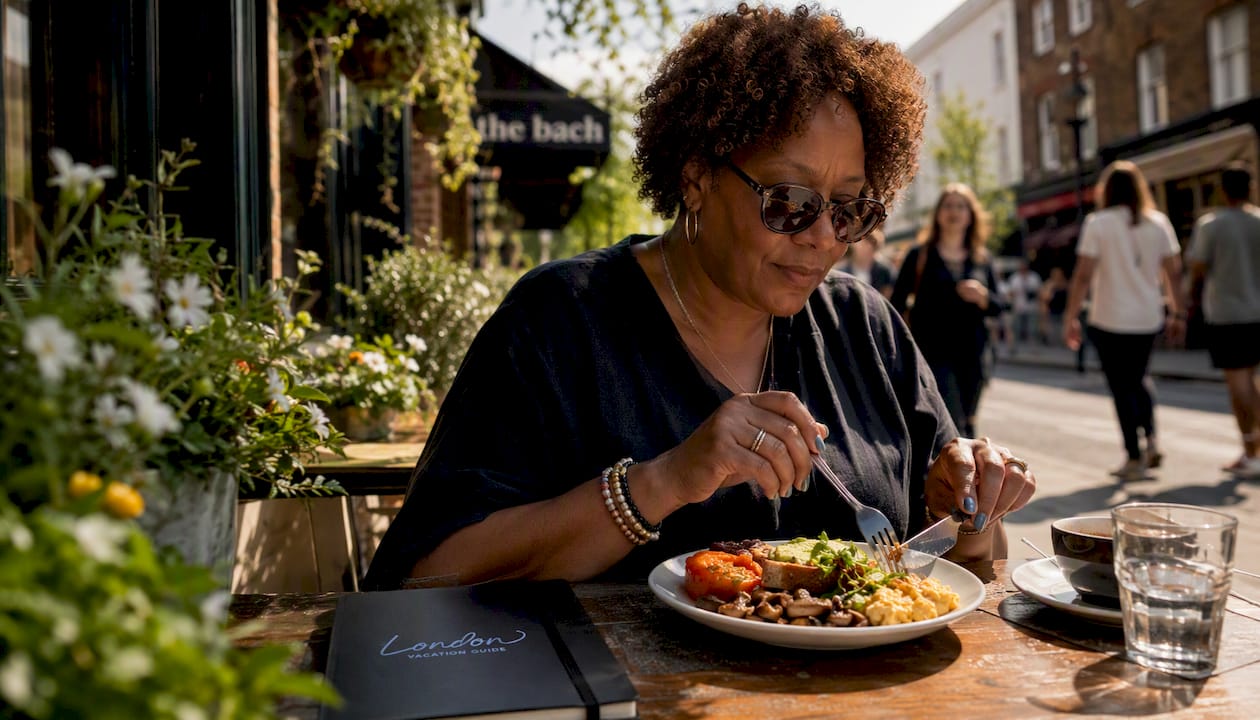
Hackney is the east London pick: Broadway Market on Saturdays, The Bach café for brunch, and a strong independent food culture. Richmond works well for a quieter stay with good Overground links into central spots.
What should you do if you have a gluten reaction?
Act quickly. If you suspect accidental exposure, drink water and rest. For a confirmed coeliac reaction, NHS 111 (call or use the online service) can advise on next steps without needing an A&E visit for mild symptoms. Carry antihistamines if you also have other food sensitivities, and keep a note of what you ate and where — useful both for your own records and for flagging to the venue. Even well-regarded safe spots can change staff or menus, so always confirm kitchen processes on arrival rather than relying on a previous visit.
Where can you shop for gluten-free groceries in London?
Waitrose, Marks & Spencer, and Sainsbury’s carry the widest dedicated free-from ranges. Planet Organic (multiple central locations) and As Nature Intended stock specialist brands harder to find in supermarkets. For international gluten-free products, the health food sections of larger Whole Foods Market branches in Kensington and Piccadilly are worth a browse.
Are there gluten-free communities or events in London?
Coeliac UK runs local support groups across Greater London and hosts an annual awareness week each May. The charity’s website lists meetups and events by postcode. Online, the Gluten Free Gorgeous and Coeliac Sanctuary communities are active, London-heavy groups where members share new restaurant finds and flag venues that have slipped in standards.
How do you avoid cross-contamination when eating out?
Choose 100% dedicated venues when your reaction to cross-contact is severe. For non-dedicated restaurants, the questions that matter most are: separate fryer, separate prep surface, and whether staff have had allergen training. Coeliac UK accreditation, particularly Grade A, indicates periodic kitchen checks and documented protocols. Mattarello Bolognese in east London, for example, holds Coeliac UK accreditation and hand-makes all pasta fresh on a dedicated prep area. Ethnic cuisines built around rice, corn, and pulses — Indian, Mexican, Latin American — tend to offer more naturally gluten-free dishes, though kitchen practices still need confirming each visit.
London Vacation Guide makes gluten-free trip planning easier
Planning a gluten-free trip to London takes more groundwork than a standard visit, and London Vacation Guide cuts that research time significantly. The site’s curated listings cover restaurants, markets, and neighbourhoods across the city, with notes on dietary accommodation where available, including Coeliac UK accreditation details. Use the first-time visitor itinerary to build a day-by-day plan that clusters gluten-free stops by area, saving you unnecessary travel. Neighbourhood guides for Angel, Hackney, and Richmond help you choose where to stay based on proximity to the venues that matter to you. Browse the listings, save your favourites, and arrive in London with a plan rather than a list of questions.
Key takeaways
London is reliably excellent for gluten-free dining, with dedicated venues, accredited restaurants, and market stalls spread across every major neighbourhood.
| Point | Details |
|---|---|
| Dedicated venues are the safest choice | London has an exceptional number of 100% gluten-free restaurants and bakeries, reducing cross-contamination risk. |
| Markets offer the best variety quickly | Borough Market (Thu–Sat) and Broadway Market (Sat) cluster multiple dedicated GF traders in one location. |
| Coeliac UK accreditation matters | Grade A certification indicates documented kitchen protocols and periodic checks — look for it before booking. |
| Budget is comparable to standard dining | Dedicated bakeries and market stalls price in line with equivalent London food, with no significant premium. |
| London Vacation Guide | Use the site’s neighbourhood guides and curated listings to plan gluten-free routes by area before you arrive. |
FAQ
Is London a good city for gluten-free eating?
Yes. London has a high concentration of dedicated gluten-free restaurants, bakeries, and market stalls, making it one of the more reliable cities in the world for coeliac travellers.
What should I say to restaurant staff if I am coeliac?
Say “I am coeliac” rather than “gluten-free,” then ask specifically about separate fryers, preparation surfaces, and allergen training. Confirming on arrival is advisable even at well-known safe venues.
Which London markets are best for gluten-free street food?
Borough Market and Broadway Market are the top picks, with multiple dedicated stalls serving dishes such as arepas, pad thai, and doughnuts from Borough 22. Borough runs Thursday to Saturday; Broadway runs every Saturday.
How do I find Coeliac UK-accredited restaurants in London?
Use the Coeliac UK restaurant finder on their website, or check My Gluten Free Guide and London Vacation Guide listings, which note accreditation details where available.
Are gluten-free options more expensive in London?
Not significantly. Dedicated bakeries and market food generally cost in line with comparable London offerings rather than carrying a notable premium.
Recommended
- Local dining guide London: find authentic food experiences - The London Journal | London Vacation Guide
- Must-try London foods: the definitive 2026 guide - The London Journal | London Vacation Guide
- Sustainable dining in London: your complete 2026 guide - The London Journal | London Vacation Guide
- Why London is a top food destination for culinary travellers - The London Journal | London Vacation Guide