How museums shape London tourism: Facts and traveller tips

London’s museums are not a rainy-day backup plan. They are the backbone of the city’s visitor economy, drawing tens of millions of visits each year and shaping how travellers experience one of the world’s greatest capital cities. Yet many tourists still treat them as optional extras, slotted in between shopping trips and river cruises. This guide cuts through that misconception, using real data and practical insight to show you exactly how museums can transform your London visit from enjoyable to genuinely unforgettable.
Table of Contents
- Museums as anchor attractions: Key facts and why they matter
- Changing visitor trends: What the numbers reveal for 2026
- How museums enrich travel: Cultural, educational, and economic impact
- Practical tips: Making museums the highlight of your London visit
- What most travel planners get wrong about London museums
- Next steps: Plan your museum-rich London adventure
- Frequently asked questions
Key Takeaways
| Point | Details |
|---|---|
| Museums drive London tourism | Museums attract millions of visitors and are foundational to travel itineraries. |
| Visitor trends fluctuate | Attendance numbers change year-to-year, but museums’ relevance remains constant. |
| Cultural and economic impact | Museums inspire and educate travellers while supporting the local economy. |
| Integrate museums in your plans | Smart planning and neighbourhood guides maximise your London museum experience. |
Museums as anchor attractions: Key facts and why they matter
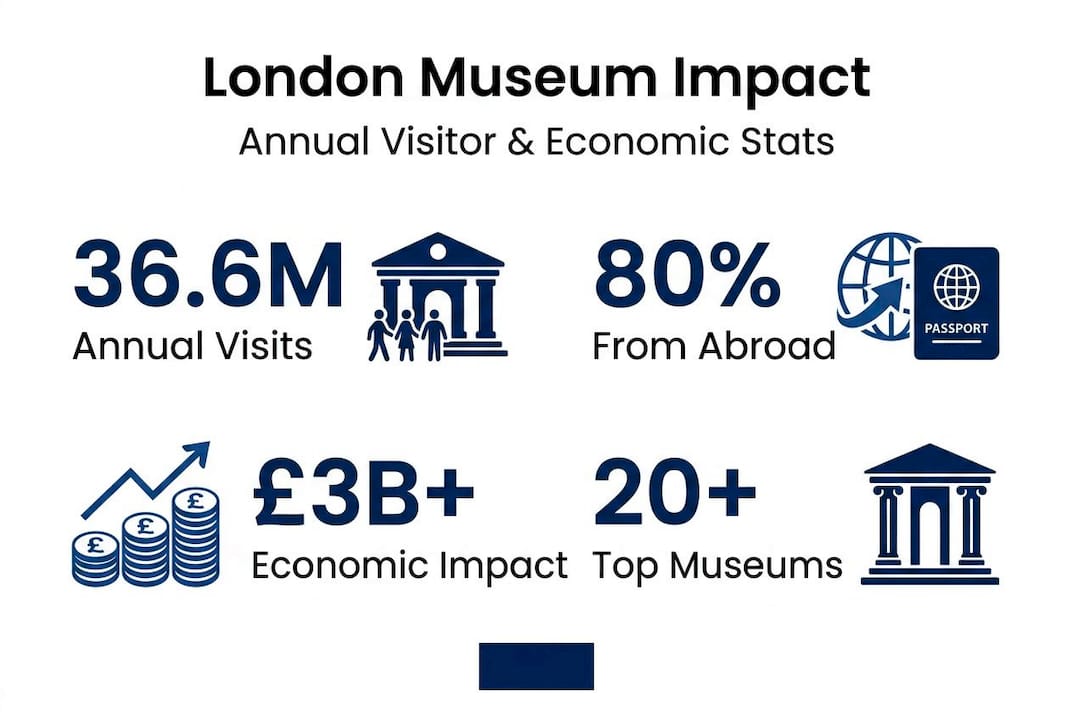
Having introduced museums as central attractions, let’s examine the facts demonstrating their true scale and influence. The numbers are, frankly, staggering. DCMS-sponsored London museums received 36.6 million visits in 2024/25, placing them firmly among the most visited attractions anywhere in Europe. That figure is not a niche statistic. It reflects the reality that museums sit at the very heart of London’s tourism landscape.
To put that into perspective, 36.6 million visits spread across a city of roughly nine million people means that museums attract more visitors than the city’s own population multiple times over each year. International tourists account for a significant share of those visits, but domestic day-trippers and Londoners themselves contribute enormously too. Museums genuinely serve everyone.
Who visits London museums, and why?
It would be a mistake to assume museums attract only academics, art historians, or school groups. The reality is far more diverse. Consider the range of people who walk through those grand entrance halls on any given Tuesday:
- Families looking for an educational day out that does not cost a fortune (many major London museums are free to enter)
- Solo travellers seeking a meaningful, self-paced cultural experience
- Couples drawn by blockbuster temporary exhibitions covering everything from ancient Egypt to David Bowie
- History enthusiasts who have planned entire trips around specific galleries or collections
- Casual tourists who simply wander in and end up spending three hours more than they intended
This breadth of appeal is precisely why museums function as what tourism economists call “anchor attractions.” They pull visitors into specific parts of the city and hold them there. A morning at the British Museum in Bloomsbury naturally flows into lunch in Covent Garden, a walk along the Embankment, and an afternoon at Tate Modern. Museums don’t just attract visitors; they orchestrate entire days and shape the flow of tourism money across the city.
| Museum | Location | Free entry? | Estimated annual visitors |
|---|---|---|---|
| British Museum | Bloomsbury | Yes | ~6 million |
| Natural History Museum | South Kensington | Yes | ~5 million |
| Victoria and Albert Museum | South Kensington | Yes (main galleries) | ~4 million |
| Tate Modern | Southwark | Yes (permanent collection) | ~4.7 million |
| National Gallery | Trafalgar Square | Yes | ~5 million |
| Science Museum | South Kensington | Yes | ~3.5 million |
Figures are approximate and based on pre-pandemic averages and recent DCMS reporting periods.
If you are building your first trip to London, a 3-day London itinerary that incorporates two or three major museum visits gives you an immediate structural advantage. You get built-in focal points around which you can arrange meals, walks, and neighbourhood exploration. For those heading to London for the very first time, our first-time visitor guide explains exactly how to balance iconic sights with less obvious cultural gems.
“Museums are major anchor attractions for London’s visitor economy, shaping not just individual days but entire travel itineraries for millions of people each year.”
One aspect that surprises many travellers is how strongly museums define London’s individual neighbourhoods. South Kensington, for instance, owes much of its international reputation to the cluster of world-class institutions sitting within walking distance of one another. Bloomsbury carries an unmistakably intellectual and artistic atmosphere shaped in large part by the British Museum and its surrounding academic institutions. Exploring London’s neighbourhood guides reveals just how deeply museums have influenced the character and appeal of different parts of the city.
Changing visitor trends: What the numbers reveal for 2026
Understanding the numbers is essential, but it is just as important to recognise the trends behind visitor patterns. Museum attendance does not remain static year on year. Visitor volumes respond to a whole range of factors including major exhibitions, global travel trends, economic pressures on household budgets, and the lingering effects of disruptions like the pandemic.
The most recent government data tells an interesting story. DCMS-sponsored London museums saw visits decrease by 1% from 37.0 million to 36.6 million in 2024/25. On paper, that sounds like a decline worth worrying about. In practice, it represents a remarkably stable attendance base for institutions that went through years of forced closure, reduced capacity, and shifting visitor habits during the early 2020s.
What drives fluctuations in museum attendance?
Several well-documented factors influence year-on-year visitor numbers:
- Temporary exhibitions: A major blockbuster show at the British Museum or the Victoria and Albert Museum can add hundreds of thousands of visits in a single year, then leave a comparative dip when the exhibition closes.
- International travel volumes: London’s museums depend heavily on overseas visitors. When transatlantic or European travel slows due to economic uncertainty or geopolitical events, visitor numbers at major institutions feel the effect almost immediately.
- School and group visits: Education-focused visits form a significant part of total attendance figures. Changes to school funding, transport costs, and curriculum priorities all affect group bookings.
- Digital alternatives: Some visitors who once attended purely to see a single artefact now do so virtually. However, research consistently shows that digital engagement tends to increase rather than replace physical visits for most audiences.
- Seasonal patterns: London’s museum visits peak strongly in the summer months, particularly July and August, when international tourism is at its highest. Autumn and winter can be quieter, though Christmas and school holidays create secondary spikes.
| Period | Approximate visitor index | Key driver |
|---|---|---|
| Summer (June to August) | Very high | International tourism peak |
| Christmas and New Year | High | Domestic tourism and school holidays |
| Spring (March to May) | Moderate to high | European short breaks and school trips |
| January to February | Lower | Post-Christmas quiet period |
Understanding these patterns has real practical value for your trip planning. If you visit the Natural History Museum on a Saturday in August, you will queue. If you arrive on a Wednesday morning in late October, you may practically have the place to yourself.
For travellers who want to avoid the crowds entirely, pairing a quieter museum visit with a wander through some of London’s hidden spots makes for an extraordinarily rewarding day. Similarly, building your schedule around local neighbourhood experiences rather than just landmark hopping means you see a more textured, authentic version of the city alongside the world-class institutions.
Pro Tip: Weekday morning visits, particularly Tuesday to Thursday between 10am and midday, consistently offer the most comfortable museum experience. Crowds tend to peak at weekends and during the early afternoon slot when school groups and lunch-hour visitors coincide.
How museums enrich travel: Cultural, educational, and economic impact
With museum visitor trends in mind, let’s focus on the deeper rewards museums provide to travellers and the city. The case for visiting museums is not purely about seeing famous objects or ticking boxes on a tourist checklist. The genuine value runs far deeper than that.
Cultural and intellectual enrichment
A single visit to the British Museum places you face to face with the Rosetta Stone, the Elgin Marbles, the Lewis Chessmen, and thousands of other objects spanning every civilisation that has ever existed on this planet. That is not hyperbole. The British Museum’s collection genuinely covers the full breadth of human history in one building. Standing in front of a 3,000-year-old Egyptian mummy and understanding the culture, beliefs, and craftsmanship behind it changes the way you see the world. It is difficult to replicate that experience through any other medium.
The Victoria and Albert Museum achieves something similar for the decorative arts, design, and fashion. Its permanent galleries trace the history of human creativity from medieval metalwork to contemporary digital design. The Natural History Museum makes you feel small in the best possible way, situating you within an evolutionary timeline measured in hundreds of millions of years.
Museums serve as major anchor attractions not just because people visit them, but because they leave visitors genuinely changed by the experience. That transformation is what makes them irreplaceable.
Economic ripple effects
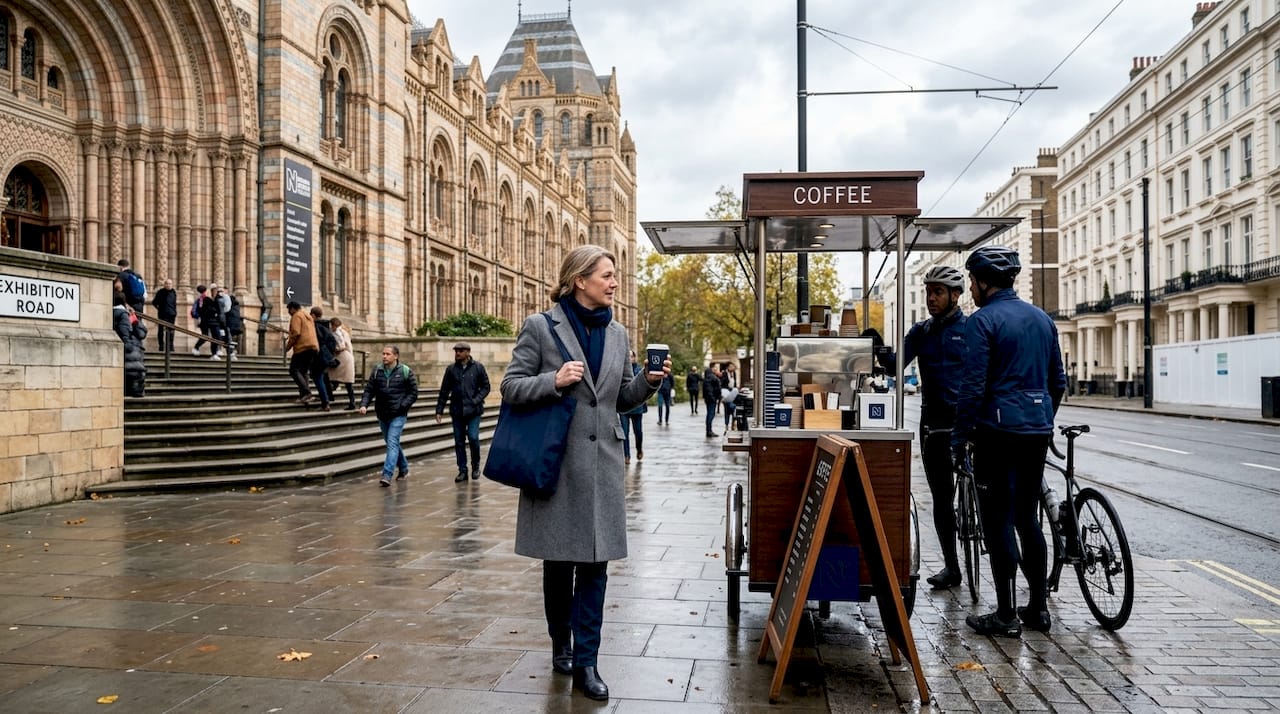
The economic impact of museums extends far beyond their own walls. Every visitor who spends a morning at the Victoria and Albert Museum is likely to stop for coffee in South Kensington, browse the shops on Brompton Road, and book a restaurant for the evening. Hotels near major museum clusters charge premium rates precisely because proximity to cultural institutions is a genuine selling point for travellers.
The relationship between museums and the surrounding hospitality sector is well documented. Effective museum-hospitality collaboration creates mutually beneficial relationships that strengthen the visitor economy as a whole. When a major exhibition opens at Tate Modern, restaurants along Bankside fill up. Taxi drivers, tube stations, souvenir shops, and street food vendors all feel the economic downstream.
For travellers, this is good news. It means that the areas around major London museums are almost always vibrant, well-served, and interesting to explore. Pairing a museum visit with neighbourhood wandering is rarely a compromise. It is almost always an enhancement.
If you want to experience London like a local, building your days around museum districts rather than generic tourist zones is one of the most effective strategies available. And if you are interested in exploring beyond tourist spots, you will discover that many of London’s smaller, specialist museums sit in fascinating neighbourhoods that most tourists never visit at all.
“The best London trips are rarely built around transport logistics. They’re built around cultural anchors, and museums are the most reliable anchors the city has.”
Pro Tip: Many London museums run free late-night opening events on certain evenings each month. The Victoria and Albert Museum’s Friday Late series, for instance, combines gallery access with live music, talks, and themed bars. These events offer an entirely different atmosphere to the standard daytime visit.
Practical tips: Making museums the highlight of your London visit
Having explored how museums can add depth to your trip, here is how to maximise your experience as a visitor. Museums in London attract tens of millions of visits annually, and yet a surprisingly large number of those visitors leave feeling they did not quite get the most out of the experience. Usually, that comes down to planning errors that are entirely avoidable.
1. Book timed entry tickets in advance
Many London museums now require or strongly recommend advance booking, particularly for popular temporary exhibitions. Even for institutions with free entry like the British Museum and the Natural History Museum, timed entry slots are frequently available online and dramatically reduce queuing time at the door.
2. Prioritise one or two highlights rather than trying to see everything
The Natural History Museum alone contains over 80 million specimens. You are not going to see them all. Identify the two or three things you most want to experience before you arrive, give those your full attention, and let everything else be a pleasant bonus. Trying to sprint through every gallery leaves you exhausted and underimpressed.
3. Time your visit to avoid peak crowds
As discussed in the trends section, weekday mornings are consistently the quietest time to visit major London museums. If your schedule allows any flexibility at all, shift your museum days to Tuesday, Wednesday, or Thursday. The difference in atmosphere compared to a Saturday afternoon in August is genuinely remarkable.
4. Pair each museum with a neighbourhood walk
Do not treat museums as isolated tick-box exercises. Plan a route that makes the museum the centrepiece of a full neighbourhood experience. A visit to Tate Modern pairs beautifully with a walk across Millennium Bridge and into the City. The British Museum anchors a morning in Bloomsbury, with its brilliant independent bookshops and garden squares. Use your ultimate London itinerary as a framework and build your museum days into it deliberately.
5. Use the museum cafes and restaurants strategically
London’s major museums house some genuinely excellent dining options that most tourists walk past on their way to the gift shop. The Great Court Restaurant at the British Museum, the café at Tate Modern with its views across the Thames, and the V&A’s stunning café set inside one of the museum’s original Victorian refreshment rooms are all worth your time. Book a table in advance during peak season.
6. Look beyond the famous names
The institutions that attract the headlines, the British Museum, the National Gallery, Tate Modern, are magnificent. But London also has dozens of smaller, highly specialised museums that offer extraordinary experiences with almost no queues. The Sir John Soane’s Museum in Lincoln’s Inn Fields, the Horniman Museum in Forest Hill, the Geffrye Museum of the Home in Shoreditch: these are places where you can spend an absorbing two hours surrounded by genuine curiosity and history without fighting your way through tour groups.
Pro Tip: The Museum of London Docklands in Canary Wharf is free, fascinating, and almost always quiet. Its permanent galleries on London’s role in the transatlantic slave trade are among the most thoughtfully presented museum exhibitions in the entire city.
What most travel planners get wrong about London museums
There is a deeply entrenched assumption in popular travel planning that museums are the sensible, slightly dutiful option. You visit them when it rains, or when you have run out of more exciting ideas, or because you feel you ought to. This assumption is not just wrong. It actively leads travellers to build worse trips.
Consider the data. DCMS-sponsored museums in London received 36.6 million visits in 2024/25. Those 36.6 million visits did not happen because people ran out of better options. They happened because museums in London are genuinely world-class, free to enter, packed with extraordinary objects, and capable of delivering experiences that no theme park, shopping centre, or tourist river cruise can match.
The “rainy day option” framing is a hangover from an older era of tourism, when museums were genuinely dusty, poorly lit, and organised primarily for scholars rather than the general public. Modern London museums are the opposite of that. They invest heavily in visitor experience, interpretation, accessibility, and programming. The British Museum’s temporary exhibition programme regularly draws international critical acclaim. Tate Modern is one of the most architecturally spectacular buildings in Europe, with a permanent collection that would embarrass many dedicated contemporary art capitals.
What savvy travellers and experienced trip planners actually do is build their itinerary around museums as primary anchors and then fill in everything else around those fixed points. You know that Wednesday morning is the British Museum. You know that Thursday afternoon is Tate Modern. Everything else, the restaurants, the walks, the market visits, flows naturally from those cultural foundations. Our museum itinerary strategies give you practical templates for doing exactly this.
The other common error is treating all London museums as interchangeable. They are not. The British Museum and the National Gallery are both extraordinary, but they offer completely different emotional and intellectual experiences. The V&A will leave a design-minded traveller in genuine rapture while leaving a natural history enthusiast feeling mildly restless. Match museums to your genuine interests, and you will leave London feeling culturally satiated rather than vaguely overwhelmed.
One more thing worth saying plainly: the fact that most major London museums are free is one of the most remarkable things about the city. There are very few world capitals where you can walk into collections of this scale and quality without paying a penny. Plan around that generosity, not in spite of it.
Next steps: Plan your museum-rich London adventure
If this article has shifted how you think about museums in your London plans, the next step is turning that insight into a real itinerary. Our neighbourhood guides are an ideal starting point, helping you understand how different parts of the city relate to the museums within them. Our essential London itinerary for first-time visitors builds museum visits into a logical and enjoyable sequence alongside the city’s other unmissable experiences. And if you are focusing your trip around the cultural heart of London, our dedicated guide to Bloomsbury covers everything you need to know about the neighbourhood that gave the world the British Museum, Virginia Woolf, and some of the finest independent bookshops still operating anywhere in the English-speaking world.
Frequently asked questions
How many visitors do London museums attract each year?
DCMS-sponsored museums and galleries in London welcomed 36.6 million visits in 2024/25, making them among the most visited cultural institutions in the world.
Are museums still popular with tourists despite attendance fluctuations?
Yes. Even with a 1% decrease in visits from 37.0 million to 36.6 million in 2024/25, London museums remain massive, irreplaceable attractions and essential to any meaningful visit to the city.
What is the best way to integrate museum visits into my London itinerary?
Plan museum visits during off-peak hours, particularly on weekday mornings, and pair each one with a neighbourhood walk for a richer, more memorable cultural experience.
Do museums impact other areas of tourism in London?
Absolutely. Museums act as major anchor attractions that drive demand for nearby hospitality, restaurants, and local businesses, creating economic benefits that spread well beyond their own walls.
Recommended
- Discover local London: Why exploring beyond tourist spots matters - The London Journal | London Vacation Guide
- London for First-Time Visitors: The Essential Guide | London Vacation Guide
- How London festivals shape culture, community and tourism - The London Journal | London Vacation Guide
- Your essential London travel guide: tips and local experiences - The London Journal | London Vacation Guide
- 7 Essential Tips for Exploring Art Museums in Lisbon