How to find budget eats in London: a local plan
London’s cheapest, most satisfying meals are almost never in the tourist centre. Start at a market, walk five minutes from any major attraction, or grab a Tesco meal deal, and you’ll eat well for £5–£15 without trying hard.
Three things you can do right now:
- Open Google Maps, search your area, and filter by the “£” price symbol to surface nearby cheap options.
- Check Borough Market or your nearest street-food market for stalls selling hot meals under £10.
- Download Too Good To Go to claim surplus food from restaurants and cafés, often for £3–£5 a bag.
Realistic price expectations: snacks and bagels run £2–£5, market meals £5–£10, and cheap sit-down mains £8–£15. Quality at these prices is genuinely good, particularly at markets and community canteens where the food is cooked fresh and the competition keeps standards up.
Key takeaways
London’s best budget meals are found at markets, community canteens, and neighbourhood strips, not in the tourist centre, and most cost between £5 and £15.
| Point | Details |
|---|---|
| Start at a market | Borough Market, Spitalfields, and Netil Market all offer hot meals for £5–£10. |
| Use lunchtime set menus | Set-lunch deals (noon–2:30pm) cut mid-range restaurant prices significantly. |
| Try supermarket hacks | A Tesco meal deal costs around £3.90; yellow-sticker reductions appear late afternoon. |
| Walk five minutes from attractions | Stepping away from major sights shifts you into local pricing and better value. |
| London Vacation Guide | Use the neighbourhood guides and market listings to plan cheap-eat routes by area before you arrive. |
Table of Contents
- Where should you look first for cheap eats in London?
- Which apps and search tricks find the best bargains?
- Practical tactics that actually shrink your bill
- What types of cheap meals give you the most for your money?
- A tested one-day budget food itinerary
- Safety, hygiene and dietary notes for buying cheap food
- Why the neighbourhood approach works better than any app
- London Vacation Guide helps you plan your budget food trip
- Sources
- FAQ
Where should you look first for cheap eats in London?
Markets and neighbourhood food strips are where London’s best-value eating actually happens. The tourist-facing restaurants near the big sights charge a premium for location; the places locals use are a short walk away and consistently better value.
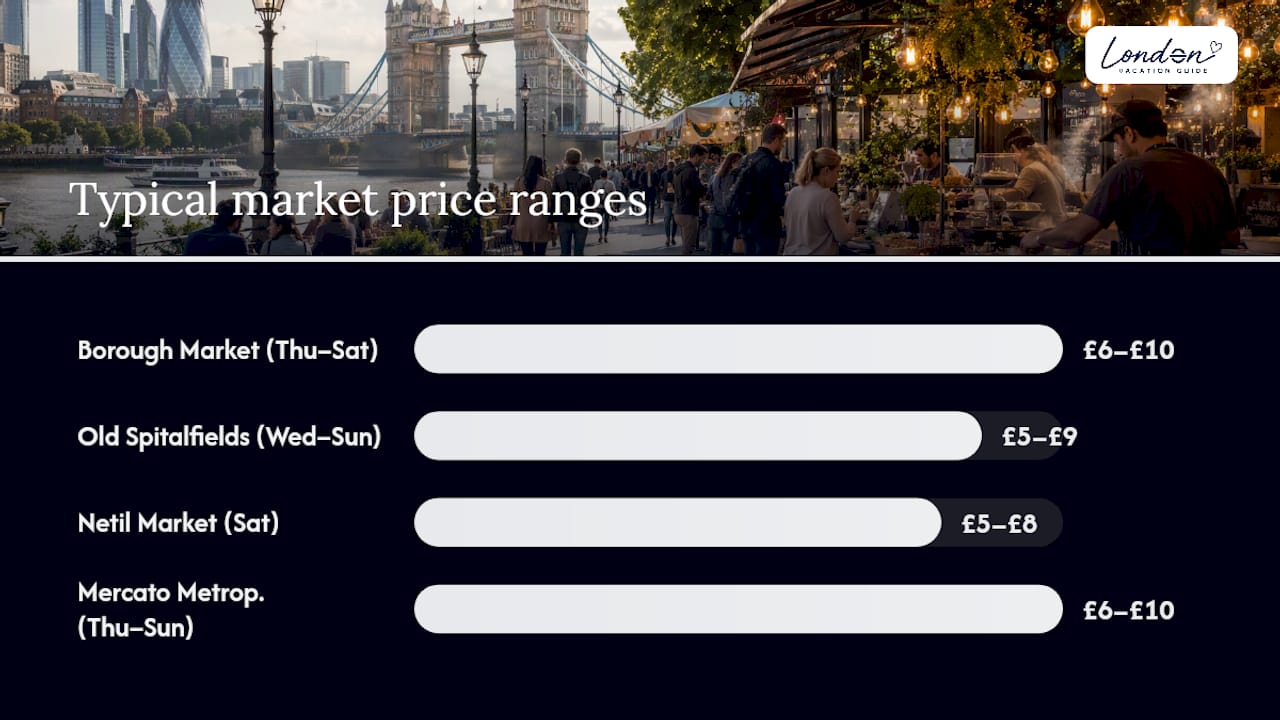
The table below covers the top spots, with price examples and the best time to visit each.
| Location | What to eat | Price range | Best time to visit |
|---|---|---|---|
| Borough Market, Southwark | Hot stalls: curries, grilled meats, fresh pasta | £6–£10 per portion | Thursday–Saturday, 10am–5pm |
| Old Spitalfields Market, E1 | Street food, bao, global cuisines | £5–£9 | Wednesday–Sunday, 10am–5pm |
| Sud Italia, Spitalfields | Wallet pizza (folded Neapolitan slice) | ~£5 | Lunchtime weekdays |
| Netil Market, London Fields | Independent food stalls, coffee | £5–£8 | Saturday, 10am–5pm |
| Mercato Metropolitano, Elephant & Castle | Italian-led food hall, pizza, pasta | £6–£10 | Thursday–Sunday |
| Camden Market | Global street food, wraps, noodles | £5–£9 | Daily, busiest weekends |
| Brick Lane, E1 | Bangladeshi curry houses, bagels | £6–£12 (curry); £1–£4 (bagels) | Evening for curry; any time for bagels |
| Brixton Village / Market Row | Caribbean, West African, Ethiopian | £6–£10 | Lunch and early evening |
| Peckham Levels / Rye Lane | Afro-Caribbean, jerk chicken, wraps | £5–£9 | Lunch onwards |
| Tooting Broadway | South Asian thalis, Sri Lankan rice | £6–£10 | Lunch and dinner |
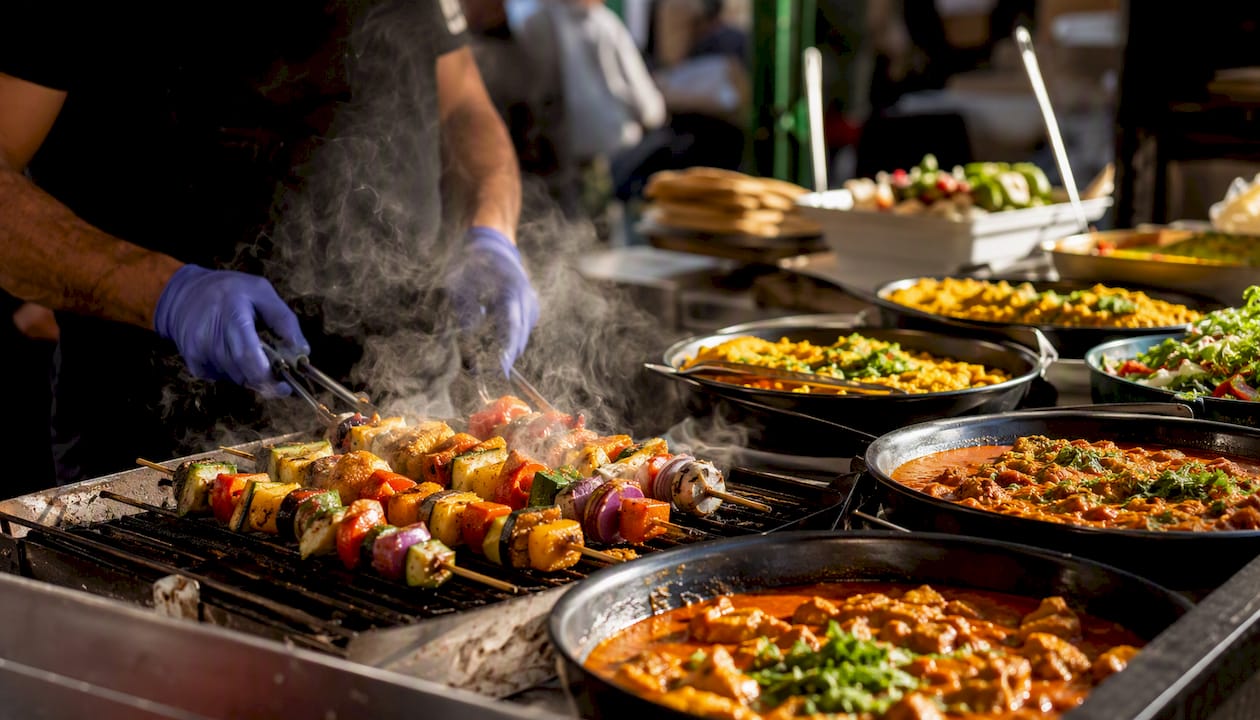
A few institutions deserve a specific mention. Beigel Bake on Brick Lane is open 24 hours a day, every day, and sells bagels from around £1 and a salt-beef bagel for a few pounds more. It is one of the most cited cheap-eat institutions in London, and rightly so. The Indian YMCA canteen near Fitzrovia serves subsidised thalis and curries to the public at prices that feel almost implausibly low for central London. Arments Pie and Mash in Walworth is a traditional pie-and-mash counter that has been feeding the area for generations. Baban’s Naan in Tooting serves freshly baked naan with toppings for a handful of pounds. Padella in Borough Market and Shoreditch is a counter-service pasta restaurant where fresh pasta dishes regularly come in under £10.
Pro Tip: Arrive at markets 30–45 minutes before closing time. Stall holders often reduce prices to shift remaining stock, and you can sometimes negotiate a larger portion for the same price.
Which apps and search tricks find the best bargains?
The right tools cut the time it takes to find cheap food from an hour of wandering to about ten minutes.
- Google Maps price filter: search any area and filter results by “£” or “££” to surface the cheapest rated spots. Combine this with the “open now” filter when you’re hungry and on the move.
- Too Good To Go: restaurants and cafés list surplus food as “magic bags” at heavily reduced prices, typically £3–£5. You collect at a set time window, usually end of day. Coverage across London is strong.
- Olio: a community sharing app where locals post surplus food, including home-cooked meals and market leftovers. Free or very low cost.
- Local Facebook groups and Reddit (r/london, r/CasualUK): search “cheap eats [neighbourhood]” for real recommendations from residents, not sponsored content.
- Michelin Bib Gourmand list: the Bib Gourmand is Michelin’s curated signal for restaurants offering high quality at accessible prices. It is one of the most reliable ways to find a sit-down meal that punches above its price point. Search the London list and filter by area.
Search tricks that work consistently:
- Type “set lunch [neighbourhood]” into Google rather than just “cheap restaurants.” Set-lunch menus at otherwise mid-range places often deliver two or three courses for £10–£15.
- Search “pre-theatre menu [area]” for early-evening deals, typically available from 5pm–6:30pm.
- Set your Google Maps radius to a specific neighbourhood rather than “near me” when you’re near a tourist attraction. A five-minute walk from the South Bank, Covent Garden, or the Tower of London usually shifts you into local pricing.
Combine tools for best results: use Google Maps to shortlist a market or neighbourhood, then check Too Good To Go for surplus offers from nearby restaurants, and cross-reference with the Michelin Bib Gourmand list if you want a sit-down option in the same area.
Practical tactics that actually shrink your bill
Timing is the single biggest lever. Pre-theatre menus, usually from 5pm to 6:30pm, work the same way. Many restaurants that feel out of reach at dinner are genuinely affordable at lunch.
Supermarket hacks are underused by visitors. A Tesco meal deal (sandwich, snack, and drink) costs a few pounds and can be a perfectly decent lunch when you’re moving fast. Yellow-sticker reductions, applied to food approaching its use-by date, typically appear in the late afternoon and evening. If you have access to a hostel or self-catering kitchen, buying reduced items and eating in saves considerably over several days.
At markets, order snack-sized or half portions where stalls offer them. Sharing two or three different dishes between two people at a market is almost always better value than each person ordering a full portion of one thing. You get more variety and usually spend less per head.
BYOB (bring your own bottle) restaurants are worth seeking out, particularly in South London and parts of Bermondsey. Drinks markups at restaurants are where budgets collapse fastest. A BYOB policy, sometimes with a small corkage fee, can save £10–£20 per person on a meal.
Pro Tip: Check a restaurant’s website or call ahead to confirm BYOB policy and any corkage charge before you arrive. Some places allow it only on certain nights.
For a broader look at saving money across your whole London trip, the tactics go well beyond food.
What types of cheap meals give you the most for your money?
The meal formats that consistently deliver the best value per pound are the ones with low overheads and high turnover.
Street-food stalls and market counters are the top of the list. A folded Neapolitan “wallet pizza” at a place like Sud Italia in Spitalfields costs around £5 and is a full, satisfying meal. Bao buns, koshari (Egyptian rice and lentil dish), grilled skewers, and fresh curries at market stalls typically fall in the £5–£9 range, as noted by food writers covering London’s best-value finds.
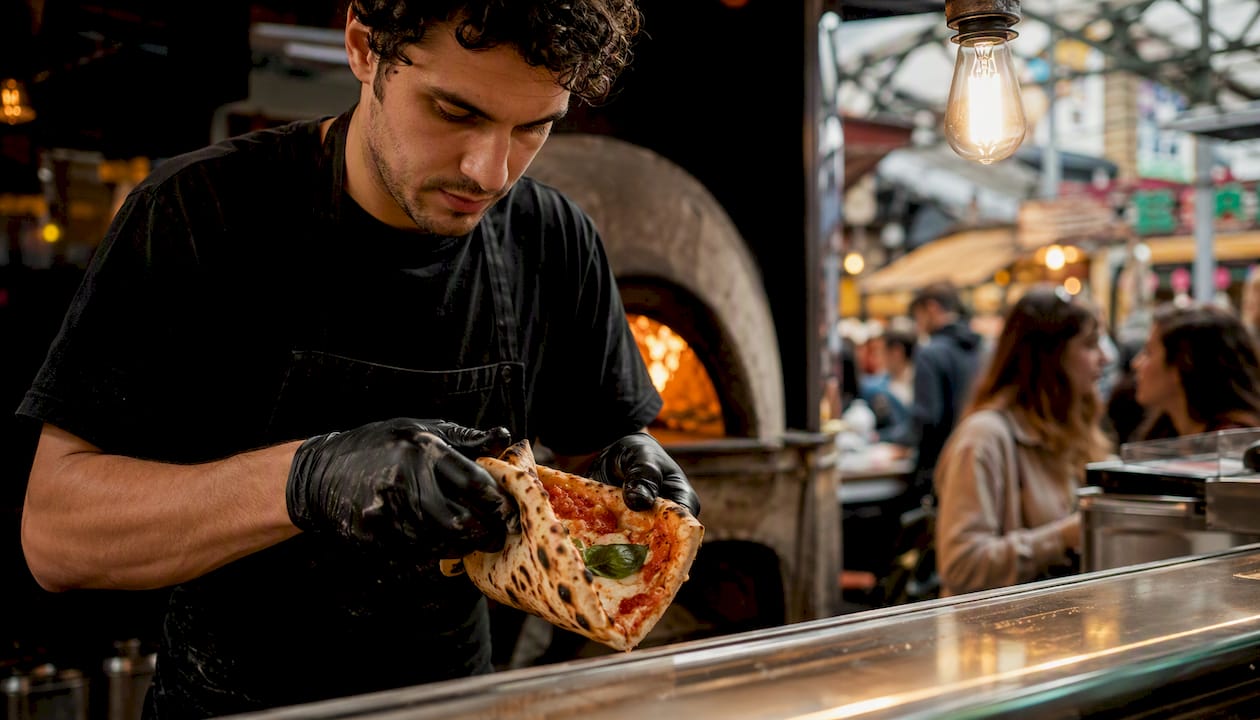
Counter-service pasta and noodle bars are the next tier. Padella’s fresh pasta dishes come in under £10 and the quality is genuinely high. Ramen bars and noodle counters across Soho and the City regularly offer bowls for £8–£12. For central London, that is strong value.
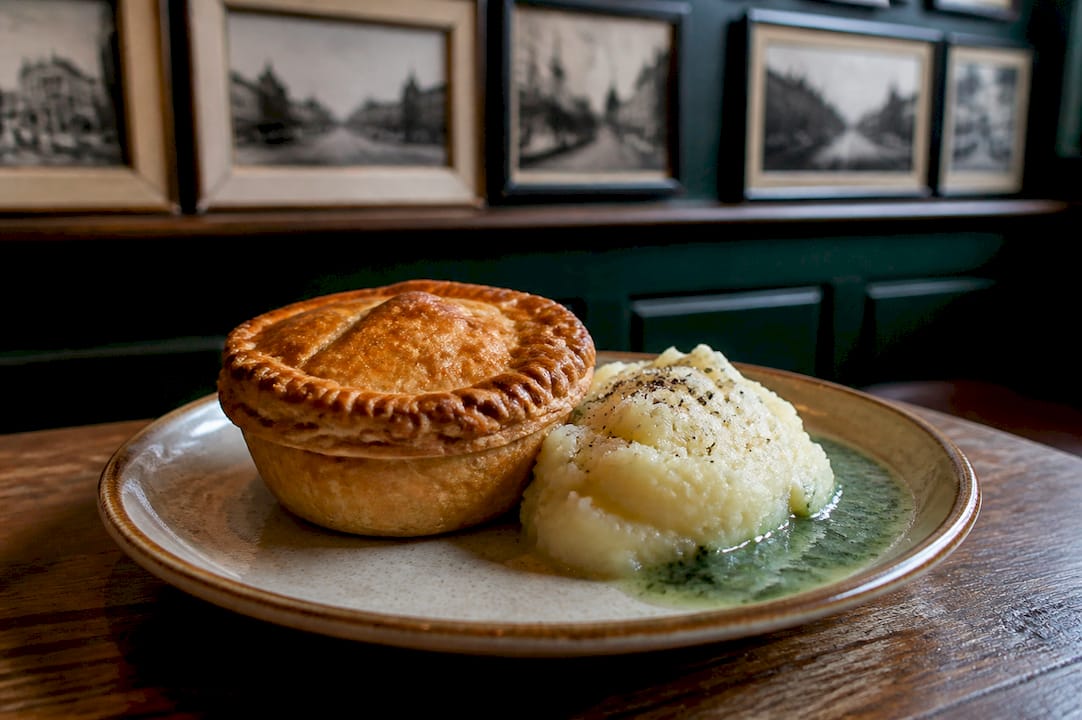
Greasy spoons and pie-and-mash counters are the most underrated option for visitors. A full English breakfast at a traditional café costs £5–£8 and keeps you going until mid-afternoon. Arments Pie and Mash in Walworth serves pie, mash, and liquor (a parsley sauce, not alcohol) for under £6. These are not Instagram-friendly meals, but they are filling, cheap, and genuinely local.
Late-night bagel counters like Beigel Bake on Brick Lane sit in their own category. A plain bagel costs a low price; a salt-beef bagel costs a bit more. Open all night, it is the most reliable cheap eat in East London at any hour.
For pizza in central London, ICCO Pizzeria in Soho offers whole pizzas from around £6.50 with no service charge and late opening hours, making it one of the better value options if you want to sit down near the West End.
A tested one-day budget food itinerary
This itinerary keeps total spend between £15 and £25 for the day, depending on choices.
- 8:30am, Brick Lane: Start at Beigel Bake for a salt-beef bagel or a plain bagel with cream cheese. Budget: £2–£4. The queue moves fast and the bread is baked on site.
- 3:00pm, neighbourhood snack: Pick up a naan at Baban’s Naan in Tooting if you’re heading south, or grab a bao from a market counter near wherever you are. Budget: £3–£5.
- 7:00pm, cheap neighbourhood dinner: Choose a BYOB curry house on Brick Lane or a thali restaurant in Tooting. Bring a bottle of beer or wine from a nearby off-licence. Budget: £8–£12 for food, minimal drink cost.
Total daily spend: £19–£30, depending on portion sizes and whether you add coffee or snacks. Staying under £20 is achievable if you skip the evening sit-down and do a market snack crawl instead.
For a full map of where these neighbourhoods sit relative to each other, the London food markets guide covers Borough, Spitalfields, and beyond in detail.
Safety, hygiene and dietary notes for buying cheap food
A busy stall is almost always a safe stall. High turnover means food is cooked and sold quickly, reducing the risk of anything sitting around. Look for visible cooking (food prepared in front of you), clean surfaces, and staff handling money and food separately. If a stall has a Food Standards Agency rating displayed, anything from 3 upwards is acceptable; 5 is the maximum.
Ask about allergens directly. Market stalls are legally required to provide allergen information, but it may not be written on a board. A quick question before you order is faster than dealing with a reaction later.
Dietary options are genuinely strong at London markets. Vegetarian and vegan diners are well served: dal and thali at South Asian counters, plant-based bao, falafel wraps, and dedicated vegan stalls at most major markets. Gluten-free options are patchier, but rice-based dishes (koshari, jerk rice, thali) are naturally gluten-free at most stalls. Ask specifically rather than assuming.
Practical notes: peak market hours (noon–2pm on Saturdays) are crowded and seating is limited. Arrive early or late to find a spot. Most stalls now accept contactless payment, but a small amount of cash is useful at older counters and community canteens. Carry a reusable water bottle. London tap water is safe to drink, and refill stations are available at most markets and many public spaces, saving £1–£2 per bottle throughout the day.
Why the neighbourhood approach works better than any app
The most reliable insight from testing these tactics across London’s markets and canteens is straightforward: the neighbourhood approach consistently beats the algorithm. Apps surface what is popular and well-reviewed; they do not surface the Indian YMCA canteen, the pie-and-mash counter that has been there for 40 years, or the market stall that opens at 11am and sells out by 1pm. Those places exist in local knowledge, not search results.
Markets and community canteens beat tourist menus on value because their cost base is different. A market stall pays a pitch fee, not West End rent. A community canteen is subsidised or runs on thin margins by design. The food is often more authentic too, cooked by people who eat it themselves.
The one honest caution: price bands vary by area and time of day. Borough Market on a Saturday lunchtime is more expensive than Tooting on a Tuesday evening. The tactics in this guide work consistently, but the specific numbers shift. Use the price ranges here as a guide, not a guarantee, and adjust for the neighbourhood you’re in.
London Vacation Guide helps you plan your budget food trip
Knowing where to eat cheaply is one thing; knowing which neighbourhood to base yourself in, which markets open on which days, and which listings are worth your time is another. London Vacation Guide brings all of that together in one place, with neighbourhood guides, curated market listings, and restaurant pages organised by area and budget.
If you’re planning your first trip and want to map cheap-eat options by where you’re staying, the London neighbourhood guides cover every major area with practical detail on food, transport, and what’s nearby. Start there, pick your base, and use the market and restaurant listings to build a daily eating plan before you arrive.
Sources
The following sources informed this guide and are worth bookmarking for further planning:
- Brick Lane Beigel Bake | 24/7 Bagel Shop
- The Best Pizza in Soho, London - ICCO Pizzeria
- MICHELIN Guide
FAQ
Where can I find cheap eats in London?
Markets like Borough Market, Old Spitalfields, and Brixton Village are the most reliable starting points, with hot meals from around £5–£10. Community canteens, pie-and-mash counters, and late-night bagel shops like Beigel Bake on Brick Lane are also strong options.
How do I eat well in London on a budget?
Use lunchtime set menus (noon–2:30pm) at mid-range restaurants, buy a Tesco meal deal for quick lunches, and focus on markets and neighbourhood strips rather than tourist-centre restaurants. Carrying a reusable water bottle and choosing BYOB restaurants cuts costs further.
What is the cheapest way to eat on a budget in London?
A Tesco meal deal at around £3.90 is the cheapest structured option. For hot food, a bagel from Beigel Bake starts at around £1, and market stalls across East and South London regularly serve full meals for £5–£8.
What is the Michelin Bib Gourmand and why does it matter for budget dining?
The Bib Gourmand is Michelin’s designation for restaurants offering high quality at accessible prices. It is one of the most practical tools for finding sit-down meals that deliver real value without the guesswork of sorting through generic review sites.
Recommended
- How to explore London on a budget: insider tips - The London Journal | London Vacation Guide
- How to explore London on a budget: tips for 2026 - The London Journal | London Vacation Guide
- How to save money in London: a practical guide - The London Journal | London Vacation Guide
- Local dining guide London: find authentic food experiences - The London Journal | London Vacation Guide