Top London museums list: the best 10 to visit
London is home to over 170 museums, which sounds like good news until you are actually standing in the city with three days and no plan. The top london museums list below cuts through the noise with picks based on cultural significance, visitor experience, accessibility, thematic variety, and whether you will genuinely leave feeling it was worth your time. Many of London’s greatest museums offer free permanent collections, though that does not mean you can walk in without thinking ahead. This guide tells you what to expect, when to go, and how to make each visit count.
Table of Contents
- Key takeaways
- 1. The British Museum
- 2. Natural History Museum
- 3. Victoria and Albert Museum (V&A)
- 4. The Science Museum London
- 5. Tate Modern
- 6. The National Gallery
- 7. Imperial War Museum
- 8. London Museum Docklands
- 9. Comparison of top London museums
- 10. Planning your museum visits in London
- My honest take on London’s museum scene
- Plan your London visit with Londonvacationguide
- FAQ
Key takeaways
| Point | Details |
|---|---|
| Free entry is common but not simple | Most top museums offer free permanent collections, yet timed entry bookings are still needed at busy periods. |
| South Kensington is unmissable | Three world-class museums sit within walking distance, making it the most efficient cultural cluster in the city. |
| Book ahead even for free museums | Assuming no ticket means no preparation is a costly mistake that leads to long queues and disappointment. |
| Mix icons with hidden gems | Pairing the British Museum or Natural History Museum with a lesser-known spot gives a richer, more authentic experience. |
| Family planning matters | Many museums offer dedicated family programmes, but these fill up quickly at weekends and school holidays. |
1. The British Museum
There is no museum in London that carries the weight of the British Museum. Covering roughly two million years of human history across 80 galleries, it is the kind of place where you could spend a full day and still feel like you have only skimmed the surface. Entry to the permanent collection is free, and the British Museum ranks among the top five most visited UK attractions in 2025.
The Rosetta Stone, the Elgin Marbles, the Lewis Chessmen, the Sutton Hoo helmet. These are not replicas. They are the originals, and that reality hits differently in person than it does on a page.
For families, the museum offers explorer trails and activity backpacks at weekends, along with Museum Missions designed to keep younger visitors genuinely engaged rather than trailing behind bored. These are popular, so collecting a backpack early in the morning is a smart move.
Key details at a glance:
- Location: Great Russell Street, Bloomsbury
- Entry: Free for permanent collection; ticketed for special exhibitions
- Best for: History enthusiasts, families, first-time visitors
- Nearest tube: Tottenham Court Road or Holborn
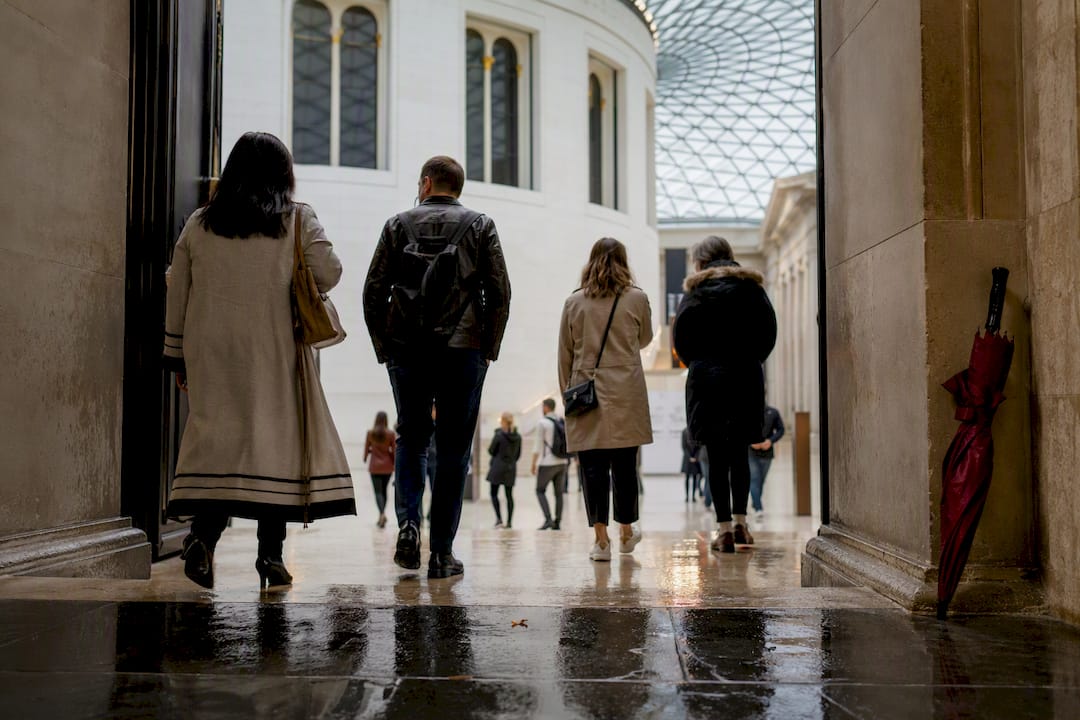
Pro Tip: Visit on a weekday morning between opening and 11am to see the Great Court at its quietest. The iconic glass-and-steel roof is spectacular without a crowd underneath it.
Staying in Bloomsbury puts you within a ten-minute walk of the main entrance, which makes early starts effortless.
2. Natural History Museum
If one museum defines why people visit London with children, it is this one. The Natural History Museum attracted over 7.1 million visitors in 2025, a 13% increase from 2024, making it the UK’s most popular tourist attraction. That level of demand tells you everything about its appeal, and it also tells you to plan carefully.
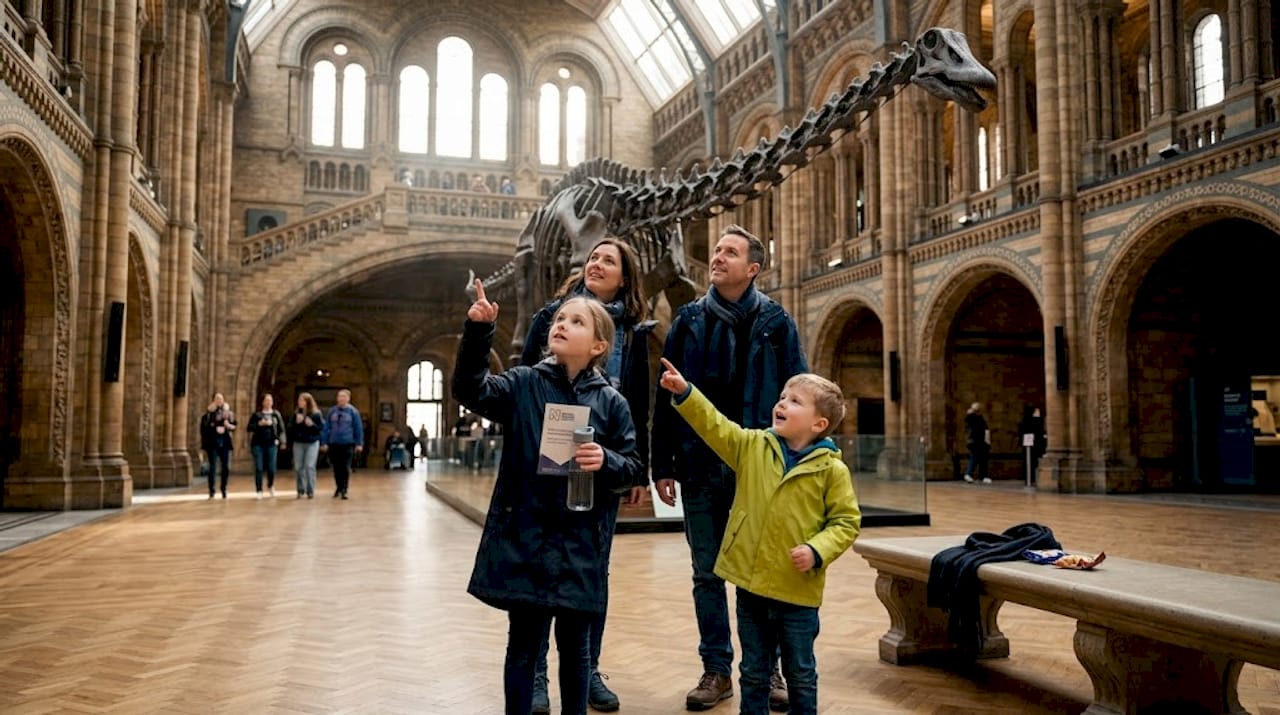
The building itself is extraordinary. Alfred Waterhouse’s Romanesque terracotta façade is worth the trip before you have even stepped inside. Once in, the drawcards are well known: the blue whale skeleton and dinosaur galleries dominate the main hall and the Hintze Hall respectively, but the Earth Galleries with their geological wonders and earthquake simulator deserve equal attention.
Highlights worth prioritising:
- Hintze Hall: The blue whale skeleton suspended from the ceiling is genuinely breathtaking
- Dinosaur Gallery: Animatronic T. rex still gets reactions from every age group
- Earth Galleries: The volcano and earthquake experience is a standout for older children and adults
- Wildlife Photographer of the Year: The annual exhibition is one of the best photography shows in the city
Entry to the permanent galleries is free, though timed entry booking is recommended during peak periods to avoid queuing outside for extended stretches.
Pro Tip: Combine your visit with the V&A and the Science Museum on the same day. All three are within a five-minute walk of each other in South Kensington, and grouping these museums geographically is the single best way to maximise your time without burning it on the Underground.
Check the full Natural History Museum listing on Londonvacationguide for current exhibition details and nearby hotel recommendations.
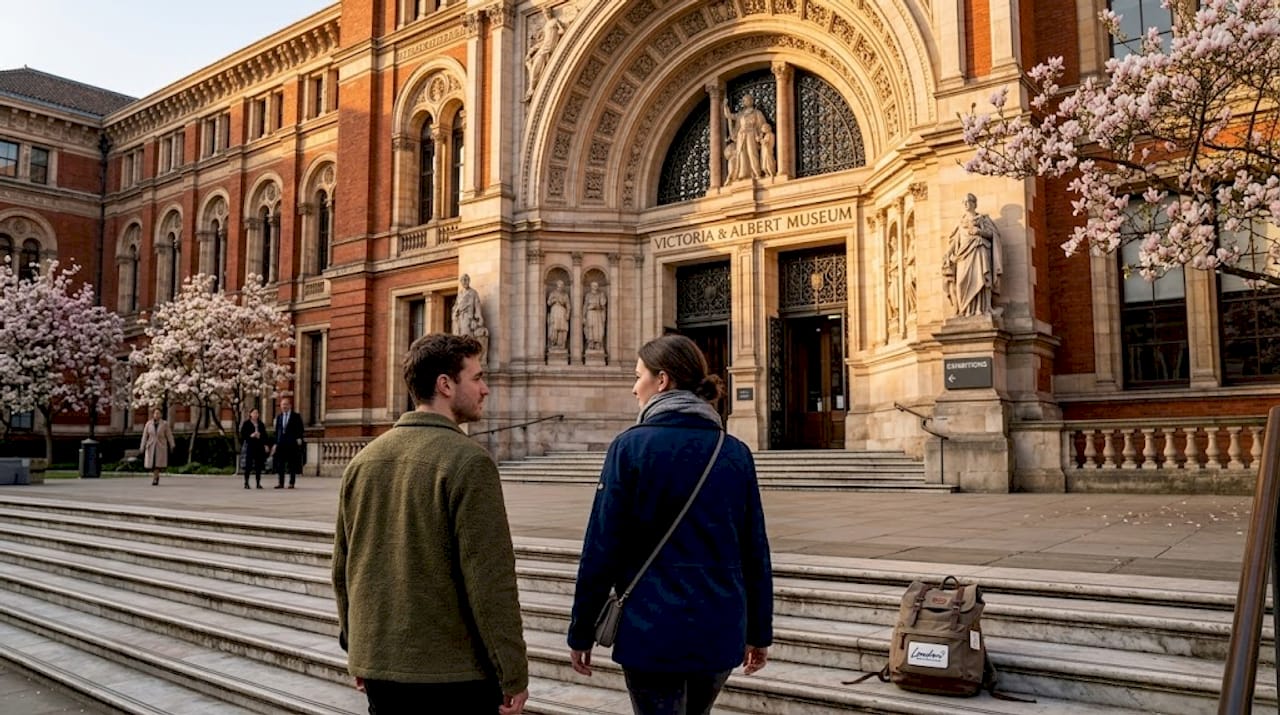
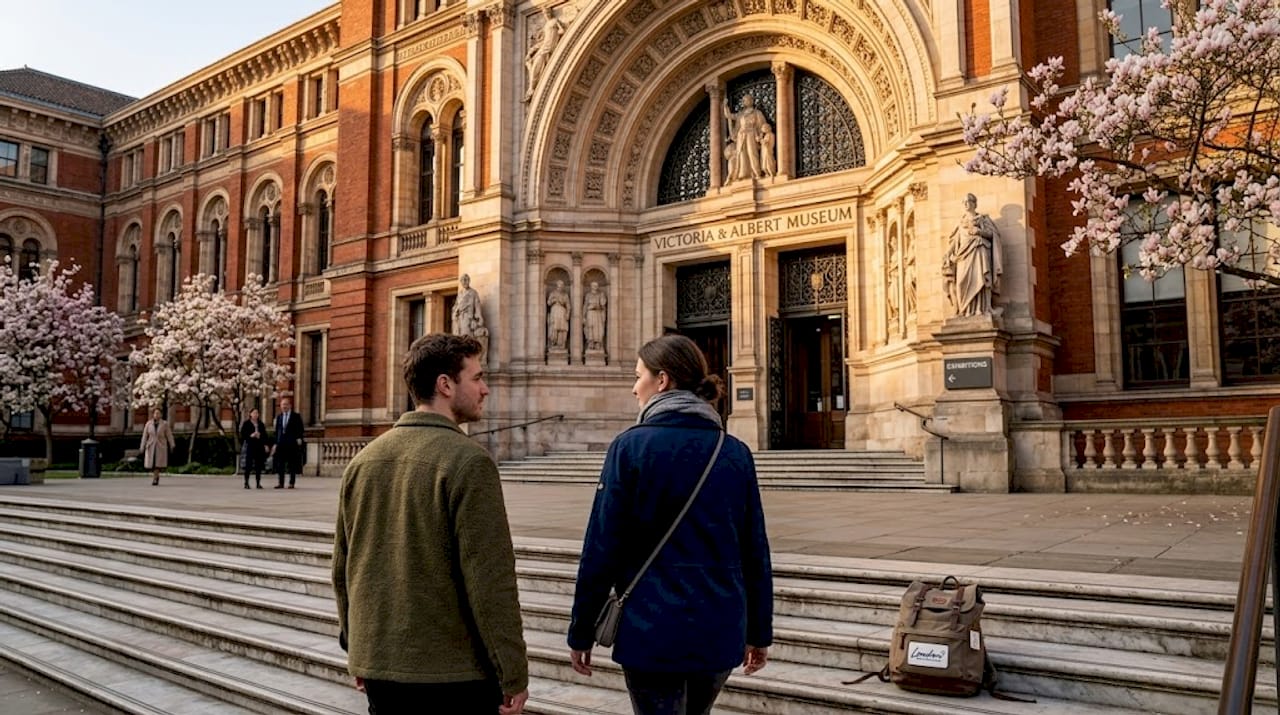
3. Victoria and Albert Museum (V&A)
The V&A is the world’s largest museum of art, design, and performance. That description alone undersells it. Where the Natural History Museum wows through scale and spectacle, the V&A rewards slower, more deliberate looking. Its collection spans 5,000 years of human creativity across fashion, ceramics, jewellery, architecture, photography, and theatre.
The permanent collection is free, and the special exhibitions are among the most anticipated in London each year. Past blockbusters have covered everyone from Alexander McQueen to David Bowie. These sell out, so booking well in advance is not optional.
A few rooms not to miss:
- The Cast Courts: Full-scale plaster casts of Trajan’s Column and Michelangelo’s David, extraordinarily strange and wonderful in equal measure
- The Raphael Cartoons: Seven monumental paintings on loan from the Royal Collection that most visitors walk past without knowing what they are
- The Fashion Gallery: A rotating display of garments from the 16th century to the present
Location: Cromwell Road, South Kensington. Two minutes from both the Natural History Museum and the Science Museum.
The V&A also runs a programme of late openings on Friday evenings, which transforms the atmosphere entirely. Visiting after 6pm on a Friday is a genuinely different experience from the daytime crowds.
4. The Science Museum London
The Science Museum features interactive galleries spanning space exploration, medicine, climate, and technological innovation, and it does so in a way that rarely feels like a school trip. Entry to the permanent galleries is free, and the mix of hands-on interactives and genuine historical artefacts makes it work for adults and children simultaneously rather than simply tolerating one group for the benefit of the other.
What makes the Science Museum worth your time:
- Space Gallery: Apollo 10 command module and space suits worn by actual astronauts
- Exploring Space: Scale models and real hardware from major missions
- Medicine galleries: The history of anaesthesia, surgery, and vaccination told with remarkable clarity
- IMAX cinema: Separate ticketed experiences that complement the galleries well
Special exhibitions at the Science Museum require tickets and tend to sell out during school holidays. The museum also has a solid café on the ground floor if you are spending a full morning here before moving to the V&A or Natural History Museum.
5. Tate Modern
The Tate Modern changed how London thinks about contemporary art when it opened in 2000, and it has not lost that energy. Housed in the former Bankside Power Station on the South Bank, the building is as much a part of the experience as the collection inside. The turbine hall alone, which hosts large-scale commissioned installations, has produced some of the most talked-about artistic moments of the past 25 years.
Entry to the permanent collection is free. The collection covers modern and contemporary art from 1900 to the present day, with particular strength in surrealism, abstract expressionism, and British post-war painting. Ticketed exhibitions on the upper floors bring in major international shows.
The Tate Modern also has one of the best views in London. The viewing level on the Blavatnik Building offers a free panorama across the Thames to St Paul’s Cathedral that most visitors do not realise exists.
6. The National Gallery
For the best museums in London dedicated to fine art before the modern era, the National Gallery is the obvious answer. Trafalgar Square is already on most itineraries, and the gallery sits directly on it, which means this is one of the easiest visits to fold into any central London day.
The collection of over 2,300 paintings covers Western European art from the 13th to the 19th century. Van Gogh’s Sunflowers, Constable’s The Hay Wain, Vermeer’s Young Woman Standing at a Virginal. These are not works you study before visiting. They are works that reward standing quietly in front of them for longer than feels comfortable.
Entrance is free. Temporary exhibitions are ticketed. Friday late openings until 9pm make this one of the better options for visitors whose daytime schedule is packed.
7. Imperial War Museum
The Imperial War Museum is consistently underestimated by visitors building their itineraries around the more obvious names. That is their loss. The IWM covers conflict from the First World War to the present, and it does so with a seriousness and emotional intelligence that distinguishes it from museums that simply display hardware.
The Holocaust Galleries, reopened after a major redevelopment, are among the most powerful museum experiences in Britain. The First World War galleries use personal testimony, objects, and film in a way that makes the statistics real. Entry to the permanent collection is free.
Location: Lambeth Road, Southwark. A short walk from Waterloo or Lambeth North tube stations.
8. London Museum Docklands
The London Museum Docklands is where you go when you want to understand the city itself rather than the world. Offering free entry and covering 400 years of docklands history in a riverside warehouse setting, it is one of the most atmospheric museums in London and one of the least crowded.
The museum traces how the Thames and its docks shaped London’s economy, its communities, and its identity. The Sailortown reconstruction, which recreates a 19th-century dockside neighbourhood, is genuinely immersive. The galleries on the transatlantic slave trade are handled with care and rigour.
This museum pairs well with a walk along the Docklands riverside and a visit to Canary Wharf, giving you a clear sense of how dramatically this part of the city has changed.
9. Comparison of top London museums
Use this table as a quick-reference guide when deciding which museums to prioritise based on your interests, travel companions, and available time.
| Museum | Location | Free permanent entry | Best for | Crowd level |
|---|---|---|---|---|
| British Museum | Bloomsbury | Yes | History, families | High |
| Natural History Museum | South Kensington | Yes | Families, nature | Very high |
| Victoria and Albert Museum | South Kensington | Yes | Art, design, fashion | Moderate to high |
| Science Museum | South Kensington | Yes | Families, technology | Moderate to high |
| Tate Modern | South Bank | Yes | Contemporary art | Moderate |
| National Gallery | Trafalgar Square | Yes | Classical painting | Moderate to high |
| Imperial War Museum | Southwark | Yes | History, conflict | Low to moderate |
| London Museum Docklands | Canary Wharf | Yes | Local history | Low |
10. Planning your museum visits in London
The single biggest mistake visitors make is treating free entry as a signal that no preparation is needed. Queue and crowd management are real issues even at free museums, particularly during school holidays, bank holidays, and the summer peak season from July to September.
Here is how to approach your museum days with less friction:
- Book timed entry in advance. Even for museums with no ticket charge, many now operate timed entry slots during busy periods. The Natural History Museum, in particular, fills its slots days ahead during summer.
- Prioritise the South Kensington cluster. The Natural History Museum, the V&A, and the Science Museum are all within a five-minute walk of each other. Splitting your time across all three in one day is genuinely achievable.
- Go early or go late. Most crowds arrive between 10.30am and 2pm. Arriving at opening or visiting on a Friday evening takes you out of the worst of it.
- Plan rest time. Museum fatigue is real. Two or three institutions in a day is a maximum for most adults, and considerably fewer if you are travelling with young children.
- Check what is on before you go. Special exhibitions often require separate tickets and sell out weeks in advance. Checking the schedule for each museum a fortnight before your visit saves frustration.
Pro Tip: If you are planning your first visit to London and want to anchor your days around museums, map your accommodation to the museum cluster most relevant to your interests. Staying near South Kensington means you can walk to three world-class institutions without touching the tube at all.
For a broader view of how these institutions shape the city’s appeal as a destination, the Londonvacationguide piece on museums and London tourism is worth reading before you finalise your itinerary.
My honest take on London’s museum scene
I have spent years paying attention to how visitors actually experience London’s museums, and what I keep noticing is that the people who have the best time are not necessarily the ones who went to the most famous institutions. They are the ones who gave themselves permission to slow down.
The British Museum and the Natural History Museum are genuinely extraordinary. I would not tell anyone to skip them. But I have seen visitors spend two hours power-walking through the Egyptian galleries and leave feeling vaguely hollow. The same people, given 45 minutes with one room they actually cared about, would have left energised.
My personal recommendation for anyone who has done the obvious circuit before: go to the Imperial War Museum for the Holocaust Galleries. Go to the London Museum Docklands on a quiet weekday and spend two hours without another tourist in sight. These are not consolation prizes for missing the big names. They are, in many ways, better.
I would also push back on the assumption that free always means easy. Pre-booking is vital even for no-cost entries, and the visitors who realise this too late spend meaningful chunks of their London time standing on pavements rather than inside galleries. Book two weeks ahead for anything during summer. Book a month ahead if you are travelling in late July or August.
Finally, do not neglect the neighbourhoods around the museums. The streets around Bloomsbury, the food options along Exhibition Road in South Kensington, and the riverside walking routes near the Tate Modern are all worth your time. A museum visit that ends with a good meal nearby and a walk through an interesting part of the city is a much better day than the same visit followed by an immediate descent into the Underground.
— Matt
Plan your London visit with Londonvacationguide
Knowing which museums you want to see is a strong start. Knowing where to stay, how to structure your days, and which neighbourhoods to eat and explore in is what turns a decent trip into a genuinely memorable one. Londonvacationguide’s first-time visitor guide covers museum recommendations alongside hotel suggestions, neighbourhood breakdowns, and day-by-day itinerary frameworks designed for visitors who want to see the best of the city without wasting time. If you are planning to base yourself near central cultural attractions, the Victoria neighbourhood guide covers an area with excellent transport links to both the South Kensington cluster and the South Bank. For something with a different character, the Bloomsbury guide puts you within walking distance of the British Museum and some of the best independent bookshops and cafés in the city.
FAQ
Are London’s top museums really free?
Yes. The permanent collections at the British Museum, Natural History Museum, V&A, Science Museum, Tate Modern, National Gallery, Imperial War Museum, and London Museum Docklands are all free to enter. Special exhibitions at each museum require a separate ticket purchase.
When is the best time to visit London museums?
Weekday mornings between opening time and 11am are the quietest. Friday evenings, when several museums open late, offer a genuinely calmer atmosphere. Avoid weekends during school holidays and the July to August peak season if crowd levels concern you.
Do I need to book in advance for free museums?
Yes. Many of London’s most popular museums now operate timed entry during busy periods, and slots fill up days or even weeks ahead. Booking early is particularly important for the Natural History Museum during summer.
Which London museums are best for families?
The Natural History Museum, the British Museum, and the Science Museum are the top choices for families. The British Museum offers family activity backpacks and explorer trails at weekends, while the Science Museum’s interactive galleries work well for children of most ages.
Can I visit multiple museums in one day?
Yes, particularly in South Kensington where the Natural History Museum, the V&A, and the Science Museum are all within walking distance of each other. Two to three museums in a single day is realistic for most adults, though one or two is more enjoyable if you want depth over breadth.
Recommended
- London’s top must-see places for unforgettable visits - The London Journal | London Vacation Guide
- London historical sites: The essential guide for visitors - The London Journal | London Vacation Guide
- How museums shape London tourism: Facts and traveller tips - The London Journal | London Vacation Guide
- Top London cultural experiences for tourists and enthusiasts - The London Journal | London Vacation Guide