Why visit London in spring? Insider tips for US travellers
Most American travellers assume summer is the golden window for a London trip. The long days, the warm(ish) temperatures, and the feeling that “everyone goes in summer” make July and August seem like obvious choices. But seasoned London visitors know a different truth: spring is when the city genuinely shines, offering blooming parks, quieter attractions, better hotel rates, and a pace of life that lets you actually breathe it all in. If you’re planning a spring holiday to London, this guide gives you the insider knowledge to make every day count.
Table of Contents
- Why spring stands out: Weather, crowds, and atmosphere
- Blooming London: Gardens and floral events not to miss
- Experience spring events and festivals
- Practical tips for a smooth spring visit
- Our perspective: Why spring in London surpasses the hype
- Plan your ultimate London spring getaway
- Frequently asked questions
Key Takeaways
| Point | Details |
|---|---|
| Spring offers fewer crowds | You’ll experience shorter waits and more relaxed sightseeing compared to summer. |
| Gardens are at their peak | London’s parks and gardens display vibrant blooms, with cherry blossoms and flower shows dominating the season. |
| Weather is mild but changeable | Expect milder temperatures with occasional rain, perfect for exploring with layered clothing and a stylish umbrella. |
| Festivals and events abound | Spring brings unique festivals and cultural events for a more local, immersive London experience. |
| Insider tips make the trip | Smart packing, early entries, and off-peak visits help you maximise your spring holiday in the city. |
Why spring stands out: Weather, crowds, and atmosphere
With expectations set, let’s explore why spring is London’s not-so-secret season for smart US travellers.
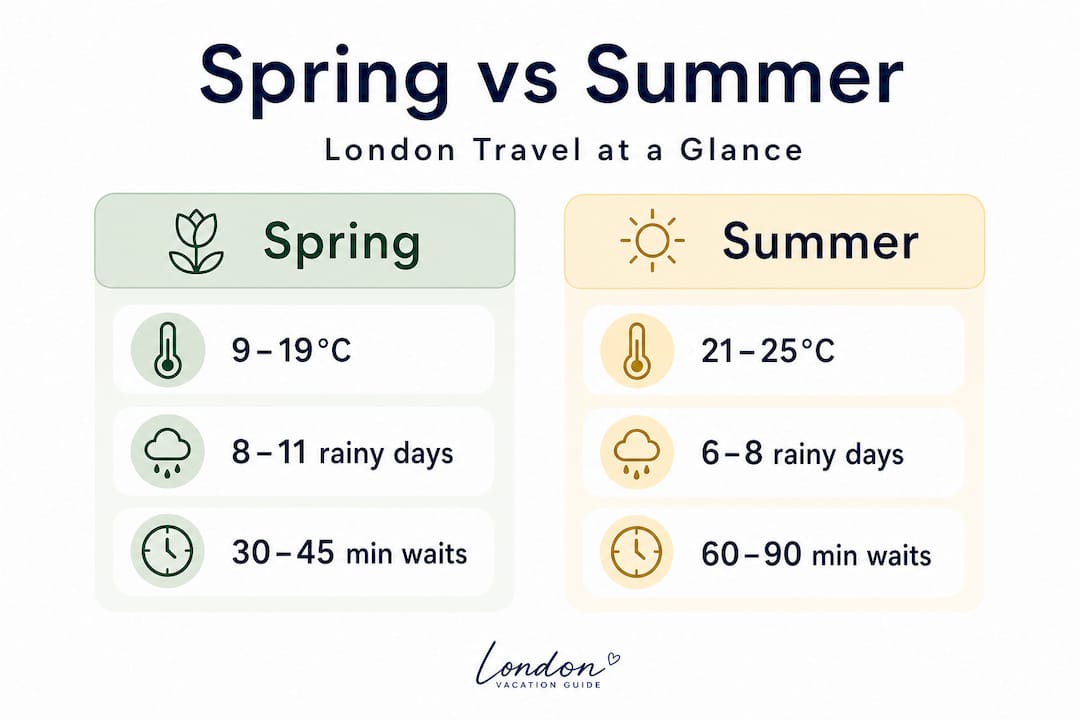
The numbers tell a compelling story. Spring temperatures in London sit at a very manageable range, with average highs climbing from 9 to 13°C in March, 13 to 16°C in April, and 16 to 19°C in May. For most Americans used to intense heat or humidity, this is genuinely pleasant sightseeing weather. You won’t overheat on a long walk across Tower Bridge or while queuing at Buckingham Palace.
Rainfall averages 40 to 60mm per month with roughly 8 to 11 rainy days, meaning showers are a reality but rarely a day-ruiner. The key insight most guides skip? Spring rain in London tends to be light and brief. It rolls in, freshens the air, makes the parks look impossibly green, and then moves on. Locals barely slow down.
Then there’s the crowd question. According to visitor data, shoulder season waits at popular attractions run 30 to 45 minutes compared with 60 to 90 minutes during the July to August peak. Hotel rates are typically 15 to 30% lower in spring. That means you’re seeing the same iconic sites, paying less to sleep, and spending far less time in queues. The spring vs summer in London comparison isn’t even close for savvy travellers who value their time and money.
Here’s a quick look at what spring and summer actually feel like on the ground:
| Factor | Spring (March to May) | Summer (July to August) |
|---|---|---|
| Average high temperature | 9 to 19°C | 21 to 24°C |
| Queue times at top sites | 30 to 45 minutes | 60 to 90 minutes |
| Hotel price premium | Standard or 15% below peak | 15 to 30% above average |
| Garden displays | Peak cherry blossom and tulips | Roses and dahlias |
| General atmosphere | Fresh, lively, local feel | Packed, tourist-heavy |
| Daylight hours | 12 to 16 hours | 16 to 18 hours |
The spring atmosphere across the city is also quite distinct. Londoners themselves seem to come alive. Restaurant terraces fill with locals celebrating the end of grey winter months. The parks draw picnicking families and office workers on lunch breaks. There’s an energy that feels authentic rather than staged for tourist season.
Essential spring packing checklist for US visitors:
- A lightweight trench coat (this is London’s signature practical fashion item for good reason)
- A compact, windproof umbrella that fits in a day bag
- Layerable clothing: a base layer, a mid-layer fleece or jumper, and a waterproof outer shell
- Comfortable waterproof walking shoes or trainers
- A small crossbody bag so you can move freely on the Tube
- A reusable water bottle (tap water in London is perfectly safe to drink)
Pro Tip: Pack a pashmina or light scarf. Temperatures can drop sharply after sunset even in late May, and a scarf works as both warmth and a versatile fashion piece for evenings out.
When planning your London spring trip, factor in that the city’s rhythm is different from summer. Locals are out, galleries are quieter, and you’ll find far more authentic interactions at neighbourhood markets and cafés. Spring genuinely feels like London at its most liveable.
Blooming London: Gardens and floral events not to miss
Having established why spring is the perfect backdrop, let’s uncover the most breath-taking botanical experiences spring brings to London.
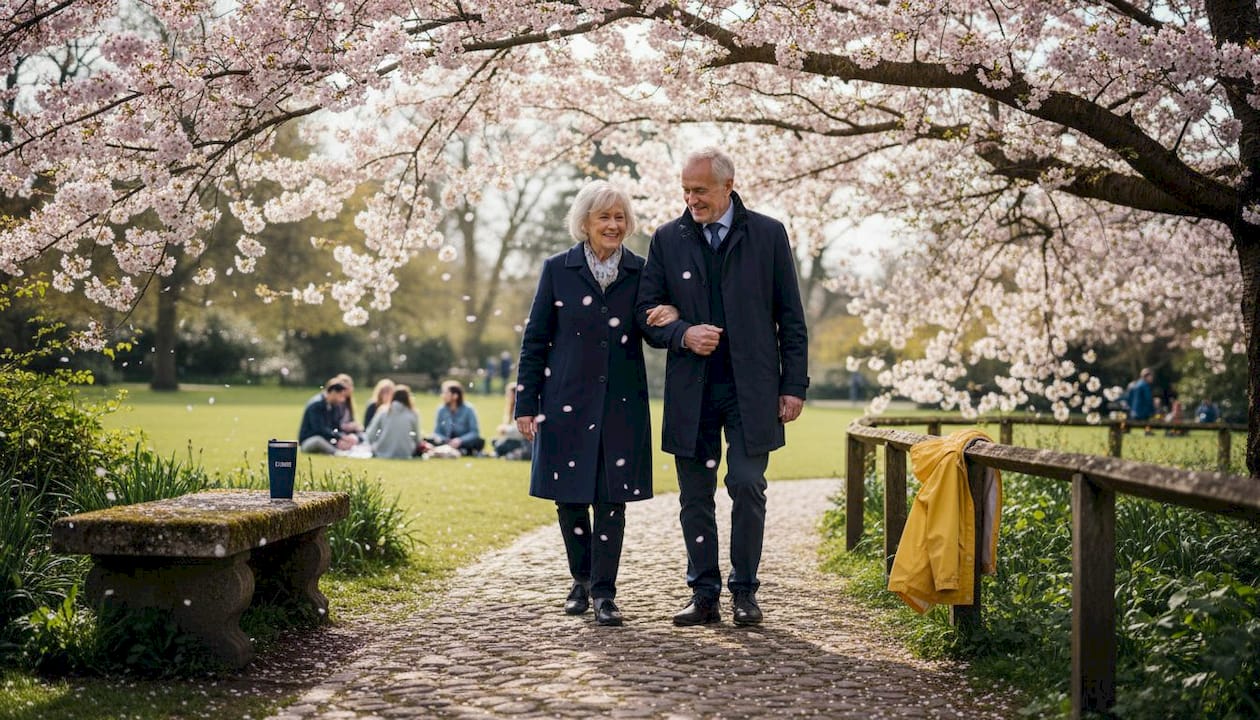
London’s park system is extraordinary in every season, but spring transforms it into something almost theatrical. Cherry blossoms, magnolias, bluebells, daffodils, and tulips take turns creating spectacular colour across the city’s green spaces. For American visitors who associate England with grey skies and formal hedgerows, the reality of a spring day in London’s gardens is genuinely surprising.
Kew Gardens: The crown jewel of spring blooms
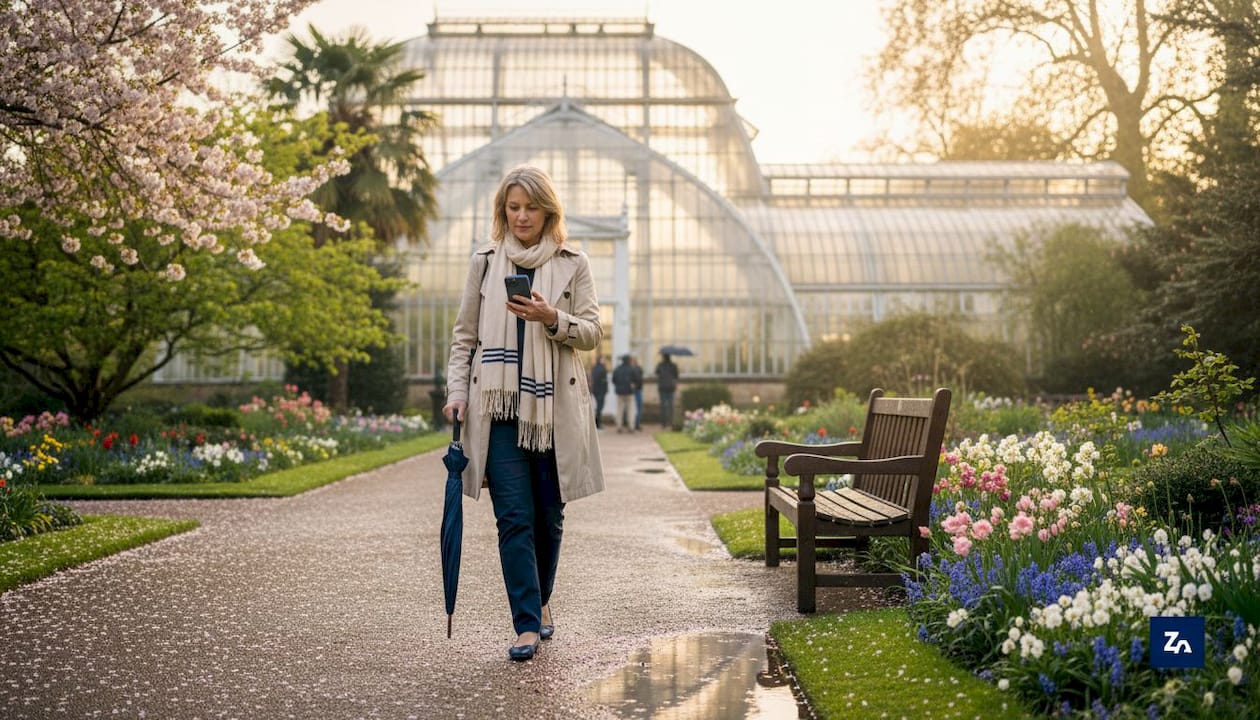
The Royal Botanic Gardens at Kew is the undisputed highlight of any spring visit. With over 500 cherry varieties alone, the blossom displays across late March to mid-May are extraordinary. Insider guidance from Kew itself suggests a clear blossom viewing strategy: enter through Victoria Gate early in the morning before the main crowds arrive, then follow a route that takes in the Palm House, the Temperate House, and the famous Cherry Walk. This loop covers the best spring displays in around three to four hours without backtracking.
Download the Kew Gardens app before you arrive. It includes live bloom maps that show exactly what’s currently flowering across the vast 330-acre site. Picnics are allowed on the lawns (a fact many visitors don’t know), so grabbing supplies from the shops on Kew Road before entering saves money and creates a genuinely lovely afternoon.
“Kew in late April feels like walking through a living painting. The Cherry Walk when it’s in full bloom is one of those rare moments that makes you stop mid-stride and just stand there.”
The RHS Chelsea Flower Show
Running from 19 to 23 May 2026, the RHS Chelsea Flower Show is the world’s most prestigious horticultural event. Held in the grounds of the Royal Hospital Chelsea, it draws top garden designers, rare plant specialists, and horticulture enthusiasts from around the globe. For American visitors, it’s a genuinely unmissable experience if your dates align.
The show features elaborately designed show gardens that are essentially outdoor art installations, alongside vast indoor floral marquees packed with extraordinary plant displays. Expert growers are on hand to offer advice, and the atmosphere mixes glamour with genuine horticultural passion.
Book tickets the moment they go on sale. Chelsea sells out weeks in advance and day tickets are extremely limited. Arriving at 8am when the gates open gives you at least two hours in the show gardens before the afternoon crowds arrive.
Comparing London’s top spring gardens:
| Garden | Best bloom period | Crowd level | Entry cost | Top feature |
|---|---|---|---|---|
| Kew Gardens | Late March to mid-May | Moderate | Paid (book online) | Cherry Walk, Temperate House |
| Hyde Park | April to May | Low to moderate | Free | Daffodil displays, Serpentine |
| Regent’s Park | Late April to May | Moderate | Free | Rose Garden, formal beds |
| Richmond Park | April to May | Low | Free | Ancient oaks, bluebells |
| Holland Park | April to May | Low | Free | Kyoto Garden water features |
For visitors who want free garden experiences that genuinely rival paid attractions, Hyde Park’s daffodil season in April is breathtaking. The area around the Serpentine turns bright yellow and the walking paths fill with local families. Holland Park’s Kyoto Garden is one of London’s best-kept secrets: a formal Japanese garden with koi ponds, peacocks, and waterfall features, completely free to enter.
A step-by-step plan for your perfect blossom day:
- Arrive at Kew Gardens at opening time (10am), entering through Victoria Gate
- Head directly to the Cherry Walk before the crowds build from around midday
- Work through the Palm House and Temperate House route over two hours
- Picnic on the lawns near the Pagoda around 1pm
- Explore the Waterlily House and the Treetop Walkway in the early afternoon
- Exit via the Victoria Gate gift shop for botanical souvenirs
- Head to Richmond Park for a late-afternoon bluebell walk in May (a 10-minute taxi from Kew)
For those who want to discover secret spring floral spots beyond the obvious choices, Postman’s Park near St Paul’s Cathedral has a beautiful wisteria display in May, and St Dunstan in the East, a ruined church garden in the City, erupts with climbing plants and offers one of London’s most photogenic and tranquil green spaces.
Pro Tip: For experiencing London’s gardens in spring, mid-week visits are dramatically quieter than weekends. If you can plan your Kew visit for a Tuesday or Wednesday morning, you’ll practically have the Cherry Walk to yourself.
Experience spring events and festivals
With gardens explored, it’s time to turn to the spring cultural and festival scene that makes London so uniquely vibrant.
London in spring is a city in full cultural swing. Beyond the gardens, there’s a rich calendar of events that give the season its energy. Understanding what’s on and how to navigate the major events is key to getting the most out of your trip.
Key spring events in London for 2026:
- RHS Chelsea Flower Show (19 to 23 May 2026): The world’s top horticultural event. Show gardens, floral artistry, and plant shopping across five days in Chelsea.
- Udderbelly Festival (May onwards): A pop-up arts and comedy festival on the South Bank, held in an upside-down purple cow-shaped tent. Unmistakably London.
- London Marathon (April 2026): One of the world’s most celebrated road races. Even if you’re not running, watching 40,000 runners stream through iconic streets is genuinely thrilling.
- Spring open house events: Many of London’s private gardens, historic houses, and members’ clubs open their gates in spring for special public days. Keep an eye on the National Gardens Scheme calendar.
- Easter weekend events: The city comes alive over the Easter long weekend with free events in parks, pop-up markets, and special museum programming.
Understanding how spring festivals influence London’s broader culture helps frame why this season feels so alive. These events aren’t just tourist attractions: they’re the city celebrating itself, which creates a very different energy from the transactional bustle of peak summer.
The RHS Chelsea Flower Show, running 19 to 23 May 2026, deserves special attention when planning your itinerary. The show has significant knock-on effects for the surrounding Chelsea neighbourhood: local restaurants offer special menus, boutique shops display flower-themed windows, and the streets around the Royal Hospital fill with a festive atmosphere even if you’re not inside the grounds.
Pro Tip: If Chelsea tickets are sold out, simply walking the King’s Road and Pimlico Road on show days gives you a wonderful flavour of the event. Many exhibitors and designers preview work in local galleries and florists throughout the week.
How to fit events into your spring London schedule:
When fitting events into your itinerary, the key principle is to anchor your diary around the one or two fixed events (like Chelsea or the Marathon) and then build your daily sightseeing around those fixed points. Book event tickets and any theatre or restaurant reservations before you leave the US. Spring in London is busy enough that leaving these to chance is a genuine risk.
Hotels near Chelsea fill up fast during the Flower Show week. If your budget is flexible, booking early secures both availability and better rates. If you prefer a quieter base, Southwark or Bermondsey offer excellent transport links and a completely different neighbourhood experience without the show-week premium.
Practical tips for a smooth spring visit
To make the most of London’s springtime events and blooms, get your on-the-ground logistics just right.
Preparation makes an enormous difference to how much you enjoy London in spring. The city rewards visitors who do a little advance work and penalises those who wing it, particularly around popular sites and events.
Spring visit preparation checklist:
- Book accommodation early. Spring rates are lower than summer, but popular areas fill up. Aim to book at least eight to twelve weeks ahead.
- Pre-book popular attractions. The Tower of London, Westminster Abbey, Buckingham Palace tours, and the Sky Garden all offer timed entry tickets online. Booking ahead typically saves 30 to 60 minutes of queuing.
- Get an Oyster card or set up contactless payment. The London Underground and buses don’t require cash, and contactless payment from a US card works on all TfL services with a daily cap on fares.
- Download essential apps. The TfL Go app for real-time transport, the Kew Gardens app for bloom maps, and a restaurant booking app for last-minute dinner reservations.
- Check the weather forecast daily. Spring weather shifts quickly. The Met Office app gives hyperlocal forecasts that are far more accurate than US weather apps for UK conditions.
- Pack your layered clothing system. As noted above, spring rainfall of 40 to 60mm per month means showers are a regular feature. A packable waterproof layer takes up almost no bag space and saves the day more often than you’d expect.
- Plan your first full day carefully. Jet lag from a transatlantic flight is real. Build in a gentler first day with a local neighbourhood walk, a market visit, and an early dinner rather than trying to hit five major attractions on arrival.
- Carry a portable charger. You’ll use your phone constantly for navigation, photos, and transport. London’s underground stations block phone signals, which drains batteries quickly.
Pro Tip: The best time to visit the most popular central London sites (Tower of London, St Paul’s Cathedral, the British Museum) is between 9am and 11am on weekday mornings. Most tour groups arrive later in the morning, so early birds get the experience with far fewer people and better photographs.
For deeper London spring planning, consider building your trip around neighbourhoods rather than a list of landmarks. Spending a morning in Notting Hill, an afternoon in Brixton, and an evening in Shoreditch gives you a far richer sense of London than rushing between tourist checkpoints.
Spring is also an ideal season to use London’s parks as transit routes. Walking from Buckingham Palace through Green Park and St James’s Park to the South Bank, for example, takes you through extraordinary floral displays and feels genuinely world-class. Use the pre-built London itineraries available through London Vacation Guide to find routes that weave parks and attractions together naturally.
Our perspective: Why spring in London surpasses the hype
Practical tips aside, what sets a spring trip to London apart, especially for American travellers? Let’s offer our honest take.
Here’s something most travel guides won’t say plainly: summer in London is often a disappointment for first-time visitors. The queues are genuinely brutal. The tube in July is one of the most uncomfortable transit experiences in Europe. Popular restaurants are booked solid. And the famous British reserve evaporates under tourist pressure, replaced by a city that feels more like a theme park than a living place.
Spring is different in ways that are harder to quantify but absolutely real. Locals are in a good mood. The city hasn’t yet been worn down by the summer tourist surge. You can walk into a pub in Clerkenwell on a Tuesday in April and have a genuinely spontaneous conversation with someone who works nearby. That kind of moment simply doesn’t happen as naturally in July.
There’s also something worth saying about what most guides miss about spring: the maritime showers that most visitors dread are actually part of what makes London so distinctive in spring. The quality of light after a brief shower, the way the wet stone of Westminster’s pavements catches the afternoon sun, the freshness of Regent’s Park after rain: these are experiences that define London at its best. Photography becomes extraordinary. The city looks like itself rather than a postcard version of itself.
We’d also challenge the assumption that spring blooms are a secondary attraction. For many repeat visitors, including people who have been to London dozens of times, a spring blossom trip to Kew or a quiet afternoon in Richmond Park in late April is what they look forward to most. These are not consolation prizes for missing summer. They are genuinely among the finest experiences the city offers.
The overcrowding problem in summer London also affects something that doesn’t appear in any data: your ability to think. Great cities reward slow, contemplative walking. You can’t do that when you’re navigating around tour groups at every turn. Spring gives you the mental and physical space to actually absorb what you’re seeing. That’s not a small thing.
Plan your ultimate London spring getaway
Ready to turn this advice into a real trip? London Vacation Guide has everything you need to move from inspiration to a fully planned spring holiday. Whether this is your first visit or your fifth, our London first-timer’s guide walks you through the essential decisions: where to stay, how to structure your days, and which attractions genuinely deserve your limited time. Browse our all London itineraries to find spring-specific day plans that weave together gardens, events, and iconic landmarks without the exhausting scatter-gun approach. And when hunger strikes after a long day at Kew or Chelsea, Borough Market Kitchen offers some of London’s finest seasonal eating, with spring produce that’s genuinely worth travelling for.
Frequently asked questions
Is spring really less crowded in London than summer?
Yes, spring is notably quieter at major attractions, with shoulder season waits of 30 to 45 minutes compared to 60 to 90 minutes in July and August, particularly before early May.
What should I pack for a London spring holiday?
Bring layered clothing, a trench coat, and a compact umbrella to handle the cool mornings and spring rainfall of 40 to 60mm per month, with around 8 to 11 rainy days across March, April, and May.
When do cherry blossoms peak in London?
Late March to mid-May is the prime window for cherry blossom displays, with Kew Gardens offering some of the finest viewing across its 500-plus cherry varieties.
How early should I book tickets for the Chelsea Flower Show?
Book as soon as tickets go on sale; the RHS Chelsea Flower Show (19 to 23 May 2026) regularly sells out weeks ahead, and early booking also lets you plan the rest of your trip around it.
Does it rain a lot in London during spring?
Spring brings 8 to 11 rainy days per month on average, but showers tend to be brief and light, and they’re genuinely responsible for keeping the parks and gardens looking so spectacular throughout the season.
Recommended
- London in Spring: Why April and May Beat Summer Every Time - The London Journal | London Vacation Guide
- Plan your perfect London vacation: tips for US visitors - The London Journal | London Vacation Guide
- How to explore London on a budget: insider tips - The London Journal | London Vacation Guide
- Best Free Things to Do in London (2025 Guide) - The London Journal | London Vacation Guide