London cable car guide: routes, fares and the best time to ride
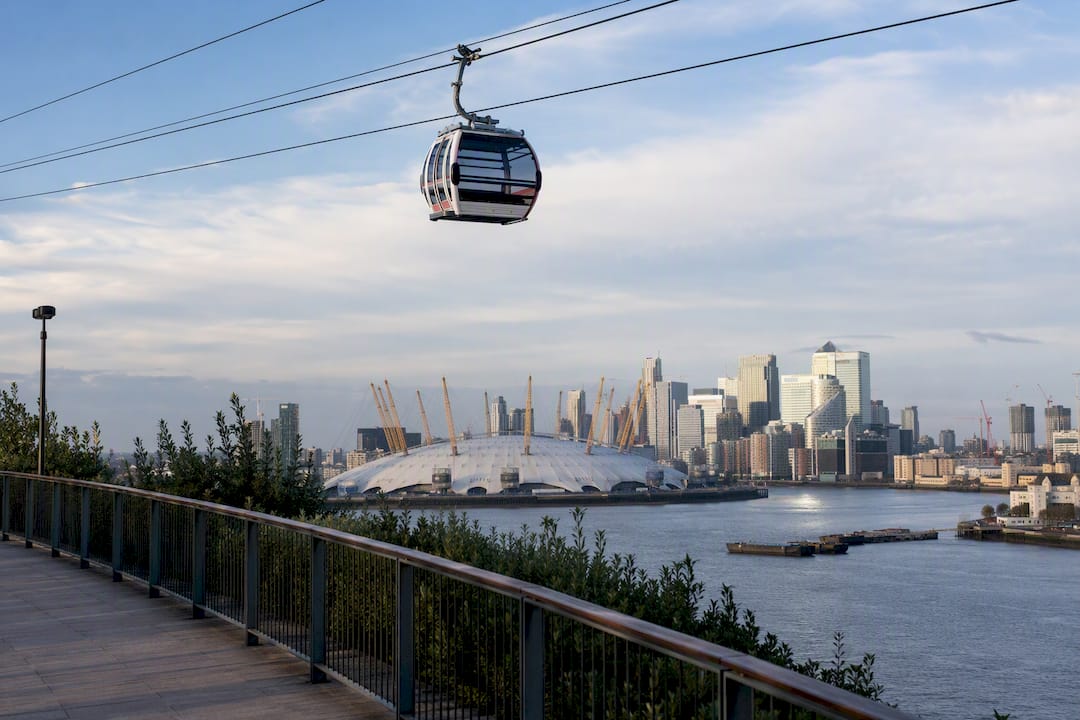
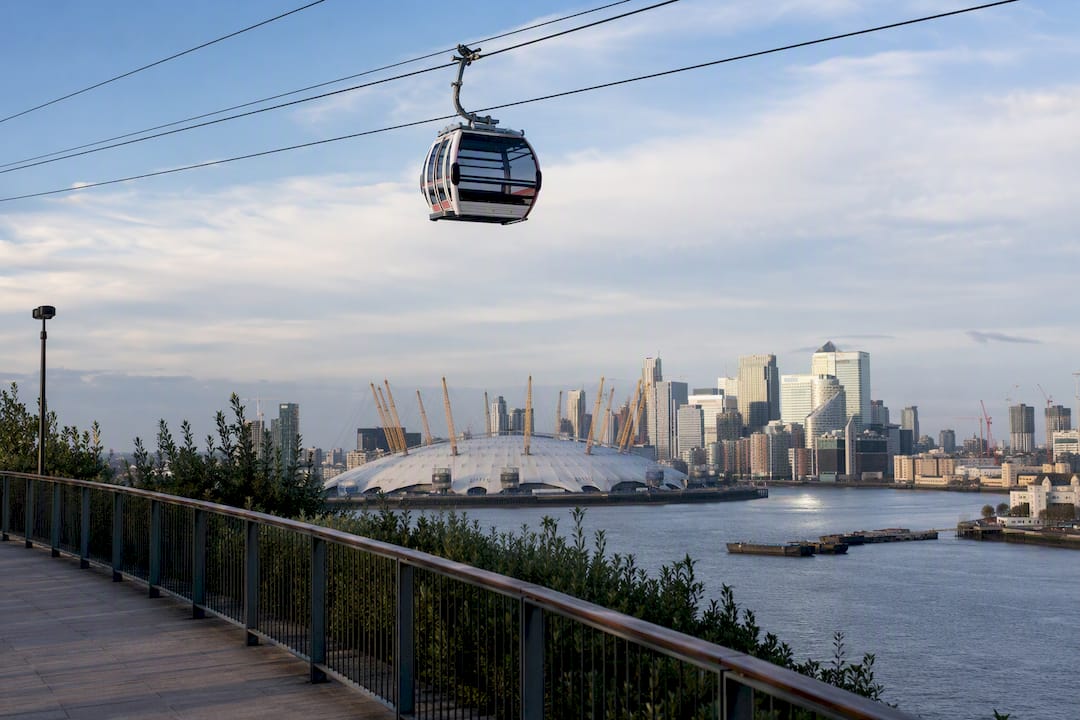
The London Cable Car links Greenwich Peninsula with the Royal Docks in a single ten-minute glide across the Thames, and it’s the fastest way to see east London’s regenerated skyline from the air. This guide covers the practical version: what it costs, when to go, and how to avoid queuing behind a coach party on a Saturday afternoon.
- Route: Greenwich Peninsula Terminal to Royal Docks Terminal, 1.1 kilometres each way
- Journey time: around 10 minutes one-way
- Best value move: book online at least seven days ahead for up to 30% off, or tap in with contactless or Oyster at the gate
- Why bother: views of the O2, Canary Wharf and the Thames Barrier you won’t get from any Tube platform
Key Takeaways
The London Cable Car is a 10-minute, 1.1 kilometre crossing between Greenwich Peninsula and the Royal Docks, cheapest when booked online seven days ahead.
| Point | Details |
|---|---|
| Fares | Adult return costs £13.50, child return £6.75, and under-5s travel free with a paying adult. |
| Book ahead for savings | Booking online at least seven days in advance on selected dates saves up to 30%. |
| Journey basics | The crossing covers 1.1 kilometres and takes roughly 10 minutes one-way. |
| Accessibility | Both terminals offer step-free access, and the cabins accommodate wheelchairs, mobility scooters and bicycles. |
| Best time to visit | Weekday mornings offer the quietest cabins, while sunset gives the best light for photos. |
| Plan the wider trip | London Vacation Guide’s first-time visitor itinerary helps combine the crossing with a fuller east and central London plan. |
Table of Contents
- What does the London cable car cost?
- Where does the cable car start and finish?
- What is it actually like to ride, and what will you see?
- Is the cable car accessible for wheelchairs, prams and bikes?
- How should you book, and is it worth the money?
- What else is worth doing nearby?
- How to plan your visit, step by step
- Sources
- FAQ
What does the London cable car cost?
Fares are set by Transport for London and haven’t changed dramatically in recent years, but the discount structure rewards anyone willing to plan ahead. As of August 2026, a standard adult single costs £7.00, with a return at £13.50. Children aged between five and fifteen pay roughly three and a half pounds one-way and about six and three quarters pounds for a return, and under-5s ride free with a paying adult.
| Ticket type | Price |
|---|---|
| Adult single | £7.00 |
| Adult return | £13.50 |
| Child (5–15) single | £3.50 |
| Child (5–15) return | £6.75 |
| Under 5 | Free with paying adult |
A few things catch first-time riders out:
- Ten-journey multi-tickets exist for regular commuters and locals, but they are only sold at the terminal ticket desks and are non-transferable.
- Booking online in advance can save you up to 30% on selected dates, which matters if you’re travelling with a family and every pound counts.
- Contactless and Oyster both work at the gates, but the cable car sits outside the standard TfL daily price cap that governs buses and the Underground, so it’s billed separately no matter how much you’ve already spent that day.
If you’re new to how contactless payment works across London’s transport network generally, it’s worth reading up on contactless payment for London visitors before your trip, since the cable car uses the same card readers but a different fare logic.
Where does the cable car start and finish?
The two terminals sit on opposite banks of the Thames, and neither one is walkable from central London, so factor in a proper journey to get there. Greenwich Peninsula Terminal is a short walk from North Greenwich station on the Jubilee line, roughly seven minutes on foot past the O2 arena’s car park. Royal Docks Terminal sits close to Royal Victoria DLR station, about five minutes away, right in the shadow of ExCeL London.
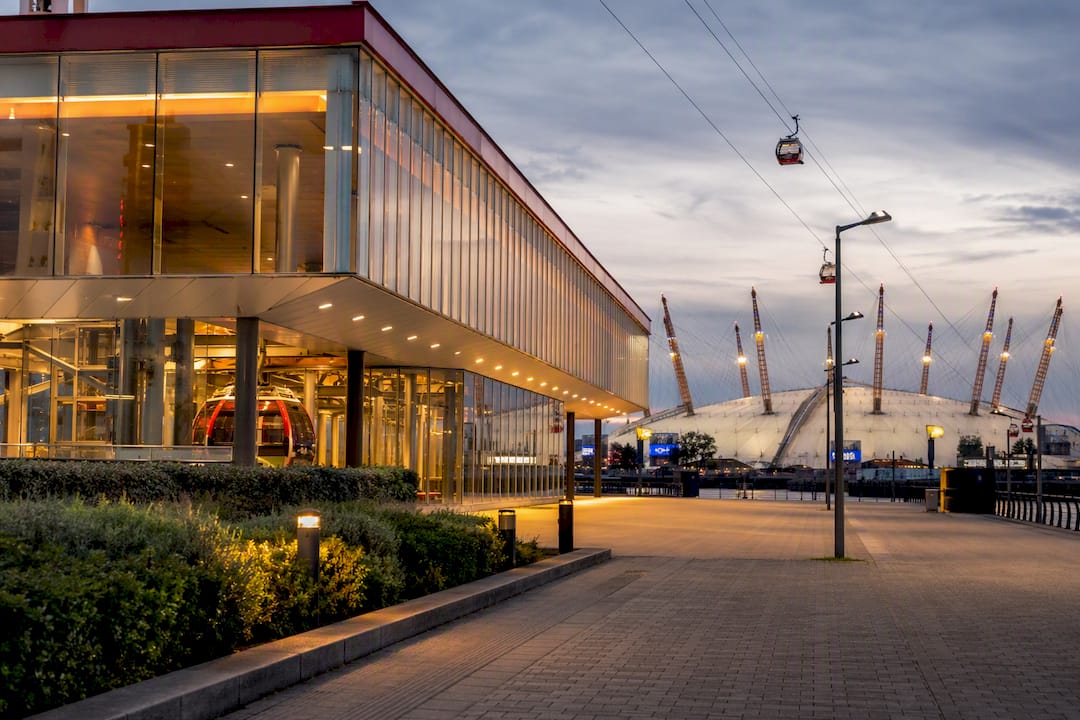
Both terminals have step-free access and clear signage, so connections from the Tube or DLR are straightforward even with luggage or a pushchair.
On journey length and timing:
- The full crossing covers 1.1 kilometres and takes about 10 minutes one-way in normal operation.
- Speeds vary slightly with passenger volume: the system runs a touch slower during busy periods to load and unload cabins safely, so peak-time crossings can stretch closer to 12 minutes.
- Opening hours vary by day of the week and by season, generally running earlier and later in summer than winter, with reduced hours in the depths of January. Always check the current opening hours and frequency on TfL’s site before you travel, since special events at the O2 or ExCeL occasionally trigger short closures for private hire.
What is it actually like to ride, and what will you see?
Each cabin holds up to ten people, though outside weekend afternoons you’ll often find yourself sharing with two or three others at most. The cabins are fully glazed, giving a wraparound view rather than a narrow window slot, and there’s no commentary or themed presentation piped in. This is a functional transit link with a spectacular view attached, not a curated tourist attraction with a script.
That distinction shapes what you’ll actually see. Looking north from the Royal Docks side, you get a clear run over London City Airport and the water. Heading towards Greenwich, the O2 arena dominates the foreground, with Canary Wharf’s tower cluster rising to the west and the Thames Barrier visible downstream. Central London landmarks like the London Eye or Big Ben stay out of sight. The distance and the curve of the river put them well beyond the horizon, so don’t expect a Westminster postcard shot.
Pro Tip: Press your phone lens directly against the cabin glass when photographing. It kills most of the reflection and glare that ruins otherwise good shots taken through aerial cabin windows.
Timing changes the experience more than most visitors expect:
- Weekday mornings are consistently the quietest window, often with near-empty cabins even in summer.
- Sunset and the half hour either side of it (golden hour) gives the most flattering light on the water and the O2’s white canopy, and it’s a genuinely underrated photography slot for a city view that doesn’t require queuing for hours like the Shard.
- Saturday late-evening runs are an overlooked quiet spot too, since most visitors cluster around Saturday afternoon.
- Summer weekends bring the longest queues by a wide margin, largely families combining the ride with an O2 visit.
Is the cable car accessible for wheelchairs, prams and bikes?
Both terminals offer step-free access, and the system accepts most manual and powered wheelchairs as well as mobility scooters within standard size and weight limits. Staff can slow the cabin loading speed to give wheelchair users and anyone travelling with a pram extra time to board safely, which is worth mentioning to the gate staff on arrival rather than assuming they’ll spot it.
Bicycles are allowed on board, making the cable car a genuinely useful link for cyclists crossing between the Greenwich and Royal Docks riverside paths rather than detouring miles round via a bridge or tunnel. Check current terminal signage for any time restrictions on bike carriage, since these can shift with seasonal demand.
A few safety and weather notes worth knowing before you set off:
- The service closes during lightning and suspends operation in very strong winds, both standard safety triggers for aerial cable systems worldwide.
- Cabins do sway gently in normal breezy conditions. It’s a similar sensation to a slow-moving lift, not a rollercoaster, and it settles quickly.
- Large suitcases are permitted but there’s limited floor space in each cabin, so travelling light makes the crossing more comfortable if you’re heading straight from an airport or station.
How should you book, and is it worth the money?
Here’s the simplest way to think about it: book online when you can plan ahead, and use contactless as your backup for spontaneous trips.
- Book through the official TfL website at least seven days before travel on selected dates to unlock savings of up to 30% off standard fares.
- If you haven’t booked ahead, tap a contactless card or Oyster card directly at the terminal gates. No advance purchase needed.
- Buy multi-journey tickets in person at either terminal desk if you’ll be riding more than a couple of times, since these aren’t available online.
- Remember the fare won’t merge with your day’s TfL cap, so budget it as a separate cost rather than assuming your existing bus and Tube spend covers it.
Set against London’s other big-ticket viewpoints, the value case is straightforward. A single adult crossing at £7.00 is a fraction of what the London Eye or the Shard’s viewing gallery charges for a comparable few minutes of elevated city view, even though the vistas differ (east London’s docklands and regeneration story, rather than Westminster’s postcard skyline). For a transport link that doubles as a sightseeing trip, that’s a genuinely efficient use of an afternoon and a fiver or two.
What else is worth doing nearby?
Pairing the cable car with a wider Greenwich or Royal Docks visit turns a ten-minute ride into a half-day out. On the Greenwich Peninsula side, the O2 arena hosts everything from live music to climbing experiences up its外roof, and Greenwich Market and the Cutty Sark are a short DLR hop further along, both covered in more depth in this guide to why Greenwich is worth visiting.
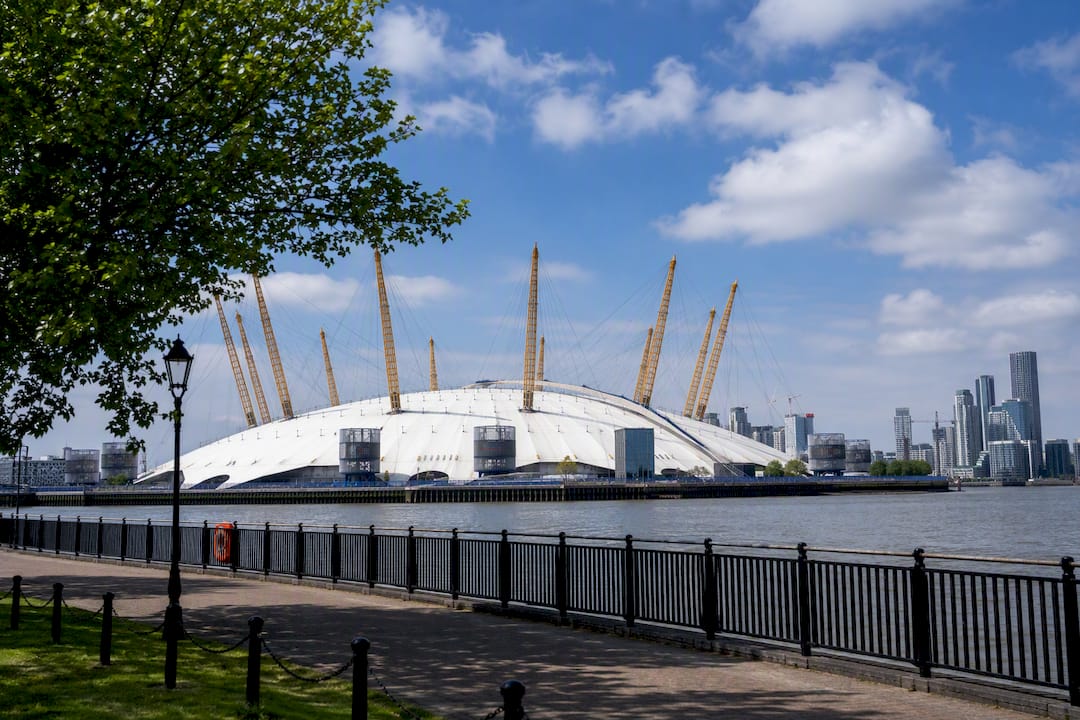
On the Royal Docks side, ExCeL London runs a packed calendar of exhibitions and events, and the surrounding waterside paths make a pleasant flat walk if you fancy stretching your legs after the crossing.
For a full day combining both banks:
- Morning: Ride the cable car from Greenwich Peninsula, quiet cabins, good light.
- Midday: Explore Royal Docks and ExCeL, lunch by the water.
- Afternoon: Return via cable car, then walk to Greenwich Market and the Cutty Sark.
- Evening: Head into central London for dinner with a view, several of which feature in this roundup of London’s best rooftop bars.
If you’re deciding where to base yourself for a trip that includes this side of London, browsing London Vacation Guide’s neighbourhood guides will help you weigh up staying central versus closer to the river.
A quick history worth knowing
The line opened in 2012 as the Emirates Air Line, built by the Austrian engineering firm Doppelmayr using a monocable detachable gondola (MDG) system, the same technology used in many ski resorts. It has since carried different sponsors, including IFS, and was renamed London Cable Car in 2026 following the latest sponsorship and operator changes.
A few technical facts worth knowing:
- Route length: 1.1 kilometres over the Thames
- Highest point: roughly 90 metres above the river at its peak
- System type: monocable detachable gondola, engineered for continuous loading rather than stop-start operation
- The service continues to carry meaningful annual ridership, a sign it functions as genuine transport infrastructure rather than a novelty ride that faded after its opening year
How to plan your visit, step by step
A little preparation turns this from a rushed errand into a proper highlight of your day in east London.
- Check the weather forecast the night before. High winds or storms can trigger closures, and you don’t want to arrive to a shut gate.
- Confirm the day’s opening hours, since they shift by day of the week and season.
- Book online if you’re travelling on a date more than seven days out, or top up your contactless or Oyster balance if you’re going same-day.
- Head to North Greenwich (Jubilee line) or Royal Victoria (DLR), depending on which direction suits your day’s plans.
- Pack a phone or camera you can press against the glass, and travel light if you’re carrying luggage.
- After crossing, use the DLR or Jubilee line to continue into central London or onward to Stratford, rather than backtracking the way you came.
An honest take on when to go
If you only get one shot at this, go at sunset on a weekday. The light hits the O2’s canopy and the water at an angle that photographs beautifully, and weekday cabins run close to empty compared with the queues that build on summer Saturdays. My one insider shortcut: ask to board towards the front of a near-empty cabin, since it gives you an unobstructed view forward rather than looking past other passengers’ shoulders, and pair the ride with a wander around Greenwich Market afterwards rather than doubling straight back.
— Matt
Plan the rest of your trip with London Vacation Guide
Once you’ve crossed the Thames by cable car, the harder question is usually what to do with the rest of your day, or your week. London Vacation Guide’s strength is exactly that gap: detailed neighbourhood guides and ready-made itineraries that save you the hours of tab-switching between review sites and forums. Rather than piecing together a route from scratch, start with the London for first-time visitors guide, which lays out how to combine east London highlights like the cable car with the central sights most visitors also want to tick off. It’s free to browse, built specifically around how people actually move through the city in a few days, and a genuinely faster way to plan than starting from a blank page.
Sources
FAQ
How much does the London cable car cost?
An adult single costs £7.00 and a return costs £13.50, with children aged 5 to 15 paying £3.50 and £6.75 respectively, while under-5s ride free with a paying adult.
Where does the London cable car start and finish?
It runs between Greenwich Peninsula Terminal, near North Greenwich Jubilee line station, and Royal Docks Terminal, near Royal Victoria DLR station.
Is the London cable car worth it?
For the price, it’s a genuinely good value view of east London’s docklands and skyline, though it won’t show you central landmarks like Big Ben, so treat it as a transport experience with a bonus view rather than a substitute for the London Eye.
How long does a round trip take on the London cable car?
A one-way crossing takes about 10 minutes, so a straightforward there-and-back round trip typically takes around twice that excluding any time spent at either terminal.
Does the cable car count towards my TfL daily cap?
No. Cable car fares sit outside the standard TfL daily price cap that applies to buses and the Underground, so they’re charged separately even if you’ve already reached your cap that day.
Recommended
- London bus fares: a step-by-step guide for visitors - The London Journal | London Vacation Guide
- Cycling routes guide London: plan safe, scenic rides - The London Journal | London Vacation Guide
- How to get London city views: the complete visitor guide - The London Journal | London Vacation Guide
- London Underground Guide: Navigate the Tube Like a Local - The London Journal | London Vacation Guide