The role of the Thames in London tourism
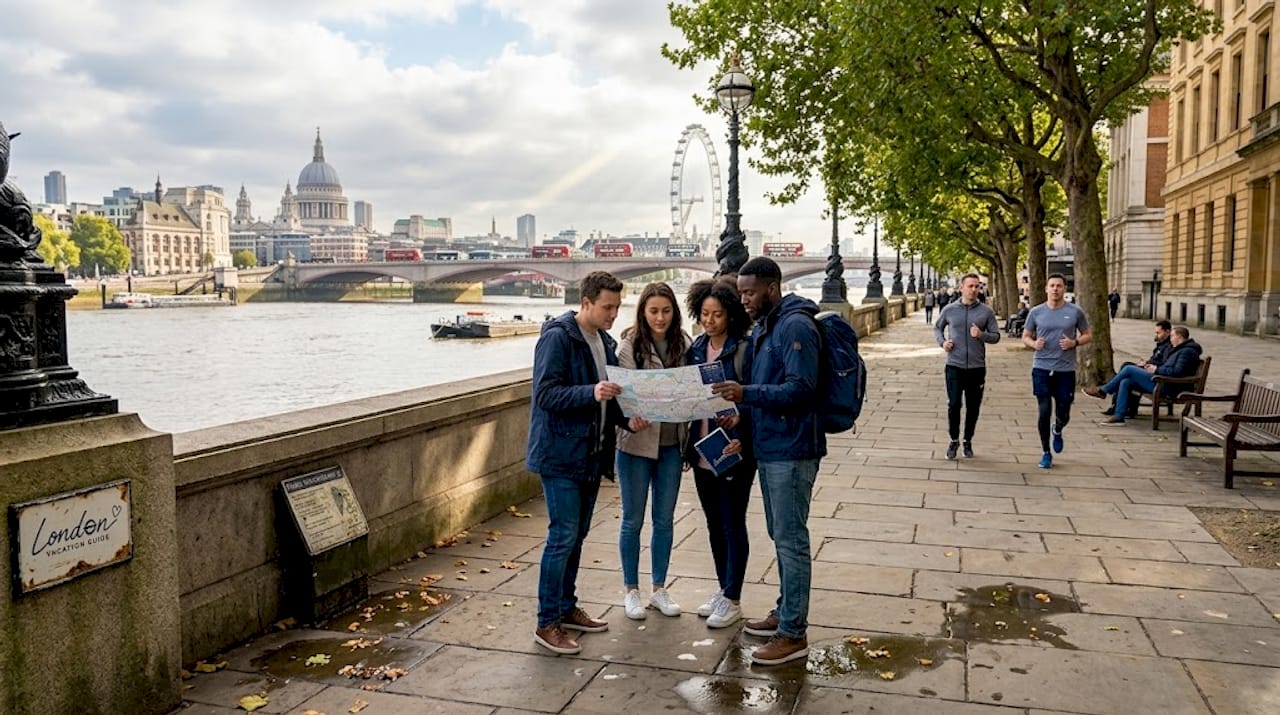
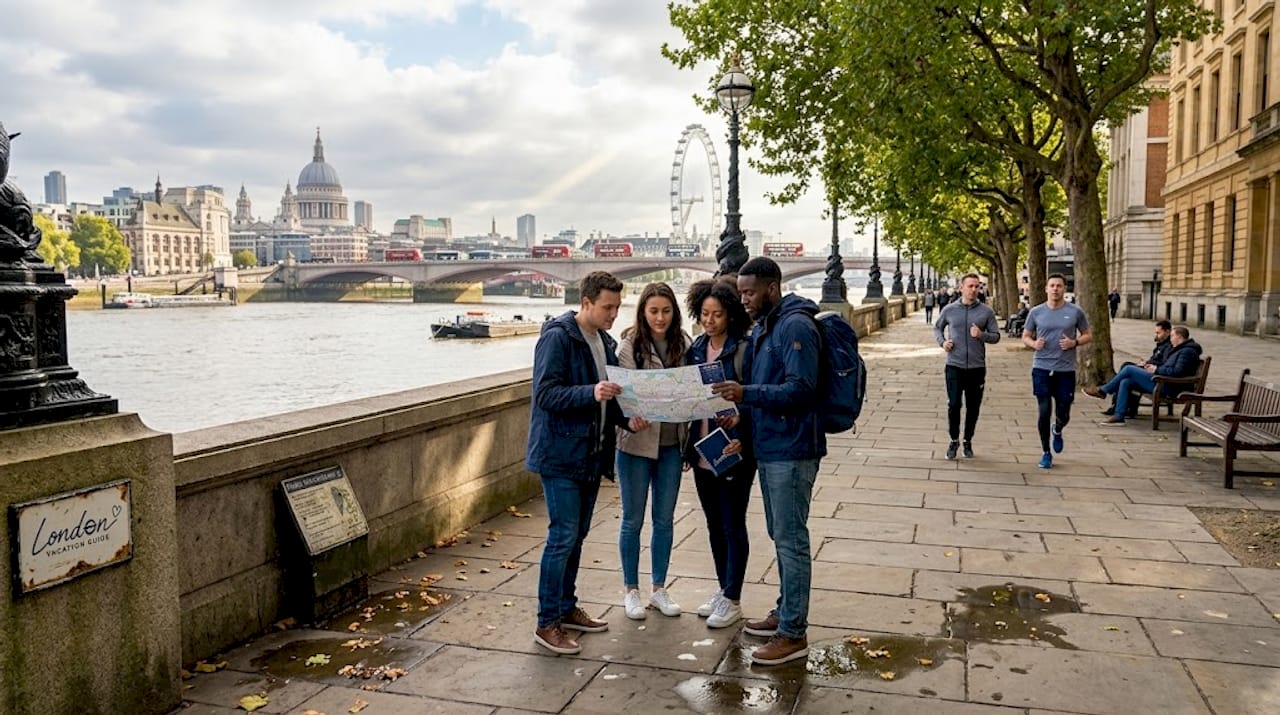
Most visitors to London arrive with the Thames already on their radar, yet remarkably few understand the full role of the Thames in London tourism. They photograph Tower Bridge, maybe board a cruise, and move on. What they miss is that the river is not a backdrop. It is the connective tissue of the entire city’s visitor experience, threading together history, culture, recreation, food, and transport across its 50-kilometre stretch through the capital. This guide cuts through the surface and gives you the complete picture, from ancient origins to official swimming spots, and from hop-on hop-off cruises to wildlife that would surprise most Londoners.
Table of Contents
- Key takeaways
- The role of the Thames in London tourism: history and culture
- Thames river cruises: leisure, perspective, and smart transport
- Walking the Thames: neighbourhoods, gems, and river paths
- The Thames as a living ecosystem and leisure space
- Planning your Thames visit: timing, stays, and itinerary
- My honest take on the Thames and what most tourists get wrong
- Plan your perfect Thames day with Londonvacationguide
- FAQ
Key takeaways
| Point | Details |
|---|---|
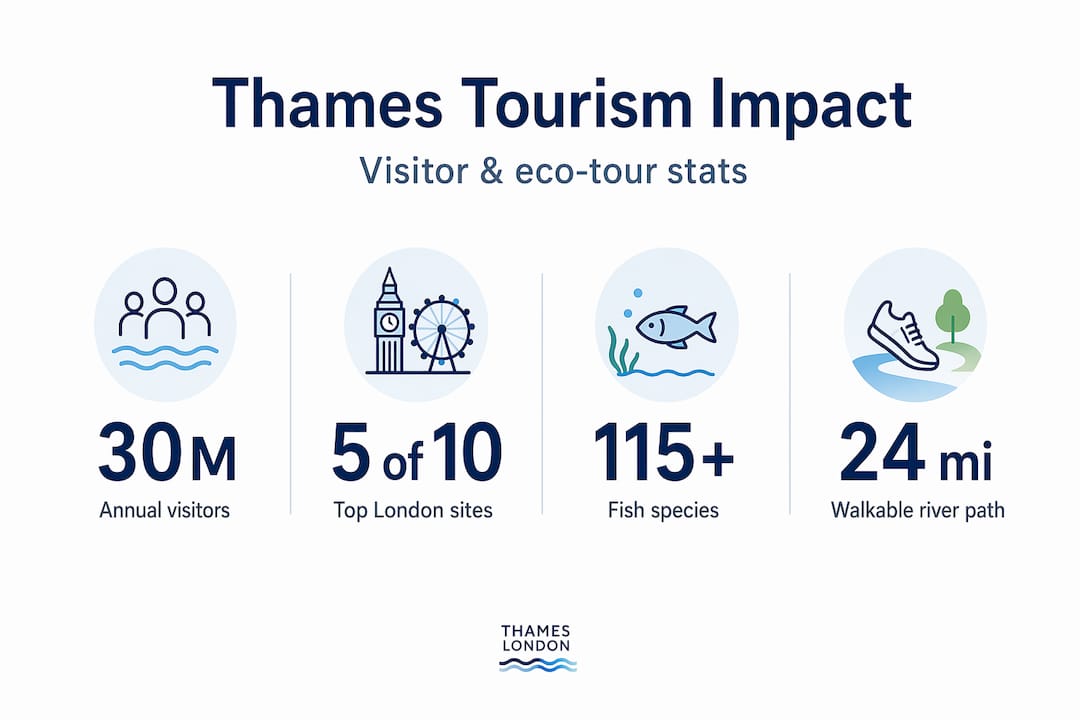
| The Thames anchors London tourism | Five of London’s top ten visitor attractions line the Thames riverbanks. |
| River cruises are more than sightseeing | A 24-hour hop-on hop-off pass doubles as practical transport, bypassing crowded Tube lines. |
| Walking the Thames reveals hidden gems | South Bank and Queen’s Walk offer cultural, culinary, and off-the-beaten-path discoveries on foot. |
| Wildlife adds an eco-tourism dimension | Seals, birds, and fish inhabit central London’s river, offering unexpected natural encounters. |
| Timing transforms your visit | Early mornings and late evenings along the Thames offer a dramatically different and far quieter experience. |
The role of the Thames in London tourism: history and culture
The Thames has a story that predates London itself. When the Romans founded Londinium around AD 43, they chose this riverbank deliberately. The river offered trade, defence, and fresh water. That original logic shaped everything that came after, and tourists who understand this history experience London’s landmarks on an entirely different level.
The role of river thames in tourism is inseparable from its historic landmarks. The Tower of London sits directly on the north bank, originally positioned to control river access. Greenwich, the home of the Prime Meridian and the National Maritime Museum, is accessible only meaningfully by water. Kew Gardens, further upstream, earned its place as a World Heritage Site partly because of centuries of royal patronage delivered via the river. These are not coincidental riverside locations. They were built in relation to the Thames, and that relationship is the story visitors should be piecing together.
The Thames also operates as what travel writers call a spine of stories. Walking tours that follow the riverbank from London Bridge to Lambeth connect the dots between plague history, the Frost Fairs of the 17th century, the Blitz, and the Festival of Britain. When you follow the water, London’s chronology becomes coherent in a way that no underground journey can replicate.
Mudlarking deserves a special mention here. Searching the Thames foreshore for historical artefacts has become one of the most talked-about ways to connect with London’s layered past. However, permits are severely restricted due to extraordinary demand, with the waiting list having reached 10,000 people and no new permits issued since 2016. Casual visitors cannot simply scavenge the foreshore. What they can do is join guided mudlarking experiences led by permit holders, which offer genuine access to this peculiar and fascinating slice of Thames culture.
Key cultural stops you should not overlook include:
- The Museum of London Docklands in Canary Wharf, which traces 2,000 years of river commerce and slavery history
- Tate Modern on the South Bank, housed in a former power station and framing the Thames as part of its artistic identity
- The Cutty Sark at Greenwich, the last surviving Victorian-era tea clipper and a direct product of the river trade era
- Shakespeare’s Globe on Bankside, rebuilt on its original riverside location where Elizabethan theatre thrived beside the water
Pro Tip: Book a guided walking tour that specifically follows the Thames path from London Bridge to Blackfriars. Most of the best tour guides combine mudlarking stories with pub stops at Victorian riverside inns, which gives you history and atmosphere in one go.
Thames river cruises: leisure, perspective, and smart transport
The role of Thames river cruises in the wider tourism picture is frequently underestimated. Most visitors consider a cruise a nice-to-have, a leisurely hour on the water before returning to the real business of sightseeing. In reality, a well-chosen cruise reshapes how you understand the entire city.
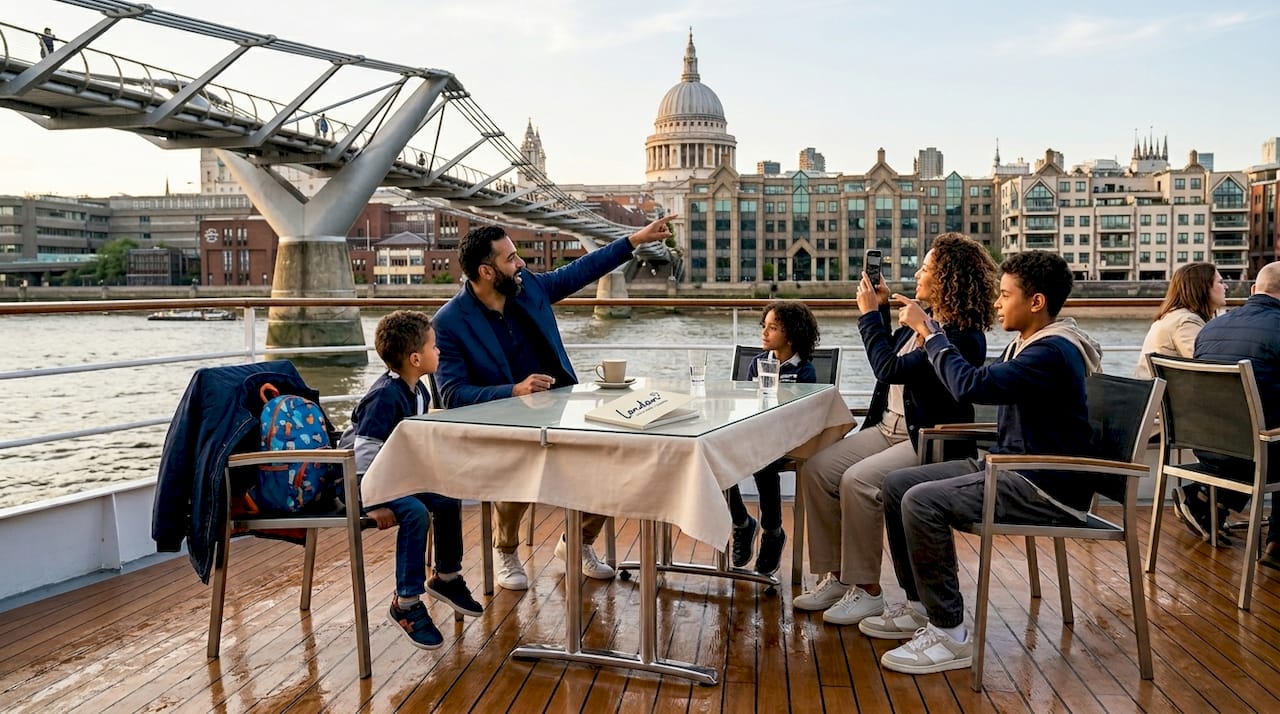
From the water, the skyline is dramatically different. St Paul’s Cathedral, which can feel hemmed in by surrounding streets on land, opens up majestically from the river. The Shard’s full geometry only becomes apparent when viewed from mid-river. You also grasp spatial relationships between neighbourhoods that are impossible to sense underground or even on foot.
Here is a breakdown of the main cruise types to help you choose:
| Cruise type | Best for | Typical duration |
|---|---|---|
| Standard sightseeing cruise | First-time visitors, landmark overview | 1 to 2 hours |
| 24-hour hop-on hop-off pass | Multiple attractions, flexible sightseeing | Full day |
| Dinner cruise | Special occasions, evening atmosphere | 2 to 3 hours |
| Tea cruise | Afternoon treat, relaxed cultural experience | 1.5 to 2 hours |
| Greenwich fast clipper | Practical commuting to east attractions | 45 minutes |
Standard sightseeing cruises typically cost between £18 and £22 per person for a one to two hour journey, while a 24-hour hop-on hop-off pass runs approximately £33. For visitors planning a full day of sightseeing, the pass is by far the better value.
The practical transport argument for the hop-on hop-off pass deserves more attention than it gets. Using the river as transport lets you avoid the Central line during peak hours and move between Westminster, Bankside, Tower Bridge, and Greenwich without ever setting foot on the Tube. On a busy summer Saturday, this alone can save you an hour of frustration.
For a premium experience, Thames dinner cruises offer something land-based restaurants simply cannot match. The illuminated landmarks seen from a moving boat create an atmosphere that no riverside restaurant window can replicate. Big Ben, the Tate Modern, and Tower Bridge lit up against the night sky, viewed while dining, is one of London’s genuinely special experiences.
How to choose the right Thames cruise experience:
- If this is your first visit to London, book a standard narrated sightseeing cruise to orient yourself geographically before walking or taking the Tube anywhere.
- If you have two or more days, invest in the 24-hour hop-on hop-off pass on day one and use it as your primary transport between South Bank, Greenwich, and Tower Hill.
- If you are celebrating a special occasion, prioritise an evening dinner cruise. Book well in advance, particularly between May and September.
- If you have children, the hop-on hop-off boats work brilliantly as an alternative to double-decker buses and offer open-air deck space.
Pro Tip: Board at Embankment or Westminster Pier rather than Waterloo. You will face shorter queues, particularly during summer peak hours, and have better access to upper deck seating.
You can check availability and book directly through the Londonvacationguide Thames river cruises listing for up-to-date options.
Walking the Thames: neighbourhoods, gems, and river paths
The South Bank is the most visited stretch of riverside in London, and for good reason. The Queen’s Walk runs from London Bridge to Hungerford Bridge without interruption, offering a continuous thread of cultural, culinary, and visual experiences. 24 million people visit the South Bank annually, and it is the stretch that most clearly demonstrates the role of thames river in london tourism as both a thoroughfare and a destination.
That said, the South Bank walk is well-trodden. The tourists who leave with the best memories tend to be the ones who push further in either direction.
Head east past Tower Bridge and you enter Bermondsey’s riverside, where converted Victorian wharves now house galleries, independent food markets, and wine bars. Maltby Street Market, a short walk from the Thames path, is one of the best food destinations in the city. Continue further and you reach Rotherhithe, where the Thames Tunnel, the world’s first underwater pedestrian tunnel, sits beneath your feet. Almost nobody visits it.
Head west from Waterloo and the character shifts considerably. Lambeth Palace, the official London residence of the Archbishop of Canterbury, occupies a riverside position most tourists walk straight past. Albert Embankment offers uninterrupted views across to the Houses of Parliament that are frequently superior to those from the north bank.
Key spots to include in a riverside walk:
- Gabriel’s Wharf near Waterloo, a cluster of independent makers’ studios and outdoor food stalls with river views
- Barge House Street, where street art and creative studios occupy former river-adjacent industrial spaces
- Strand on the Green in Chiswick, a stretch of riverside cottages that feels entirely unlike central London, complete with riverside pubs dating to the 17th century
- Richmond Bridge and its surroundings, best visited in late spring when the towpaths and meadows are at their most scenic
Seasonally, the South Bank Christmas Market (November to January) and the outdoor Underbelly Festival (May to August) transform the riverside into something particularly vibrant. The Thames Path National Trail also extends well beyond the city into Richmond and beyond, rewarding visitors who venture outside Zone 1.
Pro Tip: Walk the South Bank from east to west, finishing at the Golden Hinde near London Bridge for a pint at the Anchor pub, one of the oldest drinking establishments in the city. You will be following the exact route Londoners have walked for over 400 years.
The Thames as a living ecosystem and leisure space
Fewer visitors realise that the role of river thames extends well into eco-tourism. The river running through central London is a functioning ecosystem that continues to improve year on year, and the experiences available because of this are genuinely worth planning around.
Seals have been spotted swimming as far upstream as Canary Wharf, a striking fact that surprises most Londoners let alone tourists. Grey herons, cormorants, and kingfishers are visible along stretches like Richmond and Kew. The river now supports over 115 species of fish, a number that stood at virtually zero in the 1950s when the Thames was considered biologically dead. This recovery is one of the great environmental success stories of modern Europe.
Swimming in the Thames has become an official leisure activity. YMCA Hawker in Kingston was designated an official bathing water spot in May 2026, making it the first Thames location where Londoners can swim for free in a supervised and monitored environment. This is a significant step forward for the river’s recreational identity.
Active water sports available on the Thames include:
- Kayaking and canoeing from clubs at Richmond, Chiswick, and Twickenham
- Paddleboarding sessions available from multiple outfitters between Richmond and Kingston
- Rowing through clubs such as the London Rowing Club in Putney, some of which offer taster sessions for visitors
- Open water swimming at designated spots, with guided river swims becoming popular as part of wellness travel packages
The environmental improvements behind these activities are worth acknowledging. The Thames Tideway Tunnel project, a 25-kilometre super-sewer running beneath the river, has significantly reduced raw sewage overflow incidents. Water quality monitoring is now continuous and publicly accessible, which has given operators and swimmers the confidence to use stretches that were inaccessible a decade ago.
Visitors with an interest in natural history or sustainable travel will find the Thames increasingly relevant as an eco-tourism destination, not just a backdrop for heritage photography.
Planning your Thames visit: timing, stays, and itinerary
Getting the timing right makes a significant difference to how you experience the river. The Thames looks entirely different in January fog compared to August sunshine, and each version has its merits.
- Late spring (May and June) offers the best combination of long daylight hours, mild temperatures, and manageable crowd levels before the main summer surge. Walking the riverside at this time, especially outside Zone 1, is genuinely pleasant.
- Summer (July and August) brings the busiest period for Thames cruises and South Bank events. Book everything in advance and arrive at piers early. The payoff is that the riverside is lively and atmospheric.
- Autumn (September and October) is arguably the most underrated time. Crowd levels drop, ticket prices moderate, and the light quality on the river during October is exceptional for photography.
- Winter (November to January) suits visitors interested in the South Bank Christmas Market and the particular beauty of illuminated bridges on dark evenings. Dinner cruises in December are especially popular.
For accommodation, proximity to the river comes in various forms and budgets. The South Bank itself and nearby London Bridge area offer mid-range to luxury hotel options within a five-minute walk of the Thames Path. For a quieter, more residential experience, Richmond provides charming stays near the river at slightly more accessible price points, and the Richmond neighbourhood is well connected to central London by Overground and District line services.
Pro Tip: If you plan to combine a dinner cruise with the London Eye, do it on the same evening. Book an early evening London Eye slot for the aerial view, then board a dinner cruise as the city lights come fully on. It is the most complete version of London’s skyline experience in a single outing.
Dining along the riverside requires some curation. Borough Market near London Bridge and the street food stalls under the arches at Flat Iron Square are among the best options for casual river-adjacent eating. For sit-down river views, Oxo Tower Wharf and the rooftop at Brasserie Blanc in the Battersea Power Station complex both offer quality with a proper vista. The Londonvacationguide local dining guide has detailed neighbourhood-by-neighbourhood recommendations to help you choose.
My honest take on the Thames and what most tourists get wrong
I have spent years studying how visitors interact with London’s landmarks, and the same pattern repeats itself. People treat the Thames like a set piece. They stand at the edge, photograph it, and move on as if checking it off a list.
What I have learned is that the river is not the view. It is the vantage point. The moment you get on the water, or walk the riverside for several hours rather than just crossing it, the city reconfigures itself. Streets that seemed separate reveal their proximity. Neighbourhoods that felt like postcodes become districts with character and history.
The tourists who leave London having genuinely understood it are the ones who spent real time on or beside the river. Not just an hour on a sightseeing cruise, but a full day combining a morning walk from Waterloo to Greenwich (via the foot tunnel), an afternoon at the National Maritime Museum, and an evening dinner cruise back upstream. That is a day that tells a story.
What limits most visitors is the assumption that the Thames is something you experience passively. You stand near it, you photograph it, you eat beside it. But the eco-tourism angle, the swimming, the kayaking, the mudlarking culture, even simply sitting on a riverside bench and watching the tide reverse, these are active, immersive experiences that leave a lasting impression.
My honest recommendation: give the Thames at least one full day and plan it deliberately. Use the Londonvacationguide resources to build a specific itinerary rather than improvising. The river rewards intentionality in a way few London experiences match.
— Matt
Plan your perfect Thames day with Londonvacationguide
The Thames is worth more than a passing glance, and Londonvacationguide has the resources to help you make the most of it. Whether you are building your first London trip or returning to go deeper, the site’s curated London itineraries include Thames-specific routes combining river cruises, cultural stops, and riverside dining into coherent, well-timed days. For first-timers, the essential visitor guide provides a practical framework for fitting Thames experiences into a broader London trip without the usual guesswork.
The London business directory connects you directly to cruise operators, guided walking tours, and dining experiences along the riverfront, all organised by location and category so you can plan efficiently. Neighbourhood guides for South Bank, London Bridge, and Richmond provide accommodation suggestions and local highlights tailored to where you want to base yourself. Browse the full range of resources at Londonvacationguide and start planning the Thames day your London trip deserves.
FAQ
What is the role of the Thames in London tourism?
The Thames is the geographic and cultural spine of London tourism, with five of the top ten visitor attractions sitting directly on its banks. It functions as a historic site, a transport corridor, a leisure space, and an eco-tourism destination simultaneously.
How much does a Thames river cruise cost?
Standard sightseeing cruises cost between £18 and £22 per person for one to two hours. A 24-hour hop-on hop-off pass, which also serves as practical transport between major piers, costs approximately £33.
Can you swim in the Thames in London?
Yes. YMCA Hawker in Kingston became an official bathing water location in May 2026, making it the first Thames spot where supervised free public swimming is available.
What wildlife can you see in the Thames?
The Thames supports over 115 fish species, along with grey herons, cormorants, kingfishers, and occasional seals that swim as far upstream as Canary Wharf in central London.
What is the best time to visit the Thames riverside?
Late spring and early autumn offer the best balance of good weather, manageable crowds, and attractive light conditions. Summer is the busiest but most atmospheric period, particularly for evening dinner cruises and outdoor South Bank events.
Recommended
- Thames River Cruises - Tours in Westminster | London Vacation Guide
- How London festivals shape culture, community and tourism - The London Journal | London Vacation Guide
- How museums shape London tourism: Facts and traveller tips - The London Journal | London Vacation Guide
- Top London cultural experiences for tourists and enthusiasts - The London Journal | London Vacation Guide