The role of art in London’s identity: a 2026 guide

Art is the defining force behind London’s cultural identity, fusing world-class institutions with grassroots creativity to produce a city unlike any other on earth. London’s creative and cultural industries contribute £64bn annually to the UK economy. That figure is not just an economic statistic. It is proof that art sits at the very heart of how London functions, attracts visitors, and holds its communities together. In 2026, London was ranked the world’s best city for culture by Time Out, a recognition built on the city’s rare ability to make high culture and street-level creativity feel equally at home. The role of art in London identity is not incidental. It is structural.
How do London’s art institutions and public art shape its cultural identity?
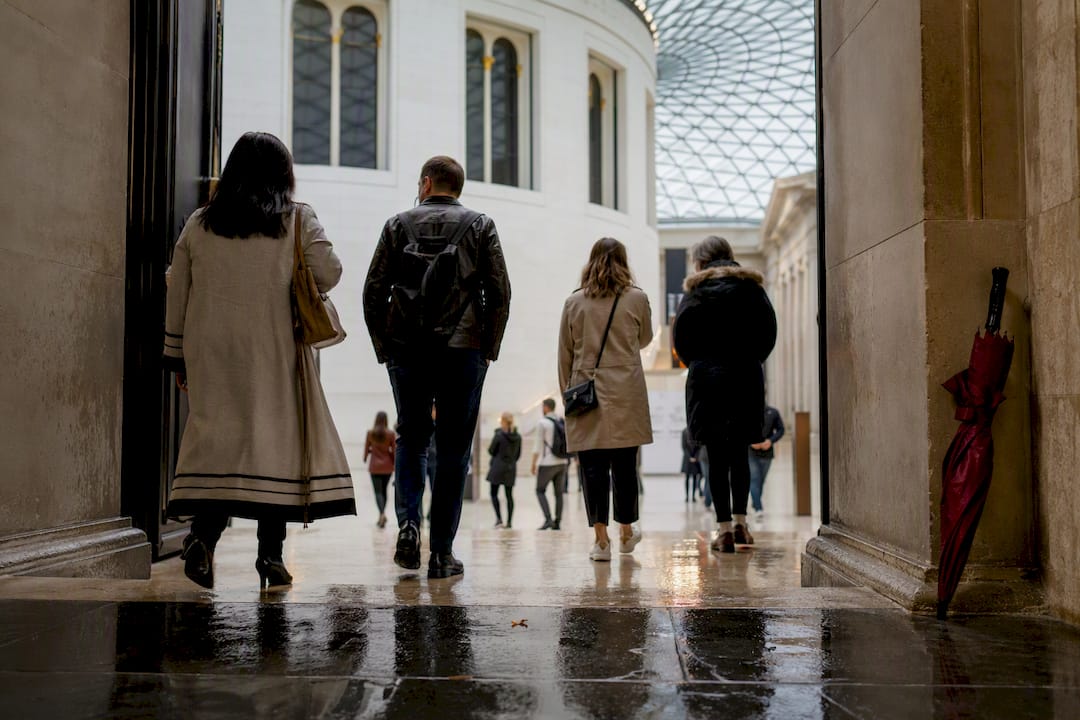
London’s major art institutions are the backbone of its global cultural reputation. The Tate Modern, the National Gallery, the British Museum, and the English National Opera each attract millions of visitors every year. They do not simply display art. They define what London stands for on the world stage.

Accessibility is the feature that separates London from other great cultural capitals. 90% of Londoners praise the affordability and accessibility of the city’s cultural institutions. Free entry to the permanent collections at the British Museum, the Victoria and Albert Museum, the National Portrait Gallery, and the Tate Modern means that art is not a privilege reserved for those who can afford it. This open-access model shapes a city where culture belongs to everyone, from schoolchildren on day trips to international visitors spending a week in the capital.

The impact on tourism is direct. London’s museums shape visitor behaviour in ways that few other attractions can match. Visitors plan entire trips around gallery visits, and the concentration of world-class institutions within walking distance of each other in areas like South Bank, Bloomsbury, and Trafalgar Square creates cultural corridors that define the city’s geography.
Public art adds another layer to this identity. London’s streets contain works that blur the line between gallery and pavement. The Queenhithe Mosaic on the Thames foreshore incorporates medieval pottery shards recovered from the riverbed, embedding genuine historical artefacts into a contemporary public artwork. That approach, placing museum-quality material directly into the urban fabric, is characteristic of how London treats its artistic heritage. Art does not stay behind glass. It lives in the city itself.
The gallery ecosystem is also evolving. Two dozen new galleries have opened in London in recent years, with a renewed focus on exhibition-making inside gallery spaces rather than relying on art fairs for visibility. This shift signals confidence. London’s gallery scene is building depth, not just spectacle.
- Tate Modern, Bankside: Free permanent collection, open daily. Best visited on weekday mornings to avoid crowds.
- National Gallery, Trafalgar Square: Over 2,300 paintings spanning 700 years. Free entry.
- Victoria and Albert Museum, South Kensington: The world’s largest decorative arts collection. Free permanent galleries.
- Queenhithe Mosaic, Thames foreshore near Upper Thames Street: A genuinely unusual public artwork that most visitors walk past without noticing.
- English National Opera, Coliseum: Ticketed performances, but with a strong commitment to accessible pricing for younger audiences.
Pro Tip: Visit the Tate Modern’s free permanent collection on a Tuesday or Wednesday morning. Crowds are a fraction of weekend levels, and the Turbine Hall installations are far easier to appreciate without the noise.
What is the significance of street art and grassroots creativity in London’s urban identity?
Street art is now a vital part of urban renewal and cultural expression in London, not a symptom of neglect. Property owners commission murals to revive neglected buildings. Councils use public art to signal investment in a neighbourhood. Visitors travel specifically to see works that will not exist in six months. That ephemerality is the point.
Shoreditch is the most concentrated example of this dynamic. The neighbourhood’s murals are frequently replaced, creating a living visual archive that reflects real-time social issues. Gentrification, migration, mental health, and political protest all appear on Shoreditch walls before they reach mainstream media. The art moves faster than the news cycle. That speed is what makes it culturally significant.
Camden and Brick Lane operate on similar principles, though with distinct characters. Camden’s murals lean towards music, counterculture, and the neighbourhood’s long association with alternative identity. Brick Lane’s art is more directly tied to the Bangladeshi community’s history in the East End, with works that document displacement, resilience, and cultural pride. Each neighbourhood uses art to tell its own story, and those stories collectively form a picture of London’s urban identity that no single institution could capture.
The social commentary embedded in street art is not decorative. It is functional. When a mural about the Grenfell Tower fire appears on a wall in North Kensington, it performs a civic role that formal memorials often cannot. It keeps a conversation alive in public space. London’s street art tradition, rooted in the graffiti culture of the 1980s and now fully legitimised as an urban asset, gives the city a mechanism for processing collective experience in real time.
Grassroots venues reinforce this energy. Independent music venues, artist-run spaces, and community galleries in areas like Peckham, Dalston, and Hackney Wick sustain the creative networks that feed the city’s larger cultural institutions. Many of the artists now showing in major London galleries came through these smaller spaces first.
- Shoreditch, East London: Start on Brick Lane and walk north towards Old Street. New works appear weekly. The area around Rivington Street and Curtain Road has the highest concentration of commissioned murals.
- Camden, North London: The market area and surrounding streets feature large-scale works tied to music and counterculture. Best visited on a Saturday morning before the market crowds arrive.
- Brick Lane, East London: The street itself and the surrounding Spitalfields area contain works that document the neighbourhood’s layered immigrant history. The Truman Brewery yard often hosts temporary installations.
- Peckham, South London: A newer hub for artist-run spaces and murals. Rye Lane and the surrounding streets have developed a distinct visual identity over the past decade.
“Authenticity in London’s creative identity is an accumulated effect of community networks and usage over time, rather than planned design.” — Evening Standard
This observation cuts to the heart of why London’s street art scene works. It cannot be manufactured from the top down. The neighbourhoods that have the most compelling visual identities are the ones where artists have been given time and space to build something organic.
How does supporting affordable creative spaces secure London’s artistic identity?
Affordable workspace is the infrastructure that keeps London’s artistic identity alive. Without it, rising property costs push artists out of the city, and the creative networks that sustain the cultural ecosystem dissolve. City Hall recognised this risk and acted on it.
The Creative Enterprise Zones programme has created 71,000 square metres of affordable workspace across London. To put that in physical terms, it is the equivalent of ten football pitches dedicated to keeping artists, makers, and creative businesses in the city. That scale of intervention reflects how seriously the cultural significance of art in London is taken at a policy level.
The zones are concentrated in areas where creative communities were most at risk: Hackney Wick and Fish Island, Wembley, Haringey, and parts of South London. Each zone combines affordable studio space with business support, skills programmes, and community engagement. The aim is not simply to preserve individual artists but to maintain the density of creative activity that makes a neighbourhood culturally distinctive.
| Area | Creative Enterprise Zone focus | Key benefit |
|---|---|---|
| Hackney Wick and Fish Island | Studios, maker spaces, independent galleries | Protects one of London’s densest artist communities |
| Wembley | Creative industries linked to the entertainment sector | Connects grassroots creativity to major venue infrastructure |
| Haringey | Music, fashion, and community arts | Supports culturally diverse creative businesses |
| South London (multiple boroughs) | Mixed creative and digital industries | Sustains the South Bank cultural corridor’s supply chain |
The balance between high-end galleries and grassroots workspaces is not accidental. London’s cultural identity depends on both ends of the spectrum functioning simultaneously. A city with only prestigious institutions becomes a museum of itself. A city with only grassroots spaces lacks the resources to sustain long-term careers. The Creative Enterprise Zones are the mechanism that holds the middle ground.
Pro Tip: Hackney Wick is one of the best places in London to see working artists in their studios. Several open studio events take place throughout the year, particularly in october and november. Check local listings for dates, as they are not always widely advertised.
How can visitors and residents experience and engage with London’s artistic identity?
London’s art scene rewards those who look beyond the obvious. The Tate Modern and the National Gallery are unmissable, but the city’s artistic identity is most vividly felt in its neighbourhoods, its cultural experiences, and its less-publicised events.
The South Bank remains the most concentrated cultural district in the city. The Tate Modern, the Hayward Gallery, the National Theatre, and the BFI Southbank sit within a ten-minute walk of each other. The riverside walk between Waterloo Bridge and Blackfriars Bridge passes public art installations, independent booksellers, and street performers. It is the most accessible introduction to how art shapes London identity in a single afternoon.
For a more layered experience, the best London neighbourhoods for artistic engagement sit outside the centre. Peckham’s independent gallery scene has grown significantly over the past decade. Dalston and Hackney Wick offer artist-run spaces that show work you will not find in mainstream galleries. Chelsea remains the address for established commercial galleries, particularly along King’s Road and in the streets around the Saatchi Gallery.
Timing matters. London Gallery Weekend, held annually in june, opens dozens of galleries simultaneously and is free to attend. Frieze Art Fair in october brings the international art world to Regent’s Park, though it requires a ticket. The Tate Modern’s Turbine Hall commissions, which change annually, are free and often the most talked-about art events in the city.
- South Bank cultural walk: Start at Tate Modern, walk east along the Thames to Borough Market, then return via the riverside path. Allow three to four hours.
- East London art day: Begin at Brick Lane, walk through Shoreditch to Hackney Wick. Combine street art with independent gallery visits.
- Chelsea gallery afternoon: The Saatchi Gallery is free. The surrounding streets contain some of London’s most respected commercial galleries, most of which welcome visitors without appointments.
- London Gallery Weekend (june): Free, city-wide, and the best single opportunity to see the breadth of London’s gallery scene in one weekend.
- Frieze Art Fair (october): Ticketed, but the associated Frieze Sculpture exhibition in Regent’s Park is free and runs for several weeks.
The most rewarding approach combines formal and grassroots experiences in the same day. Spending a morning at the National Gallery and an afternoon in Shoreditch gives a more complete picture of how art shapes London identity than either experience alone.
Key takeaways
London’s artistic identity is defined by the coexistence of world-class institutions and grassroots creativity, sustained by policy, community networks, and the city’s commitment to cultural accessibility.
| Point | Details |
|---|---|
| Art drives London’s economy | Creative and cultural industries contribute £64bn annually, making art central to the city’s economic identity. |
| Accessibility is a defining feature | Free entry to major museums and galleries means London’s cultural life belongs to all residents and visitors. |
| Street art reflects real-time social issues | Neighbourhoods like Shoreditch and Brick Lane use murals as a living archive of the city’s evolving concerns. |
| Affordable workspace sustains creativity | City Hall’s Creative Enterprise Zones have created 71,000 sqm of workspace to keep artists in the city. |
| Authenticity cannot be manufactured | London’s creative identity grows from community networks and organic use of space, not top-down planning. |
Why London’s art scene works because of its contradictions
I have spent years watching cities try to manufacture cultural identity, and most of them get it wrong in the same way. They invest in prestige. They build a flagship gallery, commission a famous architect, and wait for the cultural credibility to follow. London does something different, and I think it is the reason the city keeps producing genuinely interesting art rather than just impressive buildings.
The clash between the English National Opera and a spray-painted wall in Shoreditch is not a problem to be resolved. It is the point. London’s cultural strength comes from the fact that both things are taken seriously. The city does not ask you to choose between high culture and street-level creativity. It insists you engage with both, and that insistence produces artists, audiences, and communities that are more sophisticated than those in cities where the hierarchy is more rigid.
What I find most compelling about the current moment is the governance piece. The Creative Enterprise Zones are not glamorous policy. They do not generate headlines. But they are doing the unglamorous work of keeping artists physically present in the city, and without that, the grassroots energy that feeds everything else starts to drain away. I have seen it happen in other cities. The artists leave, the neighbourhood loses its character, and within a decade the cultural identity that attracted investment in the first place has gone.
My advice to anyone visiting London with a serious interest in art is to spend at least one day away from the South Bank. Go to Peckham. Go to Hackney Wick. Go to Dalston on a Friday evening. The art you find there will not be in any guidebook yet, and that is precisely why it matters.
— Matt
London’s art scene, explored with London Vacation Guide
London’s cultural richness is best experienced with a plan that goes beyond the obvious. London Vacation Guide’s first-time visitors guide covers the city’s cultural hotspots in detail, from the South Bank’s gallery corridor to the independent spaces of East London. Whether you are planning your first visit or returning to dig deeper into the city’s artistic identity, the guide gives you the context to make the most of every neighbourhood. For those drawn to the creative energy of specific areas, the Chelsea neighbourhood guide covers one of London’s most storied art districts, from the Saatchi Gallery to the commercial galleries that have shaped the city’s art market for decades.
FAQ
What is the role of art in London’s identity?
Art defines London’s cultural identity by combining world-class institutions with grassroots creativity. The city’s creative industries contribute £64bn annually to the UK economy, and London was ranked the world’s best city for culture in 2026.
Why is London considered a global cultural capital?
London holds free entry to major museums and galleries, making culture accessible to all. Time Out named it the world’s best city for culture, with 90% of Londoners praising the affordability of its cultural institutions.
How does street art contribute to London’s urban identity?
Street art in areas like Shoreditch, Brick Lane, and Camden acts as a living archive of social issues, reflecting real-time concerns around migration, gentrification, and community identity. Murals are frequently replaced, keeping the visual culture dynamic and current.
What are Creative Enterprise Zones and why do they matter?
Creative Enterprise Zones are areas designated by City Hall to protect affordable workspace for artists. The programme has created 71,000 square metres of studio and workspace, equivalent to ten football pitches, to stabilise artist communities facing rising property costs.
When is the best time to visit London’s art scene?
London Gallery Weekend in june offers free, city-wide access to dozens of galleries simultaneously. Frieze Art Fair in october brings the international art world to Regent’s Park, with a free sculpture exhibition in the park running for several weeks.
Recommended
- The role of markets in London culture: a local guide - The London Journal | London Vacation Guide
- What is London street art? A cultural guide - The London Journal | London Vacation Guide
- Tips for visiting london in 2026: your expert guide - The London Journal | London Vacation Guide
- Top London cultural experiences for tourists and enthusiasts - The London Journal | London Vacation Guide