Why visit the south bank: london’s cultural riverside
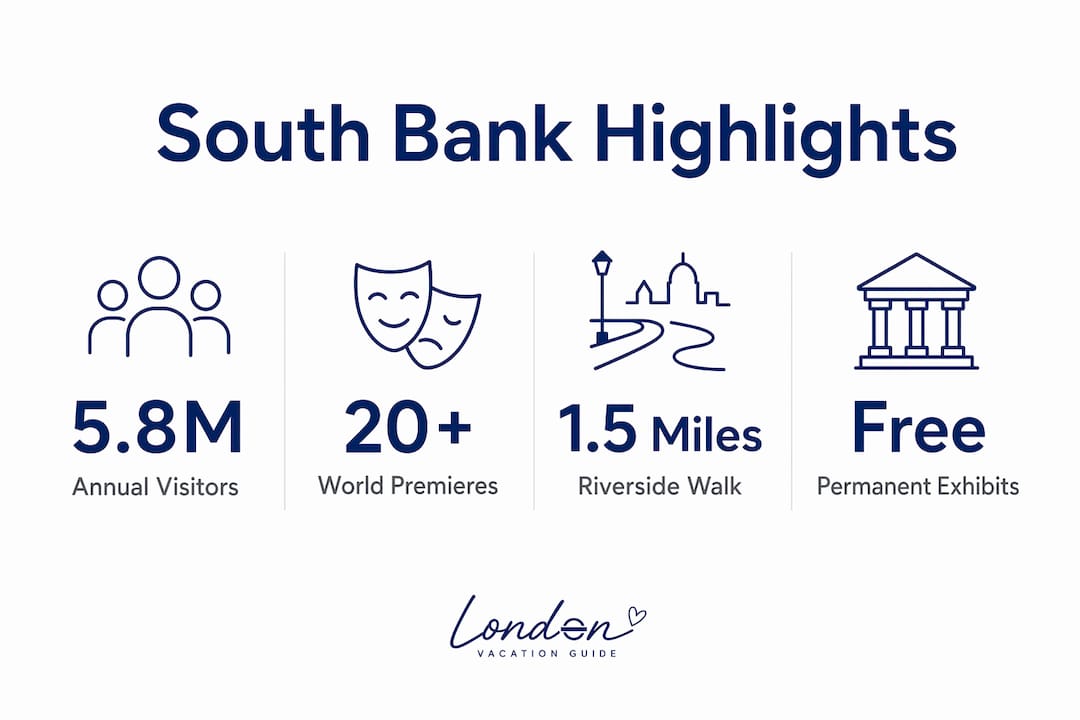
The South Bank is London’s premier cultural and entertainment district, stretching 1.5 miles along the Thames and packing more world-class venues per square metre than anywhere else in the city. The area attracts about 20 million visitors annually, contributing £2.8 billion to visitor spending. That figure alone tells you this is not a secondary stop on your London itinerary. From the London Eye and Tate Modern to the National Theatre and BFI Southbank, the South Bank delivers iconic landmarks, spontaneous street culture, and riverside dining within easy walking distance of each other. Whether you are visiting London for the first time or returning for the fifth, this stretch of riverfront rewards every visit differently.
Why visit the south bank: must-see landmarks and cultural attractions
The South Bank holds more cultural weight per step than almost any other district in Europe. The concentration of world-class institutions along this riverside walk is the single strongest reason to prioritise it on any London trip.
The london eye
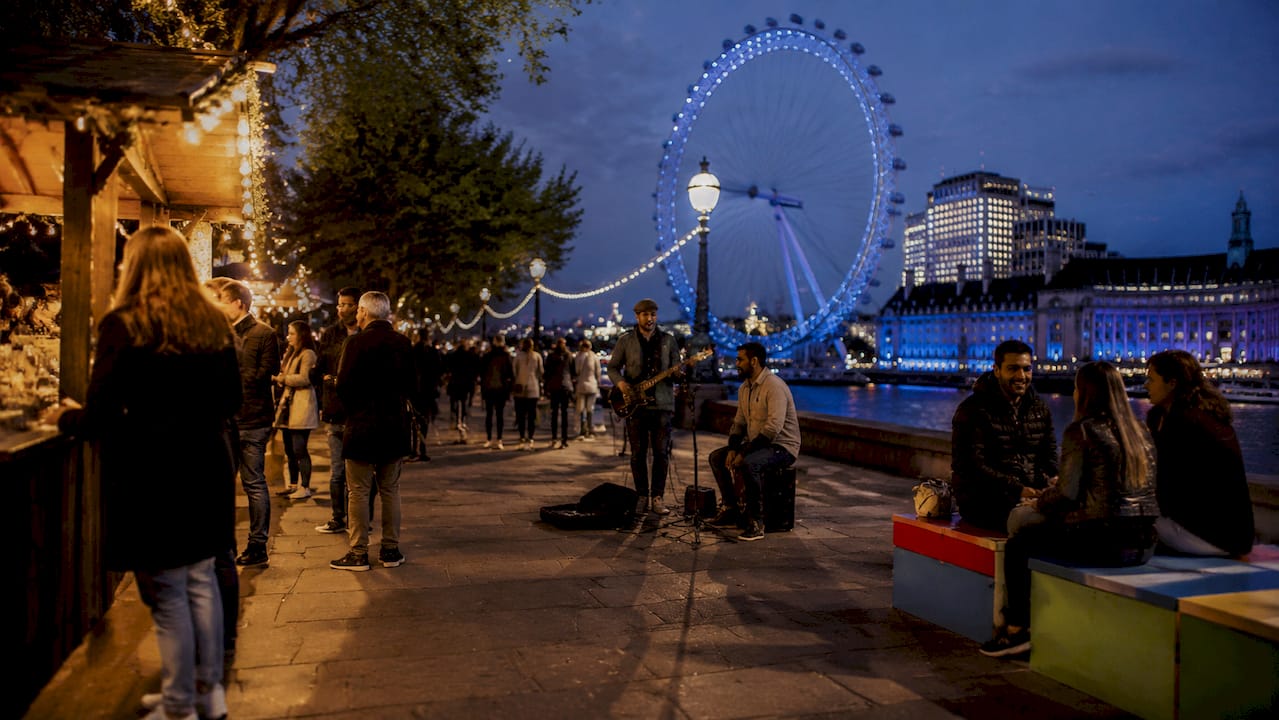
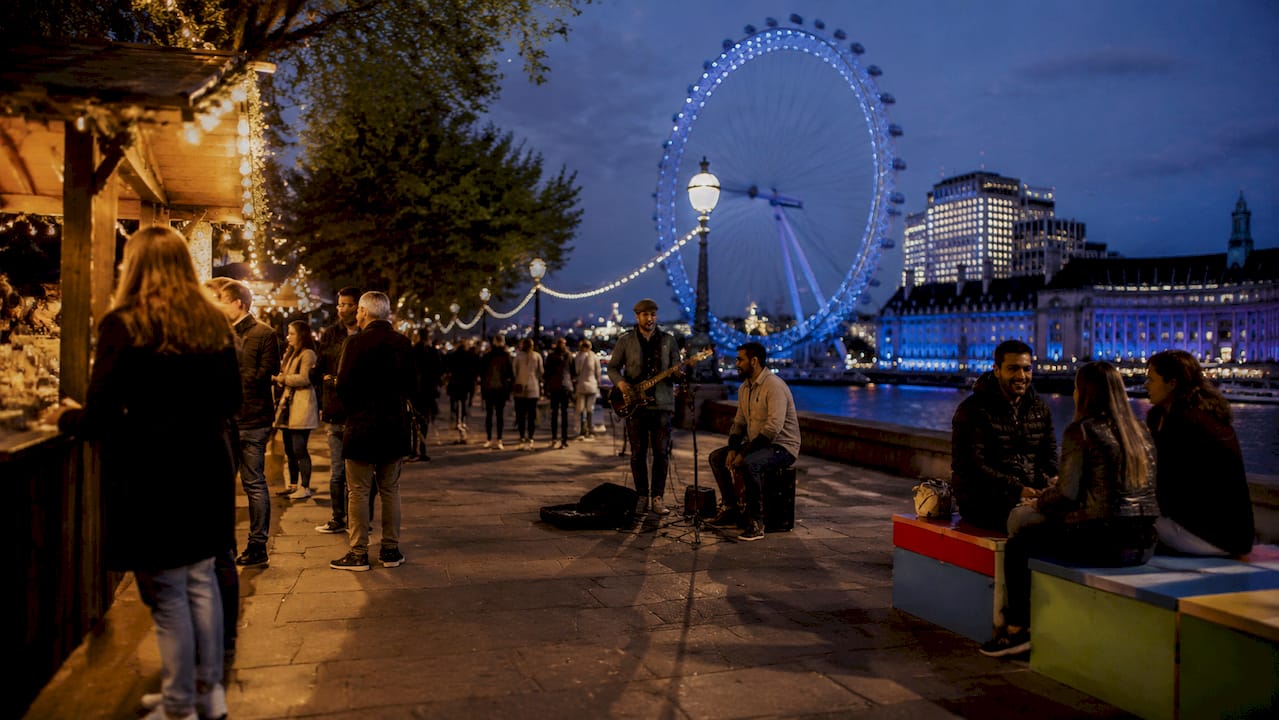
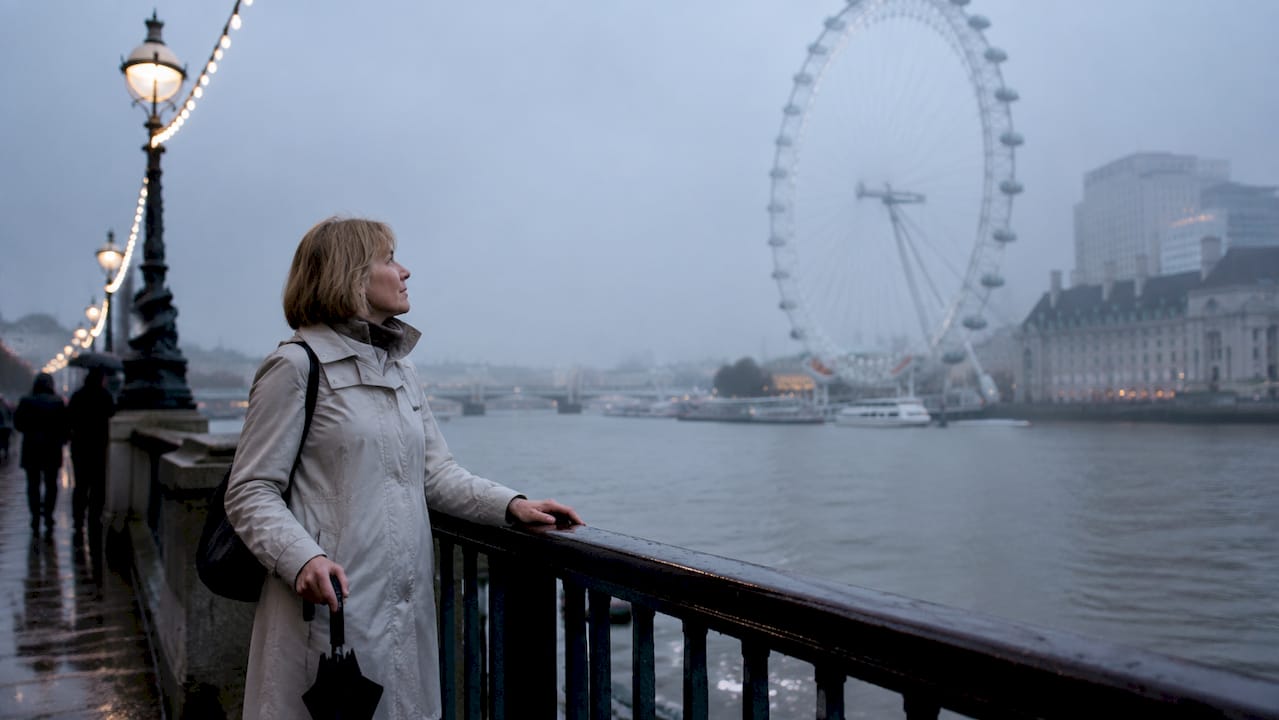
The London Eye has operated since march 2000 and remains one of the most recognisable structures on the city’s skyline. Its 32 capsules hold up to 800 passengers at a height of 135 metres, offering unobstructed panoramic views across Westminster, the City, and beyond. That height puts you level with the top floors of some of London’s tallest historic buildings. Book a fast-track ticket in advance to skip the queues, particularly during school holidays.
Tate modern
Tate Modern is the world’s most visited modern art museum. It receives 5.8 million visitors yearly, a number that reflects both the quality of its permanent collection and the draw of its temporary exhibitions. The Turbine Hall alone, a vast former industrial space, regularly hosts large-scale installations that you simply cannot see anywhere else. Entry to the permanent collection is free, making it one of the best-value experiences in the city.
National theatre and BFI southbank
The National Theatre stages over 20 world premieres annually and streams productions to more than 50 countries through its NT Live programme. Catching a show here means seeing theatre at its most ambitious. BFI Southbank runs alongside it, screening 2,000 films a year across its four cinemas, including rare archive titles and international premieres. Both venues offer free foyer access with exhibitions, cafés, and river views, so even non-ticket holders benefit from visiting.
SEA LIFE london aquarium and shakespeare’s globe
SEA LIFE London Aquarium sits directly beneath the London Eye and is particularly strong for families. Shakespeare’s Globe, a faithful reconstruction of the original Elizabethan playhouse, sits further east and offers both performances and guided tours. The outdoor standing area during summer performances is one of the most atmospheric theatre experiences in Britain.
Pro Tip: Visit Tate Modern on a weekday morning to access the Turbine Hall before the crowds arrive. The space feels entirely different when it is quiet.
| Attraction | Type | Admission | Highlight |
|---|---|---|---|
| London Eye | Observation wheel | Paid | 135-metre panoramic views |
| Tate Modern | Art museum | Free (permanent) | World’s most visited modern art museum |
| National Theatre | Performing arts | Paid (shows) | 20+ world premieres per year |
| BFI Southbank | Cinema and film | Paid (screenings) | 2,000 films screened annually |
| SEA LIFE Aquarium | Family attraction | Paid | Marine life exhibits beneath the Eye |
| Shakespeare’s Globe | Theatre and tours | Paid | Authentic Elizabethan reconstruction |
How does the south bank’s atmosphere differ from the rest of london?
The South Bank’s character is fundamentally different from the formal heritage of Westminster or the commercial energy of the West End. The difference is not just aesthetic. It is historical.
The area’s identity traces directly to the 1951 Festival of Britain, which transformed post-war industrial ruins into a public celebration of art, science, and innovation. That founding spirit shaped everything that followed. The South Bank was built to be accessible, participatory, and forward-looking rather than reverential toward the past.
Today, that legacy shows up in the street culture. On any given afternoon, you will find live musicians outside the Royal Festival Hall, skateboarders at the undercroft beneath the Queen Elizabeth Hall, and pop-up art installations along the riverside walkway. The South Bank’s spontaneous street culture contrasts directly with the formal heritage sites of Westminster, offering an environment that invites participation rather than passive observation. You are not just looking at London here. You are part of it.
The walkability factor is significant. The South Bank is noted as Europe’s top cultural district for its density of world-class venues, with the Royal Festival Hall, Hayward Gallery, National Theatre, BFI Southbank, Tate Modern, and Shakespeare’s Globe all reachable on foot within 30 minutes. No other district in London lets you move between venues of this calibre without touching the Underground.
Accessibility is another genuine advantage. The South Bank maintains 99% accessibility compliance across its pedestrian paths, public venues, and transport links. That makes it one of the most inclusive areas in central London for visitors with mobility needs.
“The South Bank is the only place in London where you can walk from a Turner Prize exhibition to a Shakespeare play to a street food market in under twenty minutes, without once feeling like a tourist.”
Pro Tip: The riverside walkway between Waterloo Bridge and Blackfriars Bridge offers some of the best views of South Bank and the City skyline. Walk it at dusk for the most dramatic light.
What seasonal experiences make the south bank worth visiting year-round?
The South Bank does not have an off-season. Each time of year brings a distinct atmosphere, and understanding those contrasts helps you plan a visit that matches what you want from London.
-
Spring (march to may): The riverside comes alive with outdoor seating, the Southbank Centre’s spring programme launches, and the crowds are lighter than summer. The Hayward Gallery typically opens major new exhibitions in this period.
-
Summer (june to august): This is the South Bank at its most energetic. The area hosts 400 free outdoor concerts annually, with the Southbank Centre’s summer festival running across multiple outdoor stages. Street performers, book markets under Waterloo Bridge, and riverside dining terraces all operate at full capacity. Borough Market, a short walk east, is at its best in summer with the full range of produce and street food traders.
-
Autumn (september to november): The BFI London Film Festival takes place in october, centred on BFI Southbank and the surrounding area. This is one of the world’s leading film festivals and brings international premieres and industry events to the riverside. Queues for free screenings form early, so arrive well ahead.
-
Winter (december to february): The South Bank transforms with illuminated carousels, alpine chalets, and heated riverside markets. The Winter Festival at Southbank Centre runs from november through january and is one of London’s most atmospheric seasonal events. Warm drinks, ice skating, and festive lights along the Thames make this a genuinely special experience.
Pro Tip: For London festivals and events on the South Bank, check the Southbank Centre and BFI websites at least six weeks in advance. Free outdoor events fill up fast, and some require pre-registration.
| Season | Key Events | Best For |
|---|---|---|
| Spring | Hayward Gallery openings, Southbank Centre programme | Quieter crowds, fresh exhibitions |
| Summer | Free outdoor concerts, book markets, riverside dining | Atmosphere, street culture, families |
| Autumn | BFI London Film Festival (october) | Film lovers, cultural visitors |
| Winter | Winter Festival, alpine chalets, festive lights | Seasonal atmosphere, couples, families |
How to plan your south bank visit: practical tips for visitors
Getting to the South Bank is straightforward from most parts of central London. Knowing the best entry points saves time and sets you up for a smooth day.
Getting there
- Waterloo station (Bakerloo, Jubilee, Northern, Waterloo and City lines) is the primary gateway and puts you at the heart of the South Bank within a five-minute walk.
- Southwark station (Jubilee line) is the closest stop to Tate Modern and Shakespeare’s Globe.
- Blackfriars station (Circle and District lines) serves the eastern end near the Globe and Borough Market.
- London Bridge station (Jubilee and Northern lines) connects you to Borough Market and the eastern South Bank.
- Cycling is a strong option. Santander Cycles docking stations run along the riverside, and the route is largely flat.
Recommended walking routes
The core South Bank walk runs from Westminster Bridge to London Bridge, covering roughly 1.5 miles. Allow two to three hours if you stop at attractions. A shorter route from Waterloo Bridge to Tate Modern takes around 20 minutes at a relaxed pace and covers the densest cluster of venues. For a longer day, extend east past the Globe to Borough Market and Bermondsey Street.
Eating and drinking
The South Bank offers a strong range of dining options at every price point.
- Borough Market (open tuesday to saturday, with a full market on thursday to saturday) is the best food market in London and sits a short walk east of the main South Bank strip. The Borough Market Kitchen is a reliable spot for a proper sit-down meal using market produce.
- Riverside restaurants along the Southbank Centre stretch include Skylon inside the Royal Festival Hall, which offers views across the Thames and a strong British menu.
- Street food operates year-round under Waterloo Bridge and around the Tate Modern forecourt.
- For a broader view of dining options near South Bank, the London Bridge and Bermondsey areas offer excellent independent restaurants within walking distance.
Accessibility
The South Bank’s near-total accessibility compliance means wide, step-free paths run the full length of the riverside. All major venues including Tate Modern, the National Theatre, and BFI Southbank have full wheelchair access, hearing loops, and accessible facilities. The Jubilee line, which serves both Waterloo and Southwark stations, is step-free throughout.
| Transport Option | Nearest Stations | Walking Time to South Bank |
|---|---|---|
| Underground | Waterloo (multi-line) | 5 minutes |
| Underground | Southwark (Jubilee) | 3 minutes to Tate Modern |
| Underground | Blackfriars (Circle/District) | 5 minutes to Globe |
| Overground/National Rail | London Bridge | 8 minutes to Borough Market |
| Cycling | Santander Cycles (riverside docks) | Immediate access |
Key takeaways
The South Bank is London’s most concentrated cultural district, combining iconic landmarks, free attractions, and year-round events within a single walkable riverside stretch.
| Point | Details |
|---|---|
| Unmatched cultural density | Tate Modern, National Theatre, BFI Southbank, and the London Eye all sit within a 1.5-mile walk. |
| Strong free access | Tate Modern’s permanent collection and 400 outdoor concerts annually cost nothing to enjoy. |
| Year-round appeal | Each season brings distinct events, from the BFI Film Festival in autumn to the Winter Festival in december. |
| Highly accessible | 99% accessibility compliance makes this one of central London’s most inclusive visitor areas. |
| Plan around events | Southbank Centre and BFI programme months ahead; check schedules before you travel. |
The south bank rewards patience, not just planning
I have walked the South Bank more times than I can count, and the visits I remember most are not the ones where I had a packed itinerary. They are the ones where I arrived without a fixed plan and let the place unfold.
Most visitors treat the South Bank as a checklist: London Eye, Tate Modern, done. That approach misses the point. The real character of this stretch of river reveals itself in the gaps between the big attractions. The skateboarders who have used the undercroft beneath the Queen Elizabeth Hall since the 1970s. The second-hand book stalls under Waterloo Bridge that appear regardless of the weather. The view from the Millennium Bridge at night, with St Paul’s Cathedral lit up on the north bank and the Tate Modern’s chimney glowing behind you.
Visitors who explore South Bank through successive walks rather than single visits consistently report a richer experience. I think that is right. Come once in summer for the outdoor energy. Come back in winter for the festive atmosphere. The area genuinely feels like a different place depending on the season and the time of day.
My practical advice: start at Waterloo station, walk east, and resist the urge to rush. Stop at the National Theatre foyer even if you have no ticket. Walk through the Tate Modern’s Turbine Hall even if you have seen it before. Cross the Millennium Bridge and look back. The South Bank is one of those rare places in London where the journey between the attractions is as good as the attractions themselves.
— Matt
Plan your south bank visit with london vacation guide
London Vacation Guide has put together detailed resources to help you make the most of your time on the South Bank and beyond. If you are visiting London for the first time, the first-time visitor itineraries include structured South Bank routes that balance the major landmarks with quieter discoveries. For those planning a longer stay, the South Bank neighbourhood guide covers everything from transport options to the best spots for breakfast before the crowds arrive. Neighbouring areas like London Bridge are also worth exploring, and the London Bridge neighbourhood guide connects you to Borough Market, Bermondsey Street, and the riverside east of the main South Bank strip.
FAQ
What is the south bank in london?
The South Bank is a cultural and entertainment district on the southern bank of the River Thames, stretching roughly 1.5 miles from Westminster Bridge to London Bridge. It is home to the London Eye, Tate Modern, National Theatre, BFI Southbank, and Shakespeare’s Globe.
Is the south bank free to visit?
Much of the South Bank is free. Tate Modern’s permanent collection, the riverside walkway, outdoor concerts, and the National Theatre and BFI foyers all cost nothing. Paid attractions include the London Eye, SEA LIFE Aquarium, and ticketed theatre and cinema performances.
How long should i spend at the south bank?
A half-day covers the main riverside walk and one or two major attractions. A full day allows you to visit Tate Modern, catch a performance or film, explore Borough Market, and walk the full stretch from Westminster Bridge to London Bridge.
When is the best time to visit the south bank?
The South Bank is worth visiting in any season. Summer brings outdoor concerts and street performers; autumn hosts the BFI London Film Festival in october; winter offers the Southbank Centre’s festive market with illuminated carousels and alpine chalets.
How do i get to the south bank?
Waterloo station is the most convenient entry point, served by the Bakerloo, Jubilee, Northern, and Waterloo and City lines. Southwark station on the Jubilee line is closest to Tate Modern. Both stations offer step-free access.
Recommended
- Explore the best London neighbourhoods for locals - The London Journal | London Vacation Guide
- The role of the Thames in London tourism - The London Journal | London Vacation Guide
- Top London cultural experiences for tourists and enthusiasts - The London Journal | London Vacation Guide
- Best Free Things to Do in London (2025 Guide) - The London Journal | London Vacation Guide