Seasonal events London guide: plan your year in the city
A seasonal events London guide is a curated calendar of major festivals, cultural happenings, and outdoor activities aligned with the city’s four seasons, designed to help visitors and locals time their trips for maximum impact. London does not slow down between January and December. Wimbledon fills SW19 with tennis fans every late june, Notting Hill Carnival transforms West London every august bank holiday, and Hyde Park’s Winter Wonderland draws crowds from november through january. Knowing when these events fall, and how to plan around them, is the difference between a trip that clicks and one that misses the city entirely. This guide covers every season with specific dates, neighbourhood tips, and practical planning advice.
What are the major seasonal events in London throughout the year?
London’s event calendar runs on four distinct rhythms, and each season delivers a genuinely different city. Spring, summer, autumn, and winter each carry anchor events that shape where crowds gather, what transport looks like, and how far in advance you need to book.
Spring: renewal, blooms, and the river
Spring in London runs from march through may, and the city uses every hour of returning daylight. Spring’s energy aligns naturally with outdoor launches and fresh cultural programming. The Chelsea Flower Show at the Royal Hospital Chelsea in late may is the season’s centrepiece, drawing garden designers and horticulture fans from across the world. The Oxford and Cambridge Boat Race on the Thames, typically held in late march or early april, is free to watch from the riverbanks between Putney and Mortlake and draws enormous crowds without a ticket.
Kew Gardens and Regent’s Park both peak in april and may with tulip and blossom displays that rival any ticketed event. The London Marathon, usually held in april, closes major roads but creates a brilliant spectator atmosphere across the Embankment and Tower Bridge.
Summer: the city’s peak season
Summer is London’s most event-dense period. June and july are peak visitor months, with accommodation demand rising sharply and event clustering at its highest. Wimbledon runs 29 june–12 july 2026, and Taste of London runs 18–22 june 2026 in Regent’s Park, bringing together the city’s top chefs and restaurants in one outdoor setting.
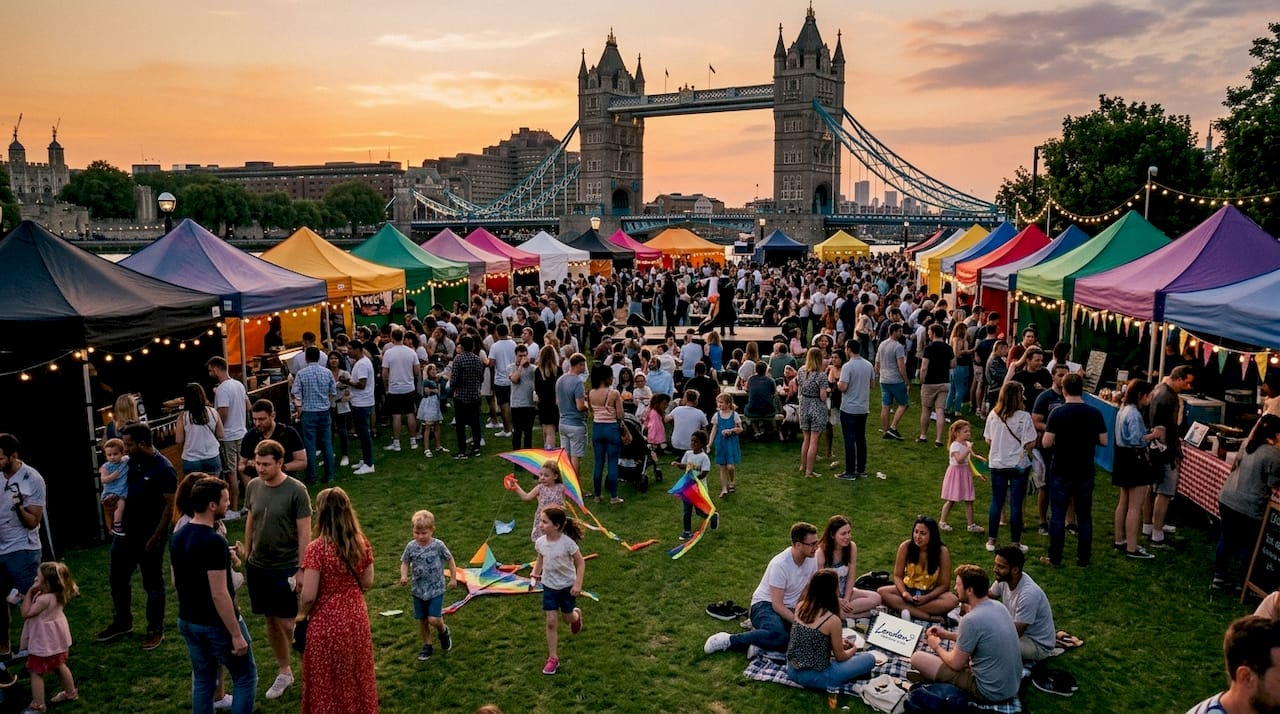
The BBC Proms at the Royal Albert Hall runs from july through september, offering nightly classical concerts with standing tickets available from just a few pounds. Long daylight hours extend outdoor events well into the evening, making summer the season where London genuinely earns its reputation as a world-class destination.
Pro Tip: Book Wimbledon ballot tickets in the preceding december and Taste of London tickets at least six weeks ahead. Hotels within two miles of the All England Club in Wimbledon sell out months in advance.
Autumn: culture, fashion, and the river
Autumn brings a shift in tone. London Fashion Week in september draws designers, press, and buyers to venues across the West End and East London. The Totally Thames Festival runs throughout september, filling the riverbanks with art installations, boat races, and open studios. Autumn is also when the low season begins to take shape, with october and november offering quieter windows between the summer rush and the Christmas peak.
Bonfire Night on 5 november produces fireworks displays across the city, with Alexandra Palace and Battersea Park hosting the most popular public events. The London Film Festival, run by the BFI in october, screens hundreds of films at the BFI Southbank and partner cinemas.
Winter: markets, lights, and spectacle
Winter in London is defined by atmosphere. Christmas markets appear from mid-november at locations including Southbank Centre Winter Market, Leicester Square, and Kingston upon Thames. Hyde Park’s Winter Wonderland opens in november and runs through january, combining fairground rides, ice skating, and food stalls in one of the city’s most visited seasonal events. Christmas market programming is a major draw for both domestic and international visitors. The New Year’s Day Parade through central London on 1 january is free to watch along the route from Parliament Square to Green Park.
| Season | Key events | Location | Approx. timing |
|---|---|---|---|
| Spring | Chelsea Flower Show, Boat Race | Chelsea, Putney to Mortlake | March–May |
| Summer | Wimbledon, Taste of London, BBC Proms | Wimbledon, Regent’s Park, Kensington | June–September |
| Autumn | London Fashion Week, Totally Thames, BFI London Film Festival | West End, South Bank | September–November |
| Winter | Winter Wonderland, Christmas markets, New Year’s Day Parade | Hyde Park, South Bank, Central London | November–January |
How to plan your visit around London’s seasonal events
Planning London seasonal events into your trip requires more than noting dates. Peak months in june and july drive accommodation prices up across all zones, not just near event venues. Booking hotels three to four months ahead for any summer trip is the minimum. For Wimbledon fortnight specifically, properties in Wimbledon, Putney, and Southfields fill first.
Transport planning matters as much as accommodation. The London Underground serves most major event venues, but Wimbledon and Notting Hill Carnival both generate significant surface congestion. TfL’s Journey Planner updates in real time and shows planned closures. Checking it the day before a major event prevents delays.
Shoulder seasons offer real advantages. Autumn and winter low seasons bring lower hotel rates, shorter queues at attractions, and a more local atmosphere. October is particularly good: the BFI London Film Festival runs, the weather is still manageable, and the city has not yet shifted into full Christmas mode.
Pro Tip: Avoid booking non-refundable accommodation during Notting Hill Carnival weekend unless you are certain of your plans. The area around Ladbroke Grove and Portobello Road becomes extremely congested, and many local businesses close.
Key planning resources for events in London by season:
- TfL Journey Planner (tfl.gov.uk) for live transport updates on event days
- VisitLondon.com for the official events calendar with ticketing links
- Eventbrite for smaller festivals, pop-ups, and fringe events not listed on official tourism sites
- National Rail for day-trip connections to Wimbledon and Hampton Court
- Time Out London for weekly listings and last-minute event picks
Early summer events act as calendar anchors. Once Wimbledon and Taste of London are confirmed in your itinerary, you can build the rest of your trip around them rather than treating them as afterthoughts.
Which London neighbourhoods are best for seasonal events?
Where you stay shapes how much you enjoy London’s seasonal activities. Proximity to event venues cuts travel time and lets you absorb the neighbourhood atmosphere before and after the main event.
Notting Hill is the natural base for Carnival weekend. The Notting Hill Carnival runs across the august bank holiday, with a ticketed Steel Band Competition on 29 august 2026 and free parades on 30 and 31 august. Staying in Notting Hill or Bayswater puts you within walking distance of the route. The neighbourhood’s independent restaurants and cafés along Portobello Road are worth exploring outside Carnival too. For more on the area, London Vacation Guide’s guide to Notting Hill covers the neighbourhood in full.
South Bank is the anchor for winter events and year-round cultural programming. The Southbank Centre Winter Market, the BFI, and the London Eye sit within a ten-minute walk of each other. Richmond offers a quieter alternative for visitors attending outdoor events, with excellent transport links into central London and access to Richmond Park for morning walks between event days.
Pro Tip: Staying one neighbourhood away from a major event venue often gives you better value and a calmer base. For Wimbledon, Putney is quieter than Wimbledon itself and has direct Overground connections to the venue.
| Neighbourhood | Best for | Transport links | Vibe |
|---|---|---|---|
| Notting Hill | Carnival, Portobello Market | Central line, bus | Vibrant, residential |
| South Bank | Winter Wonderland, BFI, Southbank Centre | Jubilee, Waterloo | Cultural, walkable |
| Wimbledon | Tennis fortnight | District line, National Rail | Suburban, green |
| Covent Garden | Year-round events, West End | Piccadilly line | Lively, central |
| Richmond | Outdoor events, green space | District line, Overground | Relaxed, leafy |
Less obvious choices also reward exploration. Brixton has a strong live music and food scene that peaks in summer, and its neighbourhood character makes it a genuine alternative to more tourist-heavy areas. Angel in Islington sits close to several autumn cultural venues and offers excellent independent dining.
What are the common challenges at London’s seasonal events?
Crowd management is the single biggest practical challenge at London’s top seasonal happenings. The Notting Hill Carnival attracts very large numbers across its free parade days, and the streets around Ladbroke Grove become genuinely difficult to navigate without a plan. Carnival features multiple stages with Soca, Calypso, and steel band music, plus food vendors spread across the route. Arriving early, before midday, gives you space to move and access to food stalls before queues build.
Weather is a constant variable. London summers are warm but unpredictable. A light waterproof layer is worth carrying to every outdoor event from april through september. Winter events like Hyde Park’s Winter Wonderland are cold and often muddy underfoot, so waterproof footwear matters more than most visitors expect.
Ticketing nuances catch many visitors off guard. Some events, like the Chelsea Flower Show, sell out months in advance and have no walk-up availability. Others, like the Boat Race, are entirely free. Knowing which category an event falls into before you travel saves significant frustration.
Quick dos and don’ts for London seasonal events:
- Do check TfL for planned tube closures the day before any major event
- Do book restaurants near event venues in advance. Dining near events fills up fast on peak days
- Do carry cash to street food vendors at Carnival and outdoor markets
- Don’t assume you can buy tickets on the day for Chelsea Flower Show, Wimbledon, or Taste of London
- Don’t drive to Notting Hill Carnival. Parking restrictions are extensive and road closures are unpredictable
- Don’t underestimate walking distances between stages at large outdoor events
Holiday event logistics at Christmas markets require reserving services well ahead and planning for queues proactively. The same principle applies to visitors: book popular market restaurants and ice rinks by october for the december period. Large summer events act as demand multipliers, pushing up prices and reducing availability across transport, dining, and accommodation simultaneously.
Key takeaways
London’s seasonal events calendar rewards early planning, neighbourhood awareness, and a willingness to look beyond the obvious headline events.
| Point | Details |
|---|---|
| Book summer accommodation early | June and July are peak months; hotels near Wimbledon and Regent’s Park sell out months ahead. |
| Know the ticketing structure | Chelsea Flower Show and Wimbledon require advance booking; Boat Race and Carnival parades are free. |
| Use shoulder seasons strategically | October and November offer lower prices, fewer crowds, and strong cultural programming. |
| Choose your neighbourhood carefully | Staying near your main event venue saves time and improves the overall experience. |
| Plan transport before event day | Check TfL Journey Planner the day before to avoid closures and congestion on busy event days. |
London’s seasons are worth experiencing on their own terms
London’s seasonal events are worth experiencing on their own terms, and I say that having attended most of them across many years. The instinct for many visitors is to treat events as boxes to tick. Wimbledon on tuesday, Carnival on sunday, done. That approach misses what makes London’s seasonal calendar genuinely special.
The Totally Thames Festival in september is one of the most underrated events in the city. It runs for the entire month, it is largely free, and it transforms the riverbanks into something that feels nothing like tourist London. Most visitors have never heard of it. The BFI London Film Festival in october is another. You can walk up to screenings with no advance booking for many films, sit in a cinema with industry professionals, and watch something that will not reach general release for months.
My honest advice is to pick one major anchor event per trip and build the rest of your itinerary around the season rather than the event list. If you are visiting in late june, Taste of London gives you a brilliant overview of the city’s restaurant scene in one afternoon. Spend the rest of the week eating at the restaurants whose chefs you discovered there. That is a better use of London than rushing between landmarks.
The winter period is also consistently underestimated. Hyde Park’s Winter Wonderland is genuinely fun, but the Southbank Centre Winter Market is quieter, more local, and has better food. Experiencing London like a local means knowing which version of each event suits you, not just which event exists.
— Matt
Plan your London visit with London Vacation Guide
London Vacation Guide brings together the practical detail and local knowledge you need to make the most of every season. If this is your first trip, the first-time visitor guide is the best starting point, covering key events, neighbourhoods, and timing advice in one place. For dining around event days, Borough Market Kitchen and Dishoom Covent Garden are two of the most reliable options near major event zones. London Vacation Guide’s neighbourhood guides cover areas from Victoria to Richmond, helping you choose a base that suits your itinerary and budget.
FAQ
What is a seasonal events London guide?
A seasonal events London guide is a curated calendar of major festivals, cultural events, and outdoor activities organised by season to help visitors and locals plan their time in the city effectively.
When is the best time to visit London for events?
June and july are the peak months for events, with Wimbledon and Taste of London as the main anchors. October offers a strong cultural programme with fewer crowds and lower accommodation prices.
Is Notting Hill Carnival free to attend?
The Carnival parades on 30 and 31 august 2026 are free. The Steel Band Competition on 29 august 2026 is a ticketed event and requires advance booking through the official Notting Hill Carnival website.
How far ahead should I book for summer events in London?
Book accommodation three to four months ahead for any summer trip. For Wimbledon specifically, ballot applications open the previous december and hotels near the venue sell out well before june.
Which London neighbourhoods are best for winter events?
South Bank is the strongest base for winter events, with the Southbank Centre Winter Market, BFI, and the London Eye all within walking distance. Hyde Park’s Winter Wonderland is best accessed from Bayswater or Paddington.
Recommended
- London in Spring: Why April and May Beat Summer Every Time - The London Journal | London Vacation Guide
- Tips for visiting london in 2026: your expert guide - The London Journal | London Vacation Guide
- London for First-Time Visitors: The Essential Guide | London Vacation Guide
- Plan your perfect London vacation: tips for US visitors - The London Journal | London Vacation Guide